
Oct 5, 2026
How Can Socialism Work on Paper? A Review of The Blueprint
Can a model designed in advance rally the people who would build it?
by Nik M.
Like many in my generation, I came to socialist politics through the Bernie Sanders campaign of 2016. Before Bernie’s run, I was vaguely left-leaning, believing that America needed a more robust welfare state, and that Obama was doing the best he could but was constrained by gridlock, that politics was a matter of experts designing policy solutions to complex problems. There was, I assumed, no room for bold ideas or serious social change in the United States.
But when he ran for president, Bernie shattered all these assumptions. Calling himself a “democratic socialist,” Bernie identified the class antagonisms that I had felt shaping the world but couldn't articulate. He used the pulpit of a presidential campaign to tell millions of people that the economy was rigged, that the people at the top were extracting from everyone else, and that the fundamental problem was not the complexity of American society (although of course that exists) but the concentration of wealth and political power in a narrow oligarchy.
Although it was an electoral loss, the Sanders campaign was a hegemonic win. Decades after we were led to believe we had reached the end of history following the fall of the Berlin Wall, socialism became a real political movement in America again. Sanders politicized thousands, if not millions, of people to identify as socialist. It was not clear exactly what he meant by “democratic socialism”—after all, wasn’t his platform simply a welfare state, inspired by countries like Sweden and Norway? But “socialism” functioned as an empty signifier, signaling something beyond merely being “progressive,” signaling a willingness to fight for the people against the oligarchic class that rules over our lives. So after the Sanders campaign and the election of Trump, a new, bold socialist and left populist movement emerged. But like the Sanders campaign itself, it lacked a sense of what comes next.
That's where Jacobin and the DSA came in. In the years leading up to and after the first Sanders campaign, Jacobin was the intellectual engine of a newly politicized left. It filled the empty signifier of “socialism" content: a rough sketch of what society could look like. Its writers and editors took the demands of the Bernie movement—Medicare for All, tuition-free college, a living wage—and embedded them in a broader vision of a democratic socialist economy, with worker cooperatives and a large public sector which held ownership of key industries. They distinguished private property from personal property, assuring us that socialism would not take away your home or your toothbrush. They assured readers curious about socialism that it was this vision—of cooperatives and a robust welfare state—and not the dark memory of the Soviet Union from our history textbooks. Their ABCs of Socialism pamphlet was a concise demonstration of this: clear, accessible, and unafraid to answer the basic questions of what socialism would look like.
Bhaskar Sunkara, Jacobin's founder, was also a leader in the pre-2016 DSA. Following the election of Donald Trump in 2016, when it was clear something had gone horribly wrong in American history, he, along with many others, used his platform to propose that the newly politicized could find a home in DSA—a big tent where the new socialist left could figure out its vision and strategy. The result of this foresight speaks for itself. The DSA is now a significant political force, and the election of Zohran Mamdani as mayor of New York City—along with a wave of DSA-backed congressional and state legislative primary wins—is a testament to the foresight of Sunkara and Jacobin's project.
The Blueprint: How Socialism Can Work In the Real World, written by Sunkara, Ben Burgis, and Mike Beggs, is a culmination of that intellectual project. It's a serious, comprehensive attempt to answer the question that the ABC’s pamphlet attempted to answer in only the briefest terms: what would socialism actually look like in practice? It grapples with the failure of Soviet planning, the socialist calculation problem, and the distinction between markets and capitalism. It proposes a model of market socialism: democratic workplaces financed by public banks, a large noncommodity public sector for healthcare and infrastructure, and public investment as a tool for macroeconomic planning.
The book is impressive in its scope and rigor. The research is extensive—the discussion of the Soviet experience is historically grounded, and the engagement with the Mises-Lange debate is thorough. The authors explain it clearly for readers with no familiarity with the vast literature on these topics. The proposals themselves are well thought out, and any future socialist project will likely incorporate many of them.
A decade after 2016, however, the book arrives in a different conjuncture than the original Jacobin project. The democratic socialist movement still thrives. One need look no further than Mamdani and the wave of DSA-backed primary wins. But Jacobin's relationship to the movement has shifted. Between 2016 and 2020, it was the intellectual engine of the left populist resurgence—its most theoretically developed tendency. This was not because it presented the right, rationally superior model of socialism, but because it represented an organized socialist tendency whose strategy was bound up with the Bernie campaigns. That tendency was organized, in part, within DSA, where Jacobin-aligned currents played a leading role. When Bernie lost in 2020, the political project that had given the tendency its coherence and confidence collapsed. The crisis is visible in DSA's internal fracturing—the rise and split of caucuses that all descended from the same tendency. Jacobin kept publishing, kept presenting its rationalist vision of socialism, but its relationship to the movement is not what it once was.
The question, then, is whether a model like the one the book proposes can do the work its authors want it to do. The book presents a blueprint of an ideal socialist society, a design drawn in advance and a fixed set of conclusions. Against this stands a different understanding of communism—not as a design to be realized, but as what Karl Marx described ‘the real movement that abolishes the present state of things.’ The sections that follow examine the ‘cookshops of the future’ controversy, the treatment of markets and planning, and the book's relationship to the political struggles of the present.
A Socialist Blueprint
One of the book's central claims is that socialism can retain markets without retaining capitalism. Firms would be worker-managed cooperatives financed, and ultimately owned, by public banks, and the surplus would accrue to workers and the public rather than to private shareholders. Markets, according to the authors, would still coordinate production and consumption, but the class power that markets currently express—the power of capital over labor—would be dissolved.
The core unit of production in the economy is the democratic workplace. Firms would be managed and run by their workers, who elect management and distribute the surplus. They compete in markets for consumer goods, which preserves the informational and incentive functions of prices. The book argues this addresses the central failure of Soviet planning, which served neither consumer preferences nor worker agency.
But markets, as the authors note, need guardrails. Left to themselves, worker-owned firms could "self-exploit": suppressing wages and intensifying work to capture market share. To prevent this, the book proposes a labor board that sets wage benchmarks by job category, with room for variation by skill, experience, and region. A firm that cannot pay the benchmark is not viable, however willing its members are to sweat their own labor. Competition is redirected toward productivity and innovation rather than downward pressure on wages.
Investment would be socialized through public banks. Rather than private financiers allocating capital, public banks would direct credit toward democratically determined priorities, giving the state a macroeconomic planning role without micromanaging production. Firms cannot buy or sell assets—they would be socially owned through public financing, preventing the emergence of a market for corporate control and the reconstitution of a capitalist class.
A large noncommodity public sector would provide goods and services that should not be allocated by markets at all—healthcare, education, energy, infrastructure—publicly funded and organized around need rather than ability to pay. Income and housing policy would compress inequality; pay disparities would still exist to reward difficult work or scarce skills, but nobody would receive income merely by owning a firm. Land and housing would be public property, with secure tenure and no speculative windfall. A modest unconditional floor would prevent destitution, with more generous benefits responding to particular needs.
Macroeconomic policy would be managed through public banks and Keynesian demand management, which, the book argues, would be more robust than under capitalism because the state would not face entrenched capitalist opposition to bold macroeconomic policies.
Together, these proposals describe a model of market socialism: markets for consumer goods, socialized investment, a large decommodified public sector, and a welfare state that guarantees that basic needs are met. It's a thoughtful and coherent vision, and any socialist project will likely draw from this model to some extent.
In Medias Res
When reading The Blueprint, however, one finds the frictionless quality of the thought experiment becomes visibly problematic. In its focus on rational coherence, the book undermines the very thing that coherence was meant to serve: its supposed hard-nosed, practical model of socialism.
Take the claim that social ownership and public financing prevent the reconstitution of a capitalist class. It sounds fine. But the trick is getting there. It assumes there are no capitalists who own the assets, no class that will fight to keep them, no political struggle over whether public financing is even possible. It skips past the struggle straight to the outcome, and, in doing so, negates the possibility of both the struggle and the outcome. Whatever socialism looks like in America will arise from the path by which socialism is achieved—socialism cannot be an ideal object that we abstractly strive for.
The book raises every theoretical problem its model has to account for—the soft budget constraint, incentive design, the coordination of investment—and treats each as a problem to be solved on paper. But the political struggle, which is what actually determines the outcome, is not treated as a problem at all. And a design that omits the struggle cannot tell us how to get there, or what socialism would actually look like once we did. It can only tell us what socialism would look like if the struggle were already resolved—which is another way of saying it cannot tell us anything at all. The form of the institutions is the sediment of the struggle, not an abstract thought experiment made in advance.
The book avoids politics because it has to. Placing the blueprint in political context would reveal it as fanciful and irrelevant. What good are the specifics of a system if you can't say how it gets built? The capitalists are here to fight now.
Of course, the authors anticipate this objection. Marx, they note, once dismissed attempts to describe communism as "writing recipes for the cookshops of the future." Many socialists have taken this to mean that we simply shouldn’t speculate about what socialism will look like, because the working class will figure it out “after the revolution.” Objecting to this, the authors grant that no model dreamed up today will fully reflect the complexities of the real world tomorrow, but argue that it is not enough for socialists to point out the flaws of capitalism. People want alternatives, but doubt whether socialism can actually work in practice. And the authors aim to answer those doubts with their blueprint.
The authors are right to push back against blanket objections to thinking about the future, which are often justified by citing Marx. But what Marx was really objecting to was a particular relationship between theory and practice—the relationship in which the intellectual designs the future and the masses are expected to implement it spontaneously.
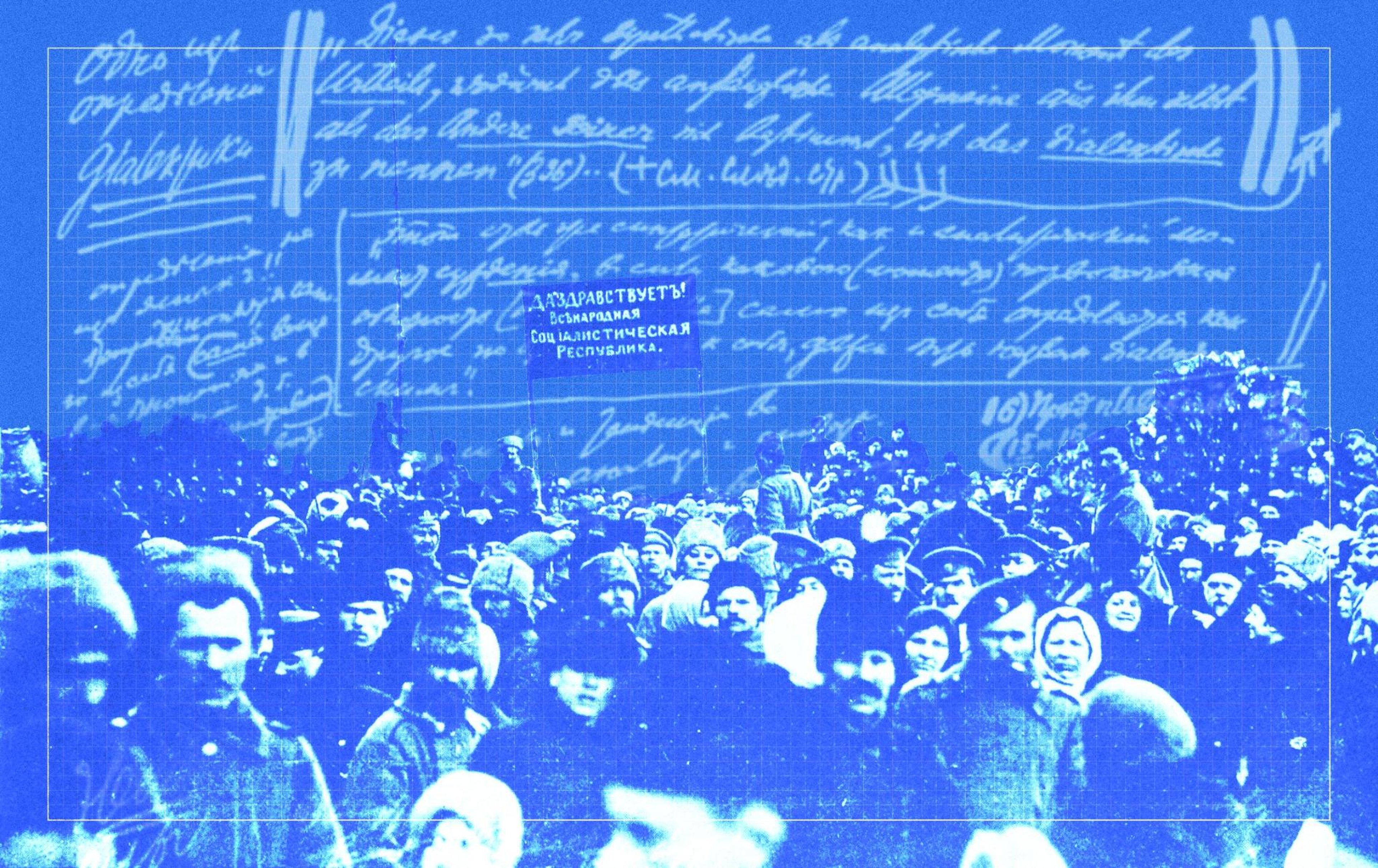
Marx's point was about the subjective form of communism. Which is to say, it is about political identity: the kind of subject the political struggle produces and requires. As P.K. Gandakin writes in Communism in Medias Res, "The question that comes first for every communist is not what communism means, or why one should be a communist, but what it actually means to be one—that is, what it means to be a living, breathing communist at this current moment. How does a communist think? How does a communist feel? How does a communist see or hear?" For Marx, communism exists only as a social practice, in the middle of struggle, in medias res, not as an ideal picture of society waiting at the end of history.
This is what it means to see communism as the "real movement" that abolishes the present state of things. It is the activity of living people—in their riots against ICE, in their electoral insurgencies, in their strikes and insurrections—abolishing the present order and building something new. The institutions are not designed in advance. They are already the expression of the movement—the form that the struggle takes as it develops.
The institutions emerge from the struggle, but so does the language that signifies it. In 2016, after Bernie Sanders reintroduced it into the political mainstream, "socialism" worked as a banner precisely because it was empty. It signaled a side—the people against the oligarchy—without demanding agreement on a program. Movements generate demands, and good theory gives those demands a name, pathos, and a horizon. A sketch of the horizon is useful for clarifying the movement's directional purpose without restricting socialism’s power as a broad signifier. But The Blueprint fills the signifier with a completed system. Cooperatives, public banks, market socialism—this is socialism, and only this. The risk is that the more precisely you define socialism in advance, the less it functions as a mobilizing political signifier in the present. Nor does the book compensate for that loss by moving people, because the appeals are purely rationalistic.
This doesn't mean that thinking about institutions is pointless. But it does mean that the value of a model depends on its relationship to the movement. A model that emerges from and speaks to the struggles of the present can be an invaluable means of clarifying demands, connecting them to a broader horizon, and orienting action. A model that is designed in abstraction from those struggles, addressed to a reader as a rational chooser rather than as a participant in a movement, risks becoming too disconnected from the political moment to serve the movement.
The dilemma, then, is not whether socialists should think about models of an ideal society. It's whether the model is anchored in the real movement, whether it speaks to the struggles already happening, whether it clarifies the demands already being made, whether it gives form to the aspirations already being expressed. The emphasis on abolitionism, for example, is missing from the book. But this is exactly because abolitionism is tied to socialism due to the present tasks and contradictions of proletarian struggle today—the struggle against policing, against ICE, against imperialism—that give a much clearer, if less formally rational, picture of what socialism looks like.
Markets and Planning
In defense of markets, the authors draw on two historical experiences: the failure of Soviet planning and the famous socialist calculation debate between Austrian economist Ludwig Von Mises and socialist economist Oskar Lange. From both these experiences, they conclude that markets are rationally optimal for solving the coordination problems of a complex economy. Central planning failed not merely because of technological limitations but also because of informational asymmetries and incentive structures that were coded into the system itself. Markets, by contrast, perform functions that no plan can easily replicate: they discover what people want, give producers reasons to respond, and create space for innovation.
Their case is compelling. Indeed, no socialist project in the near future will be a fully planned economy as opposed to a market one. The transition away from markets—if it ever happens—will be gradual, experimental, and fraught. But the book treats the problems of planning as inherent rather than contingent, and the effect is to make markets seem like a permanent feature of any workable socialism rather than merely a phase of human society.
Take what the authors call Soviet "non-market planning.” Planning in the Soviet Union was really an inefficient attempt to simulate markets using a command bureaucracy. The Soviet system didn't transcend the market so much as it tried to replicate its functions through a hierarchy, and it failed because the hierarchy couldn't process information or generate the right incentives. But that’s a failure of a specific institutional design, not a refutation of planning in the abstract.
The Mises-Lange debate, which the book engages with carefully, was framed within the same historical moment. The debate was largely conducted on the premise that the relevant benchmark is the allocation a competitive market would produce, and the disagreement could really be boiled down to whether a planner could match it. Lange's model—a Central Planning Board adjusting prices through trial and error based on reported surpluses and shortages—was a serious attempt to answer Mises and Hayek on their own terms. The authors credit Lange for his contributions but identify the shortcomings that make his model another inefficient simulation of the market.
What has changed since the Soviet experience and the calculation debate of the 20th century is not just computational power but also the possibility of bypassing the human intermediaries altogether. The Soviet system's pathologies, such as the incentive to withhold information, were generated by managers who reported to planners, firms that negotiated targets, and bureaucrats who allocated resources. Algorithmic systems can bypass those specific intermediaries and the pathologies they generated.
Amazon's internal supply-chain planning, for example, is a distributed system in which a central coordinator negotiates with planning agents through price-like signals, with agents retaining private information and acting as "black boxes" that report only their preferred choices when queried. It's not a market in the classical sense—buyers and sellers do not interact directly—but it's not Gosplan, either. If anything, it sounds a lot like Lange’s model. Amazon’s planning apparatus is a cybernetic system that simulates market functions without market relations, at a scale the Soviets could not have imagined.
This does not prove that we can plan the entire economy. But it does show that the specific pathologies the Soviets faced were problems of a particular technological and institutional configuration, not of planning as such. The algorithm reads data and adjusts, while the problem of Soviet planning was that bureaucrats could withhold data from the coordinator as they bargained over targets. While Amazon cannot be a model for coordinating an entire economy, it does demonstrate coordination mechanisms that are now technically realizable but were not in the 20th century.
The authors are still correct about the necessity of markets in the short to medium term. But the book's justification for markets is abstract and logical rather than historical and transitional. The blueprint as a static snapshot assumes a fixed operative economic logic. But the operative logics of any moment are contingent on the technology, tools, and political conditions available. Markets may be necessary now. That doesn't make them necessary in principle. Socialism is a directional purpose, not a final design, and therefore doesn't require a fixed answer to whether or how a planned economy can work. It requires democratizing control over whatever mechanisms are available.
Blueprint or Practice
The book, for all its merits, reads as though it was written for the 2010s, an antiquated moment when it made sense for socialism to be argued on libertarian and liberal terrain. Socialism, it was felt, needed to be defended against the charge that it was irrational, inefficient, or totalitarian. Socialism was associated with the DMV and the Post Office, rather than a barnstorming movement for political freedom. In that moment, Jacobin editors and analytical Marxists took up that task, and it was admirable of them to do so.
But the world has changed. We are in the midst of a Gramscian interregnum, where the old, neoliberal world is dying, and the new world struggles to be born. In this light, the second Trump administration represents an active project to demolish the state's remaining regulatory and administrative capacity, weaponize government against political enemies, and eliminate progressivism in America. MAGA presents a vision that is authoritarian, extractive, and barbaric. And the Democratic Party has no answer to this. It clings to institutions being dismantled and procedures being weaponized against it. It has no theory of the present, no vision of the future, no capacity to identify the crisis or offer a way out. It is a party of the living dead.
In the interregnum, therefore, the question is no longer whether socialism can be proven rational. It is whether socialism can offer a side, an identity, a vision that people want to fight for. The left populist and democratic socialist pole that emerged from the Bernie campaigns—now represented by Mamdani, the DSA primary winners, and the movements behind them—is building this alternative to MAGA and the do-nothing Democrats. The current moment demands ideas that can inform the trajectories of the real movement now in motion.
The authors are clear about their intellectual influences: the analytical Marxists G.A. Cohen and Erik Olin Wright, and the Rawlsian tradition in political philosophy. The book seems to be written in dialogue with libertarians, who base their politics on axioms about property and rights, and with some of the liberal intelligentsia, for whom Rawls remains an authoritative figure. The authors’ rational defense of socialism is ironclad. Invoking Rawls's veil of ignorance—asking what principles of justice you would endorse if you didn't know your position in society—they make a rigorous case that unchosen inequalities of birth and talent can't justify unequal outcomes, and that inequality has to be justified by its effects. To their rational interlocutors, this argument is surely bulletproof.
What use is this in practice, though? The veil of ignorance tells you what principles a rational chooser might endorse. But it doesn't tell you who will build the society those principles describe, or how. By addressing the reader as a rational chooser rather than as a participant in a movement, the book cannot contribute to the construction of political identities. The text reasons about justice from a standpoint outside history and struggle. The book reads as though it were written when Americans were still reacquainting themselves with the concept of socialism, but today socialism is hegemonic within the left-of-center intelligentsia. The people voting for socialist candidates no longer need persuading that socialism is rational, and rational persuasion is not, and was never, how political identities are forged.
The worst thing a “recipe for a cookshop of the future” can do is fail to inspire people to take political action. A fixation on rational elegance yields a closed system rather than a horizon. A sketch of the horizon clarifies a movement's directional purpose and leaves the signifier open enough to gather people. A closed system specifies the destination and asks the reader to accept it. Whatever its rational coherence, it cannot move anyone, because it is not trying to build a movement. It is trying to win an argument with writers at Vox. It is dry and economistic, and brackets out politics altogether. Its anecdotes illustrate how one might start a pasta cooperative rather than immersing the reader in a new world with a new ethico-political vision.
A vision of a better world is supposed to make you want that world. It should have pathos, forge political identification, and make the reader feel the injustice of the present and, more importantly, the tangible possibility of the future. Yanis Varoufakis's Another Now is a work of utopian socialist science fiction that makes a different world feel real while remaining connected to a political project. Ursula K. Le Guin's The Dispossessed and Edward Bellamy's Looking Backward do much of the same. Where they don’t necessarily offer practical solutions for socialism, they do politicize their readers.
So the Blueprint doesn't set out to vividly describe an immersive socialist future. Does it at least offer practical solutions to the problems of constructing socialism? It tries to have it both ways: a vision of the future and a serious, practical document—and ends up being neither. The problems it addresses are hypothetical, and so are the solutions. They resolve the problems as the book has framed them. But the book satisfies a taste for rational elegance rather than working out any of the actual practical problems of constructing socialism. And what these proposals would concretely look like is inseparable from how they are constructed.
The Real Movement
In its final chapter, The Blueprint surveys the objections to its method: The USSR wasn't real socialism. A priori worries about calculation are the ideological reflex of the existing order against the very idea of transformation. A victorious working class will sort out the problems of socialist construction through democratic trial and error, and it is arrogant for intellectuals to anticipate the results. Feudal monks could not have predicted stock markets and limited-liability corporations, so we shouldn't pretend to see the socialist future either. The authors boil these objections down to a single demand: "have a little faith." They are right that this is a weak answer to those interested in socialism. But does this mean the only two paths are the blueprint and faithful cheerleading of the masses from behind without a horizon?
The book assumes the task is to persuade people of socialism's rational merits. But this misunderstands where political identities come from. As Ernesto Laclau observed, identities are forged not according to the categories of an intellectual discourse, but in conflict. Leadership does not mean presenting a static model for rational approval; it means entering the active terrain of struggle, linking disparate popular grievances and articulating them into an equivalential chain. It means creating a collective political subject capable of recognizing itself as "the people" against an oligarchic ruling class, and giving its demands a concrete, institutional form as the struggle unfolds.
This is the purpose of a political program, and the difference between a program and a blueprint is easy to see in the book's own proposals. In The Blueprint, public banks are posed abstractly, as a mechanism within a model. Compare that with New Consensus, the think tank founded by Saikat Chakrabarti, which proposes reviving the Reconstruction Finance Corporation (RFC). In the 1930s and during the Second World War, the RFC became the largest investor in the nation, buying preferred stock in banks, financing industry, and building the industrial base that won the war. It was itself a site of class conflict, and reviving it now would mean another round of that conflict. A revived RFC would take investment allocation away from private finance and place it under public control. John Maynard Keynes called this “the euthanasia of the rentier:” the abolition of the functionless investor as a claimant on surplus. The book describes a world without rentiers as a thought experiment. Chakrabarti, on the other hand, proposes an instrument that would actually kill the rentier, and in doing so gives people something to fight for and someone to fight against.
This distinction gets to the core of how political consciousness is formed. Economistic rational persuasion does not activate people; in fact, by treating politics as an administrative puzzle to be solved by technocrats, it is actively depoliticizing. What activates people—what turns a vague sense of injustice into committed socialist politics—is political conflict. People are politicized when they see a side to join, an enemy to defeat, and an instrument of collective power they can wield to change their lives.
Socialists do not need to choose between the passivity of "having faith" and the isolation of building paper utopias. The role of socialist leadership today is neither to liquidate into the spontaneous movement nor to act as social engineers of the cookshops of the future. It is to lead within the storm: to render coherent the inchoate sentiments of the masses in struggle, to make the movement conscious of itself and of what it is fighting for.
None of this diminishes what the book accomplishes. The Blueprint systematizes decades of socialist thought and debate into a framework that is coherent, rigorous, and remarkably readable. Its proposals need a place in any serious socialist program. It is the high-water mark of the effort to articulate the state of affairs to be established, the ideal to which reality might adjust. Anyone interested in being an educated socialist in the modern day should pick up and read this book.
But ten years after Bernie Sanders and the authors of The Blueprint politicized our generation into identifying as socialists, I ultimately side with Marx. Not with the ideal to which reality adjusts, but with communism as the real movement that abolishes the present state of things.