
By Ant L and Ada Lovelace
By Frankie Fritz

By Andy C.
By Nik M.
By Cass B and Matthew Smith
By Farudh Emiel Majid, Elizabeth Oh, and Rasha Harvey
By JJ Christensen
By Kolya Ludwig
What if “socialism” is not a prefigured identity to aspire to, but a culmination of effects produced through the struggle to reshape society itself? In his latest work, Kolya Ludwig revisits the left’s misunderstanding of political subjectivity and its implications for socialist strategy, drawing on Ernesto Laclau’s theory of populism.

By T. E. Moon
By Matthew J. Hunter
By T. E. Moon
By Geese Editorial Team
By E. Day and J. Ryder
By E. Day and T. E. Moon
By E. Day
By Kolya Ludwig
By P. K. Gandakin
By J. Ryder
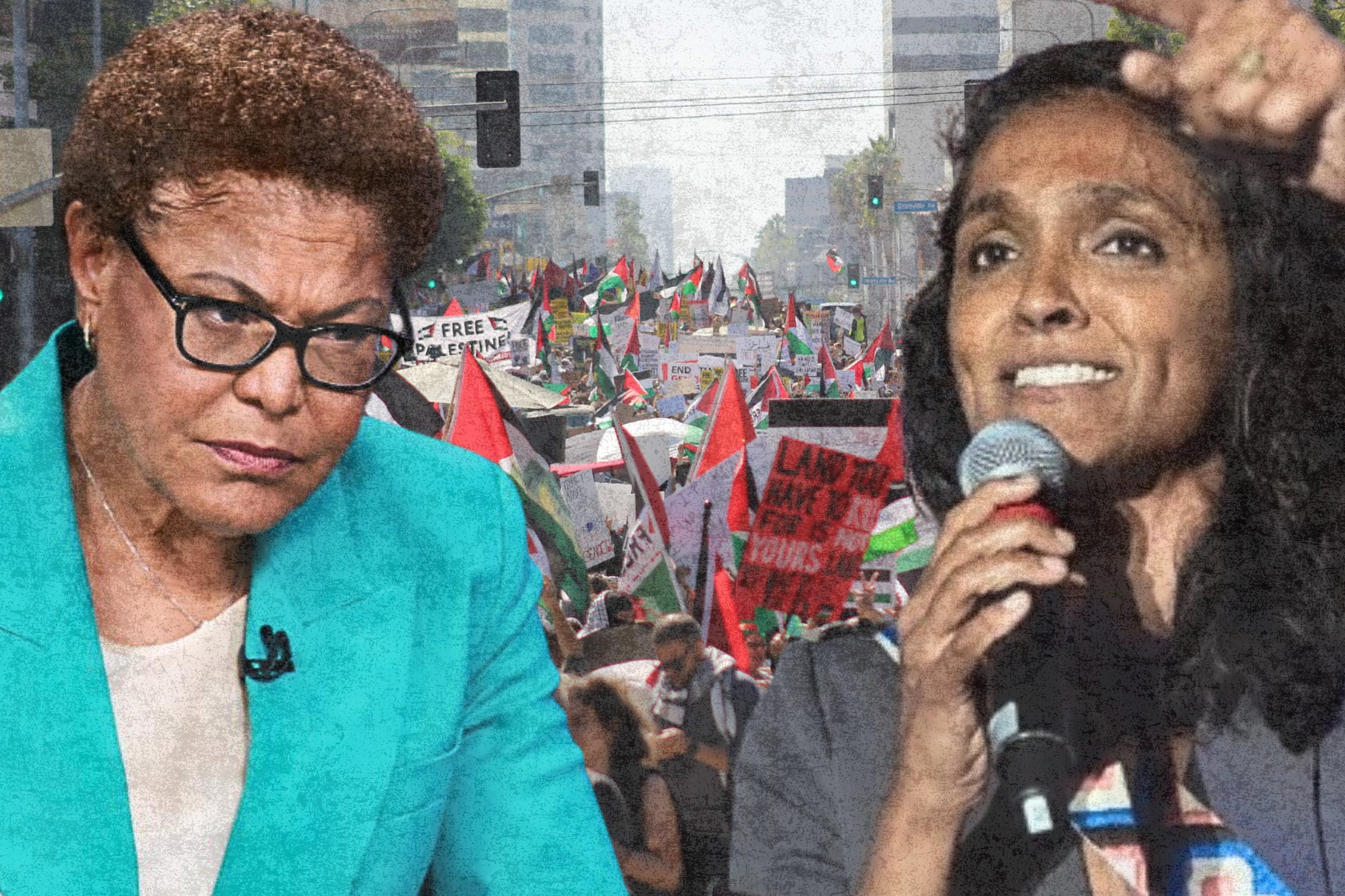
Nithya Raman has won the official endorsement of DSA-LA following weeks of contentious yet constructive debate in Geese by both sides of the question. J. Ryder argues that the entire chapter should now mobilize and unite under a permanent campaign to build a socialist pole in LA and defeat Karen Bass to meet the crucial challenges ahead against the establishment.

By Noah Suarez-Sikes, Sean A., Gabbie Metheny, and Xara Shaw
By Alejandra Quintero, Anna Gross, Charity Croomes, Jules Yun, and Lydia Cardwell
By T. E. Moon
By E. Day and T. E. Moon
By Kolya Ludwig, E. Day, J. Ryder, and Noah Suarez-Sikes
By P. K. Gandakin
By Andy C.
By Sarkozy
By Abdullah F., Tej B., and Griffin M.
By Devin G.
Fifty years after the death of Mao Zedong, the founder of the People’s Republic of China surprisingly continues to resonate on the American left, from the Black Panther Party’s historic "Serve the People" programs to Hasan Piker’s choice of attire today. Mao’s contributions to communist practice—namely the Mass Line and the concretization of Marxism to national conditions—remain instructive to American socialists. In his debut piece, Devin G explores why a 20th-century Chinese revolutionary still resonates in the heart of the American empire.

By Andy C.
By JJ Christensen
By J. Ryder
By Juan Muñoz-Guevara, Mary L. Entoma, Estefany Alejandra Castañeda, and Aya Konishi
By Noah Suarez-Sikes, Sean A., Gabbie Metheny, and Xara Shaw
By Alejandra Quintero, Anna Gross, Charity Croomes, Jules Yun, and Lydia Cardwell
By Matthew J. Hunter and Danny Estrada
By E. Day and T. E. Moon
By Kolya Ludwig, E. Day, J. Ryder, and Noah Suarez-Sikes
By Matthew J. Hunter
Public power needs the radical threat. Communists need bail money. Marketcraft needs an organized working class. That wager lies at the heart of Malcolm Harris's What's Left? The left's rival strategies for surviving the climate crisis need one another, and none wins by converting the rest. Matthew J. Hunter makes the case for reading Harris, blind spots and all, and for building the united front before the crisis forecloses the chance.

By Roxanne R.
By Ant L and Ada Lovelace
By Frankie Fritz
By Steven R.
By Nik M.
By Cass B and Matthew Smith
By Farudh Emiel Majid, Elizabeth Oh, and Rasha Harvey
By Nik M.
By Jack M
By Devin G.
Few concepts within Marxism are as contested as the idea that, once the relations of production arise, a whole world of ideology, consciousness, institutions, and norms follows. Understood through the Base/Superstructure metaphor, this idea has been contested and expanded by a wide range of Marxists, from György Lukács to Theodor Adorno. Devin G. proposes a different approach. Rather than accepting any sort of deterministic framework, communists should revisit Marx’s more general ‘mode of production’ thesis as a synoptic, fluid totality based on human activity.

By Ishan Parasher
By Cassandra Luna
By Cassandra Luna
By Cassandra Luna
By Kolya Ludwig
By Matthew J. Hunter
By Aldo B.
By Gavin Mueller
By Nabi Eullmann