
Sep 9, 2026
Fifty Years Since Mao: Why He Still Matters
Fifty years after the death of Mao Zedong, Devin G explores why a 20th-century Chinese revolutionary still resonates in the heart of the empire.
by Devin G.
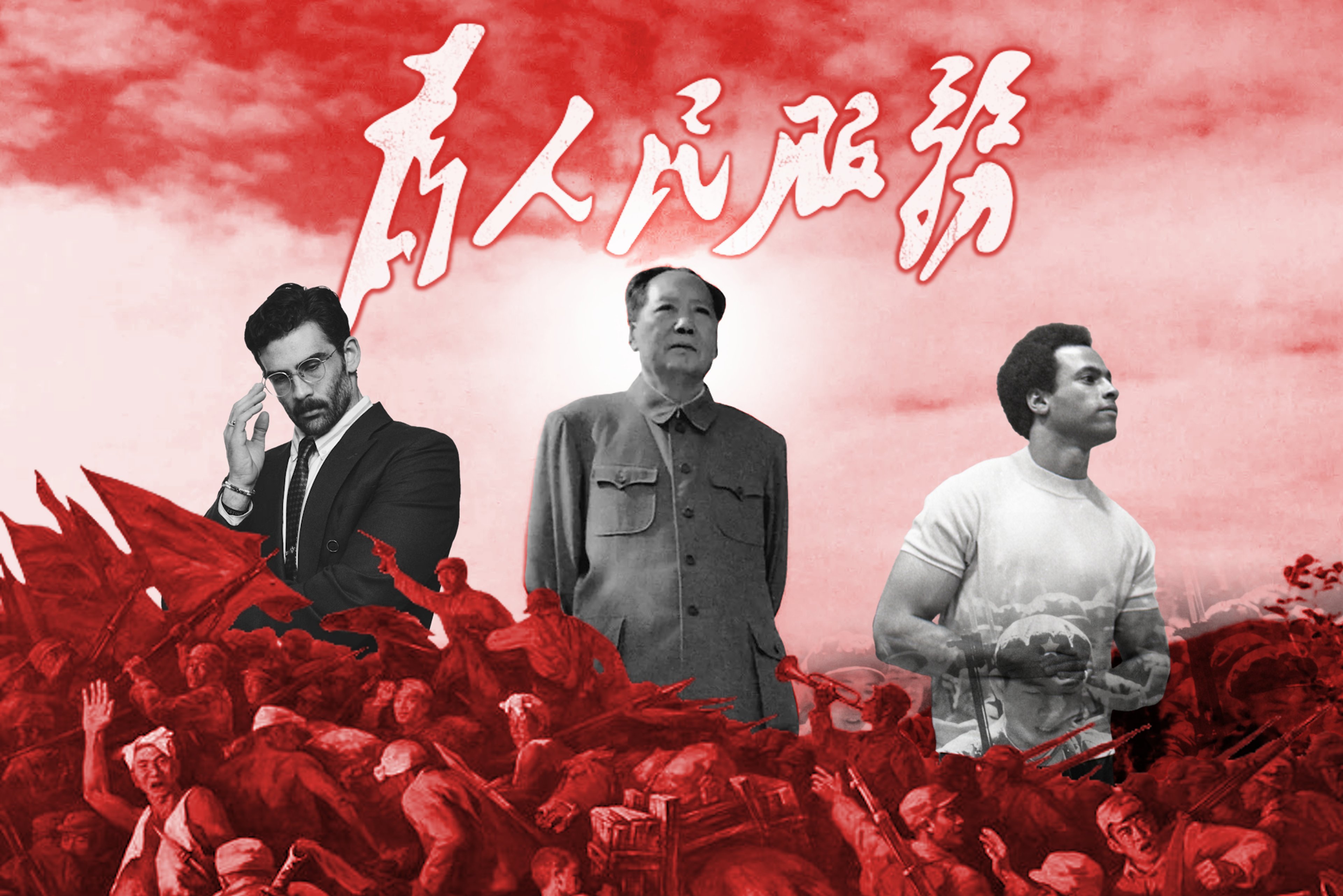
Everything under heaven is in utter chaos; the situation is excellent.
― Mao Zedong
Introduction
50 years ago today, the Marxist revolutionary, politician, and military strategist Mao Zedong passed away, marking the end of a decades-long tenureship overseeing the transformation of the trajectory of both Chinese and global politics.
When talking about Mao, one will be met with a diversity of opinions and assessments of the Chairman's legacy. Some think about The Long March, one of the most arduous, yet impressive, strategic military retreats in human history. Some think about the failures of The Great Leap Forward and the mass famine that happened in its wake. Others may think about how China reclaimed its sovereignty as a strong nation on the global stage. Many more remember how the peasantry, during the Chinese revolution, were empowered to rebel against their oppressors in what would be the largest confiscation of private property in human history. Tyrant, liberator, nationalist, internationalist, murderer, genius, dogmatist, etc., all of these are different ways one may describe the deceased chairman, and, to an extent, they are all right in their own particular way. But in this piece, I am concerned with answering one question: Why does Mao matter today?
More specifically, what is it from Mao’s thought that the modern American left can internalize and apply to their own conditions?
Maoism and Mao Zedong Thought (as officially codified in the PRC) aren't completely alien to the American left. The Black Panther Party were famously vocal supporters of the revolutionary government in China, and they would often walk around with Mao’s little red book in hand as a vital source of revolutionary wisdom. More broadly speaking, those who made up the rank and file of the New Left movement of the late 1960s were very attracted to the allure of Mao’s thought, seeing China as a more militant, radically democratic experiment than the rigidly bureaucratic Soviet Union. Even recently, famous socialist twitch streamer Hasan Piker came under immense fire from corporate news outlets over his insistence on wearing a zhongshan suit and for referring to Mao as a “great man of history”.
This is all well and good, but still doesn’t bring us much closer to answering the question: what is it that makes Mao’s thought useful today? The Panthers, The New Left, Hasan Piker, the DSA’s current-day Liberation Caucus, etc., all found it useful to emulate or study Mao despite operating in radically different conditions from the conditions in which Mao operated. Some may find the aforementioned figures and movements to be mere self-described radicals, detached from the realities of real, concretely American politics–John Lennon’s assessment of the student radicals waving posters of Mao. I hope to make a different proposal, however. The unity of Mao’s thought and the ways in which we, as American socialists, can learn from key concepts like the Mass Line, Line Struggle, or Mao’s insistence on concretization to national conditions are significant. These concepts are not merely products of a foreign, bygone struggle, but very salient for the modern American left to discuss as we continue to organize and disseminate our strategies for radical democratic revolution amidst rapidly changing political conditions.
The Mass Line
When one considers Mao’s contribution to socialist thought, the Mass Line is most often brought up as a key concept governing his strategy. The party, as the most dedicated and consistent organizers of the communist cause, have many goals in mind. But possibly the most important of the party’s goals is that of its own self-abolition–the replacement of the party with the direct self-governance of the working class. Just as a teacher only succeeds when the student no longer relies on their pedagogical intervention, the revolutionary party measures its success by the extent to which it clears the way for the people's self governance. The Mass Line as a methodological tool, defining the relationship between the party and the people, sets for itself this far-sighted goal of self-abolition. It is, in many ways, a question of pedagogy!
Furthermore, the Mass Line is a concept which necessitates that one does not treat the people as a homogenous blob. Due in no small part to the nature of capitalist development and the extensive division of labor which exists as a result, the people are not one. They do not spontaneously become a unified political subject, conscious of their historic task, by their own volition. The people must be actively organized and guided by capable and responsive leadership. Effective leadership is leadership that unites the various disparate struggles of the represented people in a common unity directed towards the achievement of some aim.. In America, we are dealing with the problems of police brutality, trans rights, immigrant rights, student protest, and the resistance to American imperialism domestically and abroad. The Mass Line leads us to understand that the construction of the revolutionary people comes out of uniting these struggles under a common political framework that solves the crisis of the day, such as Democratic Revolution..
Importantly, the mass line allows us to think of “building the party” not just as an increase in the paper membership of our organization, but rather as the construction of real infrastructure: where a class’s own organizers, theoreticians, and political strategists can be trained and continuously deployed into the realm of concrete political struggle. This question of effective leadership emphasizes that the pedagogical element of the Mass Line is not a bureaucratic, top down approach, dictating what the people ought to do. Only an egoist, detached from the realities of the class struggle in a definite conjecture, would a priori assume that their own conceptions and preconceived programs are most salient by virtue of their theoretical rigour. Instead, by explicitly positing itself as the unity of disparate struggles in a common line, the Mass Line is responsive to the concrete struggle of the proletariat.
The Mass Line demands that the party line come directly from the people, their real struggles, grievances, yearnings, energy, etc. This is more consequential than a thousand sectarian programs or theories of change that see leadership as separate and apart from the people or devalue the people’s democratic participation when making an organic program a reality. A program is only salient if it derives itself from an all-around, concrete study of real social conditions and the class as it actually exists, rather than conceiving of the class as an abstract concept imposed onto reality from outside. One may read all the critical theory in the world yet still be less radical than the average worker. Marxism gives us a set of concepts and analytical tools for the study of political economy and the driving contradictions of the capitalist mode of production, but that is quite empty knowledge if it is not given power by a mass force who embody the practice of change through their own everyday concepts and struggles.
In total, the Mass Line is the enlightenment of the unorganized, diverse masses–but only on the basis that the masses themselves enlighten the leadership who seek to win their ardent trust and support. As the DSA still struggles with economism and filters most of its demands through a deliverist lens, the Mass Line becomes more necessary than ever. Communists within the burgeoning left movement need to make a habit out of connecting the various forms of oppression – class, social, sexual, racial, etc. – as constituent parts of the capitalist mode of production, and build the broadest unity possible in tackling these interconnected systems of oppression. Building the Mass Line means organizing these different strata of the working class, systematizing their most progressive inclinations into a salient plan for action, and then returning to the people to enact and test our formulations in the field of political struggle. Through this process we learn from the people and the people learn from us. Too many organizers in DSA are scared of the people's radicalism. They feel that they need to backtrack on “woke 1”, which in reality just means backtracking from the legacy of BLM. They feel the need to rationalize every action and policy proposal within the confines of technocratic bourgeois legality, as if the test of political correctedness lies in conformity to the bourgeois order of knowledge rather than the ability to mobilize great masses of people.
Currently, proletarians across the country are increasingly defacing Flock cameras, disrupting ICE seizures, and forcibly running Neo-Fascist like Jake Lang off of the streets. The left-populist upsurge has brought many successes and will serve us well in future political confrontations against the establishment forces, but I call on the DSA leadership and organizers who are wary of the people’s growing radicalism to take the following proposition seriously: the masses can never be too radical, and they can never fail us. The real issue is whether or not we will fail them, either through technocratic tailism, which can’t properly translate the peoples spontaneous outrage into organized mass action on the political stage, or through sectarian dogmatism, which can’t help but to preach at the masses from the sidelines and lose energy in idealistic ventures disconnected from the masses, rather than taking the necessary steps to meet them where they are in the field of their immediate practical struggle.
Line Struggle
In essence, Line Struggle–the concept that two alternative viewpoints on a political question, or political ‘lines’, should actively seek direct conflict and resolution rather than being solved bureaucratically–sets its sight on building stronger unity and clarity within the ranks of the revolutionary party. In a party based on democratic participation, debate, and theoretical discussion, there are often times where a handful of lines or outlooks dominate the ranks of a party. The differing lines may create friction, factionalism, and ultimately serve to pull the party in a number of different directions. This in itself is not an immediate problem!
If we look within our specific context as a socialist movement in embryo, we see that many of us have our own ideas for bringing about a socialist transformation. Some are in the reformist camp and believe in democratizing the present system, while others want to negate the same system in its entirety. Some believe in a socialist state but not in a communist society, while others only see a socialist state as valid in as much as it is a transition to a stateless society. Any movement which breaches the realm of genuine political discourse and relevance is bound to be made up of a diverse array of outlooks. It is only in the minds of subcultural sectarians that a small group of ideologically pure activists is axiomatically superior to a mass of politically diverse organizers. To the extent that this hodgepodge of diverse outlooks becomes an impediment to swift, decisive action–we must see this as a good problem to have, one that comes with the growth of any movement.
This is where Line Struggle comes in. Line Struggle seeks to resolve the intraparty contradictions when two diametrically opposed lines come to dominate the party’s work. The two lines are encouraged to struggle through the victory of their separate outlook. It can be summed up in one simple formula: Unity-Struggle-Unity. Struggle here should be understood not as petty squabbling or bullying others that you deem to be beneath you, whether it be intellectually or practically. It is a struggle on the basis of an already established unity, with the intention of strengthening that unity. An organization that can act decisively and in unison is much more effective than one which is constantly pulling every other way and breaking off into insular factions. By beginning with the understanding of a common commitment, struggling through the different viewpoints, and arriving at a new conclusion that the different viewpoints rally around, the Line Struggle functions as a necessary resolution of contradictions which enables a party to develop stronger clarity amongst its ranks.
In many ways, Geese magazine is a good example of this concept. We have a collection of communists from across the country who bring their own ideological orientations to the project. Some are more partial to orthodox Marxism, some are hardened Marxist-Leninists, while others are more inclined to left-populism via the works of Laclau and Mouffe. Geese has published polemics between fellow contributors and encourages the platforming of multiple perspectives that may at times be diametrically opposed. This is because Geese recognizes the necessity of debate and ideological struggle within the current moment. Even if Geese has its own viewpoint, this is not a flaw, but a starting-point for generating further discussion, unity, and clarity on tasks. We do not simply claim to be right and claim that others are wrong. We claim that unity can only be strengthened through the consistent and thorough battle of our ideas. In other words, we seek to let a hundred flowers bloom, as Mao himself once said.
Such a struggle, when done right, can be a catalyst for strengthening unity and building common ground amongst an already united group, determining which courses of action will be best and which ones should be discarded. In the context of the DSA, I am of the opinion that the DSA left and right divide ought to be overcome through such struggle, so that genuine synthesis or discarding of ideas can be carried out. A genuine synthesis between political maximalism and electoral maneuvering is both possible and desirable, but it is through this mode of airing out differences and testing each other's theses against one another that this can happen. One who seeks to avoid these struggles entirely is only yielding to the creation of a handful of disparate, inward-facing sects and factions, or a mass movement held together by a false unity, where no effort towards hammering out an actionable program is possible. If you have a polemic, let it be distributed! If you have a proposition for a particular course of action, even if it may run counter to the opinions of others within your chapter, let it be heard! You are certainly doing yourself no good by avoiding the horizon of struggle–and doing the communist movement no good either.
Concretization
Unlike Line Struggle or the Mass Line, Mao’s concept of Concretization has received less attention. Mao writes:
“Although a few Party members and sympathizers have undertaken this work, it has not been done in an organized way. Many Party members are still in a fog about Chinese history, whether of the last hundred years or of ancient times. There are many Marxist-Leninist scholars who cannot open their mouths without citing ancient Greece; but as for their own ancestors--sorry, they have been forgotten. There is no climate of serious study either of current conditions or of past history.” - Mao Zedong (Reform Our Study, 1941).
Replace “Chinese history” with “American history” and you have a nearly perfect description of the subcultural American left today. Throughout the course of the Chinese revolution, Mao waged an unwavering war against the pervasiveness of ideological dogmatism which reigned supreme amongst his contemporaries. They failed to treat Marxism in a creative manner, as a tool for making social revolution in China. Instead, they filled their heads with cheap, abstract truths, memorized and transported from their training in France or the Soviet Union. Many of them knew their Marx, Engels, and Lenin, but they erred in their praxis because they fundamentally could not grasp that the goal of Marxism is that of concretization, not imposing the doctrinaries of what Lenin described as “‘systematisers’ in the seclusion of their studies.” (Guerilla Warfare 1906).
Mao had a keen understanding of his unique historical circumstances and was able to outline the development of the class struggle as it had been historically determined in China. His flexibility and creative spirit allowed him to grasp and exploit objective ruptures in China from the subjective position of a revolutionary Marxist. Understanding the nature of exploitation among the peasantry, the role of the comprador bourgeoisie, the varying political outlooks among the national bourgeoisie, the proletariat as a still burgeoning class, etc., Mao identified the peasantry in unity with the working class, rather than the industrial proletariat alone, as the motor of change in China’s specific circumstances.
The audacity of Mao was to look at widely accepted dogmas, disseminated by the Soviet faction of the party, and question their validity in measure with the actual concrete realities of Chinese politics and economic development. Unfortunately, many of us in America have not properly internalized these same lessons, and still cling to abstract concepts and book knowledge as the sole arbiters of truth. We speak about the proletariat as described in the abstract-scientific works of Karl Marx, but little work is done to actually understand the unique development of the American working class in the modern day: the prevalence of racialized labor markets, the expansive labor aristocracy, the integration of labor into the administrative state that started with The New Deal policies, deindustrialization and the rise of the gig economy, etc. Furthermore, many of us rightfully find much joy in the works of the classics of Marxism, but we don't care to study our own American history and radical traditions.
Not enough have given thought to expanding their knowledge on the history of the specific political developments in America that have led us to our current moment. Thinkers like W.E.B Du Bois, Malcolm X, and Henry Winston, amongst others, are forgotten. We don't do enough to study the abolitionist movement – arguably the most influential and radical social force in American history. The more we understand such pivotal movements and political trends within our country’s history – the social forces they unleashed, where they failed, and what we can learn from them – the better equipped we can be to understand our own relation to past struggles, the present moment, and the world we ultimately want to construct.
All great Marxists have understood this. The goal is not to transport Mao to America, but to understand what it is that made Mao a creative revolutionary, and how we can emulate that through our own agency to meet the moment. We either concretize Marxist theory to our unique circumstances, or we relegate ourselves to being merely a small group of intellectual activists, perpetually doomed to tail the most significant political developments of our day.
So, what does Mao mean to us today? If he is a symbol of dogmatism or fidelity to a theoretical system–he is nothing. If, however, we accept his theory holistically, and understand his contributions as primarily towards revolutionary science–how to make Marxism a living force in the United States today–we will find that he is a fountain of insight.
Sources used/further reading
https://www.marxists.org/reference/archive/mao/selected-works/volume-3/mswv3_02.htm
https://www.liberationcaucus.org/on-two-line-struggle-and-its-b/
https://www.marxists.org/archive/lenin/works/1906/gw/
https://www.bing.com/search?q=geese%20class%20in%20politics&FORM=INTAN14&PC=INES14&PTAG=511137&a=0