
Oct 23, 2026
Socialists in Congress Should Hold the Speakership Hostage
Policy gains are unlikely so long as Trump holds the presidency — but a historically large socialist bloc in Congress could demand changes to how the House is run that would shape the body’s post-Trump trajectory.
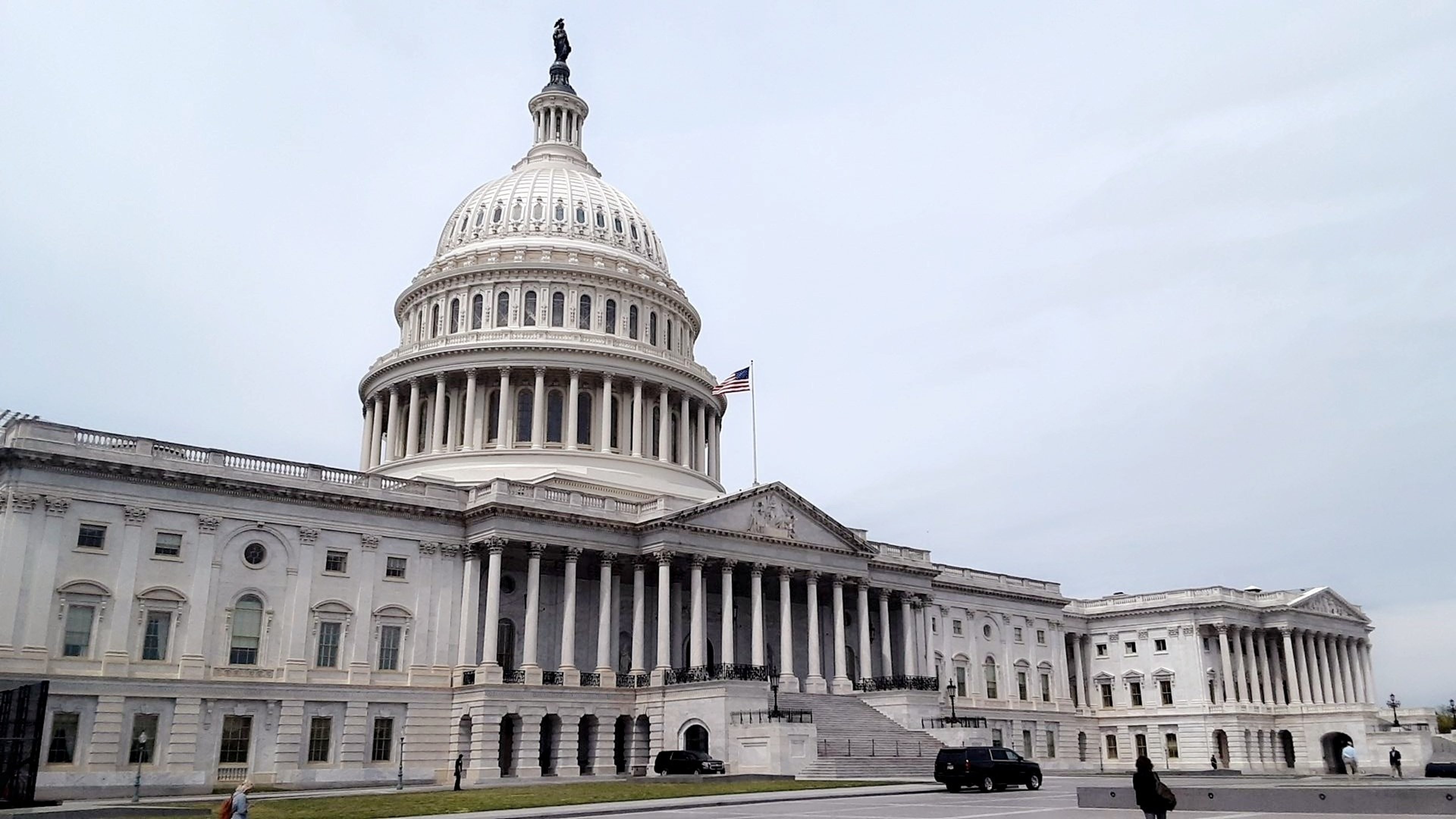
The U.S. Capitol Building, seen from outside. Photo by Jessica Rodriguez Rivas.

This article was originally published in Democratic Left.
After a historic year of victories for Democratic Socialists of America, more card-carrying socialists are set to take their seats in the House of Representatives next January than in any previous Congress in this country’s history. This socialist surge strikes a stunning contrast with the right-wing onslaught the second Trump administration has unleashed on working people everywhere in its first two years in office. DSA has caught lightning in a bottle. The question, now, is what to do with it.
Upstaged by a resurgent left and listless in the face of a frenzied right, the legitimacy of the Democratic Party’s centrist leadership is in real jeopardy. Even if the Democrats win control of both chambers of Congress in November, whether Hakeem Jeffries and Chuck Schumer remain at the helm of the party’s legislative caucus will be an open question. As a new bench of DSA members enters the House chambers in January, all eyes will be on the speaker election, where the body’s 435 representatives must vote to elect the next Speaker of the House before any Congressional business may be conducted. In normal times, the speaker is elected in a party-line vote on the first day of the session, with disputes settled behind closed doors and rare dissenting votes lodged quietly. These are not normal times.
DSA’s federal socialists in office should seize the moment and contest Hakeem Jeffries’ bid for Speaker. If the Democratic majority in the House is slim — which, thanks to the Supreme Court-endorsed gerrymandering arms race, is entirely plausible even with a popular vote landslide — then a small group of dedicated representatives could exert immense leverage by withholding their votes, forcing Democratic leadership to come to the bargaining table with representatives of a new politics. It might seem logical to make that stand on a popular policy plank like Medicare For All. Instead, a socialist challenge to Jeffries should demand changes to the House rules to improve their ability to use Congress as a platform to make the case for democratic socialism to the whole nation.
The two essential demands should be a low discharge threshold and a low threshold to vacate the chair. By making it easier for discharge petitions to succeed, democratic socialists will be able to force their preferred legislation onto the floor for a vote at nearly any time they please. Each vote taken on our terms is then one in which working people are clearly informed as to who their friends are, and as to who their enemies are. By making it easier to “vacate the chair,” to remove the speaker and call for new elections, we ensure that any effort by leadership to cross our red lines is one which shuts the House down indefinitely. Together these rules ensure that even if we cannot always have the policies and leadership we want, we can have the best terrain on which to organize the working class even when in the minority.
Demand a Democratic People’s House
This tactic is not without precedent. When Republicans narrowly retook the House in 2022, the insurgent far right of the party used the new terrain to challenge party leadership. By blocking caucus leader Kevin McCarthy’s bid for speaker, a band of MAGA hardliners — whose core membership was similar in size to the bloc DSA will send to the House this year — was able to keep Congress paralyzed for four days in a showdown that captured national headlines. The concessions they extracted shaped how the GOP would operate as an opposition party. Their hardline obstructionism for the remainder of the Biden administration helped propel Trump back to the White House.
Socialists could learn something from our ideological opposites. If we want a real opposition party, we need to build it ourselves by publicly holding Democrats’ feet to the fire and distinguishing democratic socialists as the leaders of the resistance. And if we want the left to have a hand in shaping the settlement of a post-Trump America, now is the time to start flexing our power. Now is not the time to shy away from high-stakes fights.

Claire Valdez speaks at a rally in New York City.
It might seem unusual to stage a confrontation as politically risky as holding Congress hostage over an “inside baseball” issue like the minutiae of the House rules package. But regardless of who controls Congress in 2027, shutting down the House for any of the popular policy demands that got our candidates elected would be a waste of time. Donald Trump will still be President, and he will veto anything concrete a socialist bloc can wrest from Democratic leaders even if it somehow passes the Senate.
As long as Trump is in power, the frank reality is that there will be no meaningful improvements in government policy. Any policy concessions from Democratic leadership — Medicare For All, Housing For All, Unions For All, an arms embargo on Israel, et cetera — would be a worthless “IOU” until the next time Democrats have a governing trifecta. But we have no reason to take Democrats like Hakeem Jeffries at their word after years of organizing against the socialist movement. Even if the party center were trustworthy, congressional Democrats will not be setting the agenda in 2029, the new president will. For the incoming Congress, DSA’s emerging bloc of legislators needs to think seriously about how to wage consequential political fights that rely on the power of the House of Representatives alone.
U.S. Rep. Chip Roy, R-Texas, far-right architect of the 2023 speaker fight, was in some sense a visionary. By holding fast to the demand for a mechanism to eject the speaker and trigger new elections at any time during the session, Roy’s Freedom Caucus won a way to force Republican leadership to maintain their majority throughout the term by making concessions to the hardliners’ politics. When they crossed the insurgents’ red lines in budget negotiations with the Democrats later that year, the Freedom Caucus paralyzed the chamber again, ultimately forcing the party to replace McCarthy with the hard-right Mike Johnson.
If the Democrats win control of Congress, a powerful faction of the party will be determined to collaborate with Trump’s agenda by funding and empowering Immigration and Customs Enforcement (ICE), arming Israel, and organizing anti-socialist witch hunts. Let them do so — with Republican votes. Do-nothing Democrats may not know how to draw a red line, but democratic socialists must. Voters chose to send DSA candidates to office because they believed in their promise to fight for civil rights and workers’ rights. Meekly assenting to Jeffries’ style of leadership without securing the means to force the issue of resistance or collaboration would be breaking that promise.
But socialists in Congress could do more with a rules change than just defend against Democrats’ worst impulses. When it comes time for the annual appropriations showdown, working-class voters deserve to know that there is an alternative to haggling with Trump over shades of austerity. A lower threshold to bring legislation to the floor of the House would let a socialist bloc force Congress to debate defunding ICE, ending aid to Israel, and shutting down the war machine instead.
It would also set a precedent by reducing the barriers that prevent popular ideas like universal healthcare from getting an honest hearing, preparing the ground for DSA to go on the offensive in future Congresses where constructive reform is possible. But if that’s the case, wouldn’t such a rules change suffer the same fate as a policy “IOU,” with centrist Democrats conspiring to discard it at the earliest opportunity?
Yes, certainly — and the hardliners who challenged McCarthy in 2023 foresaw their own party leaders doing the same with the concessions they won. After the speaker elections of 2023, they sought to defend their gains by securing seats for their allies on key House committees so they would be better positioned to cut backroom deals with Kevin McCarthy’s faction. But a strategy like that just won’t cut it for DSA. Oligarchs and their sycophants work well in the shadows, but socialists aren’t afraid of the public eye. For us, the best defense against conniving party leaders is an open-ended threat to shut down the House with a new round of speaker elections, paired with clear, honest, and consistent messaging aimed at the people Congress usually leaves in the dark.
Stop Horse-Trading, Start Agitating
To get ordinary people invested in a fight over the contents of the House rules package, socialists must make a point of linking procedural demands with an agenda that would utilize the limited powers of the House of Representatives to put up a real fight for working people. Otherwise-opaque “process demands” can become popular rallying cries when the stakes are brought into sharp relief. Ending the Senate filibuster became a broadly and deeply felt demand when two senators used it to kill the progressive parts of Joe Biden’s agenda in 2021-2022, as did abolishing the Electoral College when it delivered Trump to the White House in 2016.
But what can the House do on its own? Jealously guarding state power from the masses, the elite authors of the Constitution gave the more representative lower chamber very little power to act without the consent of the aristocratic Senate or the imperial Presidency. The two areas where the House does have power in its own right are impeachment and the power of the purse. A socialist delegation fighting for an amended rules package with which to better challenge Democratic leadership could draw out the political stakes of the contest by calling attention to these two tools.
“Any acceptable candidate for Speaker,” the message would go, “must agree to impeach Trump for his murderous immigration policy and brazen wars of conquest, and to prevent another dime from being spent on wars or ICE. The House democratic socialists will not yield to any candidate without a pledge to that effect and changes to the chamber’s rules to make it enforceable.”
Members of the House placing a name in nomination for speaker customarily give long nominating speeches. DSA’s socialists in office could use theirs to address the people at large, justifying their disruptive tactics, indicting enemies on both sides of the aisle, presenting a socialist vision of government, and calling on regular people outside the chamber walls to take collective action with DSA.
Though we have Chip Roy and the Freedom Caucus to thank for reintroducing this particular tactic in the twenty-first century, it does not belong to the right. In the leadup to the Civil War, opponents of slavery in Congress used a very similar playbook. The socialist left must reclaim that militant heritage to turn the tide of reaction and put transformative politics on the table. Comrades heading for Capitol Hill next year, take heed: it’s time to stop horse-trading and start agitating.