
Aug 2
The Soldier is the School Shooter
A man enters a school with a gun. A man drops a bomb on an elementary school in Iran. What happens when the values of our nation's heroes and our nation's worst dregs are the same?
by John Henry
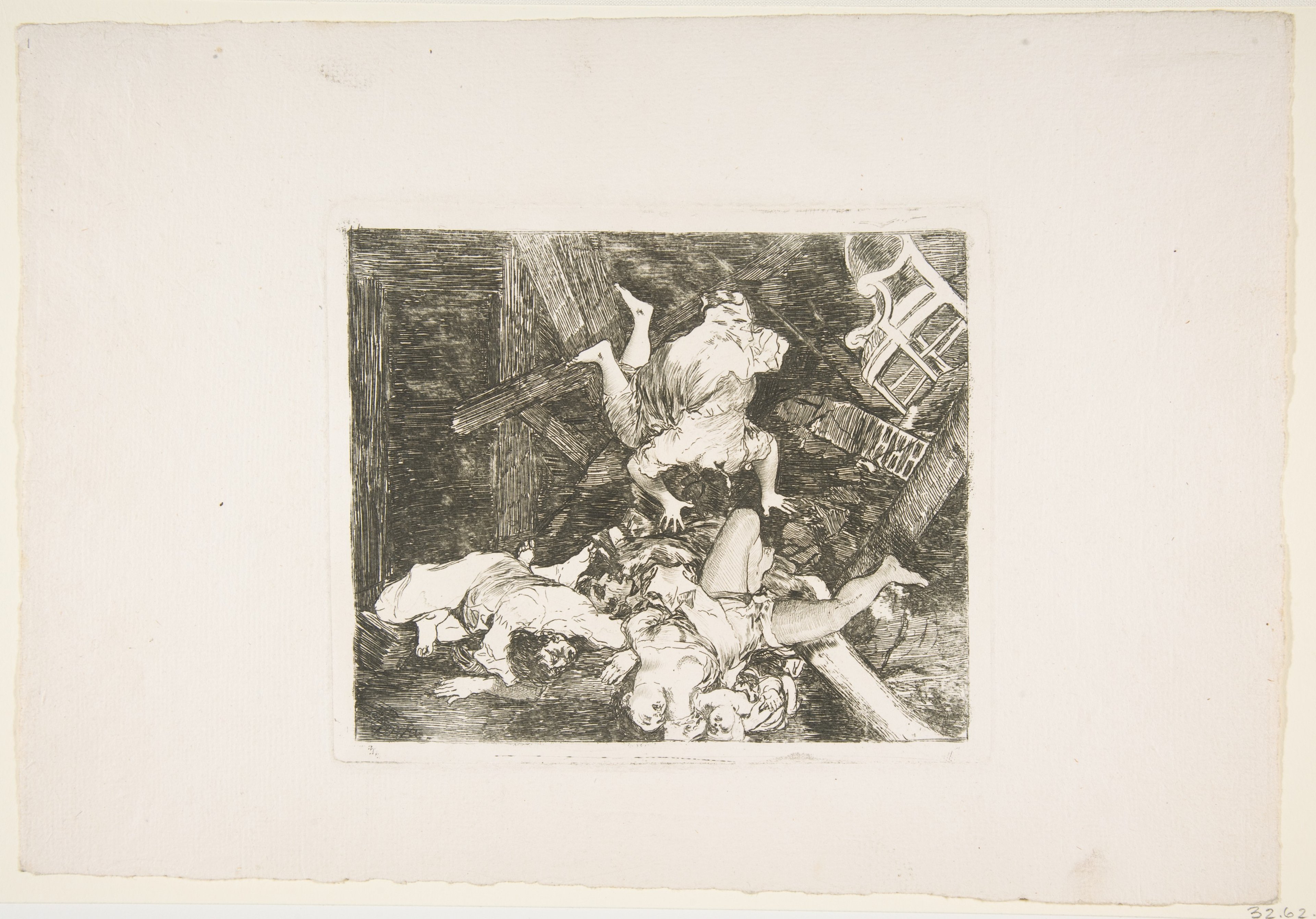
Plate 30 from "The Disasters of War" (Los Desastres de la Guerra): 'Ravages of War' (Estragos de la guerra) by Francisco Goya (1810)
This article is a syndication.
CW: Contains description of graphic violence.
Honor. It's a nebulous term. It's meant many things to many people throughout the ages, but right now, it's a core value of the U.S. Armed Forces. It's instilled into you, along with values like loyalty, selfless service, courage, sacrifice.
On February 28, 2026, a bomb was dropped by the U.S. Air Force. The U.S. Air Force dropped many bombs, but this bomb had a specific target in mind. That target was an all-girls elementary school in Iran. The official reasoning has shifted considerably, and it continues to shift. Some will say that it was an AI targeting mistake and that they intentionally meant to hit that location, but the data on the location was bad. Others will say that it was a human error, that the AI fed the intelligence officers bad information, that there was a satellite radar dish type of facility not far from the elementary school's location.
Neither of these excuses draw attention to the reality of the strike. For the last four months, five months, it was supposed to be a two-week expedition. Now it's coming to a close, or we're told to believe. For the last four months, our Department of War Secretary insisted over and over and over again that we do not follow the rules of engagement. That we will not be held back, that we will not waste our time with the politically correct way to wage war, as our opponents might phrase it. For the last four or five months, Pete Hegseth has gotten on the podium and declared total war on the Iranian people, on the Iranian state, on the Iranian army. No mercy. We will send you back to the Stone Age. These values of courage and honor and selfless sacrifice, selfless service, sit at the backdrop of the action. The men and women who were taught from boot camp and maybe even from birth, giving much credence to the propaganda machine of America and its imperialism, were drilled with these values, drilled with the concept of honor. That's why they call them drill sergeants. They drill these values into your body and remake you into the vision of what those values represent, a member of the U.S. Armed Forces, a soldier, an airman, a Navy man, a Marine.
And yet, there is no honor to be found in the excuses, and there is no courage to be found in the action.
Why might a school shooter shoot up a school? To cause terror. To feel supremely powerful. To feel the power and the ability to take a life. To deny someone the act of living is the ultimate power. They do it to cause terror. To shift the lives of those who survive forevermore. To change the nature of their hometown. To be remembered as a great terror. A great evil. It gives them power to know that you will remember them as such. Yes, they are dead. Self-inflicted gunshot wound to the head after the police stormed the classroom. 34 students dead. Two teachers, a PE coach, and the principal too. Just another Saturday in America-land. The type of thing that's become so common that it fades from the news in a day or two. People read the shooter's manifesto, we give our thoughts and prayers, and fail to sit with the fundmental rot of American capitalist society. Rinse and repeat. The kids that walked out of school in solidarity with Parkland now send their own children to the killing fields.
We know the phenotype of the school shooter well. We have moved far beyond the fictitious trope of the school shooter as the bully victim, and we have embraced the reality of what they are. Deeply disturbed people. People who seek terror for the gain of infamy. People who seek terror to leave their mark on a nihilistic world. One doesn't have to think long and one doesn't have to think hard about the values of courage and honor and selfless service and how they relate to a school shooter. They do not. There's no honor in that person, in that action, in that reality, in those ideologies, in that belief set. There is no courage in murdering children with weapons. There is nothing selfless about taking the life of a kindergartner.
The American people are intimately familiar with the realities of the school shooter. It's a homegrown phenomenon. It's a core part of American culture. Between all the thoughts and prayers, we've forgotten that there is nothing natural about the massacre of children.
And yet, if you shift the narrative just a bit, if you provide a few excuses to the public, if you can rhetoric your way out of it, then it becomes a no-brainer to apply the values of honor and courage and selfless service to the airmen that dropped a bomb and killed nearly 200 Iranian schoolgirls. And that's something the American people have to sit with. We'll never sit with it. I don't think any amount of the increase in gas prices could force them to sit with that. Imagine enlisting in an organization that you've only heard of through pop culture and high school recruiters. You grew up on a steady diet of Call of Duty, World of Tanks, and Battlefield. You're intimately familiar with the loadouts of all the special operations divisions in the armed forces. You're intimately familiar with the weapons, with the gear, with the inventory. But have you taken inventory of the reality of the action? If someone asked you to help a school shooter secure ammunition, to help a school shooter secure a weapon, to help a school shooter plan a list of targets, you wouldn't do it. You would know, fundamentally, that it's wrong, immoral, nihilistic, anti-human. And yet, when offered the same role in the United States Armed Forces, so many will answer the call. Decades of propaganda, a decaying world that offers nothing, a society built on "fuck you, got mine" and the inability to sit with the dead kids that we've created.
Let's get to the real reason why they ordered an elementary school in Iran to be bombed at the very beginning of the Iran-American war. Why did America bomb this school? What was the real strategic reason? The real reason was to commit an act of terror intended to demoralize the enemy. It is a message to the world: Resist the capitalists of Wall Street, and your children will be annihilated. It is a message of terror: If we show the enemy we are willing to murder their children, then surely their resolve will be broken. Let's be honest with ourselves, the AI bit is a shield. It's an excuse. It's a mask. It's an illusion that enables the narrative to shift from "we murdered children" to "is AI reliable for our military?". "We don't know what really happened because they were using an AI system." Whose AI system? What algorithm was it? We'll never know. But it's just enough shield to make you forget the reality of the lives taken. The discussion shifts from the material brutality of murdering 168 school children, to the debate around AI. The reality that there were two pilots that flew that plane, dropped that bomb, the reality that there were a squad of people who loaded the bomb, a reality that there were dozens of supporting troops, mechanics, inspectors, hell, even the guy waving the cones on the runway. And all of these people worked in synchronicity to do what a school shooter does, to inflict terror by massacring children.
Terror. That's the real reason we did it, and it sounds vulgar. It feels wrong to say, to acknowledge. That's why you can't sit with it, because it goes against so many fundamentally taught things about this country and its people. How unfortunate it is that they do not teach our legacy of torture in the same schools the recruiter recruits from.
You might have joined the National Guard right out of 18, right out of high school, with the same recruiter that spoke to you in your junior year and your senior year. And you might join because, hey, there's a lot of natural disasters in your state, whether it's forest fires or floods, and they need people. And next thing you know, you find yourself overseas in Kuwait on detail for an airfield, playing your part, making sure that that bomb makes it to that school to kill those kids, to tell the Iranian people that Americans will not take quarter, that we will not follow the rules of engagement, and that we will send you back to the Stone Age. We dropped that bomb, not out of tactical error, but out of tactical complicity, with the hope that the death of those children would scar the people of Iran, that, even if we lost the war, the families shattered, communities broken, will leave a lasting image of terror and a remembrance as to what America really is, an imperialist backwater country that takes great joy in terrorizing children abroad for profit. Someone made that bomb and made a lot of money off it. Our motivations for dropping that bomb on that school, for loading that plane up, for paying those pilots, for recruiting all of those people into the Air Force, all of it was not done out of honor or courage or selfless sacrifice or the desire to serve the people. It was done in the name of profit, in the name of terror, in the name of shattering a people and leaving a permanent mark.
Let's stay inside that schoolroom for a moment, because you cannot imagine it and you must. 168 children. 168 pregnancies carried to term, every one of them a body that swelled and ached and stretched a mother's skin, every one of them a birth that tore through a woman in blood and screaming and then, if she was lucky, in a cry that meant a new set of lungs had opened. 168 parents who looked down at a small, crumpled face and thought they had been handed a miracle. A third-grade teacher was at the board, chalk in hand, mid-sentence, mid-thought, a mind full of nothing but the lesson, and then the roof came apart. The thermobarbaric bomb explodes instantly, turning the air itself into shrapnel. The overpressure from a 2,000-pound munition disassembles everything around it into one thousand pieces that become piecing bullets. It takes a room of breathing, giggling, fidgeting little girls and rearranges their bodies into a view that no parent's mind can survive seeing.
A six-year-old, seated criss-cross-apple-sauce on a mat, learning basic animals, clapping to the nursery rhymes the teacher bellows, is transformed in an instant by the blast wave.
The body lies fragmented into pieces—pieces a teacher must collect. Not the one who sang with her; that teacher was killed by America's bomb too. But this teacher, this medic, this person, must gather them, matching limb to limb, forcing herself not to recognize a familiar face on something severed from its torso. Some of the girls did not die instantly. They lay conscious in the rubble, watching their friends bleed out, feeling their own missing parts. Their bodies, still in shock, had not yet let the full pain register as they called out for mothers who would never come in time. The air filled with dust and iron and the specific, sweet, terrible smell that those who have seen a mass casualty event will never forget. When the smoke cleared enough for the survivors to begin the work, you had a teacher on her knees, her own clothes soaked in the blood of her students, picking up individual body parts and laying them in rows, trying to piece back together a pile of corpses created by the United States military.
That is what a precision-guided bomb delivers. That is the product. That is what was paid for, manufactured, shipped, loaded, and released. And someone, somewhere, logged a profit in a quarterly report.
What about the ones who did the loading? The aircraft mechanic who enlisted at seventeen, just looking for a way out of a nowhere town, who spent six years of his life repairing death machines, telling himself it was just a job, just metal, just hydraulics. He never saw a dead child. But one day he reads the report, or he hears the numbers, and he does the math on the dates and the squadron, and he realizes that the weapons system he kept in working order was the very one that turned that school into a crime scene. No one pins a medal on him for that knowledge. No one even looks him in the eye. He finishes his contract, comes home to a society that offers him nothing—no job that makes sense, no community that wants to hear what he knows, no ritual to wash off the stain.
So the guilt gets individualized. The machine was collective, the command was collective, the profit was collected by a board of directors and a class of shareholders, but the moral weight finds nowhere else to settle except inside the chest of that mechanic. And he sits with it until he can't. He sits with the image of a little girl's family, struggling to pick up the pieces, struggling to cope with the reality of an eviscerated toddler's body, struggling to cope with the reality that the pieces might not even be their daughter's. He did not see the carnage but now he cannot stop seeing the reality. And one night, alone in an apartment, drunk off the Jack Daniels, he realizes that he was not a "defender of freedom"; he was a mercenary for the capitalist, for wallstreet, for BlackRock and Haliburton. He puts a gun in his mouth, pulls the trigger, blowing his brains out, grey matter spread across the bathroom ceiling. So then his family loses a son, a father. A mother who once told him the military would be his ticket out of poverty gets a folded flag and a story about a tragic accident. He suffered a spiritual death long before he was killed, because he was made into an instrument of killing innocent people for the profit of men who will never know his name and will never care. What a juxtaposition. A bomb tearing through an elementary school. A teacher teaching as it happens. And then, boom. 168 families changed, 168 miracles lost, 168 children killed in an explosive flash of profit.
We dropped that bomb. We killed those kids. Children that were born, now dead. Children that were wanted, now dead. Children that were loved, now dead. The bombs we drop, are no different than the Uvalde's we witness.
And we are allowed to know this and nothing shifts. Some might say they want us to know, to desensitize us to reality, to have us embrace the murder of these children as patriotic duty. The boomers knew about the massacres of Vietnam—My Lai, the napalm, the gang rapes, some of those raped by US forces as young as 12, as young as the little girls that might be found in the 5th grade wing of the elementary school we bombed—My Lai, over 500 innocent civilians killed, over 500 war trophies for the US Army—and you and I still grew up playing Call of Duty, a franchise funded by the Department of War. Because it's profitable. The shadow of a endless war and a two hundred thousand civilians killed in Iraq, the shadow of hundred thousand veteran suicides be damned, killing is the business, and business is good. That's the logic that keeps the engine of America running: if it's profitable, it will continue. And maybe that's the real sickness of our society, the assumption that a world where the only thing that matters is profit is some natural, God-given reality, a law of physics rather than a choice we keep making with every budget, every contract, every recruiter's visit to a high school in a dying town.
We all have the ability to choose, but our choices are narrowed by capital. We see what a narrowed world like that actually looks like. It looks like bombing children. It looks like shrapnel ripping through a six-year-old girl's body, killing her instantly as her bleeding out friends are covered in blood and dust. It looks like child amputation without anesthetic, performed under rubble. It looks like a crater where a classroom used to be, where mothers in Iran will cry as they bury pieces of their daughters while a Pentagon spokesman reads a statement about a regrettable technical error. It looks like a gambling ad played right after the footage of it all.
At least with Vietnam, you had the excuse, worn out but an excuse nonetheless, of the draft. "I was drafted. I didn't choose this." Even if we entertain that logic for a moment, it evaporates the second you look at the modern force. The U.S. military today is volunteer-based, and one of the reasons it's able to run on a volunteer basis is because they spend billions of dollars on propaganda to manufacture consent from childhood. From gaming streamers to NASCAR sponsorships. From pull up bars at your local anime convention to jets screaming over the local high school's homecoming football game. Funding for movies, including the ones that pretend to be critical, the ones that let you feel like you're asking hard questions while still bathing the screen in the aesthetics of power. Funding for Call of Duty, because war is profitable, and they're going to want to keep making that money.
If imperialism is the final stage of capitalism, then necro-politics is its final transformation. Who lives, who dies, and the power to decide it, that's where the real profit lies. It's not profitable for the American people who have to watch their children get recruited to be killing machines. It's not profitable for the mother in West Virginia who insisted her son join the armed forces, hoping it would give him a better life, a better way to escape the poverty and the opioid-ridden hollowing-out of his hometown, only to find out, years later, that her son helped load that bomb that killed those children, and that he hasn't spoken a full sentence since he came home, and that the light in his eyes went out somewhere over the Persian Gulf and isn't coming back. She wanted a future for him. The empire gave him a past that will swallow his future whole. Imperialism is the name of the game, the name of the future-eating eldritch horror that really is the final stage of capital.
Why do we, the Americans, the aggressor, the imperialists, the people constantly bombing children in the name of "stopping terror", need the metaphor of the school shooter to understand the violence we inflict on others? Why must we translate the deaths of Iranian schoolgirls into the domestic horror of a Columbine or a Sandy Hook before the feeling can reach us? Is it because we have so thoroughly moralized the school shooter as the ultimate monster that we can only grasp our own violence by shrinking it down to the size of an individual pathology? Can we not bear the reality that our entire society has been built to kill children for the profit of a few?
What would our world look like if we would sit with the reality that the soldier is the school shooter?
To sit with the reality of what our military has done in this war is to sit with the reality of what our military has done in every war, whether that's the Phillipines, Nicaragua, or Iraq. 168 schoolgirls killed by American bombs. We're a nation with school shooters exporting death to enrich an ever smaller group of people who see us as cattle. What would change about our nation and our society and our spirit if we viewed the soldier the same way we view the school shooter? And what does it do to a country to know it cannot bear to answer that question, because the answer would demand a kind of honesty that would unravel everything? If the school shooter is the ultimate evil, and the soldier the ultimate good, what does it say about our society if they are functionally, materially the same?
I served in all commissioned ranks from Second Lieutenant to Major-General. And during that period, I spent most of my time being a high class muscle-man for Big Business, for Wall Street and for the Bankers. In short, I was a racketeer, a gangster for capitalism.—Smedley Butler