
Jun 3, 2026
These Boots Were Made for Boosting: A Communist Review of I Love Boosters
Boots Riley’s latest movie is a masterpiece that weaves together themes of worker solidarity with a fresh take on many classic tropes. But it is, at the same time, a document of the capitalist realism that produced it.
by D. Everett
Warning: This review contains spoilers for Boots Riley’s I Love Boosters.
I. Introduction
I love boosters. Or, really, I understand them. They were a mainstay at the Banana Republic I used to work at in Brooklyn. Once a week or so, I would clock in for a shift and, on the way to drop off my stuff, I’d see the cops taking statements and an inventory of stolen goods from the front of the store. Sometimes, when we got boosted while I was working the front, I’d have to go down and make a statement myself. Those statements were always: “No, I didn't get a good look at them” and "No, I didn't see what they took”.
I wasn’t considered the most observant employee of that particular Banana Republic Factory Store.
The worst thing a booster ever did to me was only ever slightly inconvenient: my manager realized the brand-new, expensive blue jeans probably shouldn’t be stuck right next to the front door and made me pack them up and cart them to the second floor. Why should I be concerned if my billion-dollar corporate employer lost a few items? We had dozens more in the basement. In reality, I knew I was more likely to end up a booster myself with a couple of bad turns of fate before I’d ever see any material loss in my life from a couple of pieces of clothes being stolen. No child tells their parents, “I wanna be a booster when I grow up”. Boosting is an act of necessity. If life were all sunshine and rainbows, there wouldn't be any boosters. So I always chose to follow the golden rule…
Boots Riley’s filmography is a long lesson in the golden rule. Shit sucks for people, and, when shit sucks, people have to do shitty things. They rob, they steal, they become baristas at Starbucks. So we should empathize with them. We should treat them as we would want to be treated if we were in their shoes.
In their Boots.
Better yet, we should all come together in solidarity. Telemarketers, sweatshop workers, fast food fry cooks, boosters, equine-human hybrids, even Starbucks baristas should all join hands and stand up against the ones actually making shit suck, the capitalists.
“Well, yeah, duh, D. Everett. We’re all leftists here. We wouldn’t be leftists if we didn’t already know all that”, is what I’m imagining you, reader, saying as you read this review. It's what I said to myself the other day, watching the final act of I Love Boosters unfold in a theater I’d hoped would be a bit more full. But, none-too-surprisingly, in what I expect was, ironically, a cruel trick of capitalism, Boots Riley’s absurdist, anti-capitalist, black comedy opened this weekend against Disney’s latest IP-slop fest, The Mandalorian and Grogu.
To what degree we are all leftists, I can’t say, but I will assume there’s a pretty even distribution of you reading this who would call this film either a funny, poignant, accessible entry point to basic leftist ideas or a petit-bourgeois-KKKolonialist-lumpen romanticist-KKKapitalist funded-wrecker movie made for libbed up suburban wine moms who feel revolutionary just glimpsing a Black person on a screen.
I’d put myself rather solidly in the middle of this distribution, maybe a bit further towards the former, but only because, as you can read, my Maoist standard English isn't as good as the latter. Boots Riley has made a lot of very funny, very absurd, very well-acted and directed pieces of anti-capitalist art that are great entry points to communist ideas without being explicitly communist. He hasn't gone far enough, though. In as polarized a time as we live in, where fascists and socialists alike are being elected to the highest seats of power in this country, I think the average moviegoer can handle a bit more communism in their communist movies.
This review will start with an assessment of I Love Boosters on its merits as a film. I will look at the story, the themes, the production design, that one scene with Lakeith Stanfield that really freaked my mom out, everything the movie does right, and everything it does wrong. But I will also take a look at the filmmaker, Mr. Boots Riley himself: his background in communist organizations, his music, and his revolutionary, grassroots youth organizing. I will look at how this background led him to where he is today and to the creation of this filmography: Sorry to Bother You, I’m a Virgo, and I Love Boosters. I will look at his projects as a whole work of art and examine a couple of places where I believe it falls short. Mind you, I would never tell another artist how he should make his art, but I will definitely tell another communist how he should do his communism.
II. Absurdism With a Purpose
The boilerplate method of filmmaking, when it comes to stories about poverty, class, and social inequity or labor politics, is gritty, dark realism. Dirty, unwashed masses, people living in squalor, the victims of an affluent upper class, downtrodden by the economic realities that living under capitalism necessitates. This is a tried-and-true model for delivering heart-wrenching stories of perseverance in the face of hopelessness, not to mention winning a bunch of Oscars. Everyone loves to root for an underdog. We look at these films and think: thank god we have it so great. Films like The Florida Project, City of God, The Bicycle Thief, or The Battle of Algiers are all great examples that come to mind that fit this model.
These are all great movies. And they are all movies that need this style of realism to achieve their greatness. But there is more than one way to pluck a goose. One of Boots Riley’s greatest strengths, and the main reason his work is so compelling, is the way he upends this model to tell a different kind of story about poverty and class and social inequity and labor politics.
Absurdism is a delicate art, and it requires a steady hand and clear intentions to be executed well. There is a fine line to be drawn between absurdism that holds a mirror to the wild realities of everyday life, and absurdism that is merely farcical drivel meant to shock a reaction out of an audience. It is the difference between a hotel that transforms single people into animals if they don’t find love within 45 days, like in The Lobster, and going on a date with Hugh Jackman, who happens to have a pair of testicles dangling from his chin like Movie 43. Absurdism must have a purpose, and Boots Riley easily falls into a pantheon of artists like David Lynch, the Coen Brothers, and Yorgos Lanthimos (to name a few), who are most purposeful with their use of absurdism in their films.
The absurdism of I Love Boosters is a direct indictment of the strangeness of capitalism. Corvette’s boulder of bills, debts, and anxieties, $100,000 suits worn by a (literally) skinless propaganda think tank, Lakeith Stanfield’s cunnilingus demon, the dialectical materialism machines, all these concepts can be stripped down to mundane facets of everyday capitalism. Riley’s storytelling builds out an overarching tale of the evils of capitalism in a way that is much more consumable than what the thousands of pages of communist theory and hundreds of hours of video essays are typically capable of. Riley has condensed a thousand DSA reading groups into a group of “low-class, urban bitches”, packed all three volumes of Capital into Demi Moore’s Leaning Tower of Consumption, and sifted through the interminable maze of Hegel’s Phenomenology of the Spirit to build a macguffin that shoots people with a dialectical materialism ray.
III. Problems of Economism
On the one hand, we can rightly praise Mr. Riley for creating such a captivating and entertaining critique of capitalism and for using its own tools, money, and distribution apparatus to make that critique. We can and should support him in this endeavor, and we should all show up to the theater this weekend to give him a 30% box-office bump as we did for Obsession in its second weekend. Communists need to support other communists wherever we can. We should never be the ‘Regular Revolutionary Marxism-Leninism-Maoist’ shouting “Die, liberal!” at the ‘Revolutionary Marxism-Leninism-Maoism-Gonzaloist’ and pushing him off the bridge.
On the other hand, I fear that I Love Boosters merely opens a small crack in the door to the world of leftist ideology, and, in the current state of our country, that is not enough. Too often do we see our communists oversimplify solutions to the issues of capitalism down to economism. They treat capitalism as merely a problem of unfair exchange or exploitation at the level of distribution, rather than a political system that requires organized political struggle. If we are to succeed in our goals as a larger political movement, we must eschew the former to bring about the latter. In J. Ryder’s Problems of Economism in the CPUSA and the American Marxist Movement, he argues that the American communist movement is politically weak because it has fallen into economism or
“the understanding that posits that it is not mass-political struggle but rather agitation on the level of the economic, spontaneous, and unconscious aspects of sociopolitical life that blazes the path to a revolutionary situation”
As socialists, we overemphasize union organizing and the isolated economic struggle as ends in themselves rather than as sites for political transformation. We liquidate communist politics into routine activism, and we fail to build independent hegemony in a bid to make a concrete political intervention on the national stage. We allow unions and progressive movements to be absorbed by the Democratic Party machine, and misinterpret the politics of crisis as accelerationism, incorrectly assuming economic collapse naturally and inevitably produces revolutionary consciousness.
Viewing I Love Boosters from this angle, one can see a microcosm of this more broadly pervasive subservience to economic spontaneity on the left. In the climax of the film, everything: the boosting, the teleportation, the situational acceleration and deconstruction rays, the skinless propagandists, the revolt of the Chinese sweatshop workers, Corvette’s rejection of her previously aspirational aims of entry into the capitalist consumption machine of the fashion industry, all culminate in a sudden, global uprising of the working class. The film’s “Velvet Gang” simply crosses the streams of their dialectical materialism proton packs and turns all the Metro Design employees into glorious, picketing trade-unionists. The evil billionaire Christie escapes unscathed but is forced to capitulate to the workers’ demands. The Metro Design strike spreads globally into a massive general strike, and everyone lives happily ever after.
I’ll admit I was a bit let down. Riley spends the movie weaving an intricate web of communist themes, interesting characters, and gorgeous visual tableaus. But when the moment seems ripe for something spectacular, the movie fizzles out without a real bang. The viewer is left happy for the characters, for the workers, and the new paradigm the general strike spawns, but, ironically, it is the least realistic part of the film.
Not unrealistic in an absurdist sense, but unrealistic politically. In What Is To Be Done, Lenin quotes Kautsky positively on the economic struggle. He writes:
“Many of our revisionist critics believe that Marx asserted that economic development and the class struggle create, not only the conditions for socialist production, but also, and directly, the consciousness of its necessity… In this connection socialist consciousness appears to be a necessary and direct result of the proletarian class struggle. But this is absolutely untrue… Thus, socialist consciousness is something introduced into the proletarian class struggle from without and not something that arose within it spontaneously.”
The spontaneous rise of the Metro Design workers leading to a global general strike that solves all the problems of capitalism is not a plausible outcome to a story as well-crafted as I Love Boosters. The problems of economism that Ryder describes exist because of economistic consciousness: too many of our number are brought into communist ideology under the assumption that if we just picket and strike, protest, and pamphlet enough, we can elicit an uprising. This is not so much Mr. Riley’s problem as much as it is simply the reality of contemporary communist culture (or subculture). The film’s absurdism, which is done so well, falls flat after the climax because the outcome is absurd in a political sense, not an aesthetic one. The absurdity of the film’s world begs coalescence into a plausible reality. Riley uses absurdism to expose the strangeness of our capitalist system, so the culmination of a story in which that system is overcome should end with the lifting of that veil of absurdity, revealing a concrete, realistic conclusion at its core. We don’t want the absurdity of capitalism to fall to an equally absurd workers’ paradise that could only come to be in the world of fiction.
At this point, I’d imagine some of you might have come to the conclusion that my perfect version of this film probably isn't one that’s possible to make. It’s not a movie that NEON buys, spends a bunch of money marketing, and releases on 1,800 screens worldwide. You might say that Mr. Riley is handcuffed by the capitalists in Hollywood, preventing him from making more explicit communist art. I don’t believe this is the case.
The limitations of I Love Boosters reflect deeper ideological conditions of capitalism outlined in Mark Fisher’s seminal text, Capitalist Realism. They are not simply barriers externally imposed by media executives or studio heads. Capitalism survives not only through censorship and repression, but also in how it shapes people’s reality. It maintains dominance not only by controlling institutions but also by shaping the boundaries of political imagination itself. Fisher writes:
“[W]e are inevitably reminded of the phrase attributed to Fredric Jameson and Slavoj Zizek, that it is easier to imagine the end of the world than it is to imagine the end of capitalism. That slogan captures precisely what I mean by 'capitalist realism': the widespread sense that not only is capitalism the only viable political and economic system, but also that it is now impossible even to imagine a coherent alternative to it.”
The keyword here is ‘coherent’. I think it can be said that the economistic conclusion of the film is the only one that Mr. Riley can conjure in his experience of our capitalist reality. It would be reductive, however, to say this was entirely his own fault.
We have failed Boots Riley. More specifically, organized communism as it exists in the United States has failed him. You may read my criticisms of this film's politics as a smear on Mr. Riley, but I assure you they are not. I think I Love Boosters is a great movie, and I thoroughly enjoyed watching it. Boots Riley is a once-in-a-generation talent who deserves all the praise and adulation his contemporaries receive. He deserves to be mentioned alongside Spike Lee, Barry Jenkins, Jordan Peele, and Ryan Coogler as figures who have shaped contemporary counterculture through their artistic endeavors. The politics of this film do not coalesce because of Riley’s lack of will to do so, but because there is no real communist party his stories can lean on. His parents were at one time members of the Progressive Labor Party, but he is not currently a member of or spokesperson for any specific communist organization. And for good reason. I am no longer a member of CPUSA because, in my time as a member, I never saw any attempt to become a viable instrument of mass political struggle. These organizations and sects, in my experience, are concerned less with becoming an independent political force and more with being support organizations for existing struggles. To quote Ryder in ‘Problems of Economism’:
“These ‘party form’ economists seek only to tail and reproduce the economic struggle while dragging along the party form for whatever morsels of institutional benefits that it may provide… The task at hand is not to simply carry on and assist the narrow economic struggle but rather to embody socialism as a political force, constituted and articulated through the mainstream sphere of national discourse and debate, the medium through which all change must pass to be actualized.”
If today’s left organizations and parties were to meet the task at hand, as Ryder describes it, the workers in the film wouldn’t have needed to be zapped by the dialectical materialism machines in order to become revolutionary. They could’ve smashed the machines and done the revolution themselves because the functions of the machine: accelerating contradictions and deconstructing bourgeois ideology, are only meaningful when they are done by the masses, the millions, who are brought into the struggle as equals who are also deconstructing the world around them, not having it done for them. But organized communism in the US has not proven capable of this, and we cannot expect Mr. Riley to conjure this formation out of thin air; even with an imagination as wildly creative as his, communism as mass party politics is a stretch.
Despite these setbacks, I Love Boosters has plenty to offer its audience in the way of potent commentary. So let’s look at some things I think Boots Riley gets right.
IV. Theft Under Capitalism
There isn't just one group of boosters in I Love Boosters; there are many. There are the boosters we love, the Velvet Gang and Jianhu and her cousin, and then there are the real boosters. Christie Smith and her store manager, the fashion industry as a whole, are boosters. Dr. Jack, Upstanding Community Member, Crying Black Mother, and Based Young Dude are boosters. Pinky Ring Guy is a booster. All of these characters are boosters operating under the umbrella of the biggest booster of them all, capitalism.
One of the biggest lies capitalism sells us on is the notion that those within the bottom strata of society are boosting from those on the top. But, it's the simplest ‘gotcha!’ for a capitalist to look at a film like this and say, “Oh, so you lawless commies think stealing is okay”? We see it so often that even when police commit acts of brutality, people say, “but what was the victim doing?” “he was no angel”. And I’m struck by the importance of Mr. Riley’s messaging here, especially with the film being released the week of May 25th, the anniversary of the murder of George Floyd. I believe if we had a kinder, more empathetic understanding of poverty and theft under capitalism, he might still be alive today. I’m lucky to have kind, empathetic parents, who, despite not being communists and thankfully not conservatives, understood these nuances already and instilled those values in me long before I ever picked up the Communist Manifesto, but there are a lot of people out there who aren’t like me. Most people see thieves and immediately see villains. And villains are supposed to be beaten by the heroes, right? And the cops are supposed to be our heroes, aren’t they? So it's good when the cops beat the thieves. It doesn’t matter if they were stealing to eat, or to make money to pay their rent, or to buy drugs because they were injured at work, got hooked on oxy, and started taking heroin after their job fired them for being injured, and they couldn’t afford the oxy anymore. These are the villains in our stories, and we’re taught that we should want the heroes to win and beat the villains, so the cycle continues. These are the types of basic leftist ideas that I think are essential to any work of art a communist makes, because they might seem like common sense to the initiated, but they make all the difference to the uninitiated.
Doctor Jack’s ‘Friends Being Friends’, a blatant pyramid scheme played for comic relief in the film, is a potent visualization of the absurdities of capitalism. Unwitting ‘friends’ looking for community and a sense of belonging buy into a space on the bottom of the pyramid for $2,000 and bring along other people they know to fill out the layers below them, with the hope that they’ll eventually find themselves at the top of their own pyramid. We’ve all been taught that those lower on the pyramid, the impoverished, the unhoused, the underprivileged, are leeches on society, draining the pockets of those on the higher levels, and that those at the top, although higher than everyone else, protect the rest of the pyramid from those at the very bottom. They sacrifice what they have at the top, so it trickles down to us lower down, so those at the very bottom don’t drain us of everything. But the structure of the pyramid, the reality of the pyramid scheme is that the top of the pyramid is the ultimate leech and each layer of the pyramid going downward leeches off the layer below and everyone sucked in is banking on the fact that they’re not going to be the bottom layer of the pyramid, better yet, they hope they will someday be on the top of the pyramid. They see themselves as temporarily embarrassed millionaires, rather than the iron-clad working class, as John Steinbeck once wisely said.
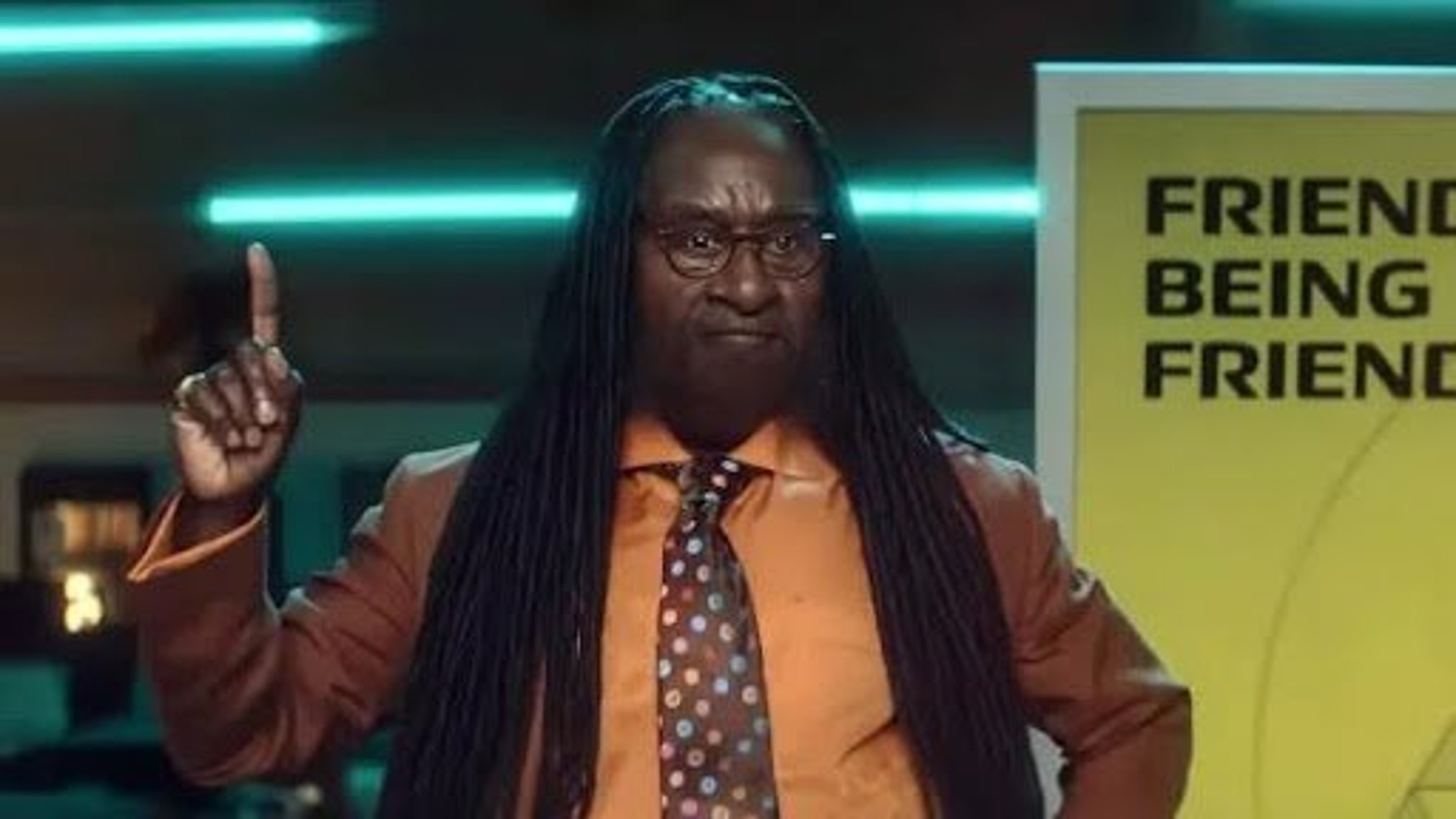
Beyond this, Dr. Jack reveals to us capitalism’s ability to commodify even solidarity itself. Friendship and community are reorganized into an extractive business model. Human connection becomes just another marketplace. Going a layer deeper, Dr. Jack’s model is presented as a warped version of more classical forms of mutual aid and wealth-sharing within marginalized communities, such as ROSCAs or Susus. Dr. Jack bastardizes these systems that are supposed to be predicated on community trust and reciprocity and twists them into a pyramid scheme that benefits only those at the top, ultimately showing how thoroughly bourgeois ideology and its contempt for the poor are universally accepted.
V. Race Is Not a Monolith
I Love Boosters couldn’t have been made without a Black director. I don’t believe that’s a controversial statement at all, but it begs repeating. Stories about the Black experience, in this case, the Black experience under capitalism, are best told by the people being spoken of.
With some notable exceptions, stories about race, or with racial themes, told by white directors tend to be rather hollow. They often become white savior fantasies like The Blind Side or Green Book. They portray shallow and ineffectual liberalized notions about racism, like Crash or The Help. On the other hand, Blackness has been wholeheartedly vilified and mocked in white-directed films. Blackness is either purposely and directly mocked in any number of old films featuring blackface and minstrelsy or, apathetically playing into racial stereotypes and white fear, indirectly vilified, like in Falling Down, Deathwish, or The Warriors. All these movies pigeonhole their Black characters into specific, monolithic roles meant merely to serve the larger narratives. They are either unassailable heroes or evil villains. They are embodiments of the resistance. They are the moral conscience of the narrative. While not all of these traits may seem negative on the surface, they remove the agency of their Black characters to fit the directors’ messaging.
Boots Riley, on the other hand, gives his Black characters agency in all his films. I Love Boosters, with all its problems of economism, allows its Black characters to move throughout the world of the story freely. They can be the heroes, they can be the villains, they can be the soul-sucking cunnilingus demon. Blackness shines brightly from his characters because they are not constrained by the narrow bounds that Hollywood cinema has placed them in. White people are presented an image of the Black community that is not fetishized. Black people are humans. They can make mistakes as normal people without having to be a larger commentary on the Black community, but instead, a commentary on capitalist society and the positioning of the Black community within it. Let’s take a look at some specific examples from the film.
The ‘Forge Democracy’ think tank are the tokenized Black propagandists (later revealed to be a cabal of skinless ‘lizard’ people and direct collaborators of the capitalist megastructure) in the film. They are shown on a loop in the local news, manufacturing consent for the capitalist class and legitimizing their existing power structures. In some films, they might be used as an indictment of certain stereotyped elements of the Black community, but Mr. Riley uses them as a symptom of the disease of capitalism. The film asks us: what happens when Blackness becomes an institutional costume, rather than a lived political reality? Capitalists treat Black skin as branding, from which they draw aesthetic legitimacy from its material politics. The think tank’s members wear suits made from Black skin, which form an incredible visual metaphor that speaks to the larger fetishism of Blackness in the fashion industry. Black skin becomes a luxury apparel just as, in our world, Black culture is hijacked by capitalists to sell products. “Authentic” Blackness does not exist biologically for Mr. Riley, and collaboration within the capitalist system does not illegitimize Black people. His politics are focused on the structure of Blackness under capitalism rather than that of racial essentialism.
The message here is that institutions reward and commodify certain performances of identity such that the represented radical figure becomes disconnected from material struggle. This film is a literalization of Mr. Riley’s political and cultural fears: capitalism’s ability to commodify identity itself. Capital is able to detach (literally, alienate) what appear to be fixed qualities from one's own body and repurpose them for other ends. To Boots, these figures are not merely collaborators. They are an ideological force sent to transform Blackness. They perform Blackness with the goal of stabilizing the capitalist systems that are exploiting the communities they ostensibly represent.
The Black propagandists might be the film’s most grotesque portrayal of racial imagery, but they are not the only symbols at play. Instead, they figure as the culmination of the broader theme of Black identity under capitalism in I Love Boosters. They show how that identity fractures and becomes commodified and subsumed into the capitalist system. Instead of presenting Blackness as a unified political consciousness, as so many other films do, this film portrays it as a set of contradictions shaped by an individual’s class position, their aspirations, and how they compromise to survive.
Take the protagonist, Corvette. She clearly recognizes the exploitation of capitalism. Her labor is stolen to serve an inflated, overpriced luxury culture. Her theft is predicated upon doing harm to that culture and the corporate thieves that are oppressing her and her friends. She is excluded from a class that hijacks her culture and keeps her from a normal, happy life. Yet, she still desires recognition from the fashion industry. Mr. Riley refuses to put her outside the capitalist system morally and psychologically. She is a living contradiction. She is neither a revolutionary nor a sellout. She seeks survival, to be granted dignity within society, and she wants that society to recognize her as an artist. The access the fashion industry offers her within a system she knows is exploitative outweighs the moral quandary that entering this system entails. This is the same tension that Cassius experiences in Riley’s breakout feature, Sorry to Bother You. Both these characters understand capitalism critically while remaining vulnerable to entrance within it.
Pinky Ring Guy, a charismatic but demonic fashion model who has set his sights on Corvette as his next conquest, stands apart from the other Black characters in the film. He operates simultaneously as a critique of Black masculine performance and as the personification of consumption under capitalism itself. He works as a character precisely because Mr. Riley refuses to reduce him to a single allegory. He is not only “toxic masculinity”, nor merely an archetype of demonic consumerism. He exists at the point at which Black, masculine identity, and capitalist logic begin to mirror one another. This makes him effectively unsettling. That is not to say it is his Black masculinity that is unsettling, but the buttressing of this capitalist logic through the lens of Black masculinity that makes him a compelling but abhorrent character.
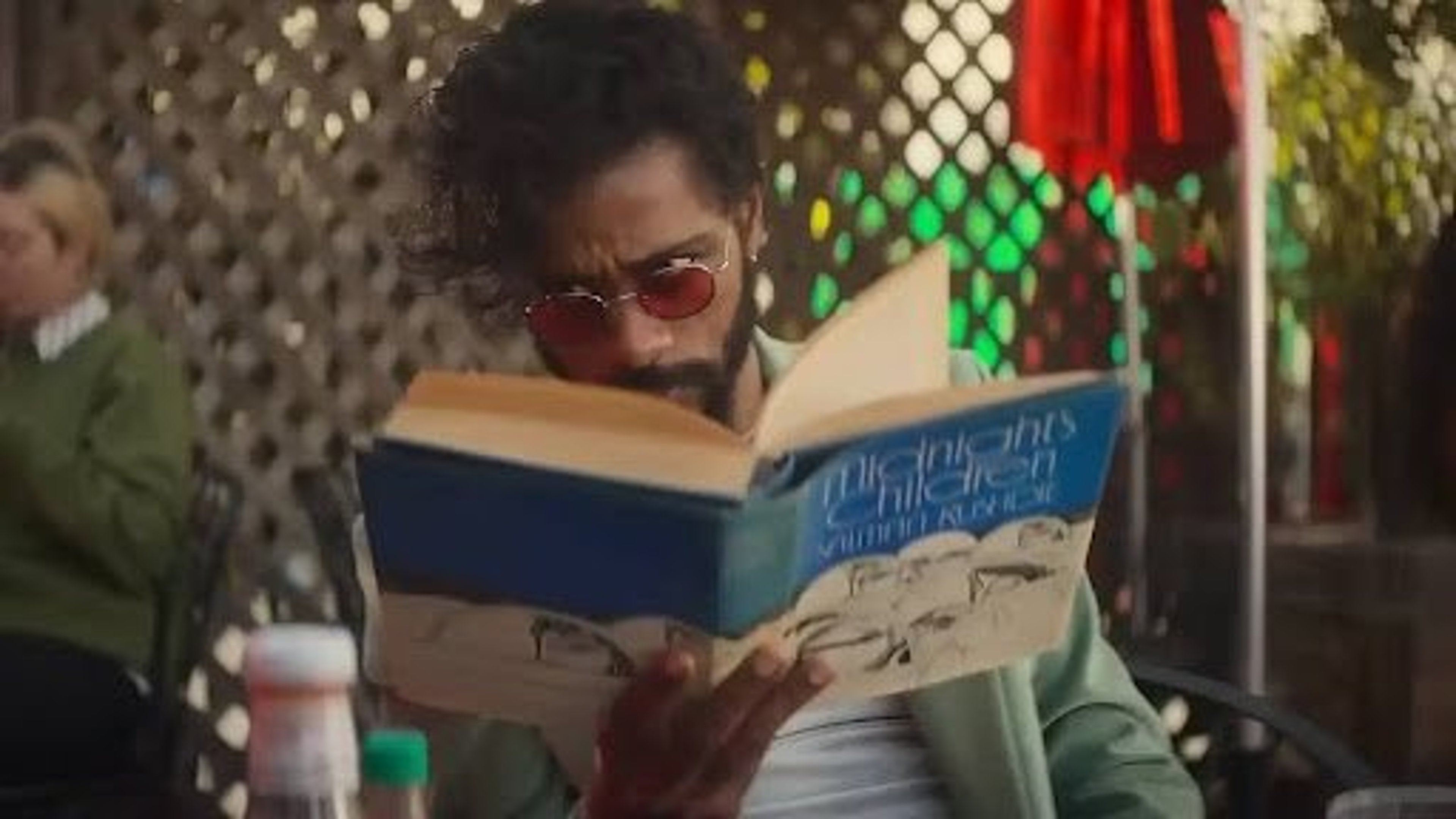
Capitalist culture begets a certain performance of masculinity that cements itself as a seductive and powerful force that conceals the ugliness at its core. In that scene that really freaked my mom out, when Pinky Ring Guy reveals his true, demonic self, he becomes an ugly and twisted monster. Yet, the woman whose soul he is devouring is so consumed by her own pleasure that she never notices the monstrosity of body horror that is feeding on her. Corvette is drawn to him because he offers her the affirmation and recognition that she desires from capitalism. From this angle, he serves Mr. Riley’s framing of capitalist power less as direct coercion and more as attraction and consumption. Capitalism doesn’t maintain itself solely through visible power; it is sustained through desire and aspiration. It convinces people to act against their own interests in the service of the very systems corrupting them.
Pinky Ring Guy is a reflection of a certain kind of performance of masculinity under capitalist culture. His identity is based on his style, charm, and desirability. But he isn’t a high-fashion model. He models for Ross Dress For Less and TJ Maxx. He is the embodiment of fast fashion, a modern trend that sells poorly made clothes with designer labels slapped on, sold at discount prices, and marketed to consumers who wear them both for their convenience and to portray a fake kind of luxury. This is why Corvette’s eventual rejection of him is important symbolically: it represents her rejection of the capitalist fantasy that Pinky Ring Guy embodies. Her desires for legitimacy, recognition, and entry into fashion culture are personified by Pinky Ring Guy’s endless appetite and seductiveness.
Altogether, these Black characters are a rejection of oversimplified racial storytelling that is so commonplace in Hollywood. Mr. Riley does not portray Blackness as naturally radical or unified, and his Black characters are not morally pure victims. He does not reduce race to individual prejudice. Instead, he treats Blackness as a social condition seen through the lenses of labor, class, and commodification. Mr. Riley does not want his Black characters to be seen as symbols of collective innocence or austere resistance. They are real people navigating the complicated maze that is capitalist society, with no guarantee they will emerge unscathed. The film grants its Black characters genuine agency by eschewing traditional narratives of racial homogeny, while exposing the collapse of solidarity under capitalism, which transforms identity itself into the commodity form.
VI. Where Do We Go From Here?
So if I Love Boosters has so much going for it, why do I feel like it ultimately falls short in its task of telling a coherent story in which overcoming the evils of capitalism and ushering in a new paradigm where the workers and the marginalized are elevated above our capitalist overlords is believable?
It's because of those damn dialectical materialism machines.
Boots Riley is very good at diagnosing the problems of capitalism symbolically, but he often falls back on mysticism and magic at the exact moment where concrete political transformation could find life. The portal machines that our protagonists use to defeat the capitalists are perfect examples of this tendency.
These machines have three functions. They are teleporters between linked devices. They are situational accelerators that ‘intensify contradictions’ present within any situation. And they are also ‘deconstructors’ that can reverse or break things down into their prior states. In the climax of the film, the Velvet Gang beams situational acceleration through two machines, intensifying this effect, and transforming the haphazard array of Metro Design employees into an organized mass of trade-unionists, signs and bullhorns in hand, ready to demand better working conditions from their evil boss Christie. They become situational accelerators of their own, their unionism spreading globally, forcing the capitalist overlords to capitulate to their demands and creating an idealistic future of proletarian solidarity.
Instead of rehashing a theoretical critique, I want to explore why Mr. Riley chose to end I Love Boosters in this way and why he has chosen to end his other film and television projects in essentially the same way. I believe the reason for this is that our socialist and communist organizations, as they exist today, have failed to concretize themselves as a real political force, opting to remain in marginal positions, whose energy is inevitably subsumed by the Democratic Party apparatus. The fact that the movie’s climax should end with trade unionism rather than with our protagonists realizing the magic was within them, and that they could unite their agenda under the banner of a political party leading a revolution against global capitalist statehood, should come as no surprise to anyone even mildly initiated into organized leftism.
Why would Mr. Riley write an ending to his story where the communist partisans, as we know them, are the solution to these tales of capitalist exploitation? The reality is that they just haven’t earned such a reputation, even within the bounds of fiction. Geese Magazine was formed specifically from a break with the existing organized communism along these exact lines. The communist organizations of today are not interested in a party formation that concretizes itself within the existing political zeitgeist, which acts as a launchpad for mass political organization and subsequent revolution. They believe that a functioning communist institution is one that merely carries out the narrow economic struggle, failing to meaningfully challenge the political leadership of the duopoly, leaving the Democrats with sole leadership over the progressive mass element. Instead of seeking to mount a bid for hegemony from within the dominant paradigms of American society, they see fit to engage in marginal activism, engaging with politics in a singularly subcultural manner. Its institutional weakness and political orientation explain exactly why even openly communist art struggles to imagine communism as a living social force. In this way, organized communism and the dialectical materialism machines are one and the same. Not because it is as it should be, but because it is inorganic, vague, and relies completely on that which is completely metaphysical. The machine, here, should be seen more like a leftist fever dream than anything analogous to the existing political parties of the left. Riley draws out the potential for a party that can deconstruct and reconstruct society, accelerating conflict to change politics, all within a magical machine that has no potential for actually existing. For Riley, it is somehow more feasible that the working class stumbles on a teleporting, dialectical ray gun than a functioning communist party to articulate an alternative; even more damning, it is more feasible that a machine will deconstruct reality before the proletariat does.
The mystical dialectical materialism machines reveal a broader crisis within the contemporary American left itself. Across all of Mr. Riley’s projects, his imagination has remained remarkably consistent. He continually exposes the contradictions and exploitations of capitalism and destabilizes its normalcy to achieve solidarity. All of this is to nudge us towards a collective awakening. It is a durable communist organization that remains to be developed. This absence says less about Mr. Riley than it does about the failures of the contemporary American communist movement. The narrowing of the horizon of political imagination that Mark Fisher talks about in Capitalist Realism is the same narrow political imagination that plagues the communist organizers of today. Marginality in the face of capitalist realism reveals the fact that anti-capitalist sentiment survives much more easily than a coherent anti-capitalist future does. Mr. Riley can imagine evil labor systems, demonic consumerist desires, and the commodification of identity under a surreal and absurd capitalist system, but it is harder for him to imagine a functioning communist institution, a communist party that is a real mass political organization that can mediate social relations in a post-capitalist future. Mass revolutionary politics aren’t inherently impossible, but because the institutional left in the United States is currently in such a weakened and ideologically diffuse state, communist organizations remain structurally disconnected from mass working-class organizations, no matter how many picket lines and rallies they show up to. Artistic imagination does not emerge in a vacuum. If there aren’t any visible examples of revolutionary institutions with social legitimacy, then the revolutionary structure itself becomes fictional and inaccessible.
The dialectical materialism machines are more of a symptom of capitalist realism itself, rather than a narrative weakness. The machines externalize revolutionary consciousness into a mystical technology because contemporary communist culture lacks convincing images of how revolutionary organization actually develops. And so, the film imagines the transformation from non-revolutionary to revolutionary through the machines' situational acceleration. The beam produces consciousness spontaneously because contemporary communist culture has lost faith in slower forms of collective political construction. This is the limitation of a left shaped by decades of depoliticization, liquidation, and institutional defeat, and explains why Mr. Riley’s projects feel politically repetitive, yet not politically empty. From Sorry to Bother You to I’m a Virgo to I Love Boosters, the basic recipe is the same. Capitalism is grotesque. Proletarian solidarity is necessary. Institutions are corrupt, and collective awakening is possible, but not so long as revolutionary politics are indistinct. Instead of seeing this in a negative light, it is better to see it as a historical documentation of a left trapped within capitalist realism and economism. Mr. Riley continually reaches the precipice of revolutionary politics only to be left with an absence of a coherent, communist institution. Consequently, his films become works of anti-capitalist desire haunted by the spectre of communism.
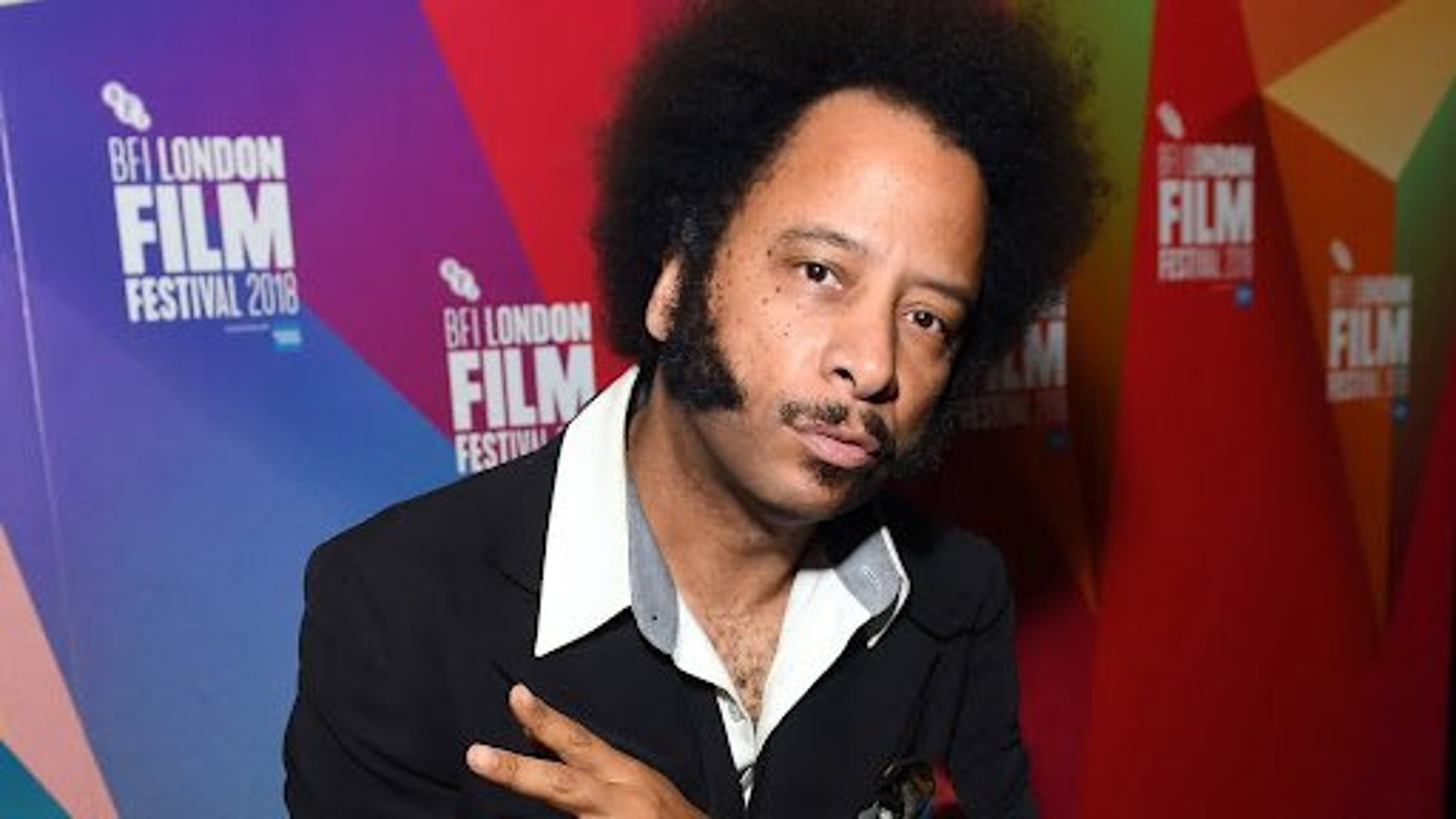
Boots Riley was born to communists, but he himself is not a member of any communist party. He was, as a teenager, a member of the Maoist Progressive Labor Party like his parents, but it was not the party where he cut his political teeth. His upbringing formed the basis of his political knowledge, but his first musical projects, The Mau Mau Rhythm Collective and The Coup, were the first expressions of that knowledge. He couldn’t have done what he did with The Young Comrades and Occupy Oakland without his art. His art is as much a part of his politics as his politics are a part of his art, as is so for every revolutionary artist. In this way, I’m reminded of Lenin’s speech to the Russian YCL, his The Tasks of the Youth Leagues, where he says:
“You can become a Communist only when you enrich your mind with a knowledge of all the treasures created by mankind.”
This quote is the best summation of his larger argument against a narrow-minded, anti-intellectual form of communism, the kind we see on the left today. Lenin criticizes the young Russian communists, especially those of the ‘Proletcult’, who believed communist education should consist only of sloganeering and book knowledge and whose leadership “preached subjective idealism” and wished to isolate themselves from mass politics. Instead, Lenin championed a practical education, taking the summation of bourgeois knowledge and applying it where the political and economic construction of the country needed it.
If we look at the political and economic construction of the United States today, a construction with a massive basis in entertainment media and artistry, the task of the Party must be, as it was of the youth leagues, to utilize bourgeois knowledge and forms in the service of bringing the masses to communism. Why don’t the parties of the left have members winning Oscars and Grammys? Why is there not a CPUSA production company producing Mr. Riley’s next movie? Why is Hasan Piker a communist Twitch streamer and not a Communist Party Twitch streamer?
Where the hell is the Communist Party Hype House?
You laugh. But when I joined the Young Communist League (YCL) in 2022 as a content creator with a burgeoning following and as a professional video editor with bona fides at the highest levels of fashion media, the only direction I was ever given was the login to the TikTok account and a standing invitation to “film stuff if I want”. At the risk of sounding vain and vindictive, this is just my small, personal experience with this larger issue of hegemony I’m getting at. The parties of the current era have never been interested in developing their hegemony outside the realm of the idealistic and economistic, idyllic revolution, without worries and without real contradictions that cap this film. They are content to leisurely float down the lazy river of a political sphere that is quickly outpacing them, sure that they do not need to exercise themselves as long as they have the dialectical materialism machine secure in their hands.
But the machine will never come, neither in the form of sci-fi technology, nor in the form of a party ex machina. We must prepare for the rapids downstream lest we die, broken on the rocks. A communist party that realizes this seizes control of the bourgeois media space for its own devices. That is how we surmount capitalist realism, through political education and cultural organization.
It is what I hope we are doing here at Geese, and I call on all writers, participants, and supporters of the magazine who may be reading this to take this seriously. It is on us to provide a plausible and concrete base for philosophical and cultural discussions through which we introduce socialist consciousness into the proletarian class struggle. This must come from without, and because we know this is not a spontaneous occurrence, we have decided to be the ones to do it. It is certainly not something the parties of today wish to do.
The Communist Party will never succeed, will never become the savior of a Boots Riley movie, while its advocates remain marginal, subcultural, and activistic in their approach. That is my problem with I Love Boosters. Or rather, they are. To reiterate, the ending cannot be plausible unless the situational acceleration of the dialectical materialism machines transforms the Metro Design employees into a concretized communist party formation. Or better yet, that the magic device is ultimately unnecessary–and it is the people, the Velvet Gang, the Chinese factory workers, and the Metro Design employees who create the concretized communist party formation themselves through their own political consciousness as a movement. But that ending can not, structurally, be imagined, unless the real world reflects this formation to a greater degree than it does now. I hope to see a Boots Riley movie one day where such an ending is real.
But best believe I’ll be there on opening day for all his other movies from now until then, hoping that the next will be indicative of a more advanced moment in revolutionary politics.
Go see I Love Boosters.
4 hamsicks/5