
Nov 5, 2026
Yes, Communism! Part III: Communism is the heart of democracy
Every victory you were taught to credit to American liberalism had communists at its center. M. Sanchez follows the lineage from abolition democracy to the Civil Rights era.
by M. Sanchez
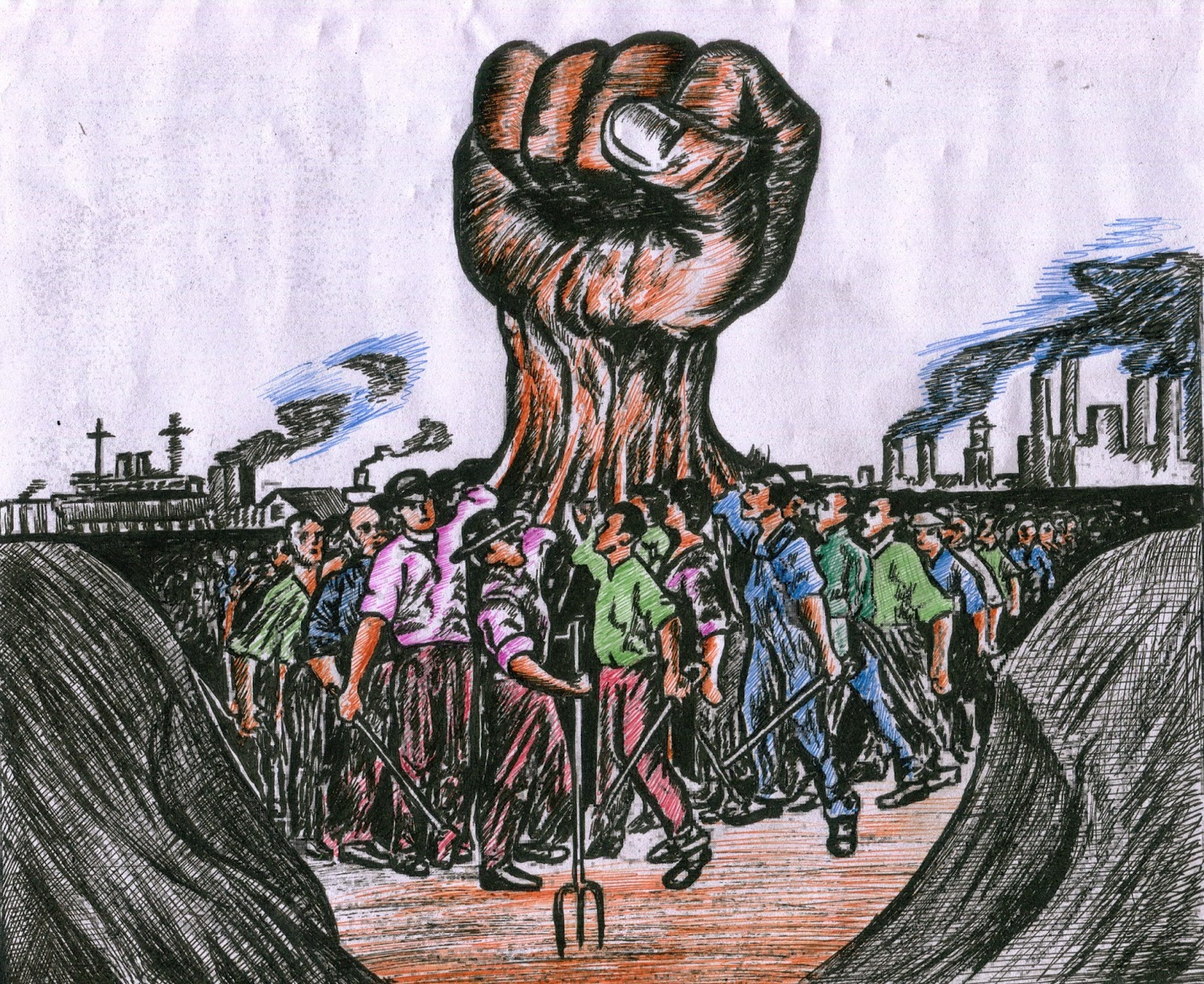
One Big Union Fist Ralph Chaplin
Section II.A.e Abolition democracy
Fragment II.A.e.ia. The Third Great Awakening
By the time that we have reached such a late period in the historical timeline as the 1840s and 1850s, it’s starting to look like communism is simply here to stay as a foundational part of “the American way of life.”
As America began to industrialize and draw the rural poor into mills and manufacturing, the sons and daughters of 1776 were rudely awakened by the rise of a new monopoly power. The commercial elite and plantocracy were now joined by robber barons who devoured the labor and lives of girls and boys. Only radical resistance could challenge the industrial tyrants.
Even many of the earliest ancestors of today’s Evangelical Christians and Mormons dipped their toes into dangerous radicalism.
They organized abolitionist protests right alongside temperance campaigns.
They pooled all of their possessions in common with their fellow believers to be distributed to any who felt any need for them.
They believed that those who trust in the fate of life on the market, seek only their own enrichment, and embrace the infinite accumulation of wealth worship a hidden idol rather than the revealed God of the Bible.
Is there something dangerously communist in the Social Gospel, which everyone from Nazarenes to the Seventh Day Adventists have become adherents of today?
Were the abolitionist Christian revivalists who volunteered themselves to work in the Union Army for the freedom of their neighbors dangerous Antichrists turning religion into a tool for extremist politics?
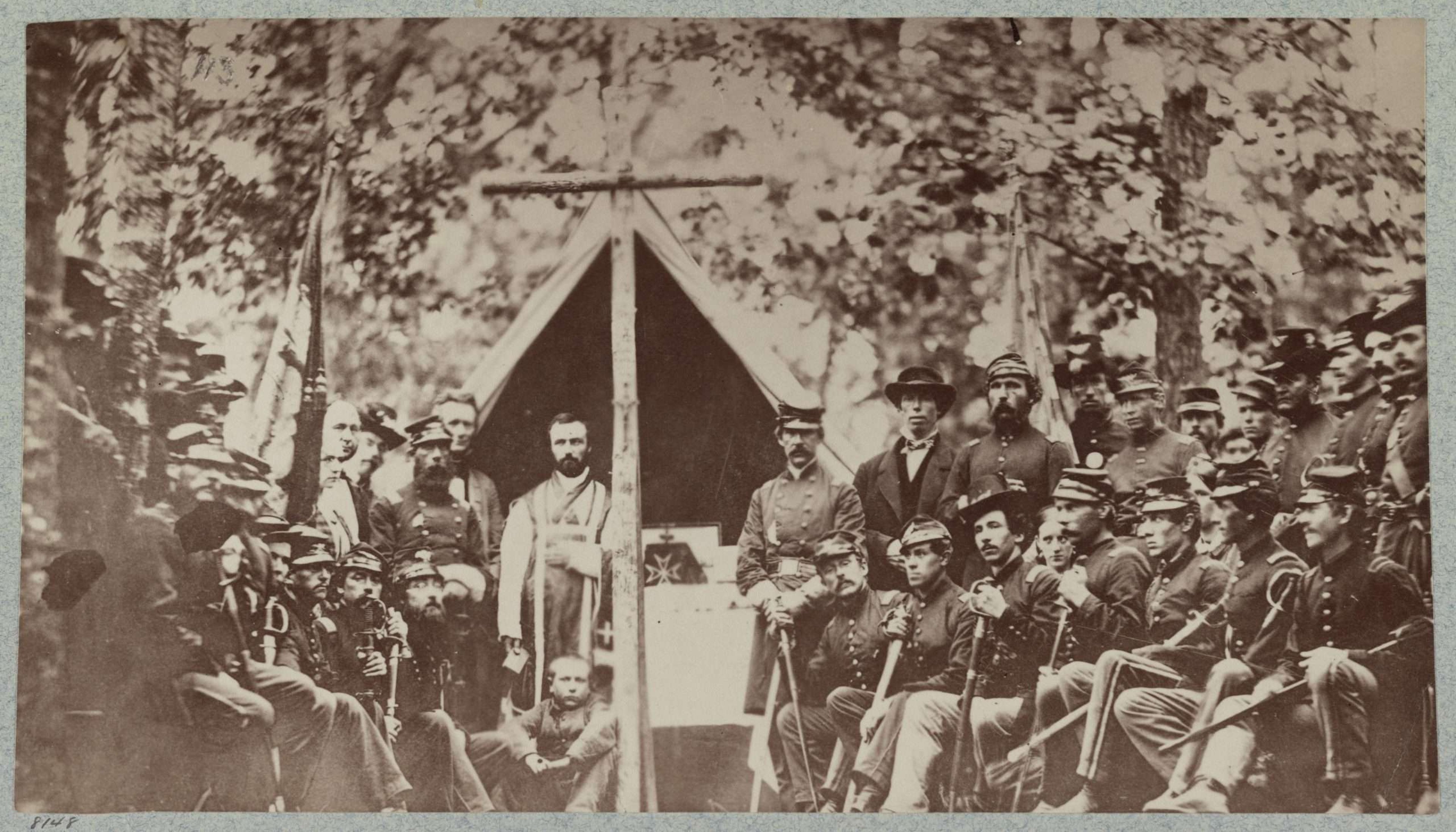
Union Army tent
One of the brightest among the working class founders of German communism, the Christian tailor and inventor Wilhelm Weitling, put his faith in the utopian experiments in America after being made into a refugee by the defeat of the 1848 democratic revolution in Germany.
Weitling moved to Communia in the 1850s and became its administrator. He pursued a pacifist line of diplomacy with the Iowa Natives who the communist settlers had become neighbors with.
Was Weitling making a mockery of Jesus Christ for attempting to live by the Gospel?
Should the Book of Acts be considered “antifa” literature?
How many of you Christians would be expected to denounce some of your own fellow servants of God as radical communists?
Fragment II.A.e.ib. The Civil War
Once we get to the Civil War, American history starts to look like a viper’s den of subversion. Every crack in the wall of our little museum is oozing with bloodthirsty Reds.
The Civil War did not start in 1861.
It started in 1850, with the Fugitive Slave Act. The Act made it the duty of all citizens to report and even arrest enslaved people, turning them over to the authorities to be returned to their enslavers. It denied any accused runaways (even born freepeople) of a right to a jury or giving testimony in their own cases and penalized any who helped them with fines big enough for ruin and imprisonment long enough for life.
Enraged by the assault on their neighbors, multiracial crowds of people began to resist the slave catchers and their enforcers. They refused to recognize the Act as law. They broke the accused out of jails. They funded and assisted the flights of runaways in a great Underground Railroad of liberation. White people put their bodies between the enslavers and their Black targets. As the enslavers grew more aggressive, the resistance of the crowds grew more violent in turn. Blood would be shed for blood.
It started in 1856, with Bleeding Kansas, a civil war between those who wished to see Kansas become a slave state and those who refused to let the slave power seize hold over more soil and labor.
Slavers and anti-slavers shed each other’s blood in the thousands. Neither accepted the other as part of the sovereignty of the people, the body that was supposed to vote for the fate of the new state.
It started in 1857, with the Supreme Court’s ruling in Dred Scott v. Sanford that Black people (enslaved or free) could never be U.S. citizens and thus could not sue in Federal courts.
Their ruling was based not only on the white nationalism of the 1790 Naturalization Act or on precedent cases, but the very 1789 Constitution itself. The Due Process Clause of the Fifth Amendment held that no persons could be deprived of property, and enslaved people had been legally recognized as property in 1789. The new sons of American liberty, who fought in the name of “the people,” would have to fight for Black people, slave or free, against the “We the People” of the Constitution.
Even devoutly Christian white fathers could be found among the insurgent people. John Brown was one of the few white people in American history to have given their lives for Black freedom, and he did so out of a deep Christian faith.
Brown believed that it was the imperative of all to practice the Gospel in their acts. He scorned those who moved into Native communities just to steal their lands. He spat on the 1789 Constitution as a Faustian bargain with the slave power.
When Brown and his sons decapitated enslavers in the fields of Bleeding Kansas in 1856, they swung their swords under this sign: “Neither cross nor crown.”
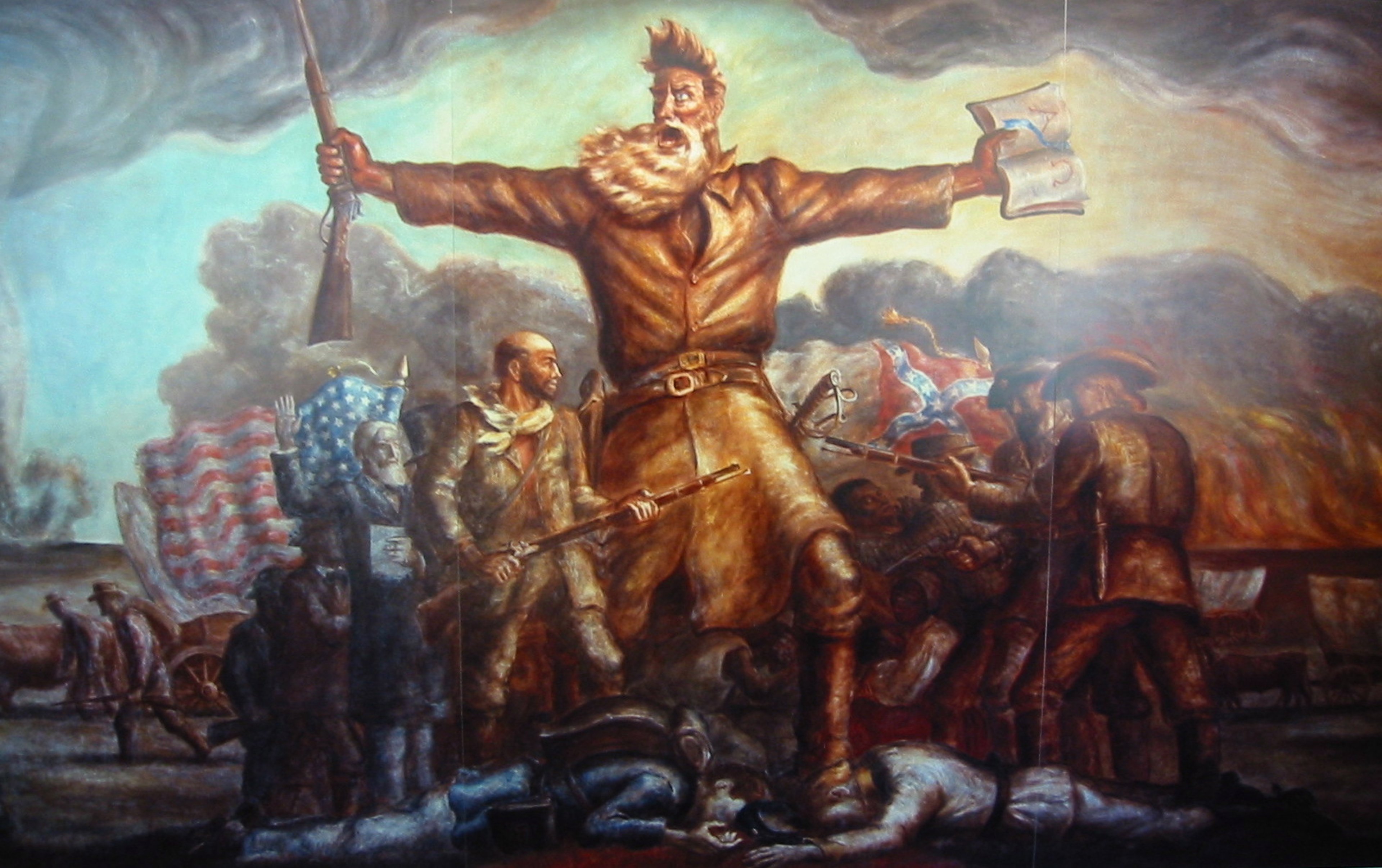
John Brown painting “Tragic Prelude” by John Steuart Curry
When Brown launched his raid on Harper’s Ferry in 1859, he did so with the stated intent of refounding the nation under the rule of law of a new Constitution—that of a socialist abolition democracy.
Brown was a hero of the American revolution. Like Nat Turner, the reincarnation of an Akan warrior, Brown was an American Siegfried, a Viking who tore the Odinic gods of the master race People’s Community from their celestial thrones and shattered their Gungnir with his liberating sword, Nothung.
Future Confederate General Robert E. Lee pursued the emancipating Siegfried. When he engaged Brown in battle, captured him, and brought the hero into court, only one man could stand to be outnumbered and face certain death with absolute bravery—and it wasn’t Lee. The inferior man oversaw the execution of the superior man on December 2, 1859.
Brown was stripped of the painted face as a white man and returned to the bare life of a rude and pagan race. Rome crucified him, but his truth marched on. Brown the barbarian sparked a prairie fire within the walls of the new world’s Roman Empire. Others only had to fan the flames to get things started from there.
Enslaved people always knew the dialectical power of song to survive exploitation, living under the master for another day, and to coordinate revolution, becoming a living death for all mastery. The abolitionists in the Union Army marched singing: “John’s brown body lies a-moldering in the grave/ but his soul goes marching on.”
Their song started as the tune of a few true believers. As the enslavers put up their bloody resistance against the great working body of the Union, the song began to take hold in the hearts of millions. Black abolitionists like Martin Delaney, Frederick Douglass, and Harriet Tubman worked to organize the general strike of the enslaved, who were embarking on an Exodus from the plantations of the south, into to the universally armed toil of the Union—a liberating army of all of the oppressed.
In the Aesopian fables of their family and friends, the freedpeople learned that the dialectic of Narodnik and Nihilist must never break down.
The command structure of the Army became a fetter on these efforts, keeping the growing multiracial democracy of John Brown’s body under the dictates of conservative white officers and generals. But even some great revolutionaries within the armed forces shared in the passions of the body.
August Willich was another German-American communist who immigrated to the United States after 1848. He became an abolitionist activist and served as a General in the Union Army during the Civil War. He was also an important German-American organizer in the Republican Party.
Were the Union government and Republican Party—who sought to destroy laws protecting the commercial traffic of bodies and private ownership of life—dangerously infested by communists?
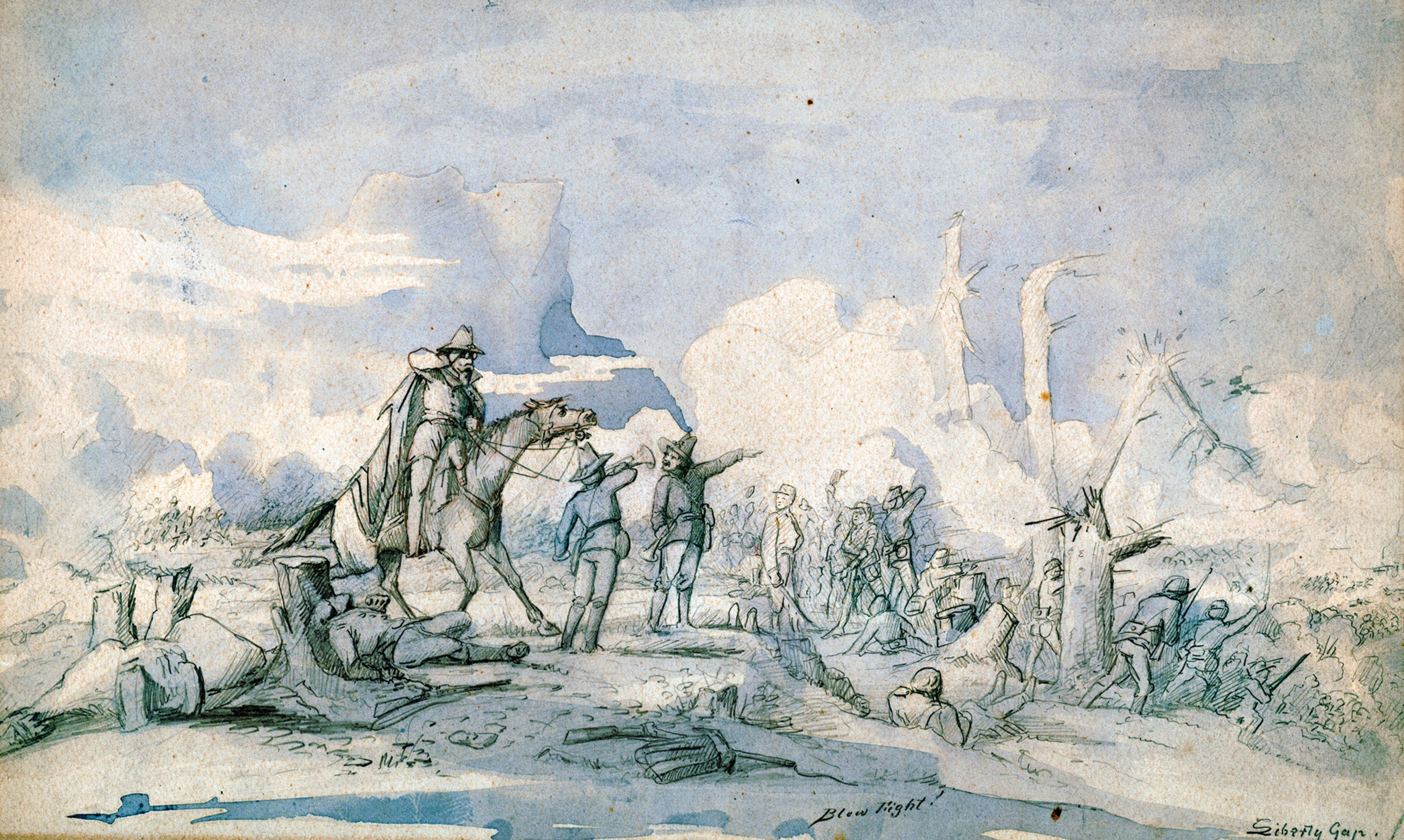
August Willich painting
Joseph Weydemeyer spent his early life as one of Karl Marx’s closest allies in the most extreme leftist circles of Central Europe. After immigrating to America, he became better known in New York as the founder of the German-American abolitionist American Workers League in 1853.
Weydemeyer quickly became a card-carrying Free Soil Republican just a year after the Party’s founding in 1855. He was a staunch supporter of Union President and Republican Party leader Abraham Lincoln.Weydemeyer served loyally as a political functionary in the Union’s military government during the Civil War of 1861-1865.
It’s starting to sound like the Republican Party has been corrupted from the beginning by Marxist subversives.
Is our very own President part of a party that was founded by violent foreign subversives?
Does Trump mean himself when he talks about “a mortal threat to American liberty,” “the greatest threat to our country,” and “the enemy of July 4th, 1776,” or was that just another one of his Freudian slips?
Karl Marx himself was a staunch supporter of the Union cause. He praised the traditions of the United States more patriotically than most Republicans today. Marx played a leading role in organizing the workers of London against the support that their bosses and “anti-slavery” government were then providing to the slave power Confederacy. He wrote a letter sending the regards of the International Workingmen’s Association to President Lincoln in November of 1864.
In the letter Marx explained his high estimation of the Union cause. Just as July 4th, 1776 had unleashed the tide of democratic revolutions across the eighteenth century Atlantic, so would the cause of emancipation that Lincoln advocated for in his November 19, 1863 address at the battlefield of Gettysburg, Virginia become the international rallying cry for the working class of the nineteenth century.
Marx considered the American revolution of slaves and abolitionists to be the twin of the Russian revolution of serfs and Narodniks, two great world revolutionary struggles for the freedom of the working class and democracy for all.
Would you Slavic-Americans have to condemn the serf rebels among your ancestors as communists?
Should we do away with teaching these key episodes of American history, so carefully explained to us from kindergarten to high school, just because Marx appreciated the significance of them to his own cause?
Was the Emancipation Proclamation that Lincoln issued on January 1, 1863 secretly written by a gang of “antifa” thugs?
Fragment II.A.e.ic. Reconstruction and the Gilded Age
The Reconstruction of our country after the Civil War does not do us much better in eliminating the Red Menace of history. Reconstruction was one of the greatest democratic experiments in history, accomplished by a continental social revolution, and it elevated broad swathes of the American working classes into the halls of political power.
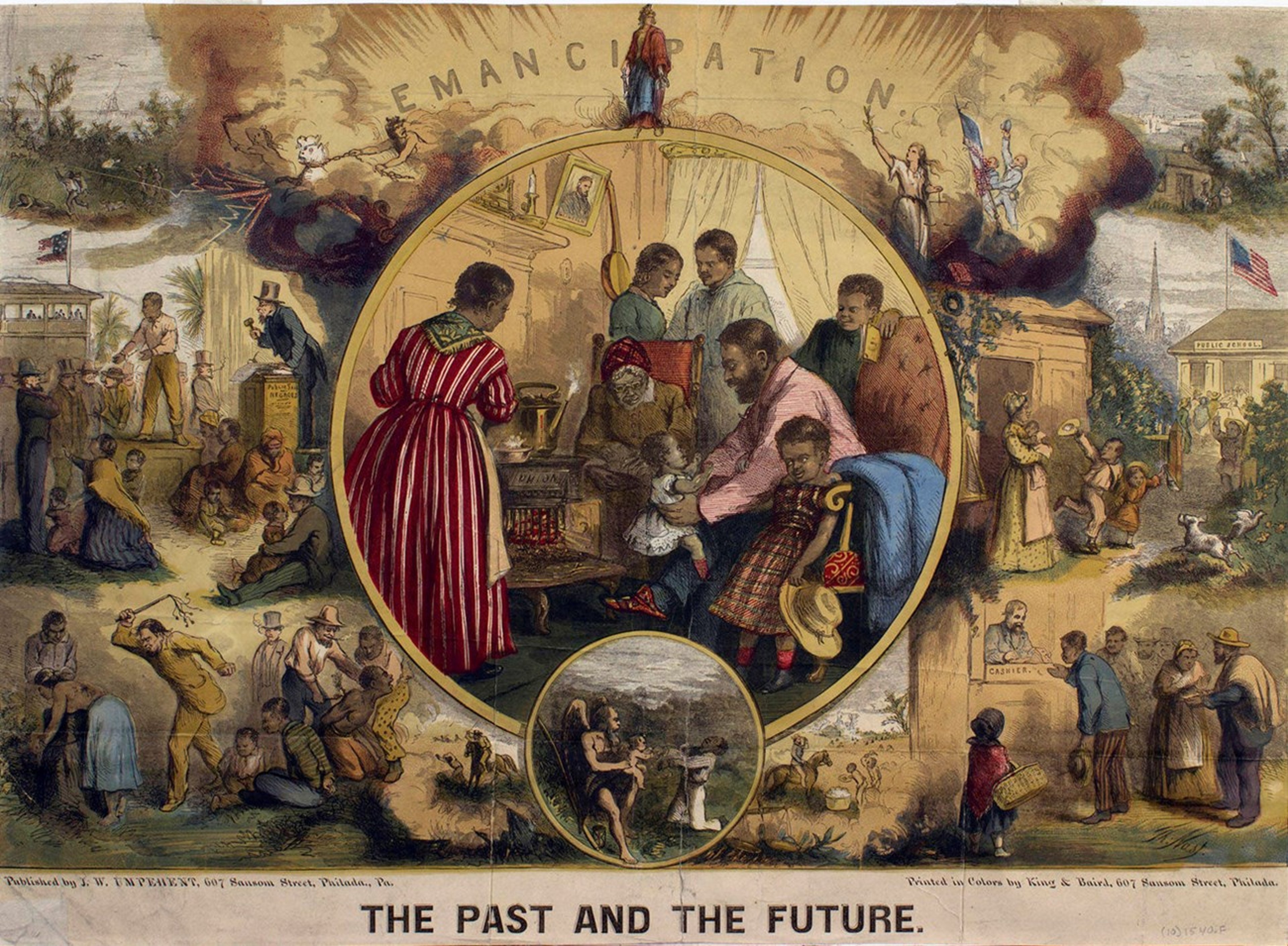
Reconstruction illustration
Republican President Abraham Lincoln, who had led a multiracial force to restore the Union, had not intended to oversee the birth of a multiracial abolition democracy. He had intended to abolish chattel slavery, as accomplished legally by his Emancipation Declaration. He was sympathetic to land reform efforts to break up the plantocracy. He never quite promised freedpeople “forty acres and a mule,” as General William Tecumseh Sherman did in January of 1865. The Homestead Act of 1862 was the closest he came to that, and it did more to help the settlers and troops fighting the Lakota in the west than the freedpeople in the south.
Lincoln believed that the freedpeople needed to be kept under the paternalist control of the Freedmen’s Bureau and kept at work on the plantations until another arrangement could be constructed. He was skeptical of full equality before the law or popular sovereignty over government. Even while being an intellectual from a working class background, he was still an elitist—perhaps another latter day Baconist. As more time passed, it seemed that Lincoln and his Party had only accomplished the rise of a new order: industrial monopoly capitalism.
The new order to come had to draw on the 1865 Constitutional Amendments that had been won by American working people. With the restoration of monopoly rule, the Amendments inverted working class hopes into nightmarish Robber Baron opposites.
The Thirteenth Amendment elevated the abolition of chattel slavery and debt peonage into Constitutional law. It also set aside exceptions for the enslavement of criminals, which the plantocracy and the monopolists made great use of against undesirable Black workers in the coming decades.
The Fourteenth Amendment universalized equal citizenship for all born or naturalized in the United States, guaranteeing equal protections for citizens before the law. It refused the extension of citizenship rights to Native Americans, who the U.S. could only accept as disenfranchised colonies or assimilated citizens (as the 1924 Indian Citizen Act hoped to accomplish). It failed to do away with the 1790 Naturalization Act, which became the framework for the white nationalist immigration restrictions of the coming decades. The Supreme Court restricted its use against monopolies in the 1873 Slaughter-House Cases, declaring that the Amendment’s equal protections applied to Federal but not state citizenship.
Trump’s government now wants to do away with the very birthright and naturalization protections of the Fourteenth Amendment itself. That would mean returning to the white Anglo-Saxon citizenship of 1790. Trump may have to deport himself—he comes from Scottish and German immigrants! How many of the people in his cabinet come from non-Anglo backgrounds? How many are Asians or Jews—two groups that American immigration policy has historically restricted!
The Fifteenth Amendment of 1870 was a great victory for freedpeople and Radical Reconstructionists, prohibiting all jurisdictions from denying the right to vote on the basis of race, color, or a previous condition of servitude. It is now repurposed as a battering ram against affirmative action and the choice of all voters in how to organize their districts.
These restorations have been accomplished by the monopolists and their allies. It was the proletariat who fought for a multiracial democracy, not the liberal politicians or carpetbaggers. The great experiment in revolutionary abolition democracy expropriated the plantocracy. It drew numerous proletarians, Black and white, into government. It birthed state governments like South Carolina that won major victories for universal suffrage, land reform, and public assistance. It could only be defeated by the overwhelming terrorism of planters and their Ku Klux Klan allies when the Republican Party and its monopolist friends abandoned the Radical Republican revolution.
Lincoln was assassinated by actor John Wilkes Booth on April 14, 1865, a washed-up celebrity who had been cancelled for his Confederate sympathies. The next day, southern poor white and War Democrat Andrew Johnson became President. Many expected him to vent his resentment for the southern plantocracy in a great revolutionary campaign against monopoly. Instead, he turned out to be the Baconist that served as a midwife for the monopoly dictatorship of the next century.
Johnson scaled back Federal Reconstruction efforts and made a rapprochement with ex-Confederates in the name of securing stability for the growth of monopolist banks and railroads. By the time that Reconstruction ended with the Compromise of 1877, which removed the occupying troops from the south and allowed the full restoration of the Democrats, the revolution had already been strangled by its own allies. Monopolists of industry and agriculture alike linked their arms together as freedpeople were driven back into disenfranchisement and slavery by a barrage of lynchings, Black Codes, and sharecropping.
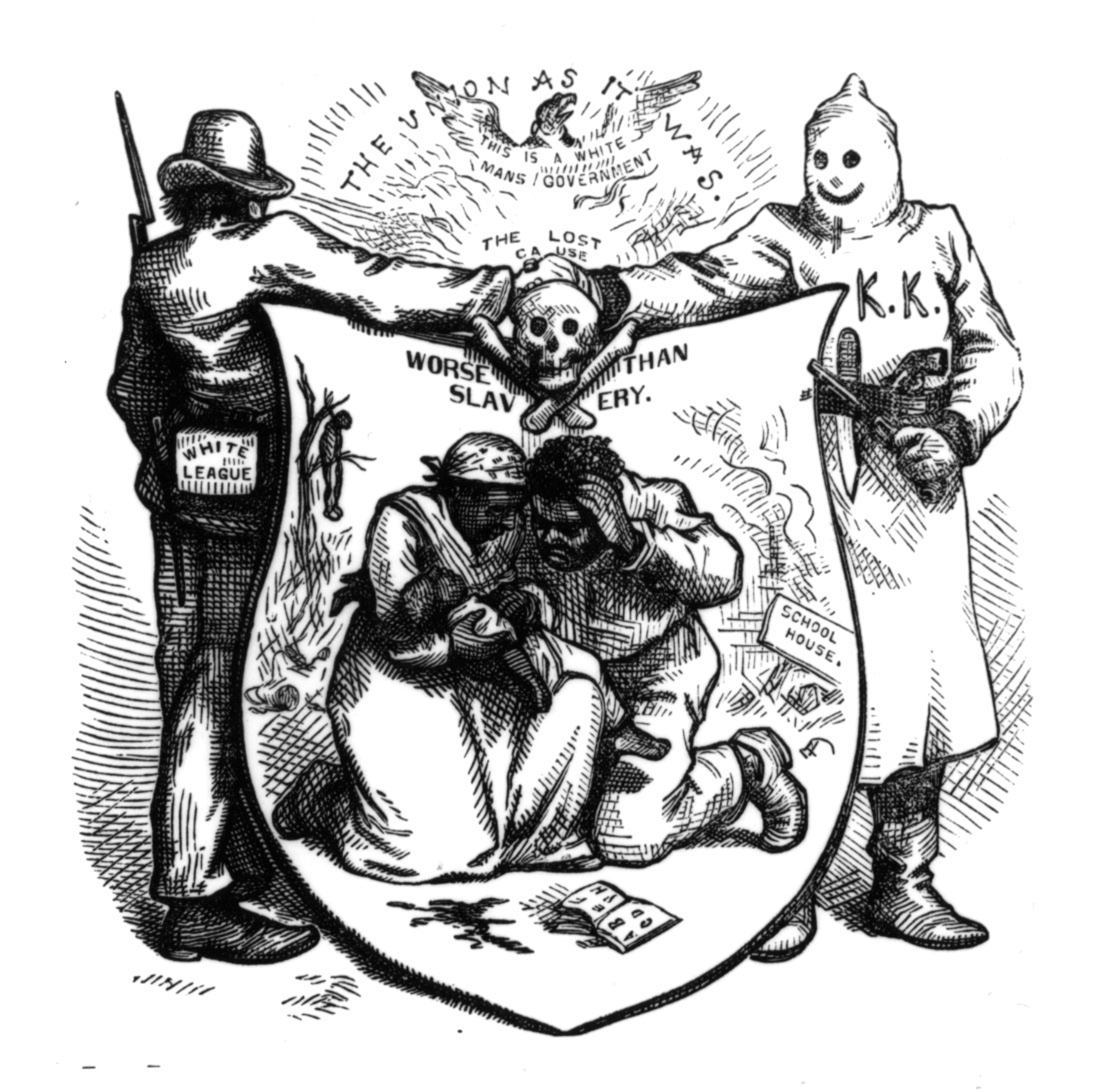
Ku Klux Klan political cartoon
The terroristic destruction of Reconstruction and the Redemptionist restoration of the 1789 alliance of commercialists and enslavers did not dissuade revolutionary opposition. Horace Greeley, the Union-supporting newspaper editor of The New York Tribune, employed Karl Marx as a foreign correspondent. Greeley became disillusioned with the Republican Party when it began to use Free Labor and Free Soil to mean the concentration of money in the hands of a few banks and the infinite expansion of railways with the involuntary help of cheap, exploitable labor. Greeley became an early political opponent of the monopoly capitalist order that had begun to emerge from the wreckage of the Reconstruction experiment in multiracial democracy by the 1870s.
Was he secretly an agent of communism just for having associated with Marx as a like-minded person fighting against oligarchy and monopoly?
Was he a Republican In Name Only (RINO)?
The Knights of Labor was founded in 1869 as a multiracial and gender-inclusive voluntary laborers association. It peaked at a million members in the Gilded Age 1880s, when it became one of the greatest hotbeds for socialist militancy in American history. Anarchists and socialists like Illinois worker George Schilling and Philadelphia tailor Uriah Stephens participated in the association to achieve their goal of transforming America into a cooperative commonwealth.
Was the working class fight for better wages and democratic control over their living conditions an enemy of democracy for demanding that collective bargaining be made the right of everyone?
Were these working class Americans really Enemies of the People?
In 1876, American Marxists (in conjunction with followers of Ferdinand Lassalle, a German populist) helped found their first national political party—the Workingmen’s Party of the United States. The Party opposed the tyranny of the rail monopolies and the duopoly of Democrats and Republicans. They spread among the workers of the growing union movement. They nevertheless failed to achieve the status of a third party.
They are mainly remembered for their California chapter’s part in leading an anti-Chinese lynch mob in 1877. They failed to appreciate the necessity for a multiracial and multinational democracy for American communism to grow into a mass movement.
More staunchly Marxist, immigrant workers founded the Socialist Labor Party (SLP) in 1876—they were the first national political party committed to an explicitly socialist program. Their leader, Daniel DeLeon, argued that the party would be the shield of the working class in the representative institutions of the capitalists, limiting the power of the tyrants, while the unions would be the sword of a class war for democracy, striking blows and making gains.
The SLP went on to participate in the various political and unionist efforts of the American left for the next few decades. They fell behind the times as militant workers began great campaigns for feminism, autonomy from work, and the abolition of racial supremacy.
The sect found reasons to fall out with almost every single campaign and organization. No one was pure enough for them. Searching through the world for the personifications of European categories, they could not find their own place in American reality itself.
The class struggle went on without the SLP. The Knights and the Marxists allied with the Populist Party in the 1890s to fight against the political hegemony of the monopoly capitalist establishments of the Republican and Democratic Parties. The two-headed monopoly was then leading the country into a new round of imperialist wars overseas, in the Caribbean and the Pacific.
If you oppose forever wars and appreciate working 8 hours or less in a day, you might have some communists you want to thank for that.
Does that make you a Marxist subversive, too?
The blame for a bombing at Chicago’s May 4, 1886 rally for the 8 hour work day was pinned on a politically convenient set of labor organizers and anarchists. Most of them weren’t even present at the rally.
One of the accused who was hanged in 1887—Albert Parsons—descended from a so-called “heritage American” family. Among his ancestors, he could count a man who fought alongside George Washington at the 1777 Battle of Brandywine. Today, the gaggle of those racist cowards that prattle on about the Great Replacement would cheer on the hanging of Parsons.
I wonder how many of those white nationalists even descend from similar stock to Parsons? Another tangle in anti-communist sentiment.
Seeing the spitting image of their imaginary national idol giving his very life for the sake of universal emancipation, will they try to understand the power of communism?
If these descendants of 1776 are “antifa” terrorists, then why is it that we are meant to allow white nationalists to use 1776 to fill their own moneybags with rent-seeking schemes?
American filibusters have used the trappings of 1776 and the rhetoric of Nathaniel Bacon to pursue ends that are more becoming of King George III.
In 1836, Texas set the tone for a pattern that has repeated time and time again: a gang of white profiteers settle in a foreign nation, ally with a multiracial coalition, and begin to demand a series of democratic demands. Once they achieve nominal independence and political power, the new class of white masters direct the new government towards neocolonial terrorism, enslaving exploitation, and imperialist land speculation.
White America considered the patriotism, family values, and military genius of the Lakota to be affronts to civilization. The Civil War for abolition democracy was conducted concurrently with a campaign of conquest in the Dakotas. General Sherman, who led a liberating scorched earth campaign through the plantations of the south, also led monopoly capitalist expansion against these First Nations free traders.
The white people of the U.S. were filled with fear and rage by the victories of Red Cloud and the Lakotas over the U.S. Army in Red Cloud’s War of 1866-1868. Red Cloud graciously signed the Treaty of Fort Laramie at the conclusion of the War, expecting his enemies to show the same respect to him that he had shown to them in exchange for their initiating a new peace.
Instead, the U.S. government subjected all Lakotas and Dakotas, reservation residing or not, to the tyrannical mob rule of white land grabbers, the bureaucratic harassment of Indian Agents, and the bloody legislation of removal from food sources and alternation between slow and rapid genocide. Brutes like the U.S. Army officer George A. Custer held them under a reign of terror and sought their extermination.
In the 1870s, the discontent of the Lakota erupted into another open revolt against the Empire. The white media spoke of leaders like Red Horse, Sitting Bull, and Crazy Horse in scandalized tones. They were equivalent to the Yahya Sinwar, Ali Khamenei, and Hassan Nasrallah of their day.
The rebels broke out of the fences that held them in subjection and abandonment. They organized a multinational democratic alliance with the Dakota, their cousins, alongside the Northern Cheyenne and Arapaho. These American Levellers and Diggers forced their way past “private property” signs and returned to their beloved homelands. They fought to win back the sacred Black Hills—the mutilated visage of which served as the backdrop of Trump’s July 3, 2026 speech.
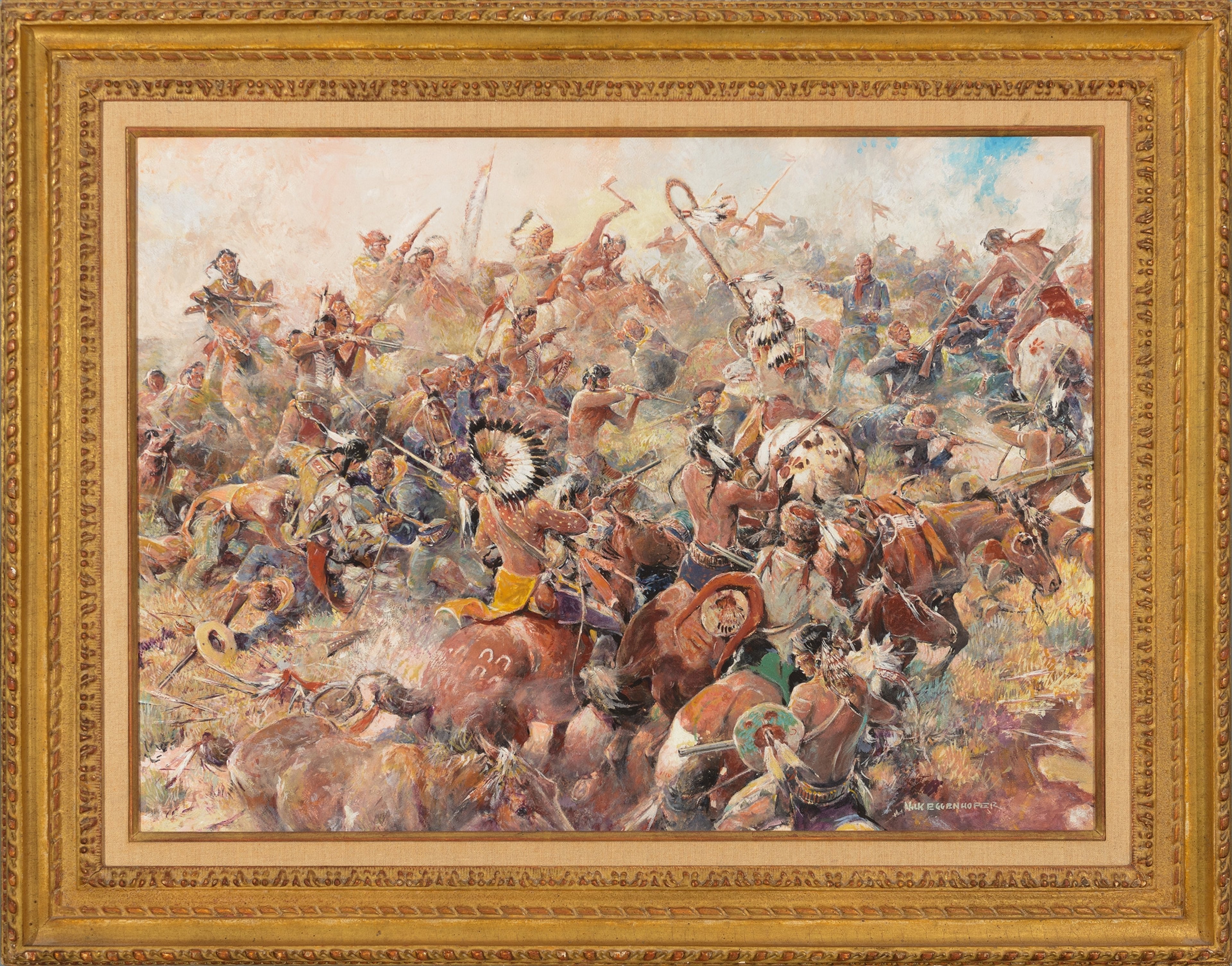
nick eggenhoffer custer's last stand painting
At the 1876 Battle of Little Bighorn, where they battled the U.S. Army, the rebels managed to kill the Baconist-Caesar Custer. Though the United States ultimately defeated the rebellion, the Lakotas had won the war for their dignity. The Army placed them under absolute subjection in the reservations. They were made dependents of government rations and driven to the point of starvation.
When the U.S. Army slaughtered a crowd of Lakota at Wounded Knee in the 1890, they massacred a multitude of starving and unarmed men, women, children, and elderly. The media reported the scene as the last appearance of the Vanishing Indian, the accomplishment of the settlement of the West. Post-Hegelian historian Frederick Jackson Turner hailed this bloody “closure of the frontier” as the final realization of the independence of American Chosen People democracy from Europe.
The arms of this democracy of Chosen People could extend further across the content than you might expect. At least, if it was beckoned by a potential ally to set out on a new imperialist adventure.
Long having allied in colonial management, the United States Army collaborated with the Mexican Army of the dictator Porfirio Díaz to exterminate the Apaches throughout the 1880s and 1890s. Díaz and his American capitalist patrons became accustomed to mass extermination and the restoration of slavery during this time—they conducted such a campaign against the Yaqui of Sonora in 1896.
In Mexico’s case, insurgent Liberals and communists in organizations like the Partido Liberal Mexicano (PLM) arose to condemn the injustice. Other than a few scattered white sympathizers like Jack London or migrant militants in the Industrial Workers of the World (IWW), no American movement emerged to challenge the slaughter. Baconism held the U.S. too tightly in its grip—even those on the left, who looked on the conquest and extermination of the Original Peoples as simply part of the inevitable march of progress.
The Americans and Mexicans sought to control the migratory border hopping and the nomadic warfare and raiding of leaders like Mangas Coloradas, Cochise, and Geronimo. They claimed that they did so in the name of life, liberty, and the pursuit of happiness, but they acted against the very reality of those principles as exercised by the Apaches.
As early as the 1848 Treaty of Guadalupe Hidalgo, they had framed this as a struggle to achieve freedom for all captives (except for Natives imprisoned on reservations) and security for everyone (except for the still-independent Natives).
Geronimo and his comrades, chased into the very depths of the sierras by his enemies, finally surrendered in 1887. The free bands of Apaches were forced to become domestic dependent nations penned in on reservations, taught wage work in Industrial Schools, and exploited by capitalists for their labor.
Independent Apaches continued to resist the U.S. authorities through the Mexican Revolution and until the passage of the Indian Citizenship Act in 1925. They resisted the Mexican authorities until 1933, when President Lázaro Cárdenas put an end to Mexico’s own Indian Wars.
As the railroads began to link the “closed” frontier in the 1880s and 1890s, they also began to link natives of all nations in new and unexpected bonds.
Beginning in 1889, Northern Paiute spiritual leader Wovoka spread his revivalist revelations throughout the country by means of the railways. He spoke to reservation residents, wage workers, and the urban unemployed alike.
Wovoka taught that if all Natives came together, abstained from the colonial culture, learned the discipline of wage labor, and pooled their wealth and power into gifts for a Ghost Dance, that their ancestors would return to the world and free them from the settlers.
Wovoka’s teaching was an adaptation of the principles of Tecumseh and Tenskwatawa and the faith of the Shakers for the industrial age. The Ghost Dance gospel began to spread far and wide.
The U.S. Army mobilized to crush the decolonial Ghost Dance movement with an iron fist, slaughtering and dispersing adherents at Wounded Knee in 1890 and in the Ghost Dance War of 1890-1891. The whites of the Dakotas thought that the massacres were good riddance. Even if they may have hated the railroad tycoons and bank magnates, they wanted to be left at peace to continue buying and consuming their cheap goods.
Corporate consumerism motivated a new series of filibustering adventures. In 1893, a small conspiracy of white profiteers organized a coup against the Kingdom of Hawaii and led its annexation as a U.S. colony, to be converted into an island of latifundias by American businesses. Why did only the popular sovereignty of a minority of white men supersede the sovereignty of all Hawaiians and Pacific Islanders?
The same imperialist pattern first set in the Gulf of Mexico and the Pacific was expanded into the Caribbean.
In the last decades of the nineteenth century, Puerto Rico and Cuba organized their own independence efforts to free themselves from debt peonage, chattel slavery, and the Spanish Empire. They adopted national flags inspired by that which our nation adopted in 1776.
Independence leaders like José Martí and Juan Ríus Rivera both supported each other’s national causes just as passionately as they dreamed of a multiracial democracy for their own. Martí was even an adept in American Transcendentalism, aligning with Ralph Waldo Emerson and Henry David Thoreau in a project for a hemispheric Americanism.
The United States Empire intervened against the Spanish Empire that was crushing these movements in 1898. After winning, the Empire of Liberty took Imperial Spain’s place.
Republican President and unabashed imperialist President John McKinley asserted the Monroe Doctrine for a new age. Spain’s colonies would be transferred to the U.S., and the rest of the hemisphere would be subjected to gunboat diplomacy as an incentive to implement U.S.-friendly policies.
Puerto Rico became a lucrative American colony. Today, the Federal government has kept this Caribbean nation as a colony, but abandoned to waste away. Cuba became an independent republic. The United States brought it under neocolonial dependency and debt servitude, crushing its independent leaders with an iron fist. Cuba finally achieved a multiracial democracy and cooperative commonwealth of its own in 1959. The United States Empire is still struggling to strangle the people of this small island for their impudence.
Veteran abolitionists like Wendell Phillips, Frederick Douglass, and Angelina Grimké became prominent critics of the new round of (wage) slave power expansion into sister republics and sovereign peoples. They attacked the extermination campaigns of the Army against the self-defending Natives. They organized with literary skeptics like Mark Twain and reformist liberals like Andrew Carnegie to form the American Anti-Imperialist League. They fought valiantly to stop the coming of the next new world, but they failed.
Only a new revolt of workers against work and patriots for cosmopolitanism could meet the challenges of the dawn of day.
Section II.A.f. The welfare-warfare state
Fragment II.A.f.ia. Jim Crow, the progressive era, and World War I
Immigrants and people of color are not enemies of the American working class. They have always been at the vanguard of efforts to improve the conditions of each other, establish equality before the law. They have led others to victory for democratic rights like freedom of association, freedom of speech, and collective bargaining.
The American labor movement could not take off in the twentieth century without an inner struggle against its own anti-Black, anti-Asian, and anti-immigrant sentiments. When given the chance to fight, they fought hard.
Mexican Americans, Japanese Americans, Filipino Americans, and Chinese Americans all led the most intensive efforts to unionize American agriculture.
The struggles of Black workers against Jim Crow threatened many of the same restrictions on public life that were used against labor organizers and political dissidents.
Without the fight to abolish anti-miscegenation laws, the cohabitation of millions of families and the mere existence of many of my readers would be a violation of the law.
You workers who despise immigrants and blame them for your problems have forgotten your own history and reality.
Lucy Parsons, who could have been a Black freedwoman or a Native Mexican or both, was left widowed by the state execution of her husband.
She went on to become a firebrand leader of the labor movement, anarchist subversion, and American communism.
She was a leading voice at the founding of the Industrial Workers of the IWW in 1905. She was a national leader of the left all the way up to the rise of the Communist Party of the United States of America (CPUSA) in the 1920s.
Parsons and other leaders of her generation, like the anarchist daughter of 1776, Voltairine de Cleyre, became the heroes of the poor popular masses.
Parsons was one of the most popular leaders in American history, one of the best agitators, educators, and organizers of the public in the world, and for those very same reasons, the bane of cops and corporations everywhere.
Was she wrong for exercising her freedom of speech beyond any constraint of the law?
Does she sound like an “enemy of free people everywhere, everywhere in the world,” as President Trump said of communists and communism?
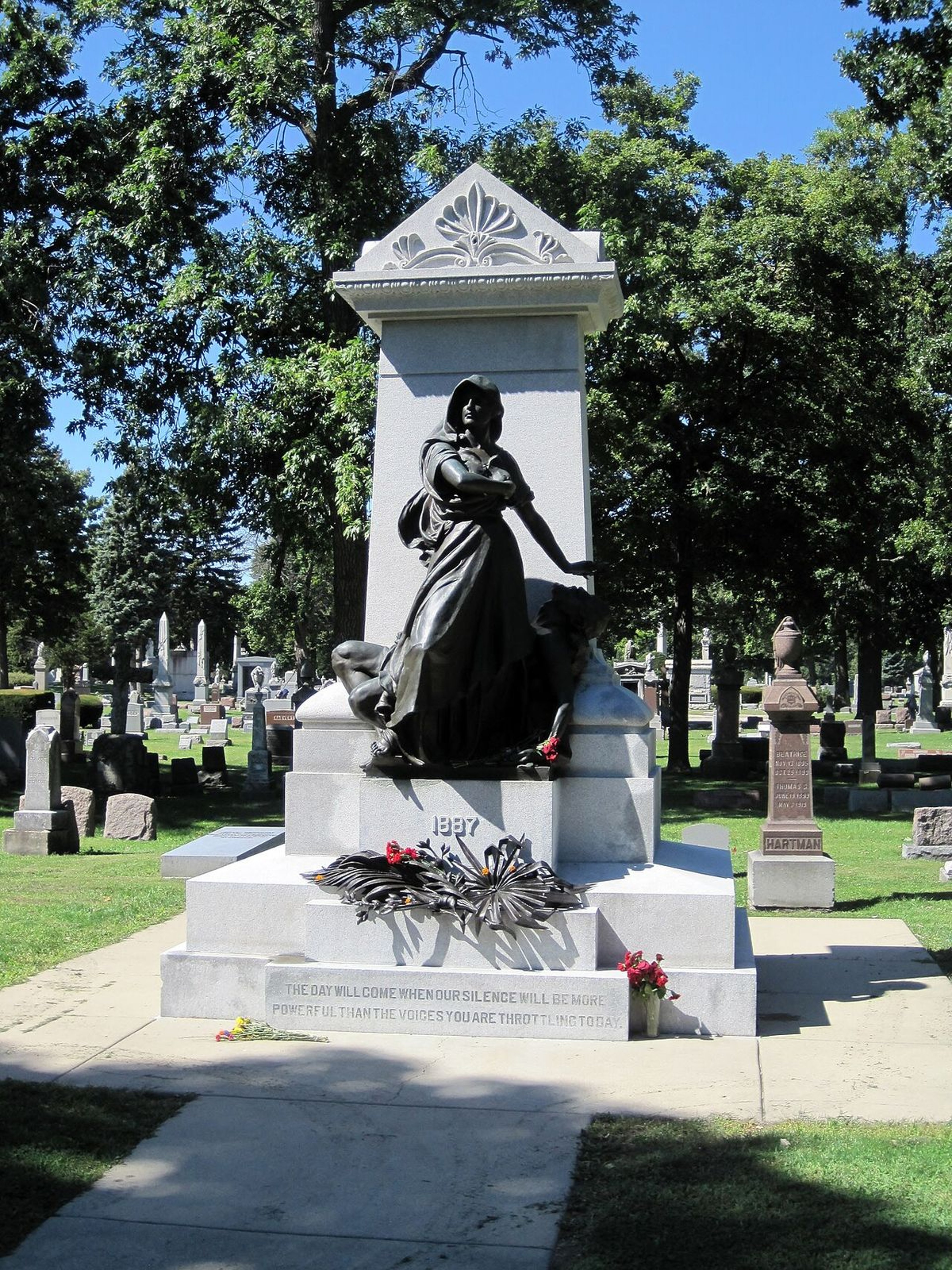
Haymarket martyrs’ monument
The rise of the Socialist Party of the United States of America (SPA) in the beginning of the twentieth century threatened the two-party oligarchy, struck fear into the hearts of monopolists, and challenged overseas forever wars.
The establishment should have been grateful that calmer and more compromising people had replaced the Propaganda of the Deed wave of the previous decades, with its bomb-throwing anarchists and assassins of Kings, Presidents, and Captains of Industry.
Compared to the radical left of the Gilded Age, the left of the “progressive” era of Jim Crow was liberal and moderate. The SPUSA was not unlike our very own Democratic Socialists of America (DSA) today.
The Socialists participated enthusiastically in elections in order to make their cause known by the very same democratic methods of the country that we are supposed to jealously guard against Marxists.
Eugene V. Debs was a veteran labor organizer, anti-imperialist, proletarian patriot, democrat, and Christian. He ran for the Presidency as the Socialist candidate five times from 1900 to 1920. Debs used his campaigns to agitate for change, educate the public in the meaning of class struggle, and organize new Socialists.
Debs skewered the decadence of the elite, pointed out the divisions in the working class made by immigration restriction policies like the 1882 Chinese Exclusion Act, and drew thousands of people into the labor unions and political parties organizing against monopoly and war.
In his 1912 Presidential campaign, Debs garnered the highest percentage of the national vote that any socialist has ever achieved—6% of the popular vote, then around 1 million voters.
Debs was imprisoned in June of 1918 for sedition, having just delivered a speech in which he urged the Christian ethic of pacifism, criticized imperialist injustice, and called for resistance to the World War I (WWI) draft. Even when he ran for Presidency from prison in 1920, he still received almost a million votes. He drew the attention of the country to the blind cruelty of the prisons, which created traumatized criminals rather than redeemed citizens.
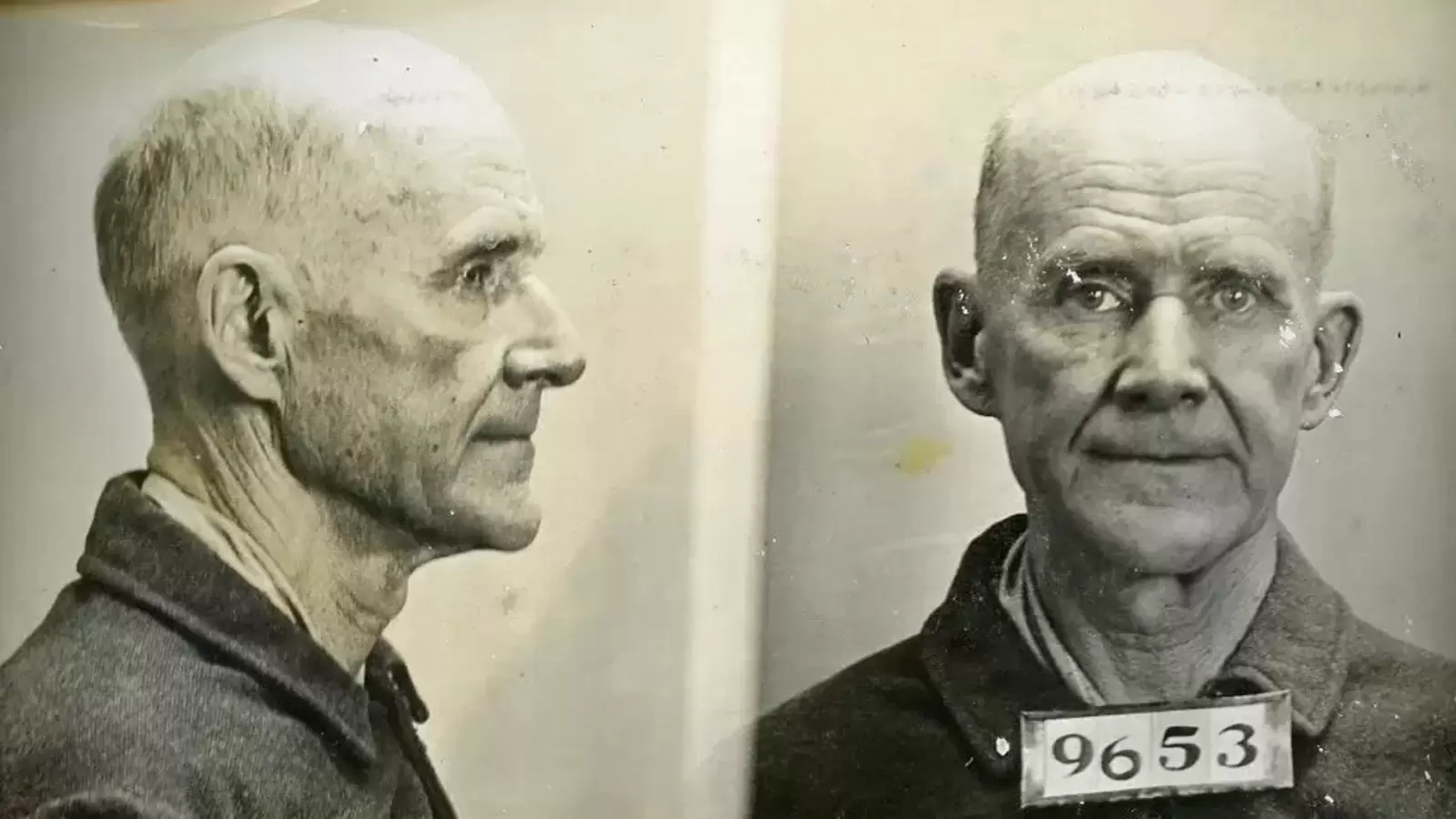
Eugene V. Debs prisoner
Was Debs a false Christian for advocating a Socialist cause?
Would you render to Caesar what is Caesar’s?
Would you condemn Debs to prison for exercising his own freedom of speech?
Would you take your 30 pieces of silver in exchange for his life?
Many among the Original Peoples began to find reasons for common cause with the new revolutionary upsurge.
Working class and intellectual Natives, reservation residents and veterans of the boarding schools alike, organized the Society of American Indians (SIA) in 1911 to advocate for Pan-Indian solidarity. They advocated for equal citizenship rights, the extension of freedom of religion to animists, and the emancipation of Natives from the colonial subjection of the reservation system.
Oneida SIA leader and Haudenosaunee spokeswoman Laura Cornelius Kellogg began to grow interested in this growing movement for socialism as a vehicle for her own peoples’ emancipation.
She stood by her convictions in the face of critics and stood by her sympathies among her allies.
Hadn’t many of their ancestors held things in common and practiced mutual aid?
Hadn’t faithful Anabaptists and Mormons done much the same?
Kellogg argued that the dialectical logic of industry and development that the boarding schools had taught them could be reinvented in a great cooperative commonwealth in a model utopian commune on the Oneida nation.
Though her experimental efforts fell through, Kellogg drew the ire of patriotic anti-communists during the Red Scare. As she faced accusations of disloyalty amidst the war effort of 1917, she insisted on the depth of her own Americanism. Her commitment to socialism and communism was founded on her own American traditions.
She did not need to be a Bolshevik to find communism in American history.
Should she have been deprived of her freedom of conscience, speech, and association?
If you did away with free speech for us communists, you would have to thoroughly sweep away the subversive potentials of journalism, the press, and grassroots media too. Otherwise, the growth of Red buds from radical roots would be just around the corner.
What would come of our world if they managed to actually blossom?
We can get some sense of what this might mean by reflecting on the past of journalism through our present. John Reed was a Socialist and Communist journalist known for his sympathetic coverage of the 1917 Russian Revolution and his cooperation with the Bolsheviks. Earlier in his career, he organized in support of the IWW, attacked Jim Crow, and advocated against the U.S. interventions in Mexico during the Mexican Revolution of the 1910s.
Would a neoliberal Zionist rag like the New York Times or The Washington Post hire him today?
Would the Department of Homeland “Security” disappear him into a blacksite concentration camp?
Would the Israeli “Defense” Forces (IDF) kidnap and beat him for participating in a flotilla to feed Gazans? Would the Central Intelligence Agency (CIA) orchestrate his assassination?
Black radicals showed great sympathy with the radical left throughout the beginning of the twentieth century. Even while facing discrimination from their fellow white workers, even the very comrades that they organized with, they felt that the truth of the cause superseded any of the stupid actions of its more mediocre advocates.
Working class Harlem revolutionary Hubert Henry Harrison joined the Socialists in 1912 in order to pursue freedom for Black people through the vehicle of socialism. He noted that the Black community had been the touchstone of democracy in America since the beginnings of the nation.
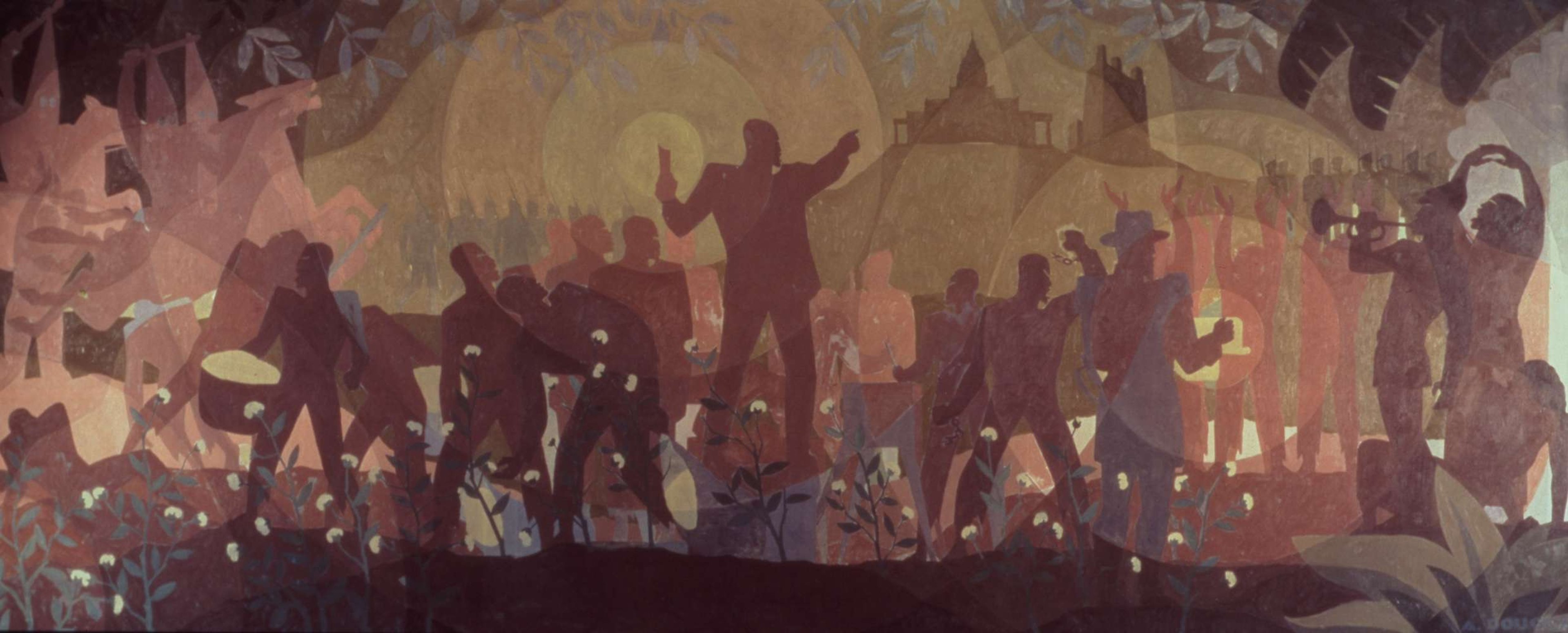
Aaron Douglas artwork
By the forceful example of struggle, they demonstrated to their white brothers and sisters how to be a people that could respect other people and be at peace with them even while entering a war with the organization of society that they allowed themselves to become the accomplices of.
Harrison made his own attempts to desegregate the Socialists and compel them to commit to whatever it would take to become a mass fighting force for a multiracial democracy and cooperative commonwealth.
Was Harrison unpatriotic for advocating for the betterment of his own people in cooperation with all?
Was he an “enemy of American liberty” for trying to democratize his own movement?
W.E.B. Du Bois was a founder of the National Association for the Advancement of Colored People (NAACP) and a Socialist. He went over to Marxism after losing all faith in American liberalism during the jingoistic adventure of World War I. He joined the Communist Party to advocate for national independence for all peoples in 1961.
Was this descendant of free people and slaves an “Enemy of the People,” as Trump might say?
Should we brand the NAACP an “enemy of July 4th, 1776” for having been shaped from its beginnings by a radical like Du Bois?
Fragment II.A.f.ib. The New Deal
When the Great Depression hit the country in 1929, it was the Communist Party that first sought to organize a national response to the suffering of working people in the city and the countryside alike. They put together a mass organization of all poor people known as the Unemployed Councils.
They held rallies in front of government buildings and organized mass protest campaigns. They demanded a relief fund for the unemployed. They staged national hunger marches to D.C.. They convinced free enterpriser President Herbert Hoover that a communist revolution was just over the horizon.
Through this mass democratic struggle and others, including industrial unionism, land reform, and early Civil Rights efforts, the Communist Party managed to kick off the revival of what was then a stagnating working class movement. They stirred up the timbre of democratic struggles into proletarian militancy. They achieved a prominence in national politics that no party could afford to ignore.
Does that sound like a fringe movement of lunatics to you?
Does it sound like they were being unrealistic about the path to popular political power?
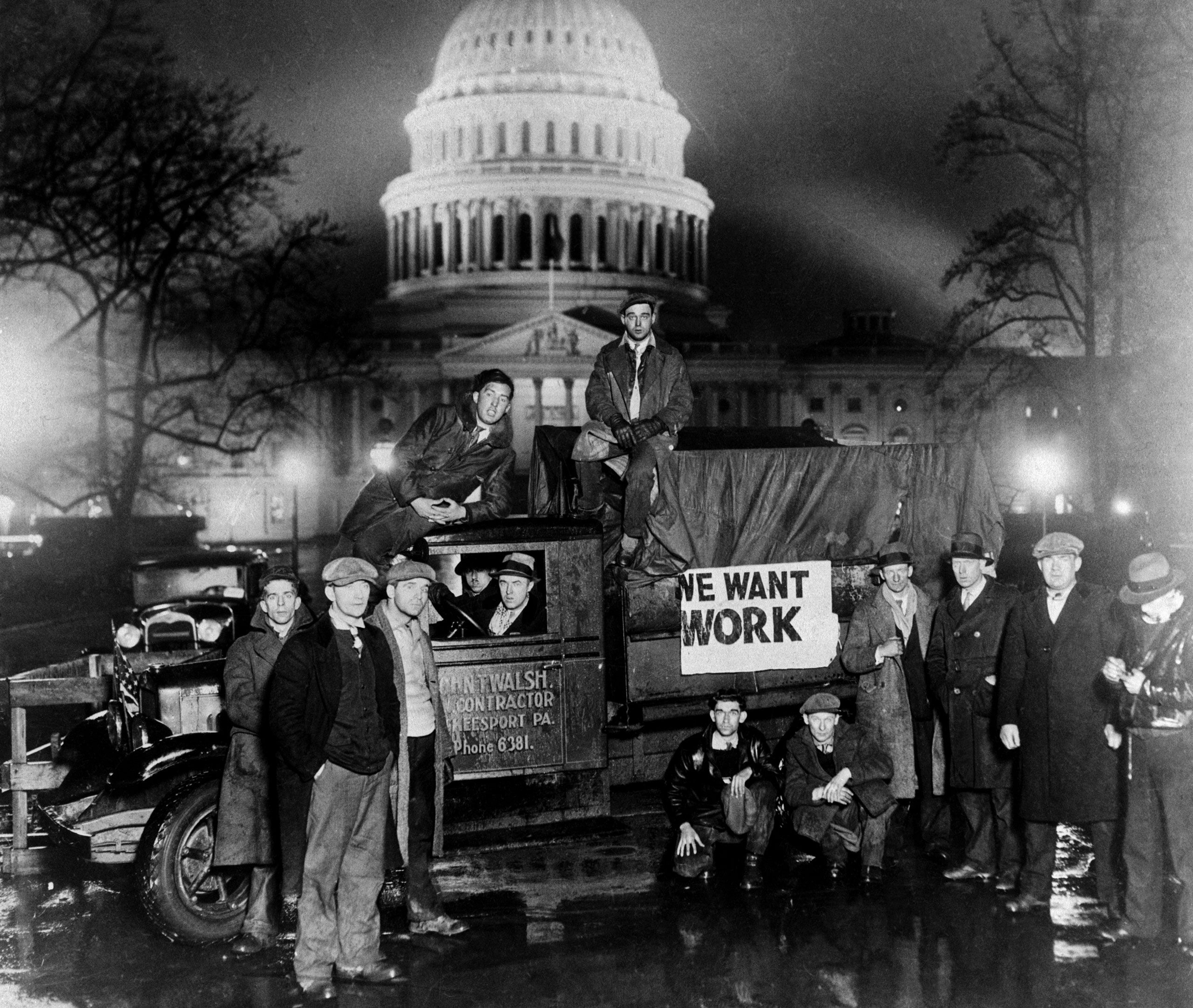
We Want Work protest
A blue blooded Baconist rose to meet the challenge of the growing Communist revolution and birth a welfare state order in substitution for it. From his inauguration in 1933 to his death in 1945, Democratic President Franklin D. Roosevelt was forced to contend with the populist force of the Communists, alongside the other critics of the system that had brought about the Depression.
Roosevelt sought to steal their thunder. He hoped that the communists would demobilize from their efforts and grow up into the kind of liberals that do their duty to society.
Roosevelt supported the Wagner Act in 1935, putting the collective bargaining of workers into law.
He created Social Security the same year, setting aside a pool of money funded by taxes on paychecks to take care of the unemployed, parents, the elderly, and the disabled.
He placed regulative limits on the powers of banks and public utility corporations.
He created jobs through gigantic infrastructure projects and government spending while uniting labor bureaucrats with corporate contractors.
If you look back fondly on the prosperity of the midcentury United States, would you also support those Communists who fought for its basic political framework before Roosevelt put it into law?
Roosevelt was the Napoleon Bonaparte who substituted himself in the place of a Great American Revolution of Communists.
Section II.A.g. Defending democracy
Fragment II.IA.g.ia. World War II
The United States was drawn into a war against fascism that led us into an alliance with Communists.
After a long rivalry between two Pacific empires, Imperial Japan finally struck directly at the U.S.
When Japanese aviators bombed Pearl Harbor on December 7, 1941, our country went to war with the fascist Empire.
Organizing the Allies against the fascist Axis, the U.S. began to reconsider its geopolitical priorities.
President Roosevelt softened U.S. relations with Communists and the government eased its grip over the Communist Party.
Communism became mainstream; as American as apple pie.
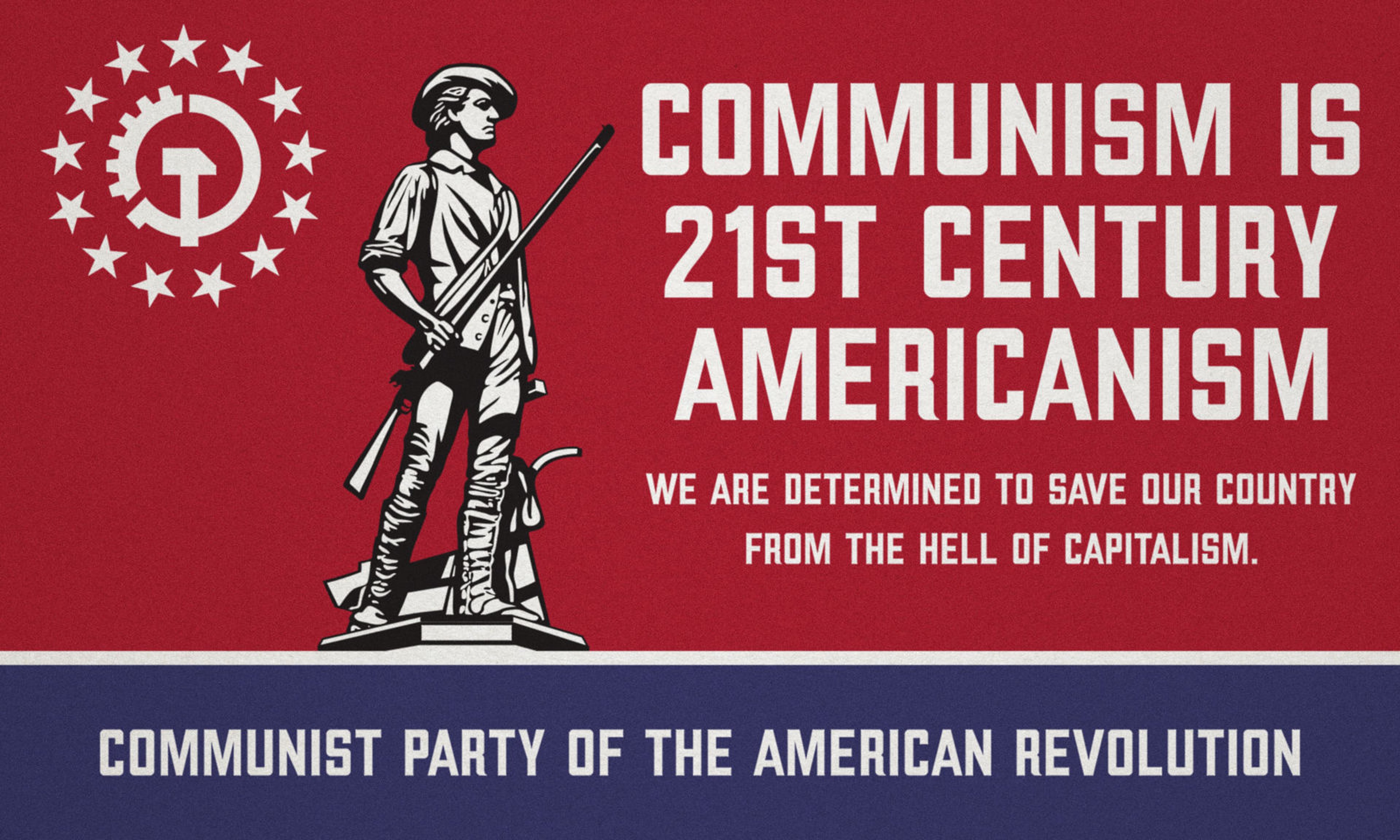
Insert communism is twentieth century Americanism from CPUSA
After Roosevelt held friendly conversations with Stalin at Tehran in late 1943, the U.S. and U.S.S.R. agreed to enter an official military alliance.
Does that make the U.S. government that came out of the war Communist?
If you staunchly opposed Communism at that moment, you may have been accused of treason.
The Communist Party activists and leaders of the trade unions came to an agreement with corporate managers to outlaw strikes during World War II.
They branded any workers who organized wildcat strikes over better pay, more control over working conditions, and democratic limitations on the power of management to be traitors to their cause of a total industrial mobilization for war.
These workers struggled anyways, inspired by the same freedom as those who took up arms against the Nazis.
As the majority of the urban white workers were drafted into the war, the American working class became a wildly diverse, multiracial, multigender, multinational army of work that no one could keep a leash on. The bureaucratic-managerial class began to grow afraid that they had unleashed something that they didn’t understand.
Women on the assembly line grew familiar with the productive forces that labor and machinery could unleash. They grew confident in their own power. They began to talk together about home life. If they could do the same work as a man, why were so many of them paid less money? They continued the thought of freedwoman Sojourner Truth in 1851, who had asked why women were too frail for equality with white men if she herself had worked harder than any white man.
Workers and Communists like Mary Inman, Claudia Jones, and Selma James began to ask why women’s housework was left unpaid, or paid poorly and accompanied by racist condescension, or subjected to the whims of a tyrannical husband. They did not fight for the cause of wages for housework, equal consideration, or socialized care because they hated men and children. They wanted life, liberty, and the pursuit of happiness for all.
Right after the war ended in victory, workers all over the country began a titanic democratic struggle of their own against the tyranny of management, for control over the pace of work, and against the weapons of mass destruction that the automated machines became in the hands of their bosses.
During the War, it was subversive to be a communist—even for the Communists!
Which of the two communisms could you anti-communists even single out to suppress?
If you try to choose both, you have to rely on an abstract instead of a concrete definition of communism.
If you choose just one, you’ll start to sound like the other communists when you explain your reasons why.
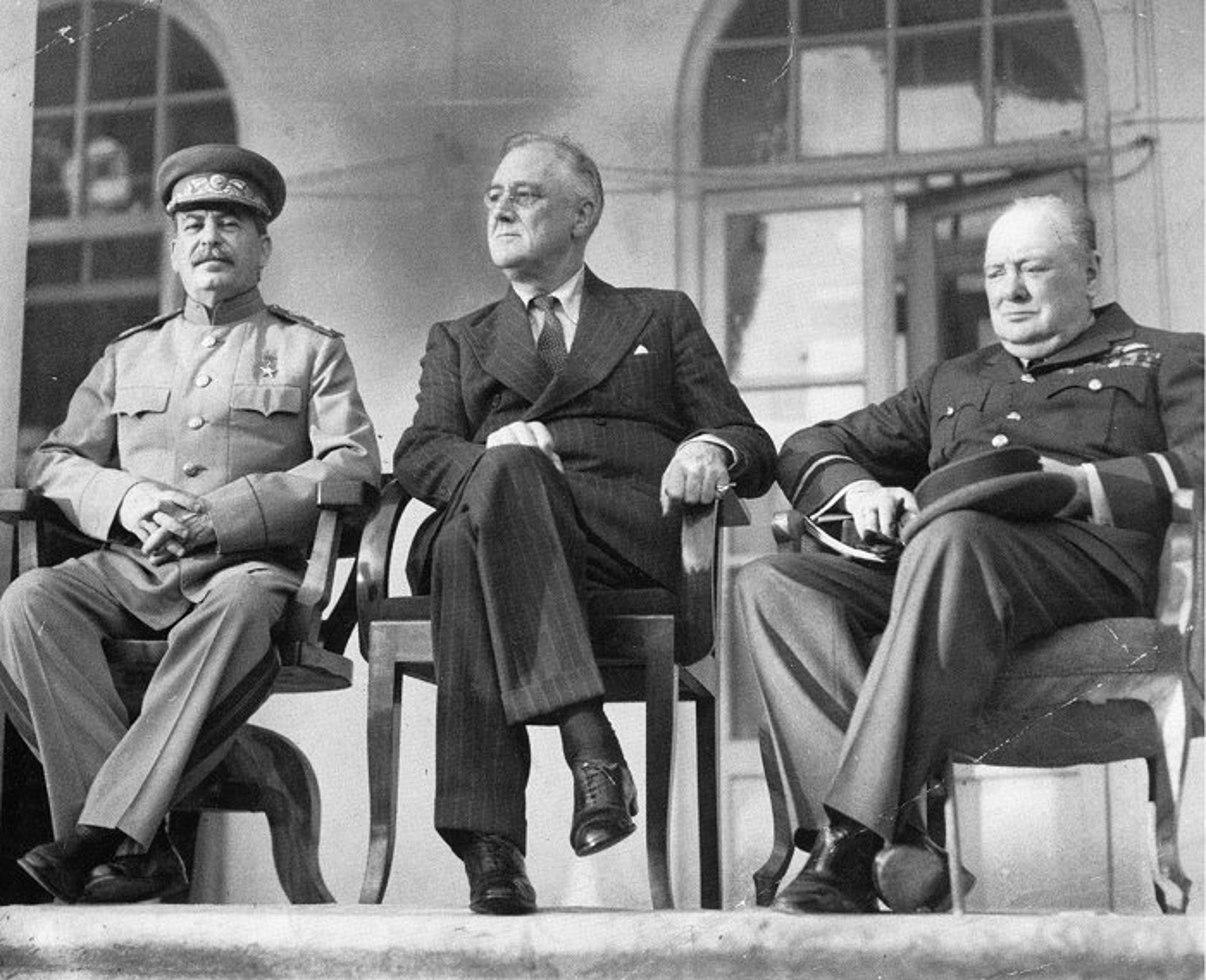
Colorized Tehran Conference
You might think the cares of industrial workers don't matter anymore, here in our post-industrial age.
You might reason to yourself that World War II was an existential struggle that forced people into strange alliances, which could never repeat again in our present day.
But the Civil Rights struggle reached a national stage in an effort to expand the promises of the anti-fascist war effort to American society as a whole. Black trade unionist A. Philip Randolph, leader of the Brotherhood of Sleeping Car Porters, called for a March on Washington in 1941 to demand a democratic Double V—victory over fascism abroad and racism at home.
During the very earliest days of World War II, Black workers fought for the end of lynching, segregation, and discrimination. They did so long before a March on Washington finally did take place in 1963, with the Reverend Dr. Martin Luther King Jr. at the front of it. That was the moment when King delivered his speech about the dream of himself and others for a new, post-racism America.
Maybe you aren’t moved by justice for women, workers, or minorities. What about the celebrities that many of you spend your every waking second thinking about?
It wasn’t just Democrats and unionists who backed the U.S.-U.S.S.R Alliance during and after the War. Celebrities and artists played a prominent role in this Popular Democratic Front, too. In his day one of the most well-known American singers in the world, Black artist Paul Robeson also became known as a prominent advocate for Civil Rights, a friend of communism, and a critic of racist imperialism in the 1940s.
He was a descendant of African American slaves and ministers, a man with a sense for the hell we make out of the earth and the heaven that we can find in doing right by others.
Was he a disloyal and unpatriotic citizen?
Did he deserve to have the State Department revoke his passport under 1950s McCarthyism?
Should our freedom of speech be at the mercy of a gang of censors?
Fragment II.A.g.ib. The Civil Rights movements
If you are from a younger generation, you were likely raised being taught that the victories of the Civil Rights movement under white ethnic Presidents John F. Kennedy (D), Lyndon B. Johnson (D) and Richard Nixon (R) proved the superiority of American liberalism over all twentieth century alternatives. My high school history teachers insisted that the passage of Civil Rights into law proved that American liberalism could incorporate even the most profound dissent into its Constitution.
But if we remember that Kennedy, Johnson, and Nixon oversaw the brutal slaughter of the Vietnamese, and that they suppressed any who opposed it within the U.S., the warm fuzziness of the picture starts to drop away and it begins to harden until it is a sharp scene of decisive struggle. The Presidential realm of Civil Rights was a contest between Baconists—some fighting to enlist people in the fight for a warmongering social democracy, others seeking to wage a taxpayer’s revolt against the welfare state.
Hidden behind the Southern Christian Leadership Conference (SCLC) during the 1950s Civil Rights struggles, yet one of the most profoundly influential organizers in the movement, was Ella Baker. She became known for teaching the youth of the Student Non-Violent Coordinating Committee (SNCC) the value of participatory democracy and self-direction. They quickly became a national political force for Civil Rights and Black Power.
Baker was shut out from the elitist, Zionist, and patriotic mainstream of SCLC for criticizing the cult of male charismatic leaders, the hypocrisy of Tel Aviv’s Chosen People “democracy,” and the cynical opportunism of American imperialist wars for the containment of Communism.
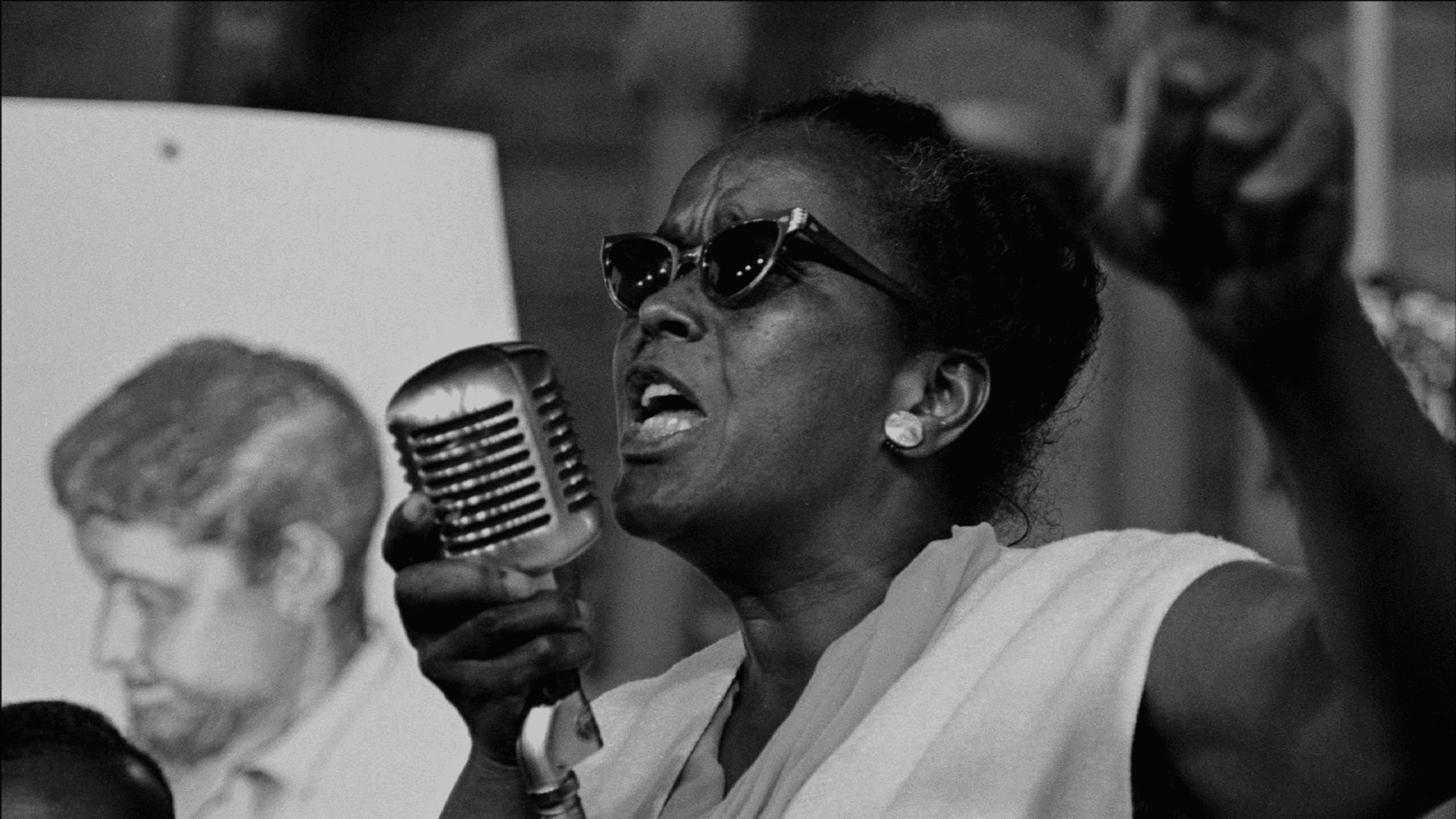
Ella Baker speech
Ella Baker was also a friend of the Communist Party throughout her early activist career, which she spent organizing cooperatives in 1930s Harlem. In 1967, she became a founder of an effort at forming a national Marxist political party called the Mass Party Organizing Committee.
Should we do away with Civil Rights because of her role in empowering the movement?
Was she a monster for caring about the freedom of all of the people around her?
Are you going to condemn someone who put personal responsibility over elite attention-seeking?
Or who fought for the freedom of regular people like you and I?
The struggle for Black Power inspired a wave of proletarian movements.
Poor Natives on and off reservations began to rise up for self-determination.
The Native Civil Rights organization National Congress of American Indians (NCAI) had advocated for the end of Federal domestic dependent nation status and the establishment of government-to-government relations throughout the previous decades. They strongly opposed the Federal policy for the termination of tribal nations that ruled the country after the abandonment of the 1934 Indian Reorganization Act and ending of the Indian New Deal in the wake of World War II.
In the ‘60s, NCAI youth began to move in a more radical direction. Ponca dancer Clyde Warrior organized a Red Power movement for self-determination and self-organization throughout the country with the foundation of National Indian Youth Council (NIYC) in the multinational Native city of Gallup, New Mexico in 1961.
In 1968, the American Indian Movement (AIM) formed out of a multinational coalition of Natives in Minneapolis, Minnesota. AIM condemned American settler-colonialism as thoroughly as they lampooned the imperialist Vietnam War. They called for the unity of all indigenous peoples against police brutality, land theft, and abandonment, whether they be from the western hemisphere that Europeans “discovered” in 1492 or from abroad. Some of the Original Peoples even sympathized with Red China!
From 1969 to 1971, the Red Power militants of Indians of All Tribes (IAT) occupied the island of Alcatraz, California, the site of a government-abandoned prison. They considered the occupation to be a reclamation of land from the colonizers. Powhatan-Renapé and Lenape intellectual Jack D. Forbes took the opportunity of the occupation to found D-Q (or D-Quetzalcoatl) University, one of the very first Native (and Chicana/o) colleges that operated independently from the U.S. government. Forbes believed that the American society of the white cannibals was based on a profound psychological and social repression of its own mixed-race and multiracial nature. He believed that the Chicana/o movement, which organized people descended from colonizers and colonized alike, could offer a powerful corrective to settler white nationalism.
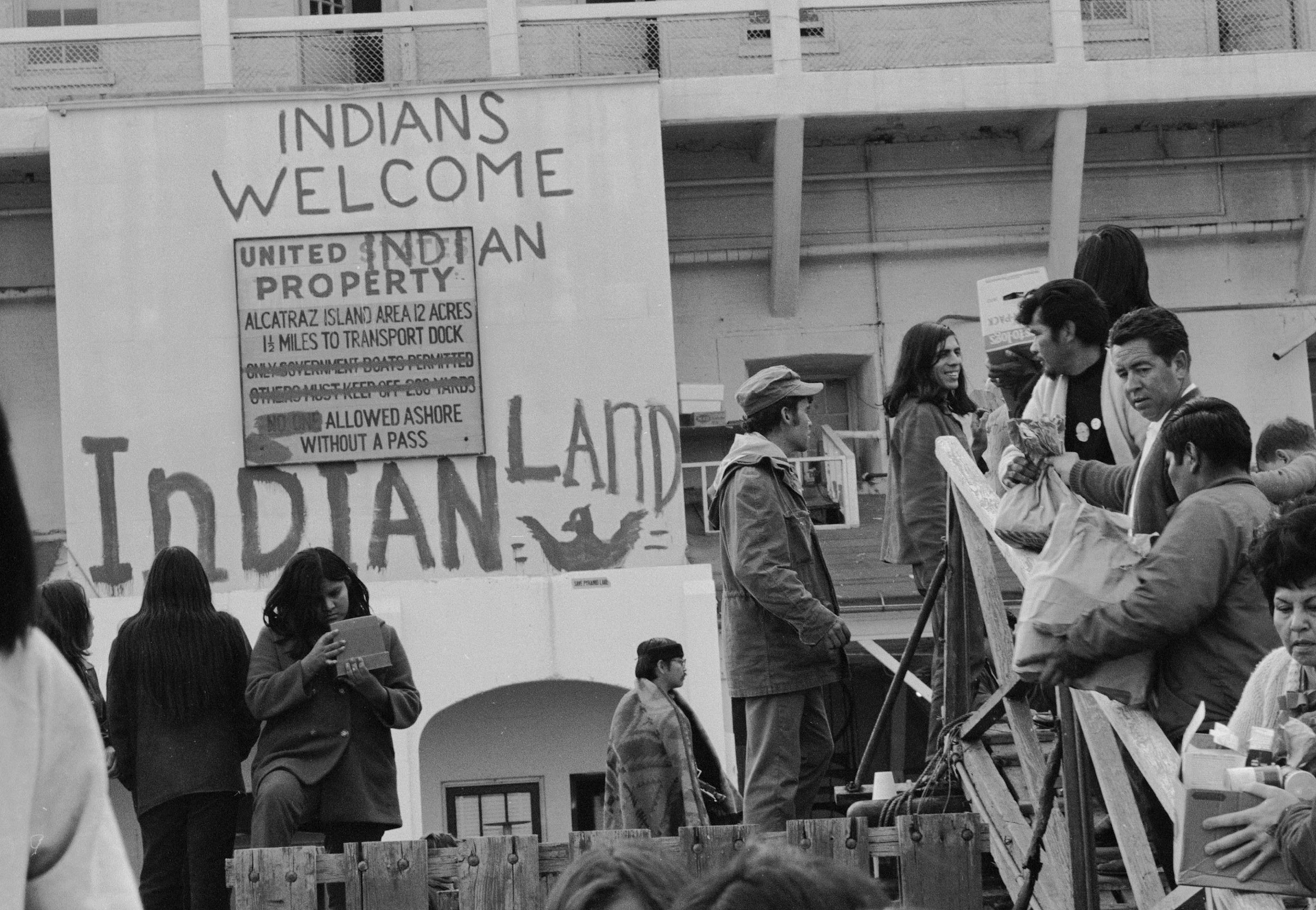
Alcatraz occupation
Native American rebels against imperialism were joined by another people who had suffered under Anglo colonization. The Chicana/o movement was home to many communists, but it was not the birthplace of Mexican American freedom fighting.
Black struggles have been at the forefront of Mexican history—the first Black man to become President in North America was not Barack Obama in 2008, but Vicente Guerrero in 1829.
Mexican Americans organized our own Civil Rights movements in tandem with Black liberation struggles long before 1848, the year that the Treaty of Guadalupe Hidalgo became law and converted us (at least, those who weren’t Black or Native) into American citizens owed protection and equality before the law.
Mexicans had already begun to struggle for multiracial democracy and against chattel slavery in the 1810s Independence movement of Catholic priest Miguel Hidalgo and insurgent guerrilla José María Morelos.
Some of the landed and commercial elite among us chose to assist the expansion of the colonial state, the slave power, and white republicanism. They hoped to join the Chosen People’s Community. Each time the Mexican American working class rose up in revolt, they attacked this collaborator caste with the same fury that they attacked the invaders. They fought for a multiracial democracy of the poor.
The abolitionists among us continued to struggle against the compromises that our government had made with the slave power in Texas and Yucatán for the sake of colonial expansion and commercial exploitation. They organized the Mexican armed forces into a liberating army for the enslaved of Texas after 1836 and the United States after 1846.
The borders of Mexico and the multiracial Spanish-speaking communities who resided along its northern corridors became safe havens for runaways who sought freedom. Dispossession, peonage, and segregation united families of Mexican Americans and Black Americans throughout the nineteenth and twentieth centuries.
The oppressed proletariat of the borderlands was a source of perpetual disobedience, subjected to brutal misrule by white authorities.
Teachers and seeders of ideas like Liberal musa tejana Sara Estela Ramírez offered the option of peaceful mutualism, caring education, and cultural autonomy.
The white authorities themselves brought things to the brink of a social revolution with their complicity in the lynching of Mexican workers like Antonio Rodríguez in 1910 and innocent children like Antonio Gómez in 1911.
The Mexican Revolution threatened to unleash the world revolution in the heart of the American Empire. The revolutionaries crossed borders freely, following the corridors of commerce and migration that had existed in the region for millennia.
The white authorities of McAllen, Texas discovered the Plan de San Diego in 1915. Striking a tone like Nat Turner’s revelation of 1831, the document planned a multiracial uprising for the independence of the southwest and southeast. It called on latinos, Black Americans, Apaches and other Natives, Japanese, and German Americans to rise up in a revolutionary war to the death against white Anglo society.
A sedicioso movement emerged to make good on the document, organizing a Mexican and Black revolt of plebeians and proletarians against the biracial landed and commercial elite of Anglos and tejanos. The Texas Rangers and U.S. Army crushed the revolt with overwhelming violence and a lynch law reign of terror that lasted for years.
When the American government caught wind of Germany’s 1917 Zimmerman telegram, proposing to restore the southwest to Mexico if the U.S. entered WWI and lost, many believed that U.S. intervention in Europe was a necessary addition to the government’s race war interventions on the southern border. They began to surveil and imprison German Americans and radical dissidents who exercised their free speech to speak out against the war.
Border policing and the police state have always gone hand in hand.
We Mexican Americans have long practiced the principles of the American New Left before there was even such a thing by that name. Champions of Mexican American autonomy like Juan Cortina, Ricardo Flores Magón, Emma Tenayuca, and Elizabeth Martínez fought for causes like Black emancipation, feminism, Indigenous self-determination, anarchism, the rights of immigrants, the organization of workers, and anti-imperialism as extensions of our own liberation. Mexican Americans have sought Land and Liberty for all, a universal homeland, in the imaginary meeting of the New Jerusalem, the home of all peoples, with the mythic land of Aztlán, home of the Mexica before their migration to the Valley of Mexico.
The Chicana/o movement was only a continuation of these traditions for a new era. Chicanas, Chicanos, and other movidas fought in organizations that ranged through the nonviolent Civil Rights advocacy of the League of United Latin American Citizens (LULAC), the veteran dissidence of the American GI Forum (AGIF), the Brown Power of the Mexican American Youth Organization (MAYO), the self-defense self-help nationalism of the Brown Berets, the student anti-imperialism of the Movimiento Estudiantil Chicana/o de Aztlán (MEChA), and the national campaign against racism, imperialism, and capital organized by the Raza Unida Party (RUP).
The leaders of the movement could fall into the darkest trappings of charismatic authority, and yet also lead the highest victories of popular struggle.
César Chávez and Dolores Huerta became the faces and voices of the farmworkers movement during the Delano Grape Strike that broke out in 1965. The predominantly Mexican and Filipino American workers of the company had begun by demanding better pay and better working conditions and, facing the resistance of the company, ended in a strike for democratic control over their work. As the leaders of the United Farm Workers, they organized further strikes, sympathy boycotts, and a media campaign for the farmworkers’ cause. They became iconic participants in MLK Jr.’s Poor People’s Campaign.
And yet, at the same, the faces of the UFW buried the role of the Filipino American Agricultural Workers Organizing Committee (AWOC), which drew on a long history of Asian American working class struggles that had always been intertwined with those of Mexican Americans.
Even worse, Chávez was using his charismatic authority to form a network of abuse. He targeted Huerta and countless other women and girls in the movement. We Mexican Americans have our own Epsteins among us.
The same cycle of the forgetting of others, the inversion of hopes, and the pattern of abuse can be found throughout the histories of the movement. Going through them proves the dire need of a universal ethic and the rule of law in social movements—perhaps communism?
Hispano preacher Reies López Tijerina and his struggle for land in the ‘60s, which set the terms of its legal case against Native sovereignty.
Think of the 1968 East Los Angeles school blowouts, which today few people know were partially organized by Chicanas like Vickie Castro.
Or the Christmas Eve 1969 protest outside of LA’s St. Basil Catholic Church, which did not fully draw on the power of its multiracial alliances to make its case for representation and support in the Church.
Or the August 29, 1970 anti-Vietnam War Chicano Moratorium of Los Angeles, where a cop shot journalist Rubén Salazar in the back of the head, when informant Eustacio Martinez drove event founder Rosalio Muñoz from its organizing committee for being a communist.
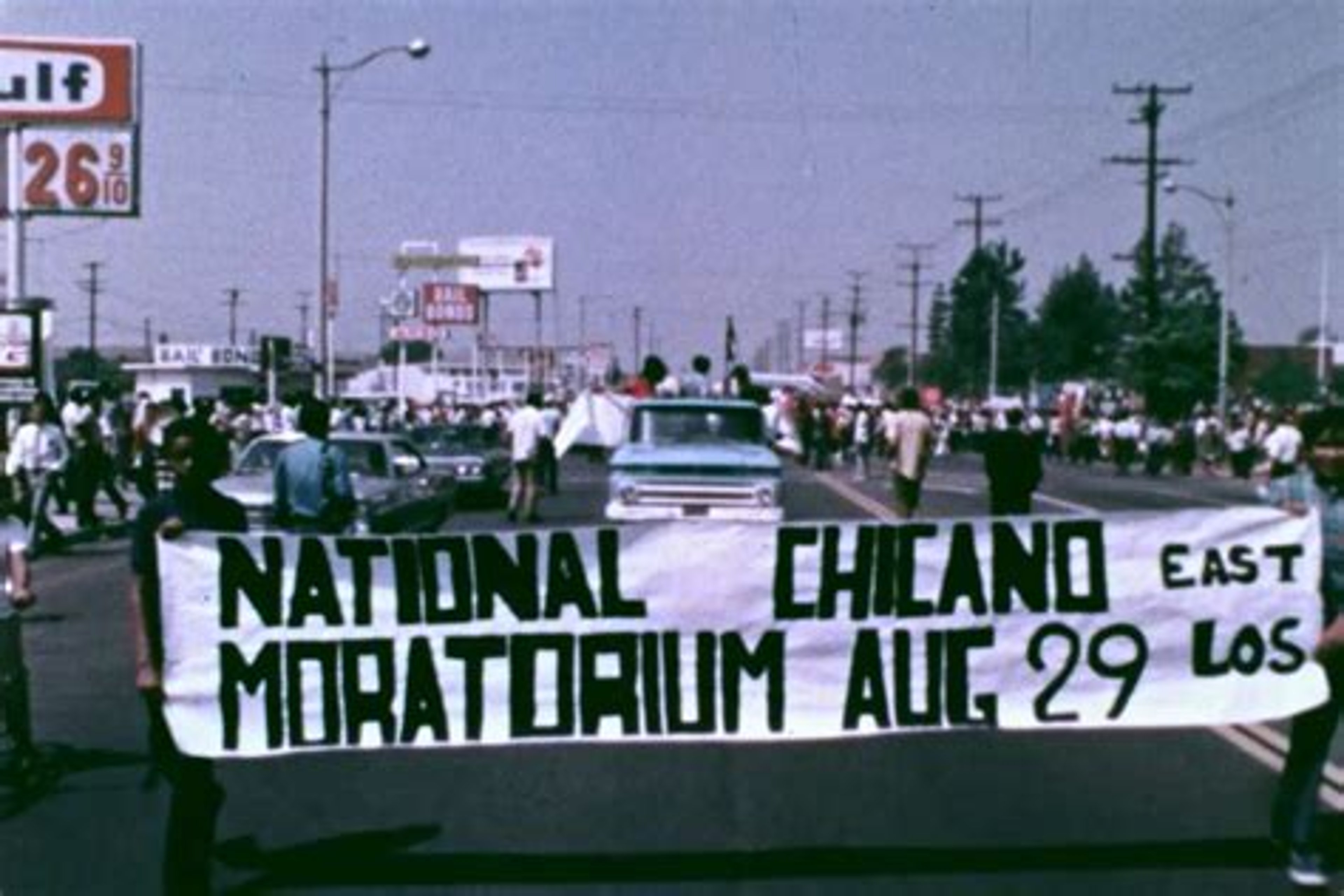
Chicano moratorium photo
Even Chicana/o Communists fell into the same old trap. Maoists and Stalinists on the Labor Committee of the Raza Unida Party formed a sect of their own called August 29th Movement (ATM) in 1974. Most of their archives are filled with obscure polemics and position papers. The action they are best remembered for is stealing and destroying the entire edition of a book written by Elizabeth Martínez, because they disagreed with some of the details of her interpretation of Mexican American history. They certainly don’t provide good models for what communism could be.
ATM were part of an effort to renew Communism for their own time of multiracial militancy. This was the New Communist Movement (NCM), which called on students to go down to the factories and fields, which did not have many more successes than the ATM provided. Yet it still left some residual legacy. After a long chain of sect formations, mergers, and splits, ATM and other sects finally became part of what is today the Freedom Road Socialist Organization (FRSO), which you may have encountered at rallies. Even traces from the obscurest history of the movimiento are all around us.
The model to draw from in understanding communism is not its sectarian residues, but the great mass movements that they were the traces of. That was the site of alliance and fusion for the multiracial millions of the working class.
Asian American, Black American, Mexican American, and Native American students at UC Berkeley organized the Third World Liberation Front in 1968 as an attempt at forging this multitude into a fighting force.
The Chicana welfare rights organizations of the 1970s brought movidas together with Black women to advocate for freedom for single women and mothers from bureaucratic harassment.
The AIM and Oglala Lakota occupation of Wounded Knee in 1973, the site of the 1890 U.S. Army massacre, inspired Americans of all races to direct the anti-imperialist struggle within. They began to understand the United States as a prison house of nations.
Feminist veterans of the new Wounded Knee organized Women of All Red Nations (WARN) in 1974. Women like Cheyenne activist Marie Sanchez and Tulalip militant Janet McCloud sought to found a new democracy based on the mutual care of all.
When Civil Rights veteran Jesse Jackson ran for President in a Democratic Rainbow Coalition ticket of wellbeing for all, self-determination, and anti-imperialism, he drew on a throng of veterans from all of the organizations that made up the experience of Civil Rights, Black Power, the New Left and New Communist Movement.
Whenever the American left adopts militant tactics today, it refers back to this theoretical atmosphere—think of how many people at the 2024 encampments spent their time reading and discussing texts and ideas from the ‘60s and ‘70s.
At every turn of the new movement of movements, it was Black workers who led the charge. In 1965, Los Angeles Police Department (LAPD) officers pulled over Black motorist Marquette Frye under the suspicion that he was driving under the influence. When he failed a sobriety test, they tried to arrest him. When he resisted, they began beating him—they went as far as to strike him directly in the face with a nightclub while onlookers watched.
Enraged crowds began assembling throughout the majority-Black neighborhood of Watts. Poor Black people smashed the windows of white establishments, looted the goods from the outsider-owned department stores that got rich off of their money, set fire to the prison camp of a neighborhood that they were confined to, and engaged in street fighting with the police and National Guard.
Proletarian revolutions always create their own martyrs. In the memory of the fallen, the living reflect on their imperative to continue the fight to victory.
black armband peace symbol
In February of 1965, devout Muslim, Black nationalist, anti-imperialist, and revolutionary socialist Malcolm X was murdered by FBI-assisted assassins from the Nation of Islam—an organization that he had left because of its endemic personality cult of sexual abuse. He was killed by people from the very community he had sought to lead to freedom—the Black Muslims of New York City.
Malcolm X’s life, later turn to internationalist intercommunalism, and death at the hands of the malorganized inspired others to continue the struggle. Working class Oakland students Bobby Seale and Huey Newton went on to found the Black Panther Party for Self-Defense in 1966.
The Panthers began to organize armed patrols to monitor police, free breakfast programs to feed children, and clinics to take care of the sick. They practiced the ethics of Communism, Christianity, and Islam all at once.
In April of 1968, a white racist assassinated the Reverend Martin Luther King Jr., pacifist, devout Christian, and democratic socialist. King had come to the site of his murder, Memphis, Tennessee, to support striking sanitation workers.
In his later years, the Civil Rights icon had become a critic of the senseless bloodbath that the U.S. war in Vietnam had made out of the world. In 1968, he began to lead a Poor People’s Campaign against the persistent poverty that American workers of all races suffered from.
For his criticism, the FBI had initiated a harassment campaign against King that aimed to drive him to suicide. They had finally achieved what they wanted in 1968.
Across 100 cities, poor people of all races broke out into a rebellion led by mourning Black people. They organized protest marches in the millions, looted the hoards of white-owner corporations, and battled the occupying fronts of the police and National Guard. The Black Panther Party grew into a national and even international force from the new upsurge.
One of the most effective organizers of the Black Panther Party, working class Chicagoan youth Fred Hampton, was also a communist militant. He united poor people of all races, white and Black alike, into a Rainbow Coalition to fight for their own class power against the police state and monopoly capital. Like other Panthers, he organized free breakfasts, childcare, and education for his community. He fought for both Black Power and the power of every other community.
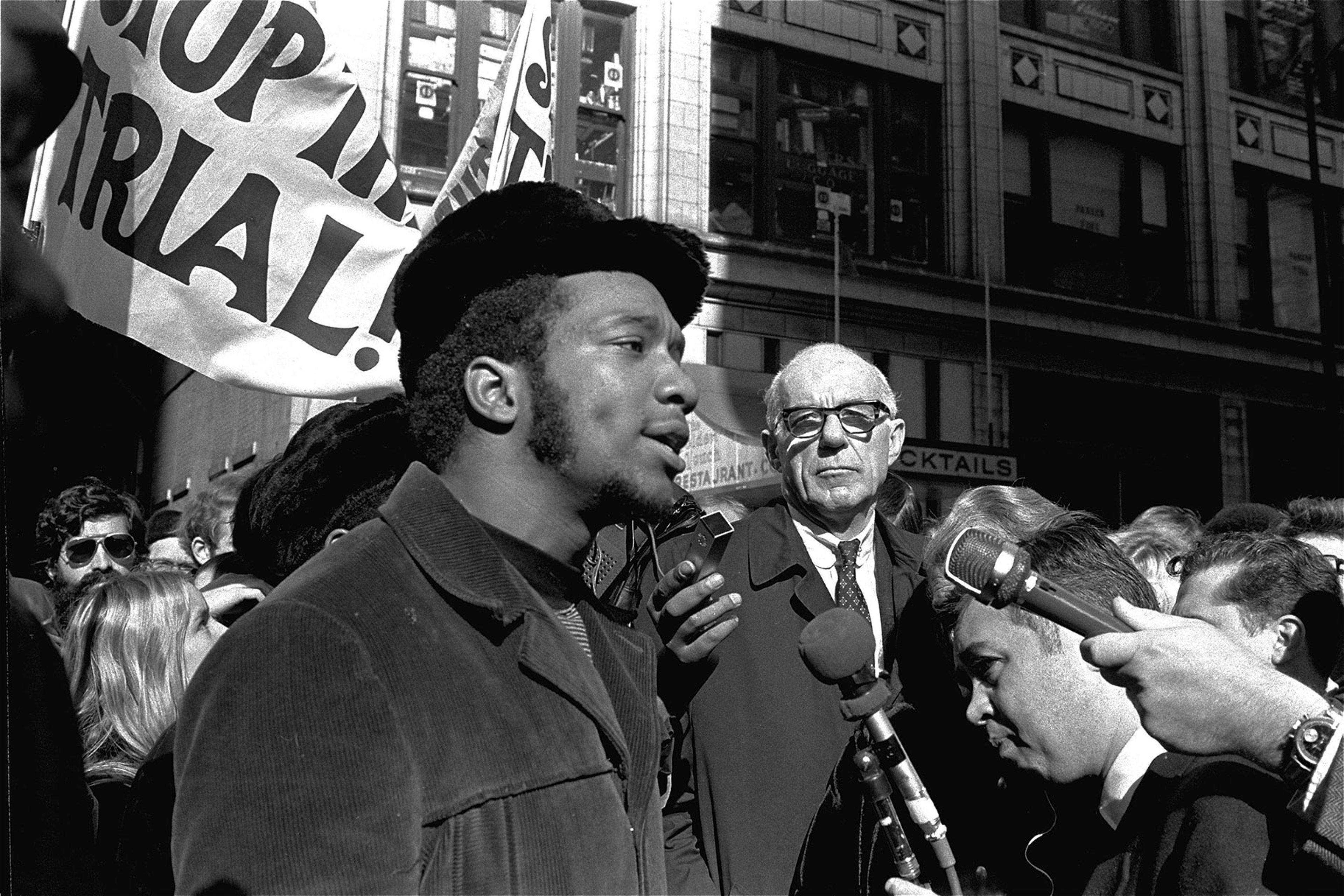
Fred Hampton
Hampton’s organizing made all the right people angry for all the wrong reasons. The Federal Bureau of Investigation (FBI) began to formulate a plan to take him out. While he slept next to his girlfriend on December 4, 1969 Chicago police riddled his apartment with bullets, assassinating him in the night.
When they shot that man in cold blood, were they just killing another Marxist subversive?
What do you think the media would say about Hampton if he died today instead?
Would a jury selected from the public—trained to be biased against a man like Hampton—actually give a fair trial for charges drawn up against the police who murdered him?
Is it right that an imperial government crucifies the few who empower the many against it?
Why is it that family values only seem to matter when they can be used as a weapon against the poor?
Many communists could be counted among the leading women of the same feminist movement that won the right of reproductive autonomy for everyone.
Militant left-feminists like Florynce Kennedy, Gloria Arellanes, and Angela Davis sought to give women the choice to have or not to have children. To accomplish this for themselves, they fought for the right of everyone to be who you please, to keep your own desire as much of a secret as you wish, and to be in full command over the entanglements of your own body with others. They fought for the freedom of women from harassment, of gay people from police terror, of welfare recipients from government paternalism, of children from the cruelty of teachers.
The freedom that they sought for themselves was so expansive in scope, that it included everyone.
Feminist march
Feminists managed the basic form of these principles into law in 1973 with Roe v. Wade, and they were the law of the land for almost a half century before the Trump-appointed Justices of the Supreme Court struck the principle back into the shadows of the back alleys and the darkness of dumpsters with 2022’s shocking case of Dobbs v. Jackson.
If you have ever gone to a family planning clinic, taken hormone replacement therapy, or gone to a Pride parade, you are benefiting from the struggles of communists in the feminist movement.
What sort of person does ending such a widely popular law as Roe v. Wade serve?
The Civil Rights movement ended with a great democratic victory in the realm of law, but it came with the cost of the demobilization of millions of people. Leaders claimed that they would represent the people within the institutions. Post-Vietnam War inflation, deindustrialization, and automation threw the urban base of the movement into disarray. Politics became the specialized profession of a few serving their constituents with their skills, degrees, and connections.
Careerism masquerading as activism became the norm.
Opportunism dressed up as community-mindedness reigned.
Cynicism softened by a sense of irony pervaded everything.