
May 15, 2026
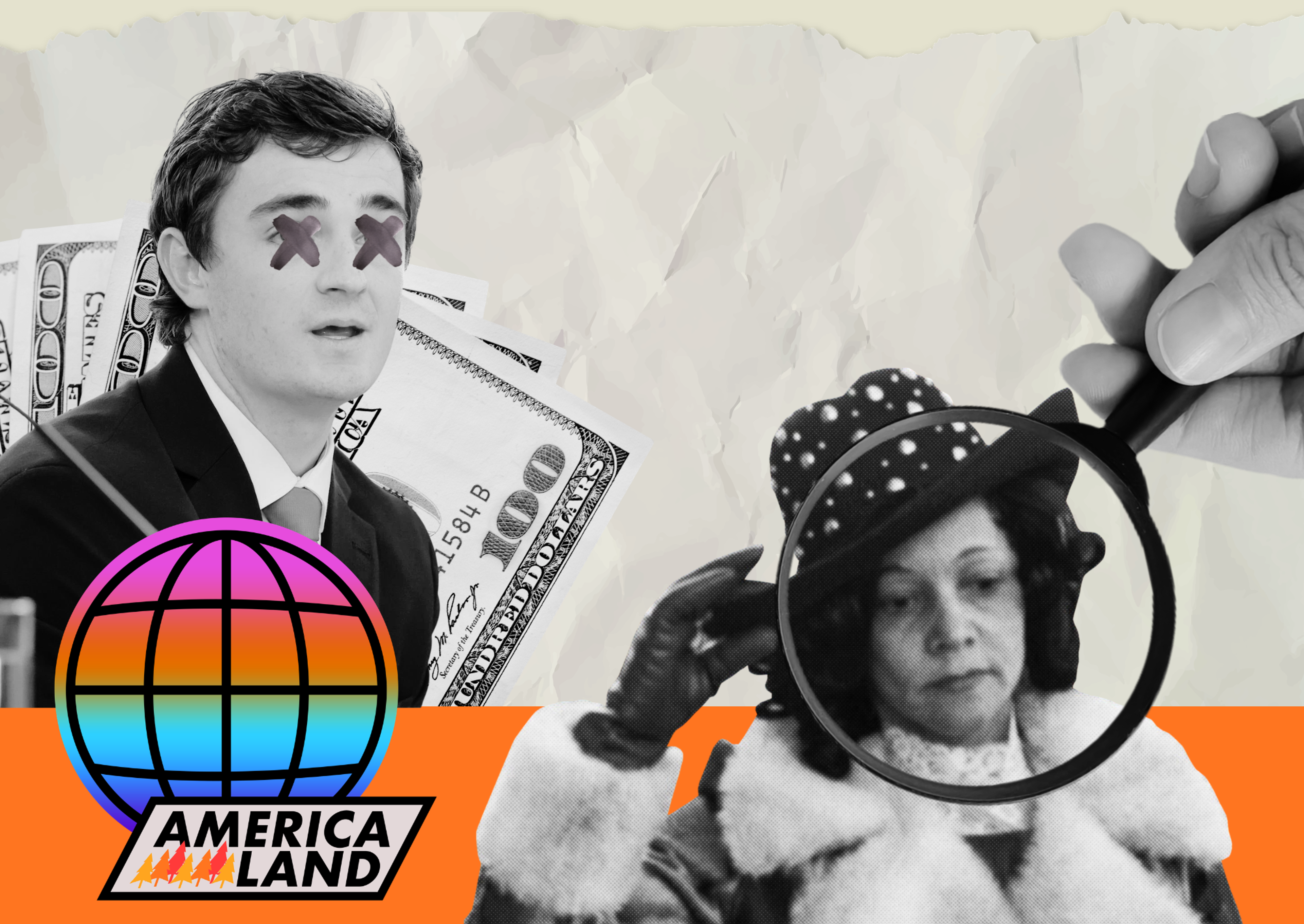
Fraud is the New Welfare Queen
An Inside Look at Conservatives' Current Hyperfixation.
by Sam Steen
Credit: Sam Steen
This essay was originally published on the author’s Substack.
Turn on the TV or scroll on social media, and you will hear the term fraud. Thanks to Nick Shirley and Republican supporters, it is the latest political catchall used by conservatives to bludgeon opponents and rebuff criticism. It is brought up everywhere and is being positioned as an impending serious issue: an issue that Republicans will, undoubtedly, posit themselves as the solution. It certainly captures much of the conservative political lexicon. Fraud could mean a myriad of things and create an unknown amount of problems. We are warned about voter fraud, financial fraud, and immigration fraud. The Democratic Party is made up of fraudsters, Somali people are frauds, and the “fake news” media is nothing but fraud.
Task forces are created. Debates begin in local state government. It is a policy to run on and a tool to whip up your base. Somali migrants were specifically targeted in Operation Metro Surge in large part because of an influencer’s “discovery” of fraud (off topic, but I am pretty sure Nick Shirley is the only Mormon with FAS). It was also what was used to justify the halting of Medicaid funds in Minnesota after the surge ended, and fears of voter fraud are behind the arguments being made to create unprecedented voter suppression with the SAVE Act.
All of these actions are a result of, supposedly, one thing: Fraud. And fraud does exist; around $233 billion to $750 billion is estimated to occur each year. Most of it is occurring in the form of white-collar crime or imposter scams, not immigrants stealing tax dollars or swinging elections.
After looking at all of this I can’t help but ask, “haven’t we seen this type of thing before?” Not fraud, that’s happened. I mean the consolidation of political movement around some catchall to create fear and then offer a solution, often the “solution” is really a party achieving political goals and othering an entire group of people. The answer is yes, we have, except we used to call them “Welfare Queens.”
The “Welfare Queen”
The term Welfare Queen dates back to the 60s, but really gained traction in 1974 with the case of Linda Taylor. Taylor, a black woman, was charged with committing $8,000 in fraud through four aliases. Later, in 1977, she was charged with fraudulently obtaining 23 welfare checks. She was covered in the Chicago Tribune and JET magazine, where it is believed the term welfare queen was coined.
This story was eventually picked up and sensationalized by Ronald Reagan (this nation’s ghost) during his presidential bid. Reagan sought to use a sensationalized retelling of Taylor to gain some political capital during his campaign as a way to criticize social programs within the United States: programs that we would eventually cut in an effort to fund “Reaganomics.” Below is an excerpt from one of his campaign speeches:
“She has 80 names, 30 addresses, 12 Social Security cards and is collecting veterans’ benefits on four non-existing deceased husbands. And she’s collecting Social Security on her cards. She’s got Medicaid, getting food stamps, and she is collecting welfare under each of her names. Her tax-free cash income alone is over $150,000.”
— Ronald Reagan, Jan 1976, Asheville, N.C. Campaign Trail Speech, “’Welfare Queen’ Becomes Issue in Reagan Campaign” New York Times, Feb 15, 1976
Employing the trope of welfare-obsessed individuals who sought to game the system, Ronnie-Boy was able to rally support with the general public for shrinking things like food stamps, housing assistance, education, and job training. In reality, he was balancing a federal budget after increasing military spending; it was just easier to sell when you say it’s for combating leeches on social programs. It also helped that the image voters had of welfare recipients was almost exclusively black, allowing Reagan and his Republican colleagues to paint black communities in a light that made it easier to dehumanize them and easier to shoot down any policies that would help them. A derogatory picture of black mothers whose husbands abandoned them, defrauding the system, meant to do nothing but help them make it easier to defame civil rights movements by putting a “beggars can’t be choosers” image onto black communities.
The political discourse around welfare continued into the 80s and then the 90s, where it was employed by Bill Clinton during a bipartisan effort to reform the welfare system. This led to the AFDC ending in favor of TANF. This bill creates a number of welfare restrictions seemingly designed to eliminate the nefarious welfare queen. It made payments temporary, created family caps, and support was paired with work requirements. This moralized welfare creates barriers for those deemed undeserving of public assistance. Pair that with the misogynistic and racist trope of the welfare queen, and you can manufacture the consent needed to keep aid away from the needy, all while telling your constituents that you’re saving their tax dollars.
This stereotype continues to this day. We see it on Jubilee’s Surrounded with James Talarico, where he spoke to a group of undecided Texas voters. During a conversation about the effects of healthcare and food assistance cuts, Daniel, an undecided voter, brings up welfare queens specifically as a way to push back against Talarico’s egalitarian and communal understanding of government assistance.
Talarico responds by flipping the stereotype on its head. Billionaires are the welfare queens living off of our tax dollars, and getting rid of assistance not only helps the wealthy but also hurts everyone else in the working class. I think that this interaction really gets to the thread of history discussed above. Welfare Queen and anti-welfare stereotypes serve to get people like Daniel to shun welfare programs meant to help people, because of a fraudster boogeyman that we imagine running off with our tax dollars. Daniel was an undecided voter, and this was the problem on his mind. It doesn’t matter that welfare fraud occurs very little or that the majority of welfare program recipients are white; Daniel still wanted the government to do something about supposed welfare queens who are looking for handouts. Even if it hurts all of us.
Do-It-All Fraud
Welfare Queen is certainly still in the cultural consciousness of many voters, and it should be understood that the tacit issue being expressed is that welfare queens are committing fraud. The implications wrapped up in the welfare queen stereotype are not just that there is a moral failing by not pulling up their bootstraps and living off the government, but that they have, somehow, swindled the system and taken what does not belong to them. In the modern day, we see that conservatives have shed the old stereotype and, instead, are just using fraud in a way that does not restrict its application to broader political goals and actions.
As I noted at the beginning of this article, fraud is employed in the debates surrounding immigration and voting. It is not limited to these issues either; fraud is spoken about as some specter that haunts the finances and fabric of people’s lives and our government. It isn’t the scourge of welfare queens responsible for the issues that conservatives communicate to the public, but rather a broad, amalgamous fraud that is perpetrated by many in every aspect of your life.
Last week, Representative Jodey Arrington of Texas went on Fox Business and spoke with Larry Kudlow about a possible reconciliation bill to get funding for Homeland Security and to scold Democrats, who they say aren’t interested in governing. After around a minute of talking about the urgency behind getting an end to the partial shutdown through reconciliation, Larry puts forward the idea of getting the money through anti-fraud action, calling it an offset (he also shills against capital gains tax while he’s at it). Jodey is tickled at this idea and says that this is exactly how Republicans should attack the affordability issues that started with the Biden/Harris administration. Arrington follows this by saying the war in Iran can be paid for by the president’s war on fraud, positing a fraud crackdown as a means to lower prices that have shot up since the war started.
Here we see that “catch-all” fraud that’s become stylish for many conservatives. The messaging couldn’t be clearer: stopping fraud means stopping your financial troubles and stronger national security. Despite the fact that this is a non-sequitur and no real evidence exists to support this “prosperity à la anti-fraud” economic model, fraud is leveraged much like a welfare queen as a way to explain economic woes and deliver a clear solution. Killing fraud, we are told, could fund an entire war and covertly planting the message that if it weren’t for those fraudsters, we wouldn’t be feeling this war at the pumps.
The conversation about fraud really became consequential after conservative influencer Nick Shirley made a video on Dec 26, 2025, centered around what he called “Minnesota’s Billion Dollar Fraud Scandal.” Shirley hardly needs an introduction, as this video shot him into the mainstream as a conservative influencer and a bit of a household name to be invoked by shifty uncles who are all of a sudden really interested in the demographic makeup of a Walmart parking lot. In the video, Shirley visits daycare facilities operated by Somali migrants in Minneapolis that he infers are committing fraud due to the following reasons: he can’t see any kids, he thinks they look empty, random bystanders can’t see any kids, and public payment records he had printed. He deduces that no kids plus money equals fraud. Now that the Nick Shirley video has largely been debunked, what I am interested in is what happened after the alarm was sounded on fraud in Minnesota.
Almost immediately after, childcare funding for five blue states was frozen by the Trump administration, citing fraud. Two months later, in a press conference that would put The Onion out of business, JD Vance and Dr. Oz made the announcement that they would temporarily halt Medicare payments to Minnesota over fraud concerns. Then, on March 16, Donald Trump created a fraud task force headed by Vice President JD Vance.
JD pulled his face out of the couch cushions and got to work. Two weeks ago, he held the first anti-fraud task force meeting, where he discussed cracking down on social programs across the board to protect taxpayer money. He’ll be looking at a large slew of benefit programs that a lot of Americans use to get by, such as SNAP, which one in eight Americans use.
Even more consequential than that, Shirley’s video is seen as the catalyst for large immigration enforcement via Operation Metro Surge in the Twin Cities. President Trump had already claimed that Somali people were fraudsters in a vitriolic, racist rant earlier in December, before the video was uploaded to YouTube. Shirley served as the “journalist” who provided “proof” to the president's hateful tirade and, thereby, the justification for a crackdown on Minnesota. The operation wasn’t particularly successful either, despite what the administration tells you. First, it terrorized the entire community and killed two people, and second, it was deeply unpopular with the public. It tanked his approval rating and increased the support for the abolishment of ICE. But now that the dust has settled a bit, Trump is back to his normal playbook. At the end of March, he said Somali migrants come to America and rob us blind, signaling his intent to continue his action against the community.
Fraud is an albatross the Trump administration tied around the necks of immigrants and, outside of just a reason to create a mass deportation program, it also tied them to the case Republicans were making for the SAVE Act. The bill is nothing but voter suppression, but conservatives are justifying the bill’s existence through fear-mongering about non-citizens voting in our elections and deciding election results. In other words, voter fraud.
The bill has a lot of problems that will affect the accessibility of elections for American citizens as much as non-citizens. It requires you to show a passport or a birth certificate in order to participate in elections. This is because both of these documents prove citizenship. Many Americans either don’t have access to or flat out don’t possess these documents. It also costs money to get a passport or replacement birth certificate, creating a type of poll tax. Even with these problems, the country is split in half on support of the SAVE Act, with the overwhelming amount of support coming from Republicans. And with the claim of immigrant-driven voter fraud being the chief argument for the bill, many Americans, like Daniel and his welfare queens, are supporting bad policy to stop the perception of fraud. It doesn’t matter that voter fraud basically never happens; the fear is enough to garner support.
Conclusion
Fraud purchases a lot for conservatives in the marketplace of political strategy. It is a workhorse issue in Trump’s domestic agenda. Much like what we see with the welfare queen stereotype, it can justify what would otherwise be unpopular policies on issues like immigration, voting, and economics. Its invocation stirs real-world policy change that is largely antagonistic towards government support programs that benefit a large majority of us. Ronald Reagan and Bill Clinton used the welfare queen to campaign and establish new programs that they framed as solutions to the welfare-induced economic crisis. Donald Trump talks about fraud to push his voter ID laws and justify militant ICE operations. We also have Republicans talking about how the money we get from stopping fraud can relieve financial pressure felt in the nation.
It can target minorities outright, as, optically, it is not immediately racist to call people fraudsters while subtly creating the approval to target groups of people seen as undesirables. Talks of fraud can also distract people from conversations about wealth accrual within the billionaire class by directing people’s fear of being cheated onto vulnerable groups. Lastly, anti-fraud action and rhetoric put people who notice all of the above issues on the defensive.
That is to say, when you point out that anti-fraud legislation and conversations are a Trojan Horse for racism, political distractions, and poor policy, you will be postured as pro-fraud, effectively ending your side of the conversation.
This is the mark of effective propaganda and the best way to combat propaganda is to attack the underlying assumptions it demands you yourself project onto it. You need to dismantle the arguments being made below the surface that it will not say outright. It will not state plainly that the target is immigrants and voting rights. It will first spin a tale of fraud and welfare queens.