
Nov 11, 2026
How The Collapse of the Soviet Union Fueled Jeffrey Epstein’s Sex Trafficking Empire
The post-Soviet period brought war, poverty, and sex traffickers to Eastern Europe.
by Joe Wrote
This essay was originally published on JoeWrote.com.
It is an uncomely cliché that powerful, wealthy men seek companionship in the infamous “Russian hooker.” A beautiful, young, foreign white woman makes a nice ‘date’ for high-class cocktail parties and galas. So many politicians and tycoons have been caught with sex workers from Central or Eastern Europe (CEE) — Russia, Ukraine, Slovakia, Belarus, Poland, etc. — that it’s become a trope, a running joke of the elite’s hypocrisy and sin.
But the stereotype didn’t fall out of thin air. Rather, it is a dark reflection of the dire reality facing CEE women since the collapse of the Soviet Union. Where once the Union of Soviet Socialist Republics (USSR) provided security, stability, and opportunity, the end of socialism and rapid introduction of capitalism brought economic hardship, civil violence, war, and mayhem to the former Eastern Bloc. Seeking to entrap the masses of women and children looking to escape a life of misery, traffickers and criminals swarmed the Soviet and Baltic nations, luring victims into their networks with promises of wealth and comfort in the capitalist West. Among the predators was the world’s most infamous sex trafficker: Jeffrey Epstein.
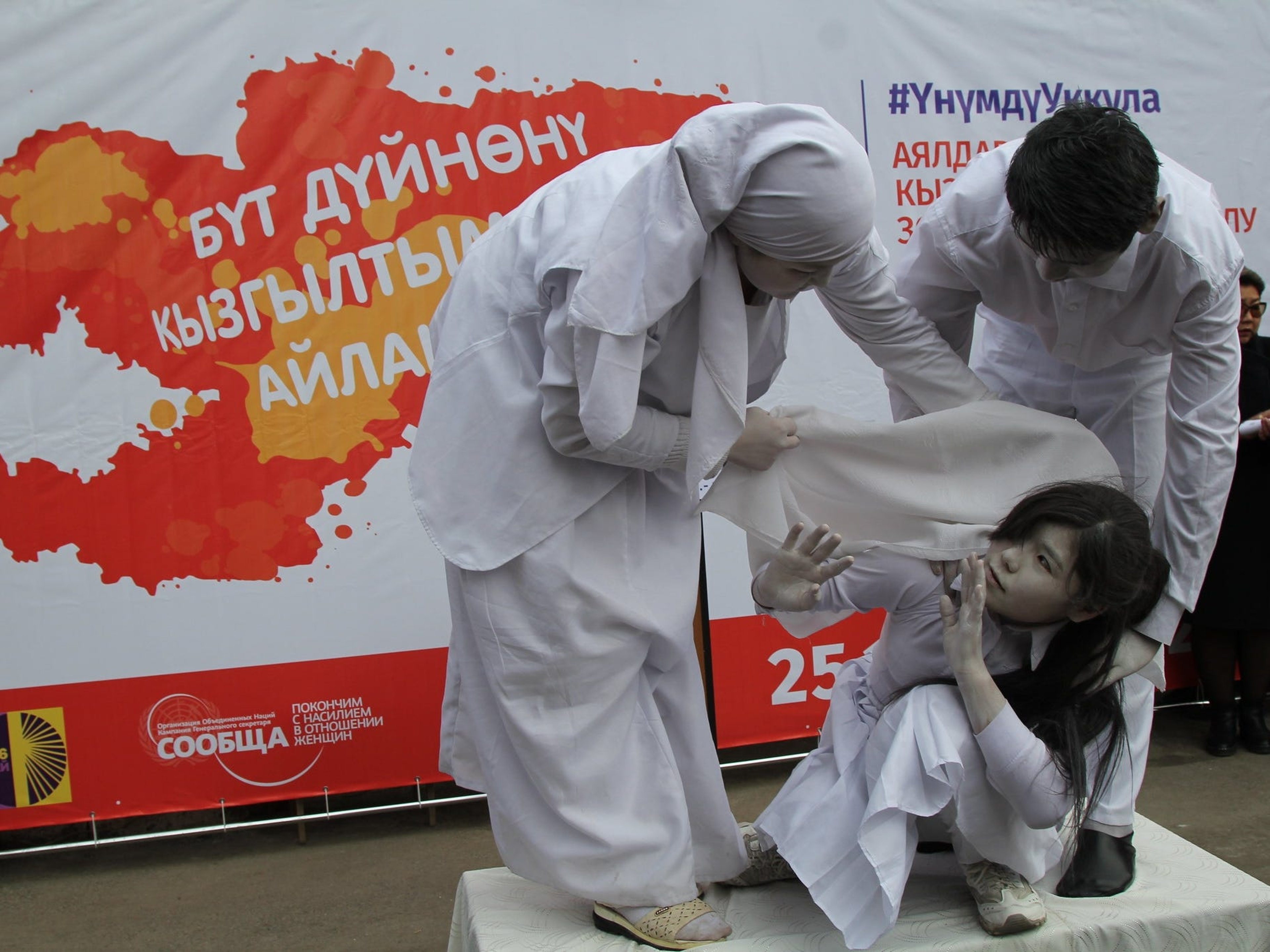
Child actors from the Center of Children’s Protection perform an artistic bride kidnapping. Kyrgyzstan is one of many post-Soviet nations in which the abduction of young women and girls for marriage is common. One study found 20% of all Kyrgyzstani wives had been forced into their marriage.
Soviet Collapse & Chaos
In 1991, the Soviet Union dissolved itself. Two years later, Russian socialism ended when Boris Yeltsin violently couped the Russian parliament with the help of the United States and an enterprising KGB officer named Vladimir Putin. No longer committed to Leninist-style communism, the former Soviet states endured what Naomi Klein dubbed “The Shock Doctrine” — the rapid, forced introduction of privatized economics during a time of disaster. Previously, the Soviet Union and its allied governments guaranteed housing, healthcare, jobs, education, and other social goods to their citizens, alongside heavy state ownership of the industrial economy. But when privatization became the demand, the state auctioned off crucial services and industries to the highest bidder—mostly criminal elements —creating Russia’s infamous oligarch class. Meanwhile, corrupt bureaucrats seized what they could, which is how Vladimir Putin became one of the richest men in the world. After all, who was going to stop them? There were no laws defining private ownership, and the government was selling everything not bolted down. The Soviet collapse was a superpower going-out-of-business sale that auctioned off international oil companies and military assets like the last DVDs at a derelict Circuit City.
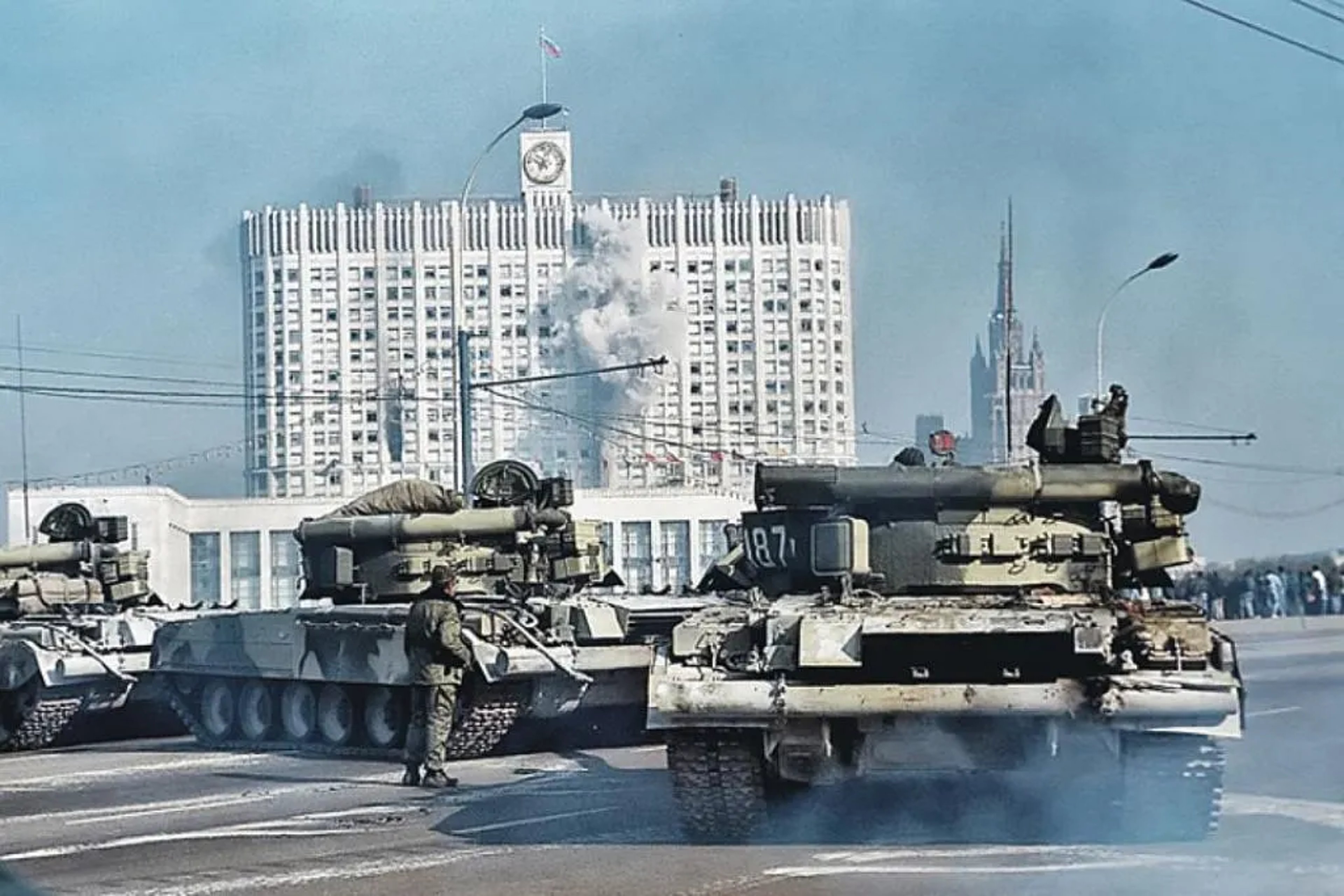
When Boris Yeltsin tried to change Russian law to rule by presidential decree, the socialist-leaning parliament revolted. Ten days of street fighting killed 147 Muscovites. Eventually, the army joined Yeltsin’s coup and shelled the Duma (parliament building). The rebels surrendered, and Russian autocracy was established.
As a result, everything formerly Soviet citizens could rely on was privatized overnight. Oligarch-owned hospitals, universities, and energy companies charged exorbitant prices to customers who had only known state-provided social goods. Privatization of state-owned industries also drove mass unemployment, exacerbating high costs. The results were immediate and deadly. By 2000, over 40% of Russians lived beneath the poverty line. A 1998 study (Norzon, Komaro, Ermakov, Sempos, Marks, Sempos) measured the shocking impact on mortality:
“Age-adjusted mortality in Russia rose by almost 33% between 1990 and 1994. During that period, life expectancy for Russian men and women declined dramatically from 63.8 and 74.4 years to 57.7 and 71.2 years, respectively, while in the United States, life expectancy increased for both men and women from 71.8 and 78.8 years to 72.4 and 79.0 years, respectively.”
In just four years, Russian men lost over six years of life, and women lost three. For context, American life expectancy fell 2.41 years during the height of the COVID pandemic (2020 and 2021). Remember how much death and misery existed during the pandemic years, double it, and you’re in the ballpark of what it was like to live during the collapse of the Soviet Union. Fifteen years after the end of Russian socialism, The Lancet (Stuckler, King, McKee) found that the former communist-controlled countries that implemented shock capitalism saw an average 13% rise in short-term male mortality, compared to nations that did not quickly introduce capitalism. This societal collapse is why many consider the Soviet Union's demise the greatest peacetime drop in life expectancy in history. [1]
While the burgeoning Russian oligarch class and Western anti-communist crusaders who cared not for the human cost of their anti-Soviet obsession rejoiced, it was a terrible time for Eastern Europeans. Though men endured the biggest loss of life, women and children suffered in other ways. By no means was the USSR an anti-patriarchal paradise free from the misogyny that exists and existed in every other culture throughout human history. But the communist system did subsidize childcare, promoted women’s education, and encouraged mothers to work outside the home [2]. As a result, the USSR achieved the highest female labor force participation rate in the world during the Cold War, a stark contrast to post-war America, where ‘housewife’ was the highest title a woman could hope to achieve.
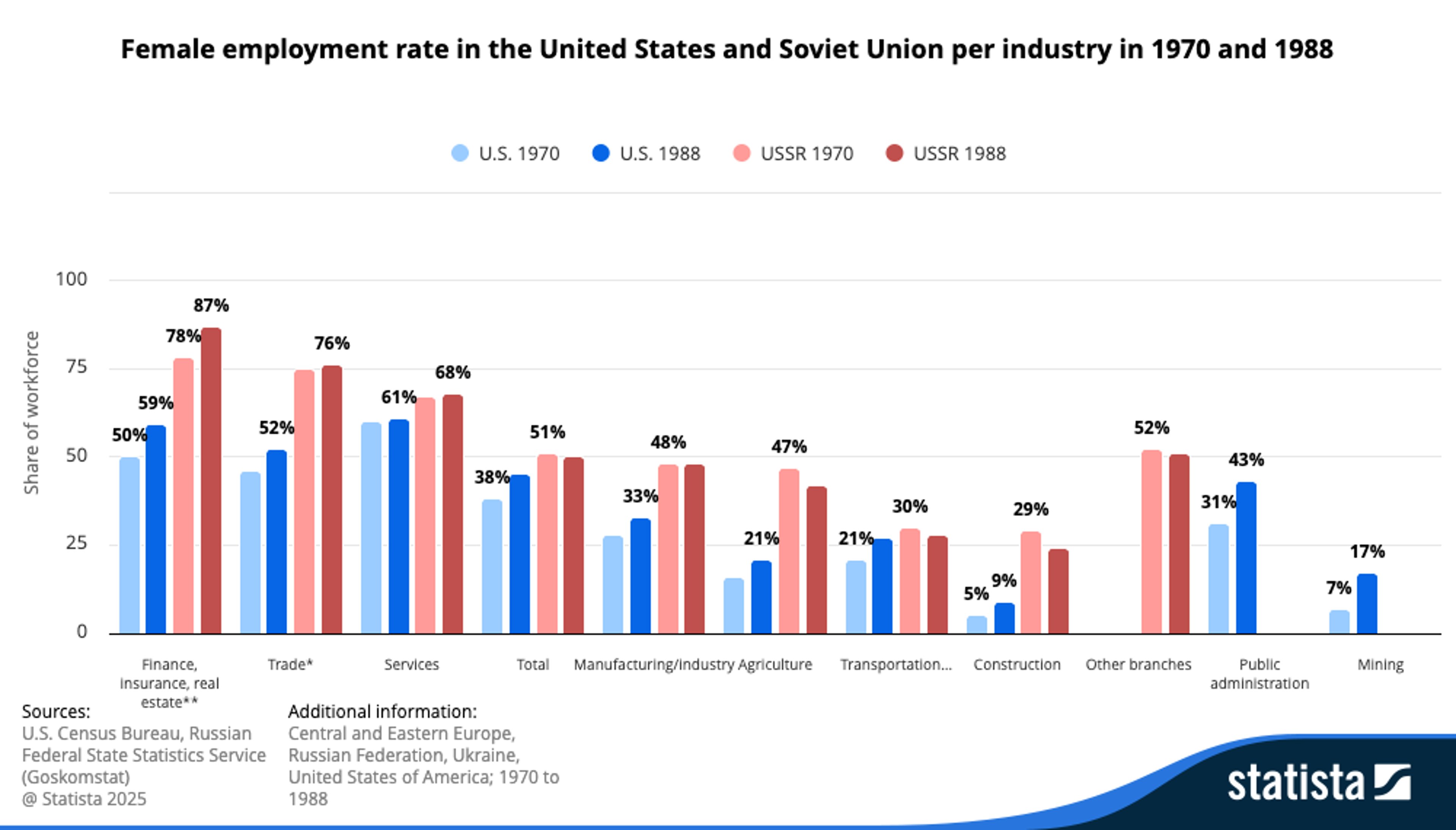
Because Soviet law and gender stereotypes prevented women from doing “men’s work,” women were concentrated in white-collar industries that were largely funded by the state. So when the Soviet state dissolved, the women-dominated jobs disappeared. A 2002 report from the International Organization for Migration found that between 1989 and 1995, five million Russians, roughly 50% of whom were women, lost defense industry-related jobs. Of course, women were laid off first in nearly every industry.
The Hunting Grounds
The unique situation created by the fall of European communism was the perfect storm for human traffickers. Mass joblessness, crushing poverty, increasing domestic and gender-based violence, half a dozen conflicts, and an endless stream of people and money flowing across borders made it easy for ‘hunters’ to identify targets and entice them with hollow promises of a glamorous life free from danger and starvation. A small bribe to a soldier or border guard (who likely hadn’t been paid in months), and the victim was out of the country, likely never to return. If she had any friends or family asking about the disappearance, they were ignored along with everyone else searching for missing loved ones taken by crime, drugs, conscriptors, or any other unsavory element common in post-Soviet Eastern Europe. As researchers at Feminist Pulse described the process:
“It was a simple, age-old strategy: small towns and villages were scoured for victims with a promise of university scholarships, modeling contracts, and a better life. Girls as young as 15 were put on a pipeline that moved them to transit hubs in Prague and Warsaw.”
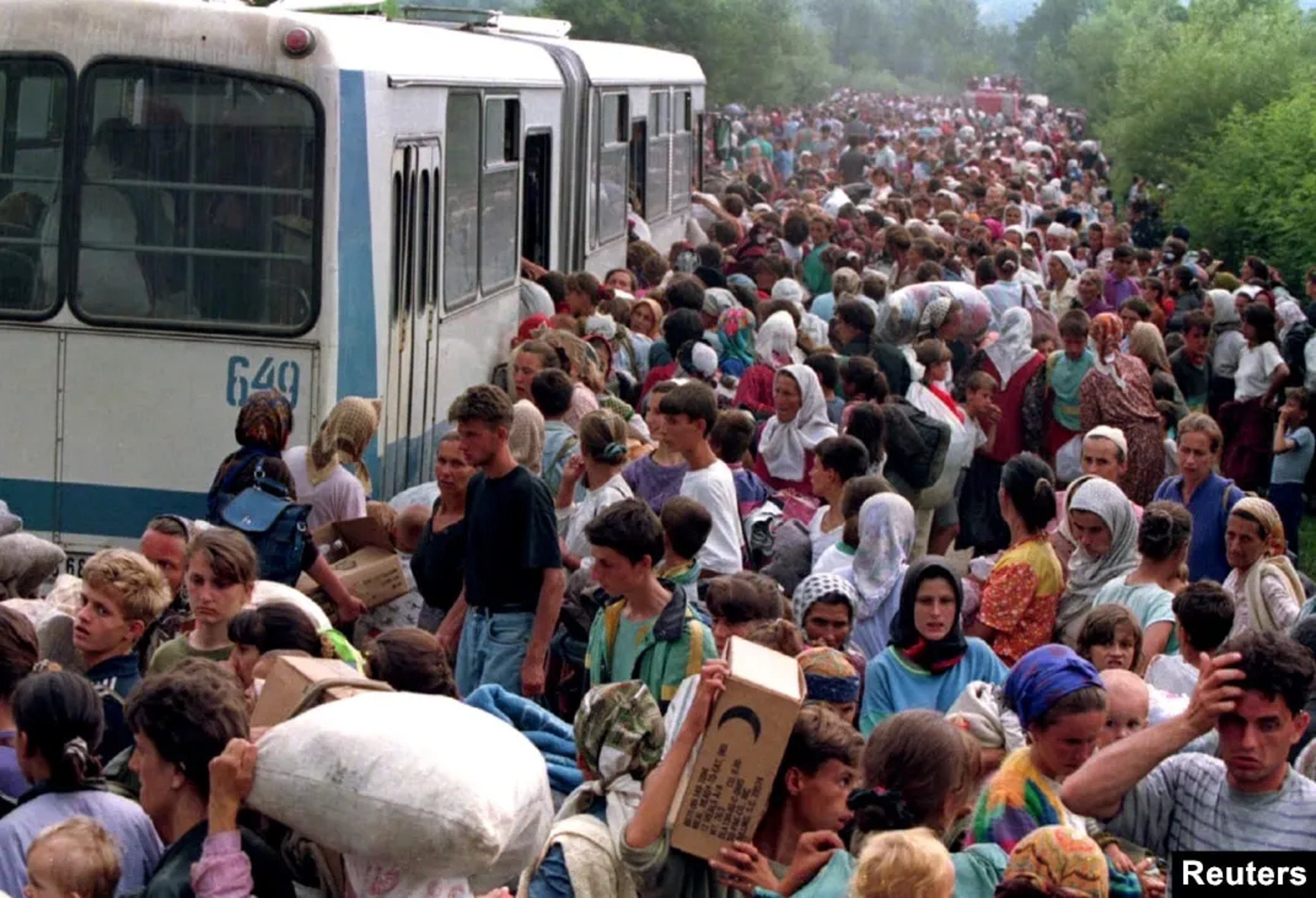
Refugees flee the Bosnian-Serb army, 1995. Refugee camps and rural towns became a magnet for traffickers looking to recruit young, untraceable women.
By 1997, the U.S. State Department estimated over 100,000 women had been trafficked through the post-Soviet states. Researcher Yuliya V. Tverdova found that at least 20,000 to 60,000 Russian women were trafficked every year, with no less than 500,000 in total between 1991 and 2010. Tverdova also found that EEC women broke the stereotype of the “typical” sex trafficking victim. Unlike other populations, Russian and Eastern European victims had significantly higher rates of college education. Once educated to meet the intellectual rigors of Soviet engineering and science, those skills became useless when the Second World came crashing down. Suddenly, professional women found themselves unemployed and unprotected from the well-funded and heavily armed forces running around the post-Soviet world. Gangs, drug cartels, the mob, uncontrolled armies, and even the U.N. “peacekeepers” preyed upon the vulnerable in every way you can imagine.
These criminal elements did so without fear of punishment, often because their networks included the highest levels of post-Soviet society. Less than three years after Yeltsin’s coup, Russia’s Ministry of Internal Affairs estimated that organized crime controlled at least 40% of private businesses, 60% of state-owned enterprises, and more than half of the country’s banks. The traffickers weren’t hiding from the authorities. In many cases, they were above them. According to Tverdova, the mobsters (now bankers, tycoons, and ministers) protected their trafficking revenue with an iron fist. Murder and intimidation were common. One Russian journalist was nearly beaten to death by an oligarch’s goons for simply republishing a study that linked traffickers to the Russian tourist industry.
Drawn to the masses of easily exploitable girls and young women, Jeffrey Epstein recruited heavily from the “Balkan Route,” as it was known. The many conflicts in 1990s Slovenia, Croatia, Bosnia, Kosovo, and Macedonia created a flood of desperate refugees, searching for anything better than genocide and starvation. Fake job offers and empty promises of life in the capitalist West, which was looking better and better every day, were used to entrap thousands. As a 2007 Department of Justice report put it:
“The former Soviet Union and Central and Eastern Europe have replaced Asia as the main source of women trafficked to Western Europe… The largest number of victims trafficked annually from the former Soviet Union and Eastern Europe come from Russia and Ukraine. In addition, several Central and Eastern European countries are reported to be sources, receiving countries, and transit countries. The conflicts in Bosnia and Kosovo provided new opportunities for traffickers in the former Yugoslavia and the Balkans. Traffickers targeted refugee women who fled Kosovo. According to the Women’s Commission for Refugee Women and Children, Albanian traffickers have smuggled thousands of Kosovo women into Italy by boat for the sex trade.”
The semi-released Epstein Files show how active Epstein’s network was in the Baltic region, even as the legal noose tightened. In 2009, a year after Epstein’s first conviction, Epstein’s ‘hunter’ Daniel Siad emailed his boss and said he would spend the summer “scouting the small villages” of Poland, Hungary, and the Slovak Republic for young girls to traffic throughout Europe. Epstein and Siad even considered creating a “modeling agency” in the region to maximize the number of women they could get into their network. They never did, instead sending young girls to Paris, where they were given “jobs” by Jean-Luc Brunel, Epstein’s close associate who posed as a model agent. From there, they were shipped to New York, Beijing, Tel Aviv, and everywhere else to become playthings for the rich and powerful.
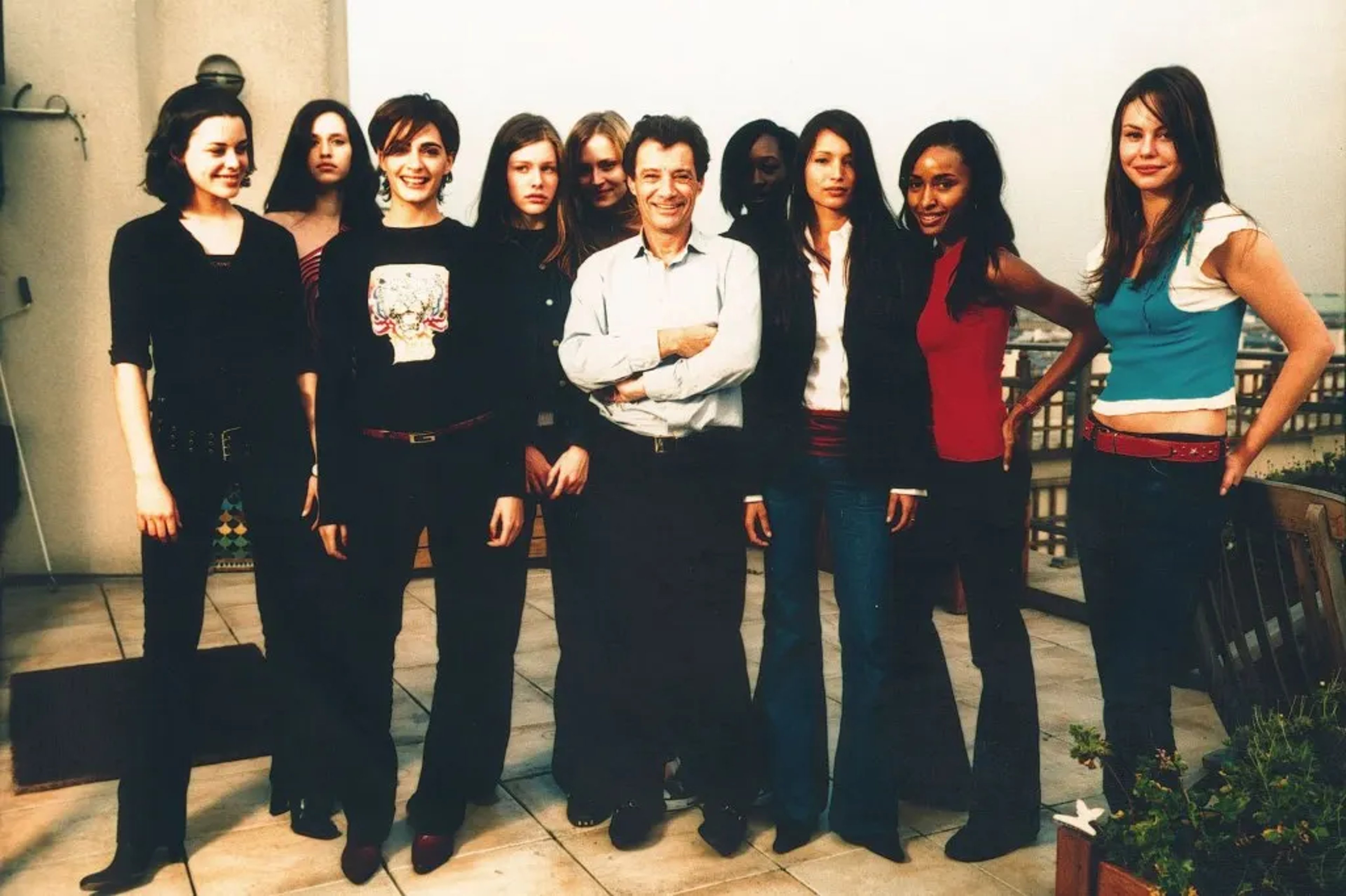
Brunel (center) poses with ‘models’ from his Paris-based Karin Modeling Agency.
For years, Epstein profited off this network as he ingrained himself in the international political and capitalist class. His reach stretched from the British monarchy to the most powerful banks, and everywhere inbetween. It’s likely that Epstein was the one who introduced Donald Trump to the current First Lady, Melania Trump, who escaped Slovenia at age 16 through what she describes as a modeling contract. (Epstein bragged that the first time Trump and Melania had sex was on his jet, the Lolita Express.) Despite his trade being an open secret in high society, Epstein remained untouched until 2005, when he was caught recruiting high schoolers in Palm Beach. That set off a multi-decade chain of events that unearthed one of the largest sex trafficking empires in history. Still, many of Epstein’s accomplices, predators, and co-conspirators still evade justice to this day — to say nothing of the un-indicted traffickers still operating in the post-Soviet world to this day.
From inside the capitalist empire, the fall of the Union of Soviet Socialist Republics is considered an indisputable good. As we’re told, the end of Soviet socialism brought ‘freedom,’ ‘democracy,’ and ‘human rights’ to the Second World. Epstein’s victims, as well as those currently enduring the horrors of the post-Soviet world, might beg to differ.
[1] Excluding periods of war, famine, plague, and natural disaster.
[2] The most famous beneficiary of communist egalitarianism was future libertarian heroess, Ayn Rand. Prevented from studying under the Tsarist regime because she was a woman and a Jew, Rand was permitted to go to university after the Bolshevik Revolution — perhaps the worst thing Vladimir Lenin ever did was give Ayn Rand an education.