
Jun 1
The Conspiracy That Wasn't and the Crisis That Was: A Review of A.J.A. Woods’ The Cultural Marxism Conspiracy
Why the Right Blames the Frankfurt School for the Decline of the West
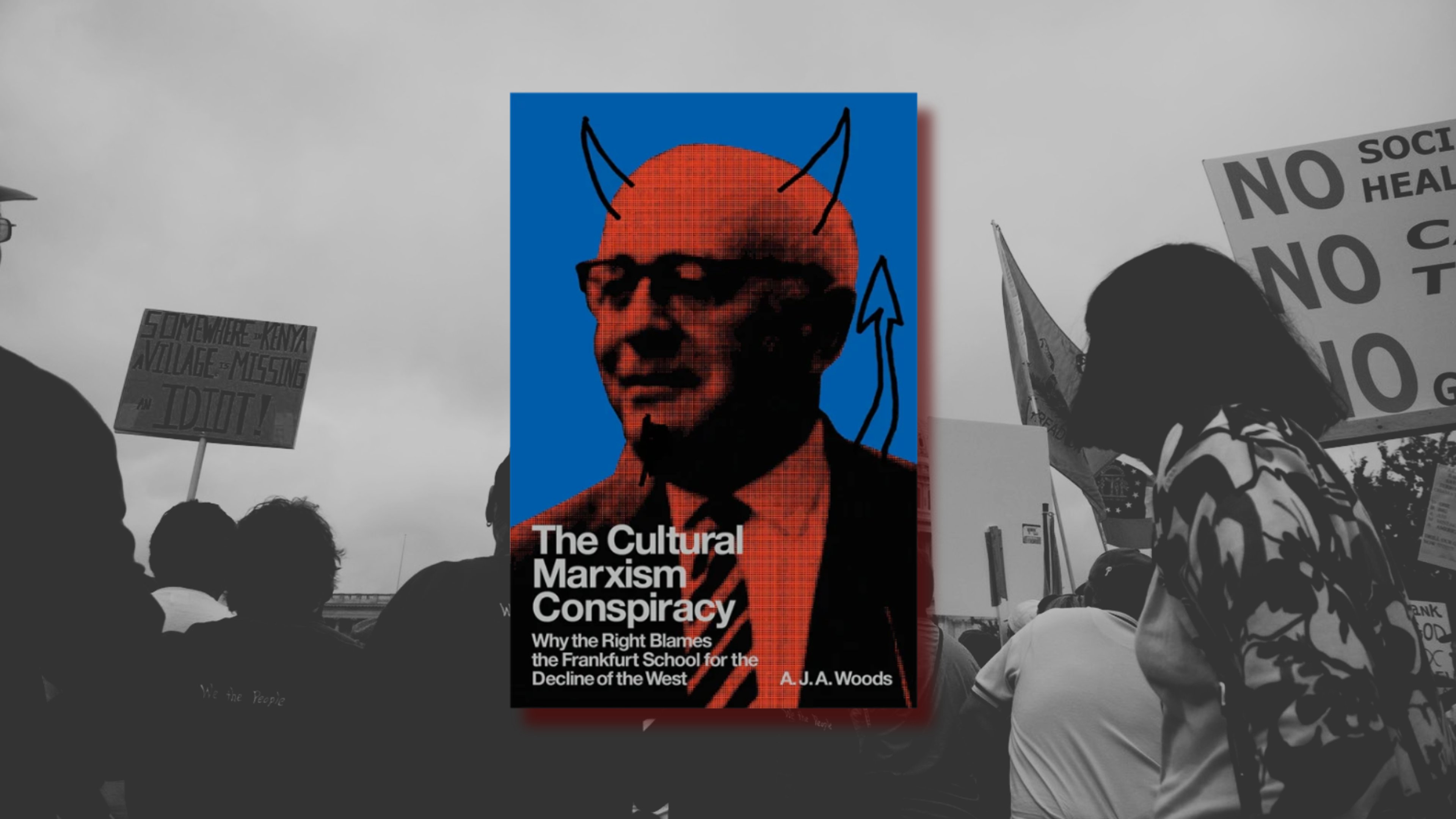
The Cultural Marxism Conspiracy: Why the Right Blames the Frankfurt School for the Decline of the West can be found here.
In the foreword to the Heritage Foundation’s governing strategy for Donald Trump—the ‘Project 2025 Mandate for Leadership’—one finds what may be described as its main theoretical adversary: “The long march of cultural Marxism through our institutions has come to pass.” This statement echoes the slogan coined by socialist student activist Rudi Dutschke in the 1960s to describe his strategy to create radical change in government. The official ideology of the United States is an open admission that, apparently, the Marxists have won.
This claim comes from the architects of a government that has spent its first year dismantling labour protections, gutting environmental regulation, murdering citizens in broad daylight with its militarized and deputized gestapo, and transferring wealth upward at a historic clip. The absurdity of it would be funny if the consequences were not so serious.
Into this backdrop arrives A.J.A. Woods’ The Cultural Marxism Conspiracy, published in April of this year through Verso at precisely the right moment to make sense of all this. Woods is an intellectual historian, having completed their PhD in Theory and Criticism at the University of Western Ontario in 2022. Their book asks the reader a question: what kind of political and cultural conditions make such a theory—the theory of Cultural Marxism—possible, potent, effective? Why does Cultural Marxism continue to haunt the halls of both leftist study groups and the White House?
Most readers would assume that a genealogy of the term could be traced through the Cold War—after all, this is the defining historical period in which America positioned itself against its Communist rival. But Woods’ history is a different one, a Foucauldian project of genealogy—despite claiming a Gramscian methodology—which looks at four moments in the history of Cultural Marxism, or what they call Cultural Marxism/s. The four distinct moments they identify are: the LaRouche movement (1970s–80s), the Free Congress Foundation and the New Right (1990s), the rise of the Tea Party (2010s), and contemporary moments across the US, Brazil, and the UK (2010s–present); each of which uses the term for different political ends, against different enemies, and in different institutional contexts. Where a Gramscian approach would keep hegemony and class struggle in view, Woods’ genealogical method is more interested in how the discourse mutates across contexts.

Perennial Presidential candidate Lyndon Larouche in 1988.
The first of these contexts is the LaRouche movement itself—the political formation built around Lyndon LaRouche, the far-right political eccentric and cult leader whose organizations emerged from the wreckage of Students for a Democratic Society in the early 1970s before metastasising into a full-blown cult complete with antisemitic conspiracy theories, purges, and ritualised “ego-stripping” of members. What made this significant for subsequent ideological history was the movement’s origin point: the LaRouchites were, in other words, Marxists—or at least former Marxists—who turned “Cultural Marxism” into a weapon against the left from which they had split. By branding their former comrades’ politics as a form of cultural decadence, they could simultaneously claim to occupy the more authentic Marxist position and align themselves with the anti-communist right. One of the more disorienting details Woods surfaces is the anti-Malthusian rhetoric circulating in LaRouche circles—a reminder that the movement’s relationship to its Marxist origins was less a clean break than a grotesque distortion, and that “Cultural Marxism” was from the outset an opportunistic formulation. Indeed, the opportunism of the term’s origins is precisely what explains its subsequent plasticity: coined for internal political warfare rather than descriptive accuracy, the term can be detached and redeployed against almost any target. It was a tool of internal sectarian warfare before it became an external ideological cudgel. Thus, subsequent fabrication falls to William Lind—a defense policy analyst and paleoconservative intellectual—and the Free Congress Foundation, who launder the term from fringe cult politics into respectable conservative discourse.
Writing in the 1990s, Lind appropriates “Cultural Marxism” as the master explanation for political correctness, embedding it within the emerging infrastructure of the New Right. The New Right, on this reading, is not engaged in a depoliticization of disenfranchised groups but a counter-politicization: it actively recruits what they call ‘grievance’ into a reactionary project by offering a monocausal explanation for civilizational decline. This is Woods’s sharpest analytical contribution. The culprits are German Jewish intellectuals; the Frankfurt School, in Lind’s rendering, becomes the single-factor explanation for everything the right finds objectionable about modernity. A sort of structural antisemitism emerges as Woods shows these ‘respectable’ conservative intellectuals were not above fraternizing with open neo-Nazis. Woods is not claiming that Lind harbored a consciously antisemitic worldview in the way his neo-Nazi interlocutors did. The point is more damaging than that. The explanatory logic of the “cultural Marxism” narrative—a cabal of German Jewish intellectuals secretly engineering civilizational decline—produces antisemitism as its necessary output regardless of the intentions of any individual promoter. Crucially, as Lind himself admits, none of this requires definitional accuracy; “Cultural Marxism” works as a delegitimising tool precisely because it only needs to be a label—or cudgel—with which to bludgeon the Right’s political opponents.
Figures such as Lind and Paul Weyrich are examples of what Woods calls the “New Right think-tank intellectual”: paternalistic promoters of free enterprise and traditional values; they worked through institutions like Weyrich’s Free Congress Foundation, and operated at the boundary between respectable conservatism and the hard right. That boundary, Woods shows, is more porous than it appears. Lind’s flirtations with alt-right and hard-right formations suggest that the laundering process runs in both directions – hard-right formations gain the veneer of credibility through association with think-tank intellectuals as much as those intellectuals corrode their own respectability through proximity to the fringe, and in doing so this exchange functions as a normalising force for positions that would otherwise remain marginal. The logical endpoint of this trajectory is Victoria: A Novel of 4th Generation War, Lind’s novel (written under the extremely pompous pseudonym Thomas Hobbes) that is less a work of fiction than a fantasy of outright violence against his enemies. Hobbes’ Leviathan is, after all, conventionally read as the foundational text for sovereign authority over the chaos of the state of nature; to appropriate his name for a novel fantasizing about violence against cultural enemies is to make the political logic explicit: the sovereign exists to crush the enemies of civilization; Lind had simply updated the enemy list. It is a useful reminder that the discourse of “Cultural Marxism” has never been merely rhetorical—it functions as political mobilization, producing material effects in policy, institutional practice, and, at its extreme, in violence.
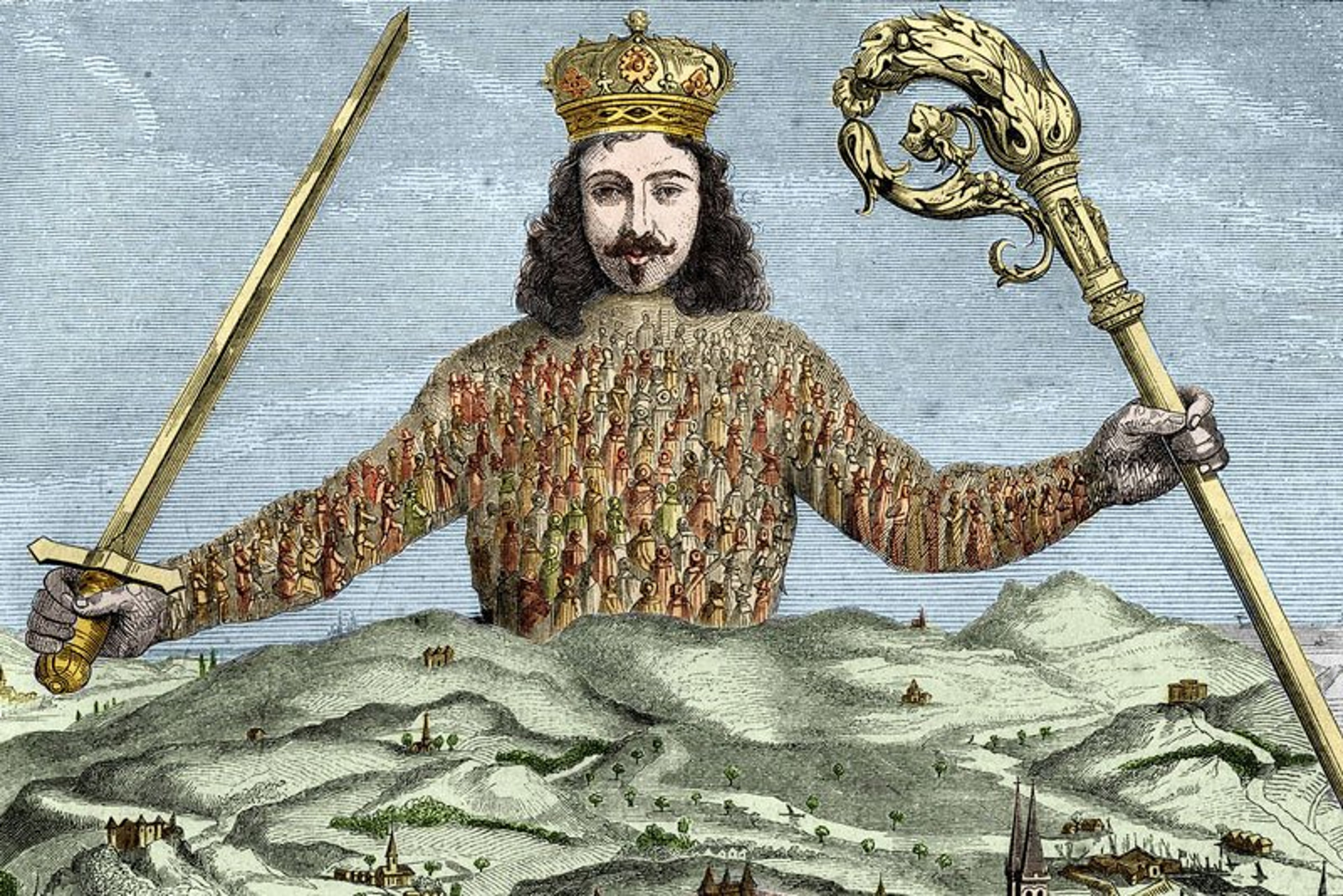
Thomas Hobbes’ Leviathan (1651) was a seminal text theorizing the nature of the state and absolute power.
The next historical conjuncture Woods examines is the rise of the Tea Party. The Tea Party represents a shift in register: where think-tank intellectuals had laid the ideological groundwork, a mass movement now carried it forward. Woods’ chapter title—“Red Smoke, Blue Donkey”—captures the dynamic well: the Tea Party was nominally a novel attack directed against Obama-era liberalism, but its animating cultural grammar had been shaped by decades of New Right ideological work. The “cultural Marxism” frame arrives here not as a philosophical argument but as a ready-made emotional package – a licence to interpret one’s material dispossession as the product of a hostile cultural conspiracy, rather than the systemic operations of capital. That those “balding and bloated businessmen,” as Woods describes them, donning tricorne hats and parading with antique muskets were themselves being actively robbed by the financial class whose deregulation their movement defended is the central irony Woods gestures toward but, frustratingly, declines to develop.
This is the book’s central limitation, and it becomes most visible precisely here. Woods is at their sharpest when they show how the Right’s intellectuals manufactured and distributed the “cultural Marxism” narrative; they are less interested in asking why it worked—why it found purchase in a specific class fraction, at a specific historical moment, rather than some other. The Tea Party was a political crystallisation forged in the post-2008 wreckage: deindustrialised regions, collapsing pension funds, opioid epidemics—in short, the absolute collapse of working-class institutional life. The Right offered a monocausal cultural explanation for this structural economic devastation, and it was effective precisely because the Left offered nothing.
The clearest evidence that Woods is right about the usage of the term “Cultural Marxism” as an ideological weapon comes from Christopher Rufo, who features in the book’s final chapter and deserves more space than he receives. Rufo, a think-tank operative and the architect of the contemporary “critical race theory” panic, has been unusually candid about his method: in 2021, he publicly announced his intention to “capture” the term “critical race theory,” redefine it to mean anything the right found objectionable about diversity initiatives, and deploy it as a political weapon. This is Lind’s operation repeated—with the additional advantage that Rufo could learn from his predecessors’ playbook and refine it. The fact that Rufo said the quiet part out loud – that the label is a weapon, not a description – and suffered no political consequences for doing so is itself a measure of how normalised this mode of operation has become. Woods is right that the term’s power derives from its indefiniteness; Rufo is simply the first practitioner to say so openly. That vagueness is not incidental but structural: only a signifier stripped of fixed content can organize an otherwise heterogeneous coalition of grievances—the evangelical, the economic nationalist, the white identitarian—under a single banner. A genuine Gramscian analysis would ask what bloc of forces the “cultural Marxism” narrative organizes, what material interests it serves, and how it recruits the injured into a project that deepens their injury. Woods’ conjunctural method tracks the term’s surface mutations competently; it does not answer the deeper causal question their own framework raises.
The final chapter turns to what Woods calls “contemporary permutations”—the deployment of “cultural Marxism” and its successor terms (Critical Race Theory, “wokeness,” gender ideology) across the US, UK, and Brazil, and into the manifestos of terrorists like Anders Breivik and the feeds of the world’s richest welfare recipient, Elon Musk. The international scope is useful, if rushed: watching the same ideological machinery operate through Christopher Rufo’s think-tank laundering operation in the US, Nigel Farage’s nativist grievance politics in Britain, and the Bolsonarista movement in Brazil reveals that what looked like, at first, simply an American pathology is better understood as a feature of the international—or transnational—right’s response to the accumulated failures of neoliberalism. The conclusion—“Politics in the Age of the Chainsaw”—arrives at the correct destination: this is not an intellectual error to be corrected but a political formation to be defeated. What this reveals is especially damning for the far right’s rise, which has modeled itself as the authentic backlash of a real “silent majority.” What we learn instead is that this political wave is hardly organic: it is the product of decades of calculated attempts to manipulate public opinion and redefine political rhetoric.
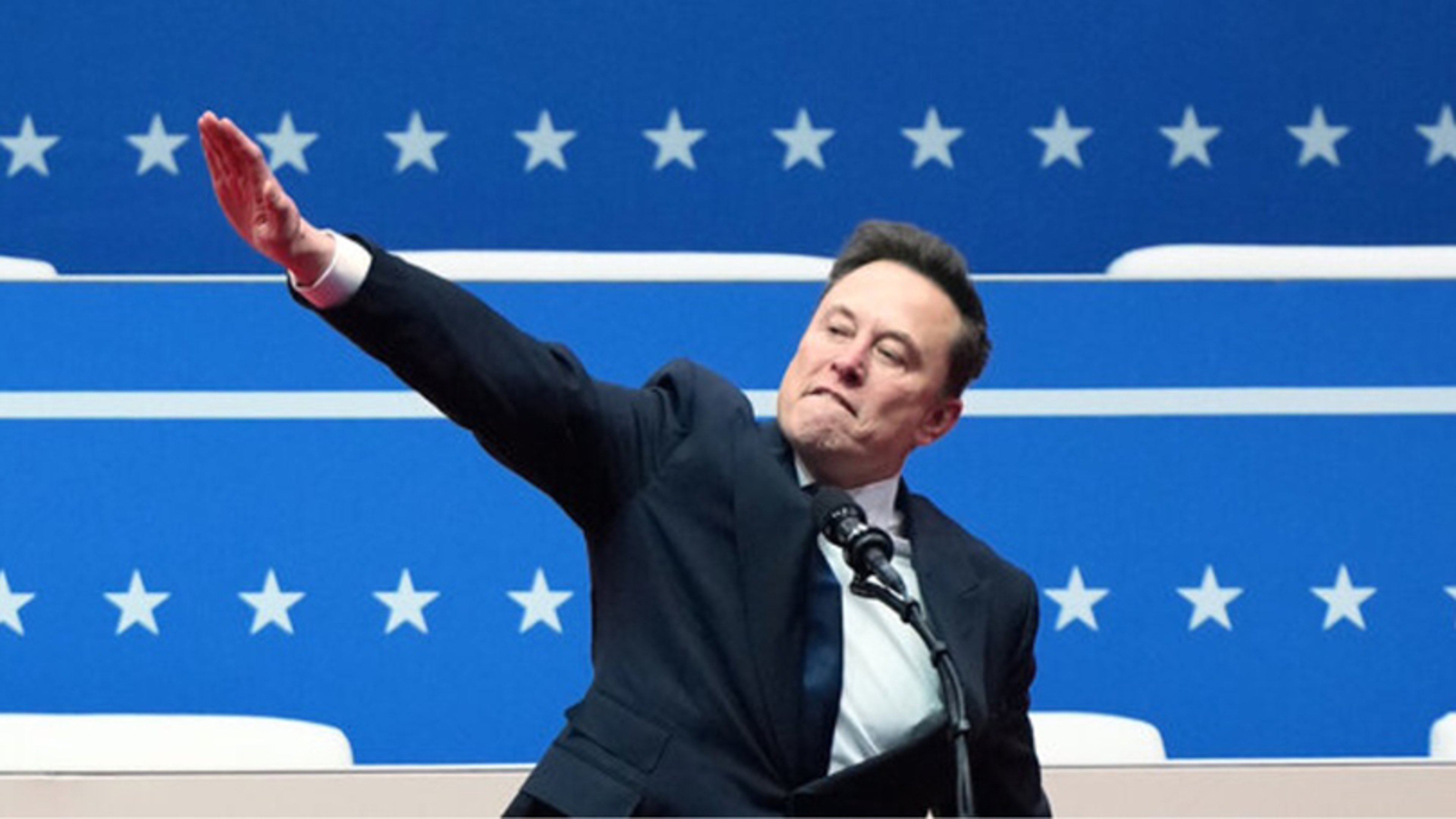
Elon Musk: “the world’s richest welfare recipient.”
What would it mean to supplement Woods’ achievement with the class analysis their framework requires but declines to perform? It would mean asking not just how the Right manufactured “cultural Marxism” as a narrative, but under what structural conditions? The answer within left theory is well-trodden: the long decomposition of organized labour, the capture of working-class institutions by a professional-managerial stratum indifferent to material questions, and the Left’s decades-long retreat from class politics into identitarian positioning that cleared the ground for that narrative to land. But Cultural Marxism introduces another key element to this explanation: in the face of this social crisis, the Right offered an explanation, however false, for real suffering, and aimed it at real enemies, however misidentified. A Left that cannot do the same, that cannot name the actual causes of that suffering and organize against them, will keep losing the ideological terrain to people like Rufo—regardless of how well it understands their methods.
It is worth noting, in closing, that the book’s critics from the right—and they are numerous, predictable, and boring—have accused Woods of bias. They argue Woods refuses to take the concerns behind the “cultural Marxism” narrative seriously. But this critique is self-refuting: the entire point of the book is that “cultural Marxism” is not a theory of anything, but a weapon, and weapons do not have concerns to take seriously. With this in mind, the conservative critic posture is just another attempt to deploy the same old canard. The more substantive limit of the book is that Woods’ analysis is strongest where it alludes to the economic conditions of cultural discontent but consistently pulls back from developing them. That restraint is the price of a cultural-studies methodology applied to a problem that is, at its root, a class problem.
None of this diminishes the book’s considerable achievement. At a moment when “cultural Marxism” is the official enemy of a nuclear-armed state, a rigorous genealogy of the term’s manufacture and deployment is a political necessity. What the left requires now is not only the history of the weapon but a politics adequate to the crisis that made it available in the first place—a crisis that is, whatever the Heritage Foundation imagines, not one of culture but of capital.