
The Direction of Determination: On Idealism and Realism in Organization and Strategy
Voluntarism, programmatic idealism, and strategic moralism are typically treated as separate mistakes. This essay argues that there is one error in three domains—the substitution of an ideal political form for material analysis—and that only reversing the direction of determination can correct it.
By Ewan Ben
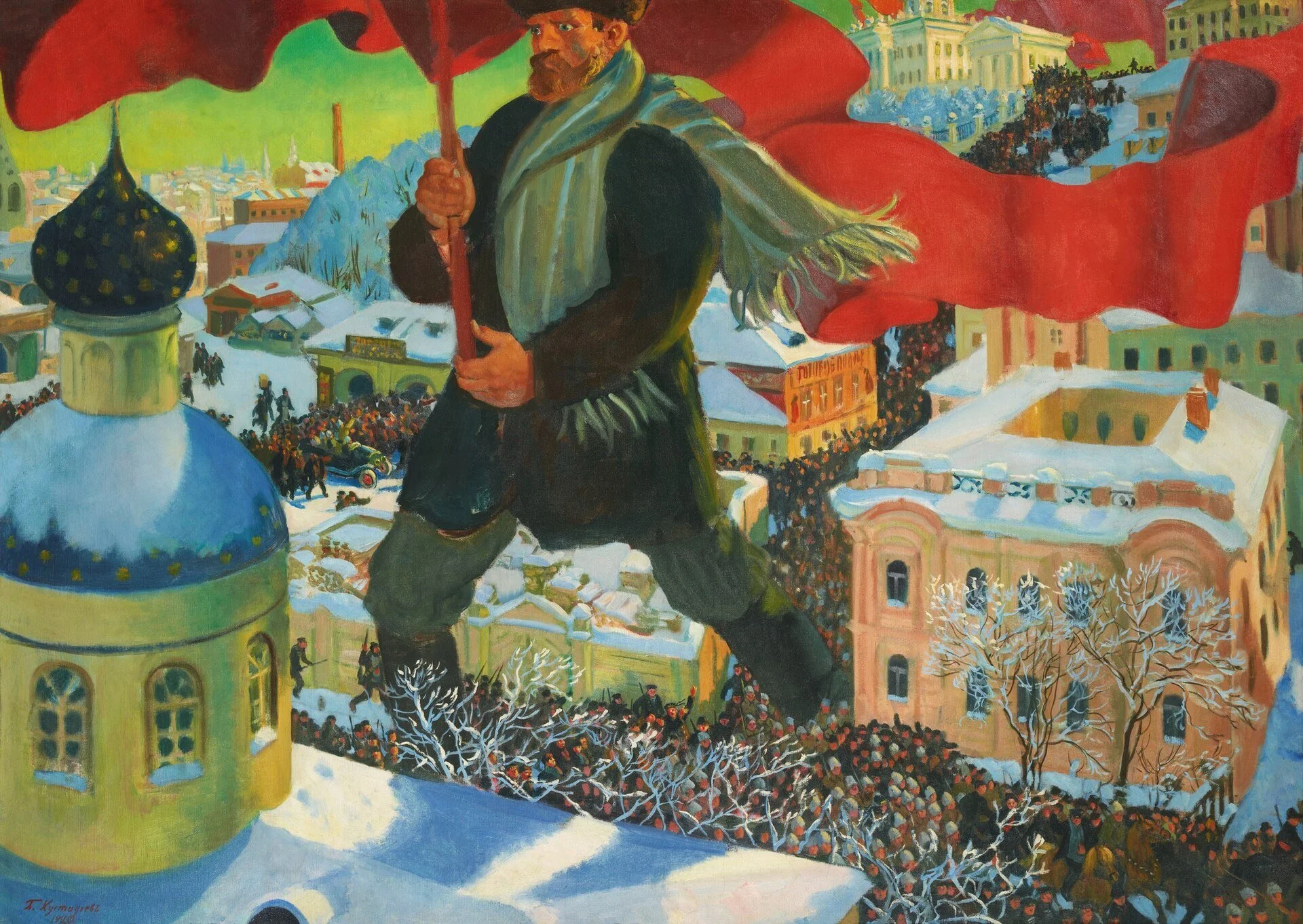
The Bolshevik, by Boris Kustodiev (1920)
I. Theses on Realism and Organization
I. The characteristic failure of the left is not moral but epistemological. It does not lack commitment or courage. It lacks an adequate account of its object.
II. Idealism in political practice is not a temperamental failing. It is a structural consequence of defeat. Sever the organic connection to the class and you remove the only mechanism that keeps theory honest.
III. Voluntarism, programmatic idealism, and strategic moralism are not three separate errors. They are one error in three domains: the substitution of an ideal political form for material analysis of actual conditions. Correct any one expression while leaving the structure intact and the others will reproduce it.
IV. Class composition analysis is not a methodology among others. It is the condition of any political judgement that deserves to be called Marxist. A politics conducted without it is conducted in relation to an imaginary object. Its conclusions are therefore imaginary, however rigorously derived.
V. The programme question is open. It cannot be closed by tendency-negotiation, by recovering a historical model, or by theoretical derivation from first principles. A programme that cannot demonstrate its derivation from the actual movement of the class is a left programme, not a Marxist one.
VI. Conjunctural analysis is not the application of a pre-existing schema to current events. It is an original analytical act. The present is always, in the relevant sense, new, and no inherited periodisation substitutes for the work of characterising it.
VII. The materialist theory of power does not distribute political capacity according to the justice of a cause. Power is accumulated, concentrated, and deployed. A left that imposes prior ethical constraints on its strategic range has chosen to be less effective than its conditions require.
VIII. No terrain of struggle is automatically primary. Terrain priority is a conjunctural judgement, not a strategic doctrine. The left that mistakes the one for the other reproduces its own incapacity as a matter of principle.
IX. The party is the necessary organizational form — not because theory requires it, but because the synthetic task of holding full-spectrum engagement together across all terrains cannot be performed by any other form. The sect begins from prior theoretical correctness. The movement cannot coordinate across terrains and over time. Only the party, understood as a synthetic organ, can.
X. The party adequate to present conditions does not yet exist. It cannot be prefabricated and inserted into the class. It must be built now, from the materials the present provides, through sustained engagement with the class as it actually is.
XI. Sustained engagement with the actual movement of the class is not a supplement to theoretical work. It is a necessary condition. Theory that loses this grounding does not remain rigorous in suspended animation. It drifts toward idealism, filling the gap left by the absence of empirical contact with ideal constructions, and eventually produces analyzes adequate only to a class that no longer exists.
XII. The encounter with the actual class is what the left has consistently refused. Realism is the insistence that this refusal cannot continue. The class as it actually is constitutes the primary political reality. Everything else is commentary.
II. The Persistence of Idealism
The standard account of Marx's break with Hegel goes like this: Hegel put the Idea first; Marx put matter first. The direction of determination was reversed. Social being determines consciousness, not the other way around. This account is not wrong, exactly. But it is incomplete.
For Hegel, and for the entire tradition Marx inherits, thought stands over against the world. The philosopher occupies what Marx calls the position of contemplation—the stance of a reasoning subject who faces an object, studies it, and attempts to construct an adequate picture of it. The idealist says the object is structured like mind. The materialist says mind is structured by the object. Both are doing the same thing: theorising the world from outside it, as if adequate understanding were a matter of achieving the correct picture of a reality that exists independently of the one picturing it. Change the direction; the schema survives.
Marx's break is not with the arrow. It is with the schema itself. Practice, not contemplation, is the condition of adequate engagement with the world. Ideas are not pictures of reality; they are modes of existing within it. Theory is not a representation of practice; it is itself a practice, and is understood only in the actual life-process of those who carry it. The Theses on Feuerbach do not invert Hegel. They dissolve him.
The left has not followed. A Marxism that reproduces the position of contemplation in its political practice has not broken with idealism. It has reinstated it under new management. The class becomes an object of theoretical derivation rather than a field of practice to be entered. The programme is constructed from intellectual distance and then applied. The organization is built from the outside in, its form determined by prior theory rather than by the actual encounter with the class in motion. The philosopher stands before the world and produces correct descriptions of it. The left stands before the class and produces correct analyzes of it. The position is identical.
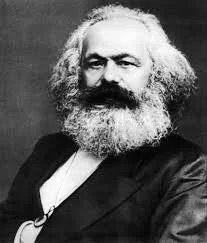
Karl Marx (1818-1883), revolutionary communist and critical theorist of social practice.
Defeat tightens the grip. Cut the organic connection to the class, reduce the left to sects and publications, remove the continuous encounter with actual struggle—and the contemplative stance is no longer a choice but a condition. Nothing corrects the theory from outside its own terms. In these conditions, ideal constructions do not announce themselves as such. They present themselves as the recovery of ‘correct’ or ‘authentic’ theory, as ‘orthodox’ application of Marxist principles to the present situation, as the one ‘intransigent’ approach that does not capitulate to prevailing conditions. The left in defeat learns to mistake theoretical rigor for material analysis, and the persistence of a position for its political relevance.
This is the condition in which three distinct but related expressions of the underlying error emerge and consolidate. Voluntarism substitutes organizational will for compositional analysis, assuming that cadre commitment can bridge the gap between the class as it is and the class as the theory requires it to be. Programmatic idealism constructs the political programme from theoretical principles or tendencies in agreement rather than from the actual state of class struggle, producing a programme adequate to an ideal Marxist consensus rather than to present historical conditions. Strategic moralism subjects the analysis of power to prior ethical constraints, treating what should be done as a question of principle rather than of material effectiveness, installing an ideal standard of political conduct before any analysis of what that political conduct can actually achieve.
One error. Three domains. And until the unity is grasped, correcting any single expression leaves the structure intact—producing not a more adequate politics but a more elaborately defended version of the same mistake.
To argue for realism in this context is not to argue for a lower level of theoretical ambition. It is to insist that the direction of determination matters: that organization, programme, and strategy must be derived from material analysis of present conditions rather than from ideal constructions of what those conditions should be. This requires, above all, sustained engagement with the actual movement of the class, not as a supplement to theoretical work but as its necessary condition. Theory that loses this grounding does not remain rigorous theory in suspended animation, waiting for better conditions. It drifts, and the form of its drift is idealism.
III. Voluntarism
The voluntarist position is rarely stated as such. It presents itself as Leninism, as the tradition of the revolutionary party, as the only approach that takes seriously the necessity of organization. What it actually amounts to is the assumption that the revolutionary organization can be built in advance of, and independently of, a serious analysis of the class it claims to represent. The organization is held together by theoretical commitment and cadre discipline; the class will follow, or the organization will intervene at the decisive moment, or conditions will change and the prepared vanguard will inherit the movement. The exact form of the argument varies. The structure does not: the organization is posited as the answer before the question of what the class actually is has been seriously posed.
The philosophical content of this position has been stated most explicitly in recent years by Jodi Dean. Her work, Crowds and Party (2016), begins from a genuine and important observation: that the crowd events of the post-2008 period, Occupy, the squares movements, the eruptions of mass protest against austerity, produced a political surplus that dispersed without organizational form to concentrate it. The lesson Dean draws is that the party is necessary as the form through which collective political subjectivity is constituted. The party does not represent an existing class; it calls the class into being as a political subject. Organization precedes class formation, not the other way around. The party is, in Dean’s account, a form of libidinal identification and collective desire before it is an instrument of class struggle: the people as political subject comes into existence through the act of organization itself.
The idealism here is explicit. Dean’s party does not require an adequate account of the class as it actually exists because the party is precisely what constitutes the class as a political force. The analysis of class composition is, on this account, irrelevant to the prior question of organization. That is to say, an account of how capital has restructured production and reproduction, of how fragmentation and stratification have transformed the technical and political composition of the working class, of what forms of solidarity and antagonism are actually available given the present state of that class. The party constitutes the subject; the subject does not determine the party form. This is the inversion of the required direction of determination stated without apology. It is at least honest about its idealism. The party-building traditions of the British and international left have been rather less candid about sharing the same structure, while claiming a rather different authority.
Lenin's own formulation of what he called the living soul of Marxism was the concrete analysis of concrete conditions. The tradition that invokes his name most insistently has made a practice of performing its exact inversion. The IST and the SWP as its British expression have operated for decades on the premise that the revolutionary cadre organization must be built now, in its correct theoretical form, ready to intervene when the class moves. The logic is superficially plausible: if a revolutionary organization does not already exist when a pre-revolutionary situation develops, it cannot be improvised. The organizational form must therefore be prepared in advance of the conditions that would make it necessary. What this means in practice is that conditions are always being made to fit the organization rather than the organization being made adequate to conditions. The analysis is not concrete. It is the prior form, defending itself.
What this logic produces in practice is well documented. The Socialist Alliance gave way to Respect, launched in 2004 on the wave of anti-war sentiment generated by the invasion of Iraq, with the SWP as its organizational spine. Respect was never understood by its SWP leadership as an attempt to build a political formation adequate to a genuine class base; it was seen as an opportunity to harness a conjunctural upsurge to the end of recruitment and consolidation of the cadre organization. The result was an internal culture in which the SWP’s organizational imperatives consistently overrode the development of Respect as an independent political force. The coalition collapsed in 2007, the anti-war movement was exhausted, and the political base was never built. The Trade Union and Socialist Coalition (TUSC) followed, standing hundreds of candidates across multiple election cycles and producing results so marginal as to constitute a precise empirical measure of the gap between the organization the left has constructed and the class it claims to represent. The SWP suspended its participation in 2017 when even this minimal electoral front failed to materialize results and became tactically inconvenient. The broader lesson was not drawn.

It never is. That is the point. If the organization already has the correct programme, if the cadre is the concentrated expression of class consciousness in advance of the class itself, then the gap between organization and class is explained not by any failure of the organizational form but by the temporary backwardness of the class, conditions not yet ripe, the absence of a sufficiently large crisis. When the crisis comes—the financial crash, the austerity wave, the pandemic, the war—the organization intervenes, and the class fails to follow. The explanation is reproduced: not ripe enough, wrong vehicle, insufficient intervention. In this model the party cannot fail. It is only ever failed by the working class.
We must understand Lenin's formula as naming a practice rather than an act. Concrete analysis of concrete conditions is not a method to be applied at a moment of one's choosing from a position of prior theoretical certainty. It is an ongoing orientation, embedded in the actual movement of the class, continuously revised by the encounter with conditions as they actually are. It cannot be performed from outside the class, and it cannot be performed once. The forms of solidarity and antagonism available given the present technical composition of the working class, the divisions produced by labor markets, by the fragmentation of the employment relation across platform and precarious work, by the differential incorporation of reproductive labor: these are not supplementary details. They are the conditions that determine what organizational forms are even possible. Derive the analysis from the class as it is, not as the theory requires it to be, and the organizational question follows. Reverse the order—fix the form and adjust the analysis—and you have not built a revolutionary party. You have built a very elaborate position of contemplation.
What a realist account requires instead is to reverse the direction of determination. What are the actual lines of stratification within the contemporary working class? The divisions produced by racialised labor markets, by the differential incorporation of reproductive labor, by the fragmentation of the employment relation across formal and informal sectors, across platform and precarious work? What forms of solidarity are structurally available given this composition, and what forms are structurally blocked?
Only from this foundation can the organizational question be seriously posed as a problem to be worked through practically rather than a prior answer without present utility. The gap between the cadre organization and the class is not a problem of insufficient militancy, incorrect leadership or premature intervention. It is a problem of form: the organization has been built in the image of a class that no longer exists as its theoretical presuppositions require, and the encounter with the actual class exposes the gap. Closing it requires not better interventions in the existing form, but the patient construction of new organizational forms adequate to the class as it is actually constituted. This is harder and slower than party-building by act of will. It is the only approach that has any prospect of producing an organization that the class might actually recognise as its own.
III. The Programme from Above
Programme is the question the left treats as most urgent and least seriously. It is urgent because the fragmentation and ineffectiveness of the left is attributed, in one version of the argument or another, to its absence. It is treated unseriously because the answer is assumed to be available through deliberation among existing Marxists. Agree on the programme; build the party around it. The working class, as presently constituted, does not appear as the generative source. It appears, at best, as the eventual addressee.
Two orientations to the programme question are possible, and they are not compatible. One takes as the adjudicator of political truth the particular formations currently populating the left—their agreements, their disagreements, the theoretical frameworks developed through decades of relative isolation from the class they claim to represent. The other takes the proletariat itself as adjudicator, who confirms or denies the programme not through organizational mouthpieces but concretely, in its actual composition, its struggles, its demands. The first produces a left programme. The second produces a Marxist one.
Mike Macnair's Revolutionary Strategy (2008) is the most serious attempt in recent British left writing to ground the first orientation theoretically. His diagnosis is substantially correct: the fragmentation of the left into competing sects, each claiming sole possession of the correct line, has produced an organizational landscape incapable of posing any serious political challenge. His proposed solution is a Marxist party broad enough to encompass the existing tendencies, organized around a common minimum programme with genuine freedom of faction and public debate within its ranks. The model is the pre-1914 Second International at its best. Unity in diversity. The theoretical currents of the workers' movement arguing their positions within a shared framework rather than maintaining the mutual anathematisation that characterizes the present situation.
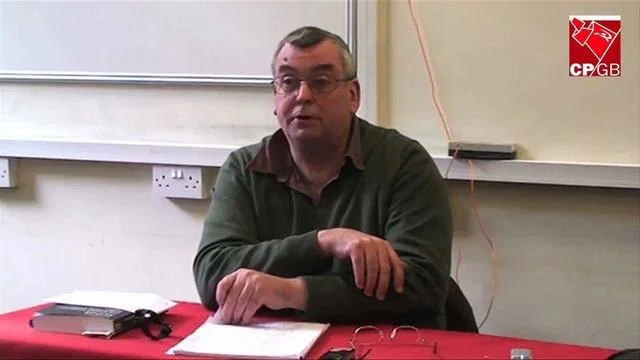
Mike MacNair is a prominent member of the CPGB.
The diagnosis is more correct than the cure. If the programme is negotiated among existing Marxist tendencies, the programme that results reflects the existing state of those tendencies. It is adequate to what the left currently is, not to what the class actually needs. The adjudicator is internal to the left. The proletariat does not appear in the process except as its projected object. A programme assembled from the agreed positions of existing tendencies does not thereby become wrong in all its particulars — but it loses its claim to represent the interests of the class as it actually exists rather than the interests of the left as it currently thinks. It is, in the precise sense, adjudicated from the wrong position.
The second expression of the error is related but distinct. Even granting that a programme might be constructed through a more rigorous process than tendency-negotiation, fixing it in advance of ongoing compositional analysis substitutes a single moment of theoretical settlement for a continuous process of political derivation. Class composition is not static. Four decades of restructuring have decomposed the industrial working class as it existed in the post-war period, expanded service, care, and reproductive labor, fragmented the employment relation across platform and precarious work, deepened stratification along racialised and gendered lines. A programme fixed before this analysis has been seriously carried out does not merely risk being incomplete. It risks being adequate to a class that no longer exists in the form the programme presupposes.
Macnair's response, to the extent it is addressed, is that the minimum programme is precisely minimum: a floor of agreed demands, not a complete platform, leaving room for development. This is less reassuring than it appears. The Kautskyan model he draws on produced a minimum programme adequate to the German working class within a particular accumulation regime, a particular set of national institutions, a particular state of the international workers' movement. The conditions that made it meaningful, the centralized industrial working class, the reformist trade union as its organizational expression, the national state as primary terrain of contestation, have been systematically decomposed. Recovering the form without reconstructing the compositional analysis that originally generated it is to inherit the shell. The content was always the proletariat's to provide.
Programme in the Marxist tradition is not a text to be agreed and applied. It is a political condensation of the actual demands, experiences, and antagonisms the class produces through its struggles. It crystallises from the movement of the class. Not from the movement of ideas among the class's theorists. A programme that cannot demonstrate this derivation has been adjudicated internally, by the left, for the left. The class will render its own verdict. It always does.
IV. Strategic Moralism
The third expression of the underlying error operates on the terrain of strategy. Strategic moralism is not a position about whether bad means corrupt good ends. That is a separate problem. This is an epistemological position about the order of analysis: ethics first, the analysis of power second. What cannot be done on principle is not analyzed for its effects. The principle has already decided.
The practical shape is familiar. A coalition including forces the moralist regards as compromised is rejected before any assessment of what it might achieve. A terrain—parliament, the trade union bureaucracy, the reformist party—is ruled out as inherently corrupting before any analysis of what effective engagement might produce. A tactic carrying the wrong historical associations is dismissed not because it has been shown to be ineffective, but because its provenance fails the prior test. In each case the political conclusion forecloses the analysis that would normally generate it.
The values doing this work are not arbitrary. Commitments to democratic practice, internationalism, anti-racism, the refusal of opportunism: these are real. The problem is not their content but their epistemological status. Installed as prior constraints rather than as considerations held in tension with the analysis of power, they produce a politics of the permissible rather than a politics of the effective. The question ceases to be what can actually be achieved. It becomes what can be done while remaining within the boundaries of acceptable conduct. In conditions of class defeat these are frequently opposite questions.
Capital does not restrict itself to tactics that meet a prior standard of political conduct. The state does not. The right does not. A left that does has chosen to be less effective than its conditions require. That is not principle. It is self-disarmament—and it compounds defeat by mistaking the narrowing of the left's own political range for a narrowing of the terrain itself.
The realist correction is not to discard the values. It is to restore the correct order. Analysis of the actual configuration of forces comes first: what tactics are available, what effects are likely, under what conditions does engagement preserve or compromise independent political capacity. Ethical evaluation enters within that analysis, not before it. The question of what can be done without undermining the political project as a whole is a strategic question. It is answered by analysing consequences, not by applying a standard that precedes them.
V. What Realism Requires
The positive account of realism cannot be assembled from the negations of the previous sections. Identify the structure of the error and you have not yet generated its correction. What realism requires is a different starting point, a different procedure, and a different account of the relationship between theory and practice. These are not independent requirements. They form a unity.
The foundation is class composition analysis. Operaismo, the current of Italian Marxism that emerged from the factory struggles of the late 1950s and 1960s, developed a method of analysis that began from the concrete organization of the labor process and moved toward the forms of antagonism it generated and constrained. Its central distinction was between technical and political composition. Technical composition: how capital has organized the labor process, stratified the workforce, structured the conditions of exploitation. Political composition: the forms of collective identity, solidarity, and antagonism that emerge from that technical organization through actual struggle. The distinction is key because the two do not map onto each other automatically. Technical recomposition does not generate political recomposition without the mediating work of organization and struggle. Flatten them into each other and you get economism—the assumption that the structure of production directly reads off the structure of politics. Class is never purely economic. It is always practically social.
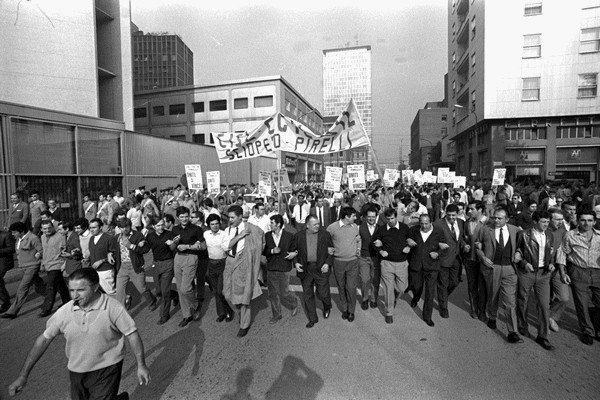
What compositional analysis therefore requires is not an inventory of the class as it was. The mid-twentieth century working class—its industrial forms, its trade union density, its workplace solidarities—has functioned as the implicit reference point for a left that has not updated its object. The actual class is something else: decomposed industrial forms, expanded service and care and reproductive labor, fragmented employment relations across platform and precarious work, deepened stratification along racialised and gendered lines, transformed social reproduction under austerity. These are the conditions that determine whether the tradition's core categories—the working class as collective political subject, the party as its organized expression, the programme as the condensation of its experience—can be made operative at all, and in what forms.
Conjunctural analysis is a distinct dimension, not a subset of compositional analysis. Composition tells you what the class is—its structural constitution at a given moment of accumulation. Conjuncture tells you what the class can do—which of its latent antagonisms are activated, which terrains of struggle are open, which configurations of political force are presently possible. One without the other produces a map without a moment, or a moment without a map. The conjuncture includes the state of the accumulation regime: whether capital is expanding or contracting, where the crisis tendencies are concentrated, how they are being managed. It includes the configuration of political forces: the state of the reformist parties and trade union bureaucracies, the openings and closures in the institutional terrain. It includes the international dimension: the state of the interstate system, the geopolitical pressures bearing on class struggle in any given national formation. Together, composition and conjuncture produce the task of periodization—the systematic characterization of the present moment with sufficient precision to ground strategic conclusions. Not the identification of the present as an instance of a known type. An original analytical act. The present is always, in the relevant sense, new.
From this foundation follows the question of power—understood not as an ethical property but as a real relation between organized forces. The Clausewitzian correction is useful here: not as military doctrine transferred wholesale to politics, but as a standing reminder that power is not distributed according to the justice of a cause. It is accumulated through organization, concentrated through coordination, deployed at points of structural vulnerability. The political question is always where the forces are, how they are constituted, what their lines of strength and vulnerability are. The moralist asks whether a given exercise of power is permissible. The realist asks whether it is effective and at what cost. These are different questions. Only one of them is the right one.
No single terrain follows automatically from this. Parliament, the trade union, the workplace, the community, the street, the international: all are sites at which the configuration of forces can be shifted. Their relative importance at any conjuncture is determined by analysis of where power is actually concentrated and where it is vulnerable—not by prior theoretical commitment to the primacy of one terrain over others. The sequentialist habits of the left, extra-parliamentary struggle first or electoral engagement first, are strategic doctrines masquerading as analytical conclusions. Every tactic's merit is determined by the moment. None are foreclosed in advance. None are preferred in advance.
The fourth dimension is the one that converts the analytical requirements into an organizational commitment. Sustained engagement with the actual movement of the class is not a supplement to the previous three; it is their necessary condition. Class composition cannot be analyzed from outside the class. The forms of solidarity and antagonism that are actually available given the present technical composition of the class are not visible from a position of pure theoretical contemplation; they emerge through the practice of struggle and are legible only to those engaged with that practice. Conjunctural analysis requires not merely the reading of political events but understanding the structure of the perception of the proletariat that so cognizes the significance of these events. To understand what is to be done, one must first internalize the position of the one who is supposed to be doing. Gramsci understood this. The organic intellectual, in his account, is not one who brings correct theory to the class from outside — a relationship he described as bureaucratic and formal, without political consequence. The organic intellectual emerges from within the class, participates in its felt life, understands not only its structure but what Gramsci called its elementary passions. Without that felt connection, the analysis remains abstract.
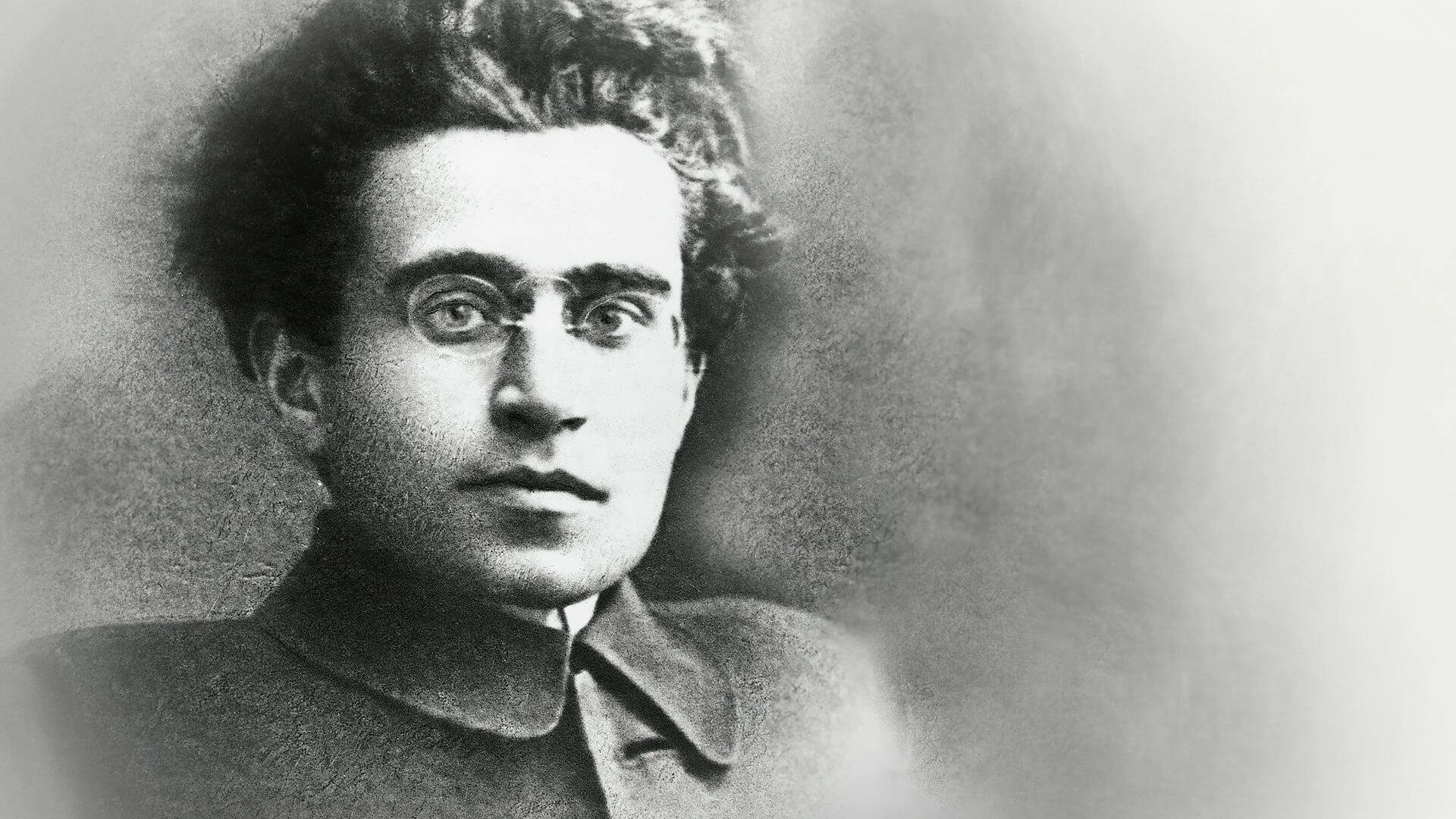
This is where the realist requirement makes its harshest demand. The period of class defeat that has structured the left’s situation since the 1980s has severed this organic connection. A left reduced to sects and publications, to the maintenance of theoretical traditions in the absence of mass engagement, is conducting its analysis from a position of systematic distance from the class it claims to analyze. The analytical tools remain available. But the application of those tools to an object from which the analyst is structurally distanced produces results that are systematically skewed, because the object itself, the class in its actual movement, is not directly available to the analysis. Theory in these conditions does not automatically decay into idealism, but it faces a continuous pressure in that direction: the pressure to fill the gap left by absent empirical contact with ideal constructions, to reason from the tradition’s categories rather than from the class’s actual experience, to mistake the survival of a theoretical framework for evidence of its present adequacy.
The realist response to this condition is not to pretend the distance does not exist or to dissolve it through an act of will. It is to hold the distance as a problem to be worked on rather than a condition to be accepted: to accept that our position is marginal and to operate consciously on that basis. Our task is to seek out the forms of engagement with the class that are actually available in the present conjuncture rather than assuming the forms that were available in a previous one, and to treat the gap between current theory and current class experience as the primary index of what further analytical work is required. The organiations and movements through which the class is presently expressing its interests, however fragmented, however partial, however remote from the political forms the left regards as adequate, are the material from which an adequate analysis must be built. The alternative is to continue building adequate analyzes of an ideal class, which is a form of work with no political consequence.
Realism, understood in this way, is not a lower standard of theoretical ambition. It is a higher one. It demands not only the mastery of the tradition’s analytical tools but their application to an object that does not conform to the tradition’s expectations, in conditions that provide no automatic corrective when the analysis goes wrong, sustained by an organizational commitment to engagement that the present configuration of the left makes systematically difficult to maintain.
These are demanding requirements. But they are also the only ones adequate to the present situation.
VI. Organization Adequate to Conditions
The move from analytical requirement to organizational consequence is itself a political act, and it is one the left has consistently deferred. Instead, we have substituted for it either the imposition of a pre-given form or the indefinite postponement of the organizational question pending better conditions. Both evasions reproduce the problem they claim to address. The organization built in the image of a class that no longer exists in the required form cannot become adequate to the actual class by waiting; the organization that waits for conditions to generate the correct form spontaneously is not an organization but an aspiration. Neither position takes seriously the requirement that organization must be built in the present–from the materials the present provides, in relation to a class analysis conducted now rather than inherited from a previous historical moment or awaiting the right opportunity.
We must distinguish the party from the sect on one side and the movement on the other. The sect is an organization built around the prior possession of correct theory, whose engagement with the class is conducted in the service of the organization’s own reproduction and theoretical vindication. The movement is an expression of class energy on a particular terrain or around a particular demand, capable of mobilising significant social forces but structurally incapable of sustaining coordinated political action across terrains and over time. The party in the relevant sense is neither. It is constituted not by prior theoretical correctness but by the commitment to the analytical procedure that correct theory requires, and it is organized not around a single terrain or demand but around the synthetic task of holding together the multiple dimensions of class struggle in their actual complexity. The programme it carries is not fixed in advance of this engagement but continuously developed through it, crystallising from the encounter with the class’s actual experience rather than from the deliberations of its theorists.
The positive requirement is a party-form capable of maintaining full-spectrum engagement as a united and synthetic organ. Full-spectrum means precisely that: parliamentary and extra-parliamentary, workplace and community, immediate demands and long-term programme, national and international. The sequentialism that the left habitually imports into its strategic thinking–the assumption that certain terrains must be secured before others can be engaged, that certain forms of struggle are primary and others derivative–is a theoretical prejudice rather than an analytical conclusion. The actual configuration of forces at any given conjuncture determines where the weight of engagement should fall, but this itself can only be practically identified if the party is present in every field of struggle, pushing the needle forward, and constantly monitoring for opportunities to advance their position. Standing outside the field of struggle does not only obscure the identification of these opportunities but also, by necessity, limits those that are actually available. The party is the organ that makes this determination and coordinates the engagement that follows.
The organizational implication of the realist account is therefore not simply that a different kind of organization is needed, though it is that. It is that the process through which adequate organization is built is itself different from what the voluntarist tradition has assumed. Conjunctural analysis on the basis of sustained engagement with the working class as it actually exists is a slower process than the voluntarist alternative, and it is a more uncertain one. The form of organization that emerges from it cannot be specified in advance because it depends on what the analysis of class composition and conjuncture actually reveals. What can be specified is the procedure: begin from the class as it is, not the class as the theory requires it to be; derive the organizational form from the analysis, not the analysis from the organizational form; treat the programme as an open question to be worked through in relation to actual class experience, not a text to be agreed and applied.
The party that results from this procedure is not a guarantee of political success. No organizational form is. What it is, is the only kind of organization that can actually produce a genuine relationship between socialist politics and the working class as it presently exists. The distance between this and what the left currently has is significant. It is not, however, a reason to defer the organizational question to better conditions. The realist method may not be an automatic solution, but it is the only place from which serious analysis can begin. Better conditions will not arrive independently of the organizational work that makes them possible. The present is the only terrain on which that work can begin, and the requirement of realism is to begin it without the comfort of ideal constructions that substitute for the harder encounter with present conditions.
That encounter is what the left has most consistently refused. The refusal takes many forms: the sect that builds the correct organization in advance of the class, the theorist who defers the organizational question until a more adequate analysis is available, the moralist who rules out the available terrain on principled grounds. What unifies them is the avoidance of the actual class as it exists, and the preference for an ideal object that does not talk back, does not confound theoretical expectations, and does not require revising positions held for decades. Realism refuses this avoidance. It insists that the class as it actually is constitutes the primary political reality, and that any organization, programme, or strategy not derived from serious engagement with that reality is not Marxist politics but a simulation of it. It is the affirmation that Marxism, unlike other forms of socialisms, defines itself by rooting its theory and practice in the theory and practice of the working class.
VII. The American Case
Viewed from outside, the American left presents a landscape of idealist tendencies operating at extraordinary scale, in conditions that make the demand for realism more urgent, and its achievement more difficult, than almost anywhere else in the advanced capitalist world. The American case is instructive not because it is exceptional but because its specificity is so frequently obscured by the importation of European political frameworks without compositional translation, by the assumption that the organizational forms adequate to a different historical moment can be recovered and applied, and by the characteristic American left habit of mistaking theoretical purity for political seriousness.
The two dominant expressions of the underlying error in the American context are structurally parallel to those described above, though their concrete form is nationally specific. The first is abstentionism and left moralism: the refusal of the electoral and democratic terrain on the grounds that engagement with it is inherently corrupting, that the two-party system is a closed circuit of ruling class interests admitting no genuine political intervention, and that the proper response of the left is to build outside and against it. This is strategic moralism applied to the specific terrain of American mass politics. The prior ethical judgement that electoral engagement provides support for the system rather than contests it is made before any analysis of what engagement might actually produce, what openings the terrain contains, and what the costs of abandoning it are. The analysis of power is foreclosed by the moral verdict. The result is a left that has voluntarily exited the field on which the political consciousness of the American working class is actually being formed and contested, in the name of a principle whose effect is to leave that field entirely to other forces. The single organization that has proactively taken advantage of the electoral struggle in the United States, the Democratic Socialists of America (DSA), have been rewarded by going from more or less irrelevant before 2016 to the largest socialist political formation in the country.
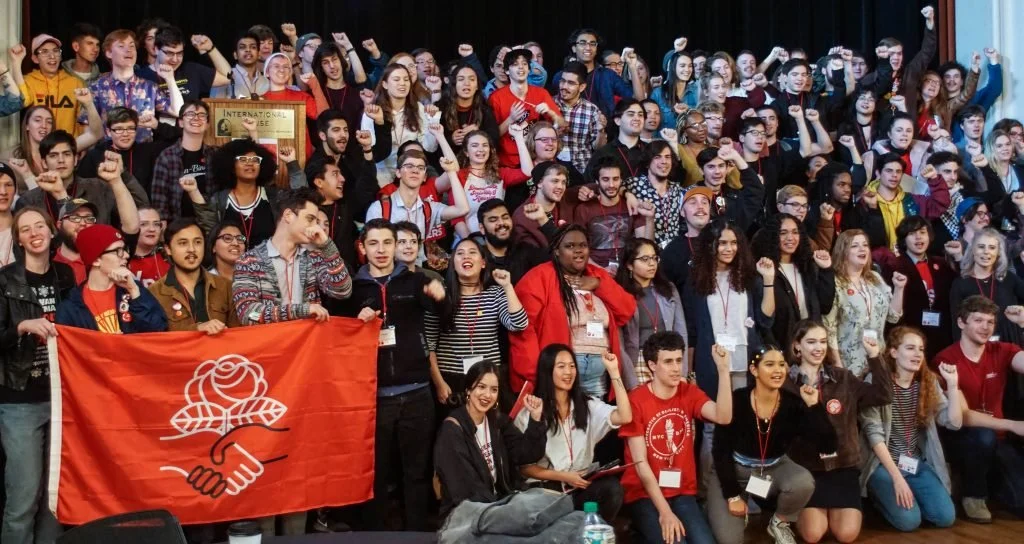
The Democratic Socialists of America (DSA).
The second expression is economist activism: the reduction of political work to organizing technique, workplace recruitment, and the accumulation of members and contacts without the political analysis that would determine what the organizing is actually for. This is voluntarism without compositional grounding. The activity substitutes for the analysis; the organization reproduces itself without asking whether the form it has taken is adequate to the class it claims to represent or the conjuncture in which it operates. Economist activism treats politics as reducible to technical method, rational appeal to interest, and rests on a theory of change that promises the accumulation of social weight through application of correct technique. What it cannot do is the political work of concretisation: the translation of the general antagonism between capital and labor into a specific political programme adequate to the actual conditions of American class struggle. That work requires exactly the kind of compositional and conjunctural analysis that economist activism systematically avoids, and begins by rejecting the abstractly rational and non-historical premises of economism outright.
The absence of an American labor party is not a contingent historical lacuna waiting to be filled by the right organizational initiative. It is a structural feature of American class politics that has shaped the forms in which class interests can be expressed and the terrains on which they can be contested. The two-party system is not simply an obstacle to socialist politics but a terrain through which class forces are organized. The question of what engagement with that terrain can produce is a strategic question requiring analysis, not a moral question requiring a verdict.
The other primary compositional fact of the American proletariat is the fragmentation of the union movement. Overall union density reached a record low of 9.9 percent in 2024, with private sector density falling to 5.9 percent. These figures represent the decomposition of the primary institutional mechanism through which the American working class has historically expressed its collective interests. The organizational forms adequate to a class with thirty percent private sector union density, which characterized the mid-twentieth century peak, cannot be assumed adequate to a class in the present condition of fragmentation. Instead, while maintaining a serious analysis of the role of unions, investigation and engagement with the other means of class organization and expression in the intervening period is necessary.
The racialized composition of the American working class is not a secondary characteristic to be addressed after the primary class analysis has been conducted; it is a structuring feature of the class itself, producing lines of stratification and solidarity that any adequate political formation must hold together rather than dissolve into a generic class appeal. Black workers have maintained consistently higher union membership rates than any other racial or ethnic group, a fact that reflects both a history of labor activism and a particular relationship to the public sector that carries its own political implications. The racialized segmentation of the labor market, the differential exposure of Black and Latino workers to the conditions of precarious and low-wage employment, and the history of racialized exclusion from the institutional forms through which the labor movement built its power are compositional facts, not supplementary social justice considerations or otherwise “bourgeois-democratic,” and a programme that does not take them as generative conditions of its own content is not adequate to the class as it actually exists.
From this compositional foundation, the strategic question becomes concrete. The democratic and electoral terrain is not, as the abstentionist position maintains, simply a mechanism for reproducing ruling class hegemony without remainder. It is the primary terrain on which the political consciousness of tens of millions of American workers is being actively shaped, and the question of whether the left engages with that process or withdraws from it in principled disgust is not a moral question but a strategic one with determinate political consequences. The Sanders conjuncture demonstrated that a political language of class power and economic antagonism retains genuine resonance within the American political imagination; the subsequent dispersal of that energy without adequate organizational form to concentrate it is precisely the problem the realist account must address. The emergence of figures such as Mamdani in New York and the broader DSA-adjacent constellation of democratic socialist electoral politics represents the embryonic form of a political current capable of speaking the language of class interests within the institutions through which mass American politics operates. Whether this embryo develops into something adequate to the compositional requirements of the present moment, or whether it is absorbed into the managerial logic of the Democratic Party without producing a genuinely independent political force, is not determined in advance. It is a strategic question open to intervention.
The adaptation of communist politics to American conditions, the translation of the general programme of the socialist tradition into specific political content adequate to the actual life of the American working class, cannot be achieved from a position of principled distance from the terrain on which that life is politically organized. It requires what the preceding argument has described: sustained engagement with the actual movement of the class, on the terrains where it actually moves, producing through that engagement the compositional and conjunctural analysis from which an adequate politics can be derived. The abstentionist refuses this engagement on moral grounds. The economist activist conducts it without the political analysis that would make it generative. The realist position is the one that takes both the terrain and the analysis seriously, without allowing the prior moral verdict to substitute for the harder strategic work of determining what engagement can actually produce.
