
Jul 6, 2026
Towards Active Revolution: Populism and the Proletarian Revolution
In Part 2 of the series, populism is examined as a historical form of class struggle and placed in relation to the general tasks of the proletarian revolution.
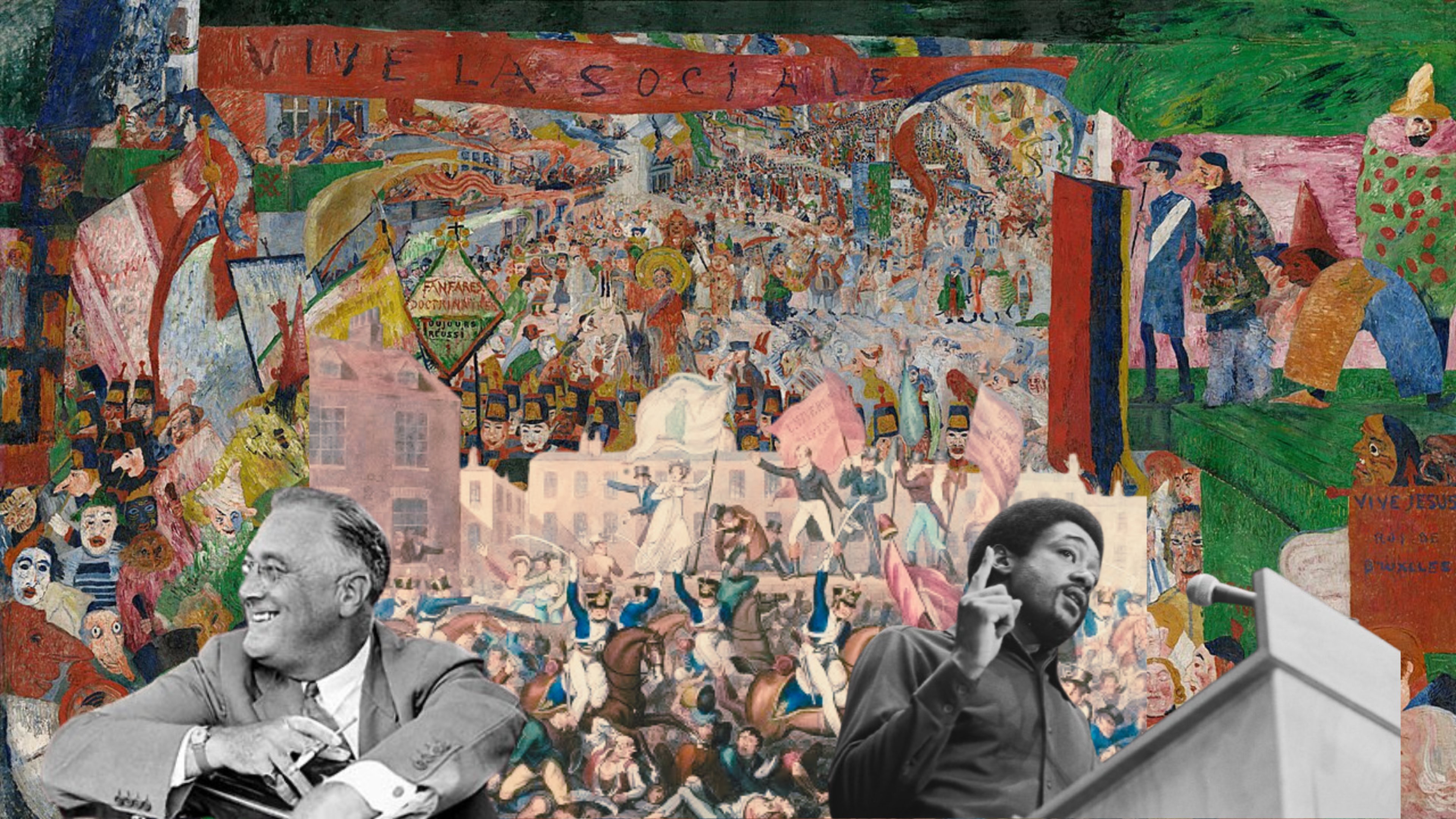
Christ’s Entry into Brussels in 1889, James Ensor (1888)
II. Populism and The Proletarian Revolution
III. The Permanent Revolution and the Tactics of the Communists
IV. Where to Begin? The Permanent Campaign
The proletarian revolution and the transition to socialism is not identifiable with the bourgeois revolution and the transition from feudalism to capitalism either in form or content. Just as any particular nation has its own particular form of revolution, so, too, does each historically revolutionary class have its own appropriate revolutionary content.
The content appropriate to the proletarian seizure of state power is mass revolution, or active revolution.
This allows us to understand the concept of left populism precisely. Both detractors and supporters of the concept of left populism treat left populism like a theory, approach, or body of ideas. The unsophisticated analyst of populism conceives of populism as demagoguery or, positively, as the necessary form of mass organization. But even the sophisticated analyst of populism, such as Laclau, treats populism as an objective social phenomenon. Although the “mass man” identified by Laclau is the realized form of the proletariat, he remains in error by giving left populism an objective model and therefore a transhistorical logic. This leads Laclau to move away from the concept of the proletariat (although he does not fully abandon it). To retain the insight of post-Marxism without falling out of Marxism, left populism must be historicized and treated as a phase in the development of the revolutionary proletariat as a subject that arises as a solution for real contradictions and problems.
To concretize this, let us offer a schematic history of the proletariat in the West over the last century and few years. The proletariat begins as a closed interest group, and is at this stage most directly identifiable with the “industrial proletariat” as a trope attributed to Marxism. The working class is largely unorganized (in the midst of forming economic organizations) and unconscious (largely apolitical and anarchistic in outlook, see e.g. syndicalism).
In this stunted stage of development, class organization where it exists takes the form of associations built on the principles and ideology of economic organization (such as the IWW, or even the early AFL). Where there is a conscious party, i.e., an intelligentsia, it largely reduces itself to the minimal tasks of cohering the proletariat via reforms of capitalist society (the Socialist Party, or even the Social Reformers) or illegalist adventurism (the early Communist Party). The rule is that the mode of political expression of the class matches the ‘physical’ organization of the class: so, largely, short-term economic gain, or ideological concepts of social change not rooted in concrete reality but in bursts of heroic action (Utopianism in the strict sense, the historical origin of the many political ‘schemes’ of the later Depression era).
The Bolshevik revolution introduces an explosive element into the mixture. The experience of 1917 indicates to the American communists, who are otherwise a gaggle of anarchists and syndicalists, the necessity of political struggle and the political party as a vehicle of the proletarian struggle. And we do see positive shifts here as the Americans attempt to emulate the political theory of the Bolsheviks, e.g., in the focus on electoral struggle and acceptance of the legal party organization, the adoption of the Black Belt thesis, etc. But this period is also marked by rapid and erratic shifts in line and confusion, which ends up marking the communist left in America for a long time and is symptomatic of any political organization that is not actually tied to a social base that can perform a mooring function. So, for example, we see the disastrous and bizarre decision to first support the La Follette presidential campaign in 1924 before the united front is “called off” and the Communists suddenly switch to running an independent ticket. Or, later, Party leader Earl Browder’s own sudden shifts between calling FDR a “fascist” and “Nazi” and supporting him as the fortunes of US-USSR relations at the time shifted.
So, we reach a shift, partially due to the success and transformation of radical left politics just described, largely due to the success of the organization of the proletariat and progressive elements of the bourgeoisie realized in the form of the New Deal. This element, along with the general crisis of capitalist society, signals the transition to the next phase.
It is often put forward that the New Deal functioned as a “class compromise” or “cooption” of the burgeoning revolutionary movement. This is true, but obscures more than it reveals for many a conspiratorial Marxist. The “class compromise” of the New Deal was precisely the empowering of the American working class, economically and politically. Modern capitalism, as it moved further and further from its youthful stage, found that it was required to survive the integration of the working class into the state to some degree. This integration is itself the modern corporate or “administrative” state: it is the slow shift of the labor of reproduction away from the small capital of the household or the community to national capital, in the short-term interests of both the proletariat and the bourgeoisie.
This is also why the critique offered by Third-Worldism, often derided by revolutionaries who understand that our task is to win revolution here, retains salience. Its conclusion—that there is no American proletariat—is totally erroneous. But the ideological trend is one of the very few ones that have soberly examined the actual development and concrete history of our working class rather than treating it as a closed concept pre-defined by Marxist theory.
In strict Marxistic terms, we might understand this period as a progressive development of bourgeois democracy under the leadership of the left-wing of the bourgeoisie with the proletariat as the junior partner. Each element here is necessary: the demands and victories achieved, whether as the result of the New Deal labor laws or as the result of the mass struggle of the working class, universally concerned the relative rights of workers and access to social wealth.
This alliance reaches its apex with the rise of Truman to the Presidency, at which point he finally cuts off the vestigial tail of the American proletariat, socialism. He goes right and the CPUSA, after expelling Browder, goes left. He turns against the Communists at the same time the Communists renounce their alliance with progressive liberalism. McCarthyism and the subsequent assault are the confirmations of this broken political relation, not the cause. But, again, the form of class organization determines the political expression: this is a period where the working class largely transitions from a largely local economic-corporate form of organization (precisely because the economic-corporate form is successfully affirmed by the the progressive bourgeoisie) to the status of a social “interest,” the labor “interest” integrated into the discourse of the State: so, we see increasing working-class political participation in the State, increasing Black political participation, and, by the end of the New Deal, a massive shift in America’s economic and political structure.
For the radical organizations, the unity of the tasks of the proletariat and of FDR’s restoration represented both a problem and an opportunity. It was an opportunity in the sense that the conditions for successful intervention were most present—an organized, attentive working class ready for political struggle—and, so, we see massive growth on the left (including the CPUSA reaching a peak of 100,000 members). But it was a problem, as well: what was to be done? How did one break out of the dominance of bourgeois leadership? The answer as it existed concretely, then, was a deviation towards reformism on one end (Browder’s CPA and the abandonment of class struggle), and a deviation towards ultra-leftism on the other (for example, the various splits from the CPUSA which are unable to link to any social group or have any significant social impact).
The struggle of the working class and the general crisis of the immediate social formation induces the next transition in the struggle. The New Deal fundamentally sought to elevate and treat workers as an interest group in the State. But to do so was to turn the proletariat into something new, a different type of class than it was previously. With the advent of the modern administrative state, the transfer of a large set of the functions of unionized labor from the site of the workplace to the site of the State, and (factors that are ironically too often invisible within Marxist analysis) the growing wealth and more advanced level of technology available to the working class–we might say that the working class had become generalized. In the same way that, at an early stage of capitalistic production, the model of commodity-production does not pierce every field of production and in fact gradually does so over time until a society is marked by generalized commodity exchange, so, too, did the production process of political identity-formation genuinely become extended and transformed during this period. In a sense, we might call the New Deal the birth of the United States as a proper singular nation in the modern connotation. Huey Long figures as an example transitional figure here, who is described frequently as running Louisiana not unlike a contemporary caudillo–a structurally impossible position for a governor today.
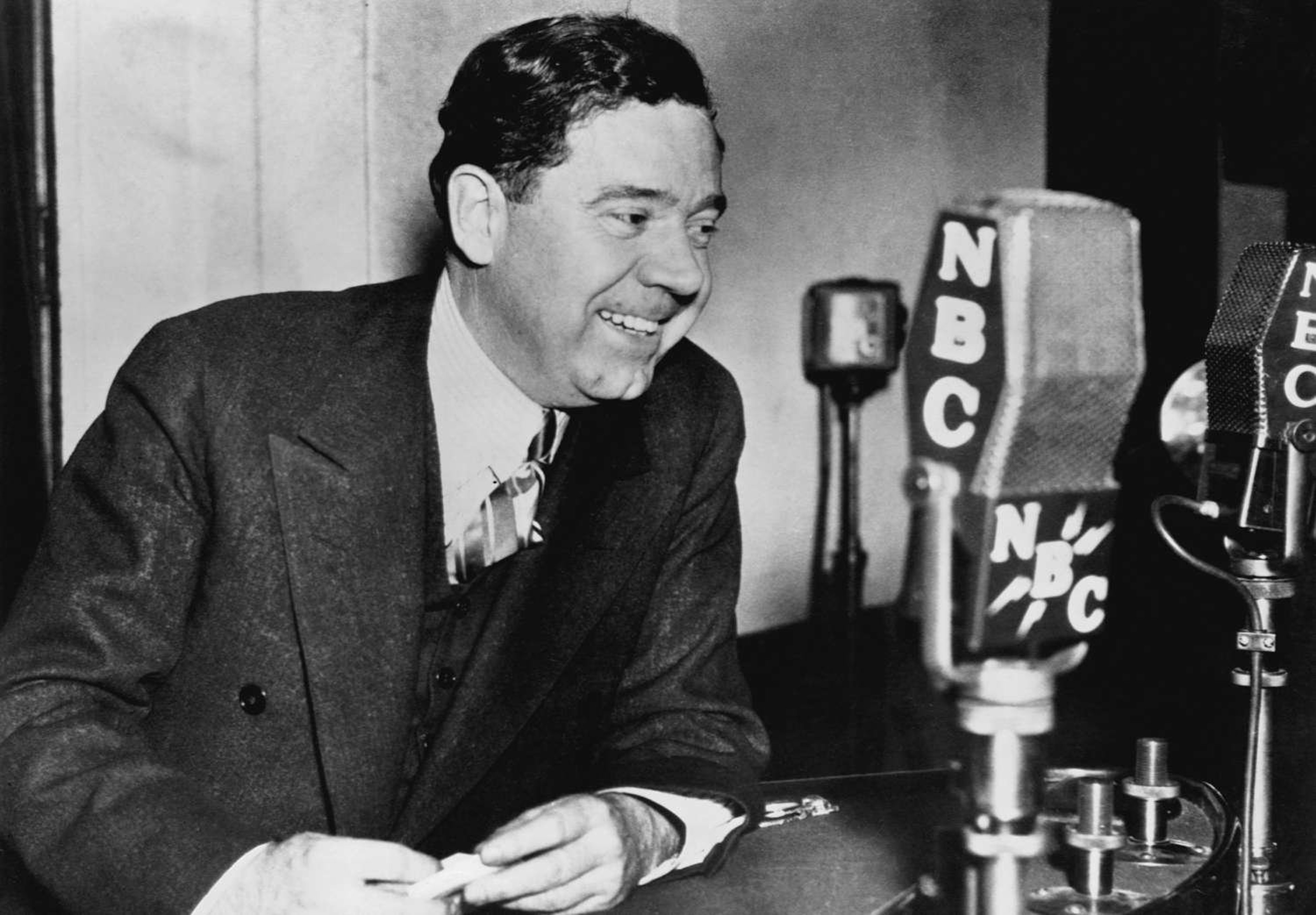
Huey Long did not just have an iron grip on the governorship of Louisiana—he ran the whole state, more or less, and did so uninterrupted until his assassination in 1935.
Often presented as evidence of the reverse–of a loss of class politics–the proof of the generalization of the proletariat as a class across society is precisely in the loss of salience of class as a motivating concept. Having lurched out of being an interest group, the American proletariat, more and more as we go closer and closer to the end of the New Deal, becomes identified with American society writ large. Becoming the whole, its eyes can only turn inward; it loses sight of its own identity as that identity balloons.
Of course, the capitalists still exist. And the State is still the “committee of the bourgeoisie.” But the specific type of State is important: the State is not directed primarily towards the short-term, narrow and financial interests of the bourgeoisie, but towards the overall preservation and advancement of the bourgeois system as a whole. Its primary task, then, is not enforcing the will of the bourgeoisie, but putting forward a politics and structure of class relations that preserves bourgeois class dictatorship specifically and the capitalist mode of production in general. This means, however, that it has more flexibility and openness than traditional Marxist models of the State have offered: the State, as Gramsci puts it, can surrender everything and anything—so long as it does not surrender its power, so long as it does not make compromises of a fundamental nature. Consequently, the failures of this period and the late New Deal cannot be read as necessary to the capitalist system in general but, rather, belonging to the conjuncture, viz., the generalization of the proletariat.
While the proletariat is an interest group, its internal differentiation takes the form of different, physically separated sections that have various economic incentives: skilled workers versus ‘simple' laborers, intellectual versus manual labor, etc. It follows this pattern because it rests on the economic structure of an undeveloped capitalism where the ‘interest group’—the industrial worker, the Western farmer, the urban immigrant—are the predominant mode of political identity. When capitalism reaches a degree of development that the proletariat is generalized in society and becomes “mass man,” however, the internal differentiation of the proletariat takes an absolutely new form. It is only now, in the populist period, that we see the full fruit of this transition. At the time, however, it still yearned to break free from the old relations of (identity-)production: the salient category becomes the citizen, and the rights of the citizen. The citizen is the abstract-individualist form of the simple universality of the proletariat under bourgeois democracy—having established itself as everything, it finds that its remaining differences are internal, and those internal differences becomes the clear markers of differentiation and thus identity rather than the “simple aggregate” of coexisting interest groups with independent bases of existence.
This is different from the classic citizen of, e.g., French Republicanism. While this type of citizen was defined by its rights as an individual, i.e., the citizen’s independence as a unit, his rights and obligations, the modern citizen is a different type: a citizen of. He is no longer defined by his membership as an individual in a community or social arrangement, but as an extension or concept of the administrative State itself. But to be an extension of the administrative State, of the ‘generic,’ is exactly what the content of alienation in the period of mass society is.
Again, this is itself the product of the history of class struggle: the slow ascendancy of the working class and the restoration of the American economy along with its global dominance led to internal differentiation within the proletariat: the wealthier suburbanites, that collected the fruit of the New Deal and in their new position wished to consolidate their privilege, the Black proletariat, which had slowly been economically integrated with the American proletariat under the New Deal and which was now most directly confronted with its lack of political power, students who centered the reproductive apparatuses of capitalism, etc. Each of these were obsessed with their mutual relations, and each defined their own identity as a facet of the whole rather than as independent units coming together to associate. Ideologically speaking, this can be seen in the transition away from the saliency as a political demand of Black nationalism, which itself was dependent on a social formation where identity was independent and objective (for the Black Nationalists of the early 20th century, this took the ideological form of an argument that the type of production of Black labor was largely of a local and peasant type). For Black nationalism (or other similar political theories dependent on identities as “aggregates”) to return, the American political system itself would need to collapse, become de-rationalized and de-nationalized, and, most importantly, the unitary function of the nation qua nation would have to be disrupted (i.e., not just political, but significant economic and cultural shifts would be requisite).
The crescendo of this phase is the Black Panther Party. Unlike the political formations that precede it, the Black Panther Party is remarkable in its growth and development. But it is remarkable and able to achieve these gains precisely because it broke with the previous mode of political party formation that the rest of the left subscribed to. The fundamental act of the Black Panther Party (BPP) is not its organizational investment—not its Breakfast programs or even its branch structure—but its political saliency. It is not rooted in peasants or workers as formal and clearly differentiated interest groups. Instead, the BPP seems to have captured the shift in the form of the proletarian struggle: it identifies the political element of class. So, the birth of the BPP is in the Ten-Point Programme. This is purely ideological; as such, it takes the form of being a pure discursive act.
In Seize the Time, Bobby Seale reflects on the founding moment of the Black Panther Party. After some failed attempts at participation in existing organization, they decide that they must act independently. He writes:
One day Huey said, "It's about time we get the organization off the ground, and do it now." [...]
Huey said, "We need a program. We have to have a program for the people. A program that relates to the people. A program that the people can understand. A program that the people can read and see, and which expresses their desires and needs at the same time. It's got to relate to the philosophical meaning of where in the world we are going, but the philosophical meaning will also have to relate to something specific." […]
“Huey understood that Oakland was a typical black community, so we took the ten-point platform and program—a thousand copies of it—and went to the black community with them. He didn't just pass out the platform in people's hands. He stopped, talked, and discussed the points on the ten-point platform with all the black brothers and sisters off the block, and with mothers who had been scrubbing Miss Ann's kitchen. We talked to brothers and sisters in colleges, in high schools, who were on parole, on probation, who'd been in jails, who'd just gotten out of jail, and brothers and sisters who looked like they were on their way to jail.
Incredible! The success of the BPP is laid out in full here. Everything else is derivative. You talk to the people. How many of you talk to the people? There are many communists. But there are shockingly few people I have met who can say they talk about communism, to people they know and people they don’t know, and that they do it a lot. And I do not think there is any way to get around that.
Stepping back. The task of the early workers’ movement was corporate-organizational. But now that the organization had succeeded—succeeded so much, in fact, that today the American proletariat is accused of having been “embourgified”—that organization was no longer the task of the day. The post-War left largely dissolved itself into sects or reformism. This was because they did not see that the task of the day had changed. Putting politics in command and uniting the democratic struggle with revolutionary vision and organized labor was the only mode of political expression appropriate to this moment—and was achieved by the BPP, which united Black revolutionary consciousness, economic discontent, and student frustrations into a single program that encapsulated the demands of the time.
Without being linked to an effective theory of political struggle, however, the BPP was unsustainable. As Newton quickly became unable to play the role of the gravitational center, the organization was quickly torn asunder by its left and right wings—and crushed by the State’s targeting of the BPP’s leadership. Even so, we can draw a through-line, now, from the Civil Rights Struggle, to the BPP, to the even later LGBTQ+ struggles. Each, confronted with a proletariat that had achieved the economic-corporate phase of organization, now was in a situation that was formally similar to the pre-War association of interest groups. But each was defined relationally, a qualitative difference that led it to conceive its interests and values in the general form of politics rather than the local form of demands. They organized on largely similar models–democratic struggle combined with community organization and radical vision. This sets the stage for the next transition.
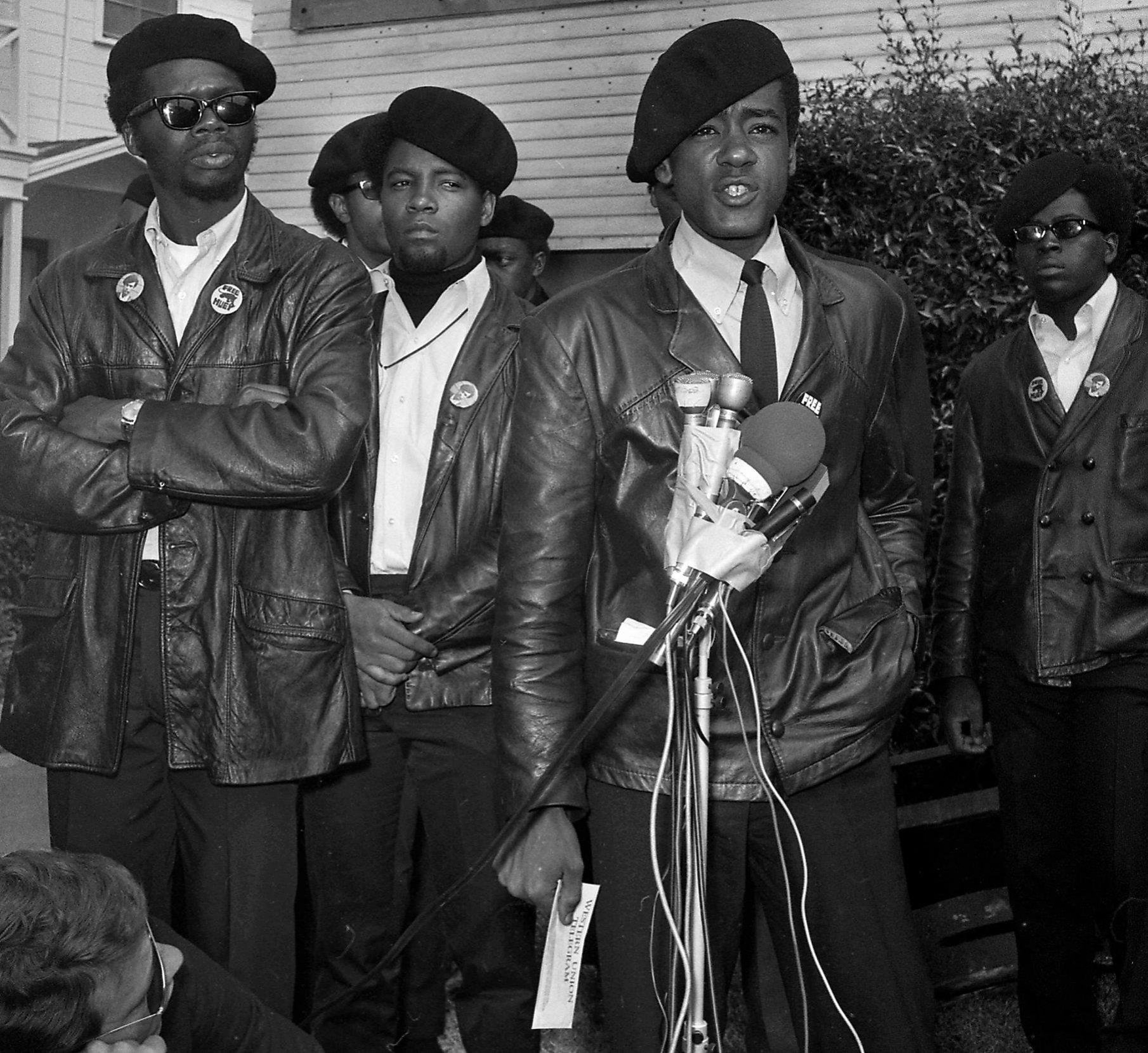
Bobby Seale’s (second from the right) Seize the Time is an astounding document of reflection from someone intimately involved in the Black Panther Party since, literally, day one. Much like many biographical accounts of revolution, it lays to rest misapprehensions about the BPP or revolutionary work in general as glorious and heroic rather than serious and patient.
Let us briefly review. We begin with a largely localist economic structure where the saliency of one's identity existed in the shape of an aggregated interest group. But because this identity existed as an aggregate, and not a relation, it resolved itself into the rationalizing tendency of capital and was incorporated as a facet of society or the State, a ‘facet of the whole.’ As such, lacking ties to each other, the various economic interests united on the basis of physical proximity, i.e., sectionally. So, we see, people vote largely according to their region, their identity is bound up with their geography, etc. Following voting patterns, in the next phase, next see that people vote on the basis of relational identities. The party they identify as their own, then, becomes the party they vote for. But because the parties are the form of expression of relational identities, they lose their saliency at the level of political partisanship; hence we see the popularity of “split-ticketing,” that is, voting for the Democrat Presidential candidate and a Republican down-ballot, filtered through the just-described voting based on the sense of their identities aligning with certain parties (as relatively non-ideological structures) rather than according to sector.
The modern period, then, is only a continuation of a developing process. Negative partisanship predominates, but this is precisely the form that political partisanship takes: individuals, leaving aside first sectoral and then party-identity loyalty, have now fully attached themselves to the national political structure of the modern State. They are purely defined by the “side” they are on: the ideological team they identify with. This is termed in political science the period of ideological “sorting,” when liberals are finally fully identified with Democrat and conservatives with Republicans. After sorting, the political character of identification is made clearest by the phenomenon of negative partisanship: very few people identify with either party, but have such deep-seated beliefs about the direction of the United States that they feel the need to form an alliance with other people with similar political objectives to defeat those with contrary political objectives.
These trends culminate in today, what we might call the age of hyperpolitics: where national politics takes precedence over localist ideology, where people are increasingly coming to their political beliefs on the basis of actual evaluation of political information and perspectives (whether they are ‘informed’ or not is irrelevant) rather than through non-ideological or physical factors. Politics seems to be theater because politics in-itself, separated from the physical constraints of underdeveloped capitalism, has the narrative as its organizing principle–and this is the politics of today.
The form of ideological expression appropriate to this structure of political practice is populism: the return of the expressly political, and the energization of the political environment by an infusion of the militant elements of combat and religion. The ideology of negative partisanship can only resolve itself into the abandonment of the specific policy goal for the question of fundamental political power: what will be the direction of our Nation? This question, more than any other, defines the individual voter’s mindset in the populist period, even if only implicitly. In relation to previous forms of political expression, then, it has the advantage of being more explicit, more open, and thus closer to genuinely revolutionary politics—it, more than any previous political formation, puts most clearly before the proletariat the question of state power.
In general, the era of mass mobilizations has displaced the world of community activism. There is no return of the “social fabric”—it has already been torn up and distributed en masse. But what waits at the other end is much grander.
As an exercise in materialism: one might ask what the links between grand narratives of political struggle and the concrete demands of democracy are. A significant reason the right-wing has mastered populism before we have is structural—institutions like the Electoral College make it so that the vote of a Republican is, in practice, almost always worth more than the vote of a Democrat. There is an incentive on one end towards mass mobilization that does not exist for liberals or progressives. The democratic revolution, consequently, is active revolution—a changing of the conditions towards bringing vastly larger swathes of the population into active political discourse.
Slowly globalized, finally generalized, with the fall of the salience of certain qualities (such as geography or race) rises the salience of other qualities. The defining motion here is the return of politics—today, everyone acts as a politician, precisely because they exist in an angry reaction to the era of moribund, neoliberal technocracy.
This is populism—the historical phase, and the reaction.