Nov 6, 2026
Yes, Communism! Part IV: Only a god can save us
M. Sanchez traces the neoliberal “War on the Poor” from Nixon to Trump, then turns the anti-communist case on its head: the misery we are told to fear from revolution is already here.
by M. Sanchez
Section II.A.h. The age of Epstein
The few who mastered the free soil and free labor opened up by neoliberalism soon grew bored with their own mastery. Capitalists as they were, they couldn’t afford to linger on the old things. They needed to constantly pursue new ventures if they wanted to survive the survival of the fittest in the spiritual animal kingdom of the free market. Only the biggest and strongest predators could come out on top of the food chain in the environment of late neoliberalism.
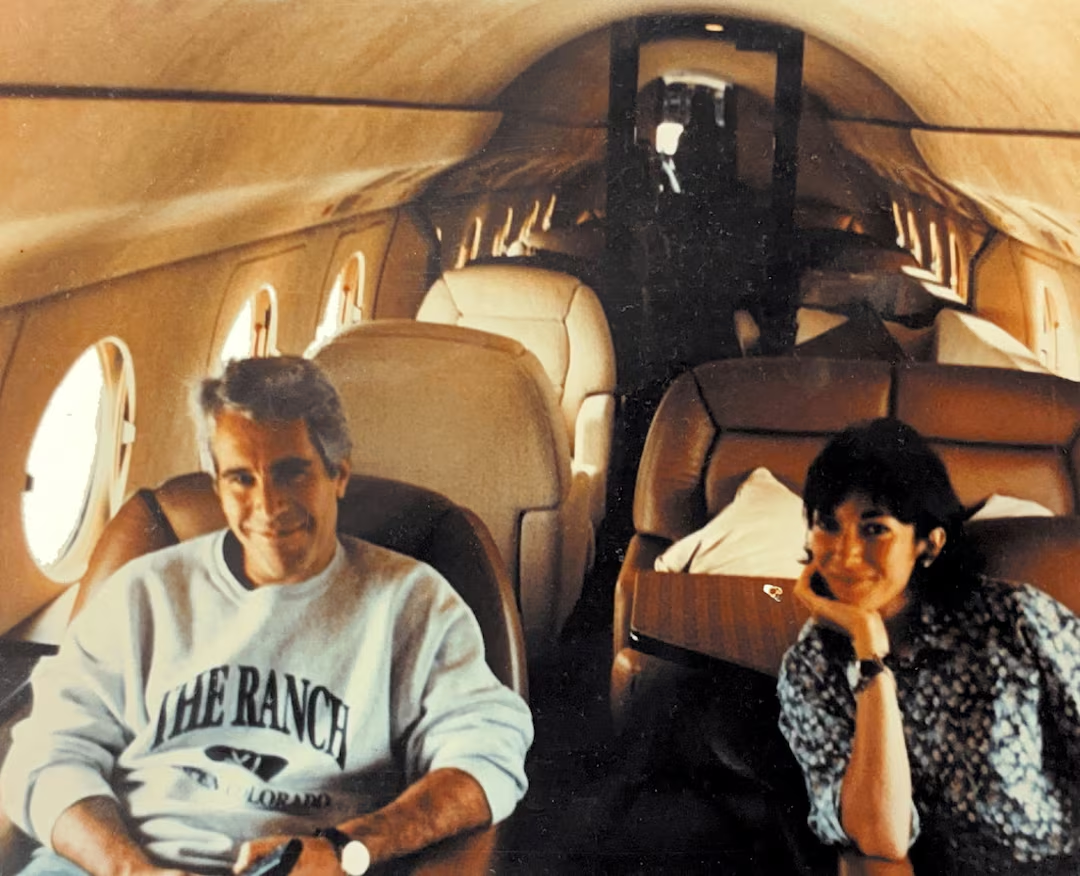
Jeffrey Epstein was a billionaire, financier, arms dealer, international negotiator, double agent, sex trafficker, child predator, mass rapist, and close friend of Presidents, Corporations and Kings.
Epstein was a child of the neoliberal era before he became a predator of children. His network of favors and blackmail twisted into the very roots of the present age of our world. Many of us know this all too well and despair deeply over it.
We are still trying to escape the age of Epstein, which I will loosely date from his adolescence in the 1970s to the years after his death in 2019.
This era has seen communists, the poor, and propertyless people all over the country persist in their life and death struggles. But we have to learn to see past the masks of totalitarian wealth and power.
Fragment II.A.h.ia. The neoliberal deep freeze
Neoliberalism was brought into power with the overwhelming violence and terrorism of the War on Crime, the War on Drugs, and the War on Terror. All three are really much better summarized as a collective War on the Poor.
The public wealth funded by taxes and voluntary contributions was stolen from the people at gunpoint and privatized, to be used for the work of policing them, imprisoning them, surveilling them, torturing them, and engineering them.
In exchange for collaboration in the destruction of the gains made by the New Deal, Civil Rights, and the feminist movement, they offered affirmative action shares in the loot to an entrepreneurial army of tyrants, opportunists, and grifters drawn from all communities.
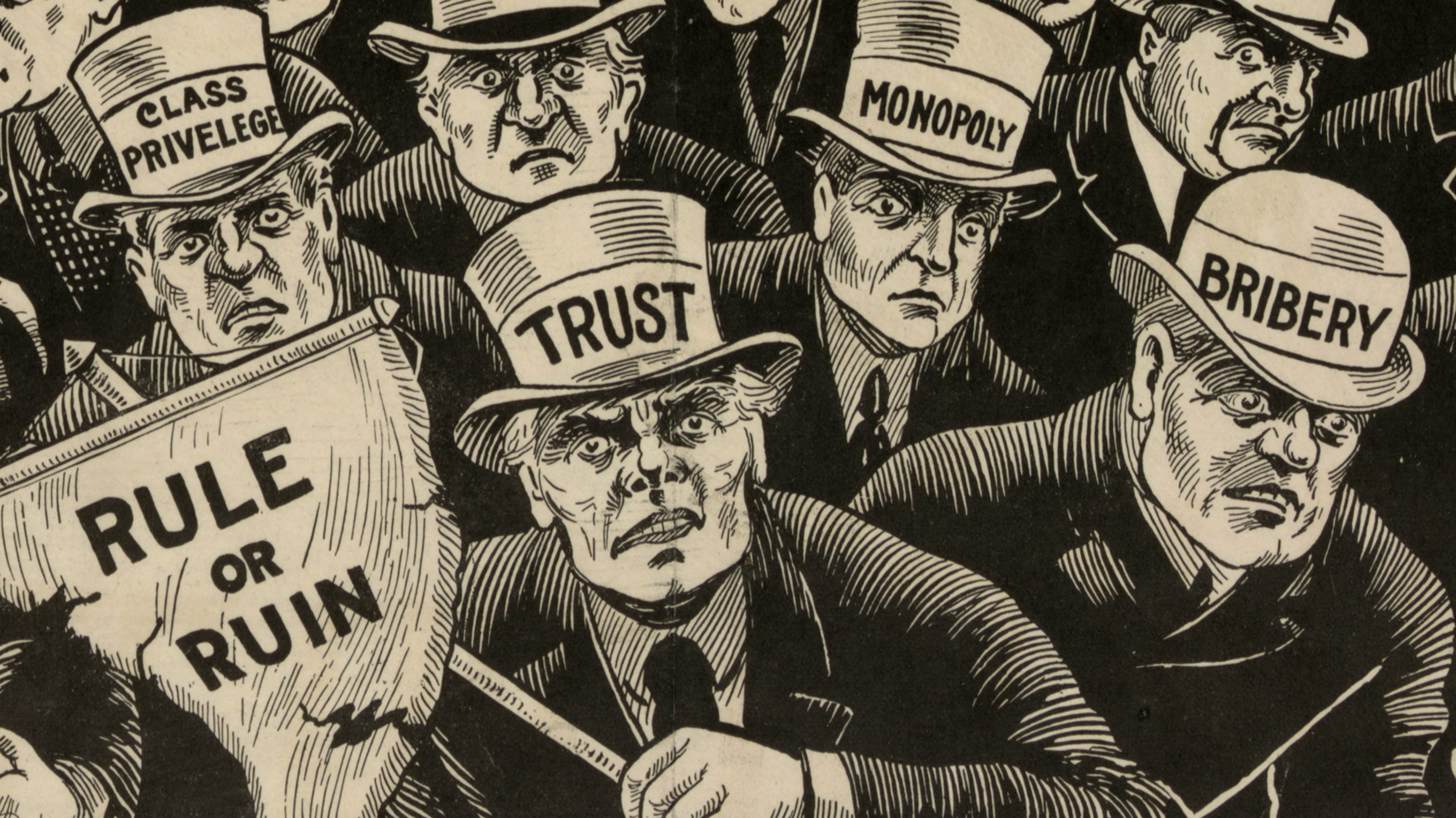
What monopoly sought control over was no longer just territory, life, labor, or money, but our very spontaneous behavior itself. It was the rise of a kind of new colonialism over everyone’s domestic affairs—neocolonialism.
Think it sounds far-fetched? Let me run you through a highlight reel of the rhetoric that we can dredge up from the era of victorious neoliberalism, and you’ll start to see what I mean.
Republican President Richard Nixon (a born and raised Quaker, if you can believe it) rose to power in 1968. He was elected on the promise of restoring “law and order.” The Nixonites interpreted this phrase as a call to crack down on student protestors who had strayed from the authority of their parents and destroy the Black militants who were at war with the Imperial Executive. Like an American Napoleon, Nixon sought to shift his palace from the traditional northeastern metropoles of power—New England—to a southern frontier of smallholders—the suburban Sunbelt.
Nixon accomplished it by channeling their hate and fear towards their enemies, the discontents who were dissidents against every system—the New Left students and the ghetto poor. Nixon campaign consultant Lee Atwater explained the very same thing in his own words in 1981: “You start out in 1954 by saying, ‘N—r, n—,r n—r.;’ By 1968 you can’t say ‘n—r’—that hurts you, backfires. So you say stuff like, uh, forced busing, states’ rights, and all that stuff, and you’re getting so abstract. Now, you’re talking about cutting taxes, and all these things you’re talking about are totally economic things and a byproduct of them is, blacks get hurt worse than whites… ‘We want to cut this,’ is much more abstract than even the busing thing, uh, and a hell of a lot more abstract than ‘N—r, n—r.’”[4]
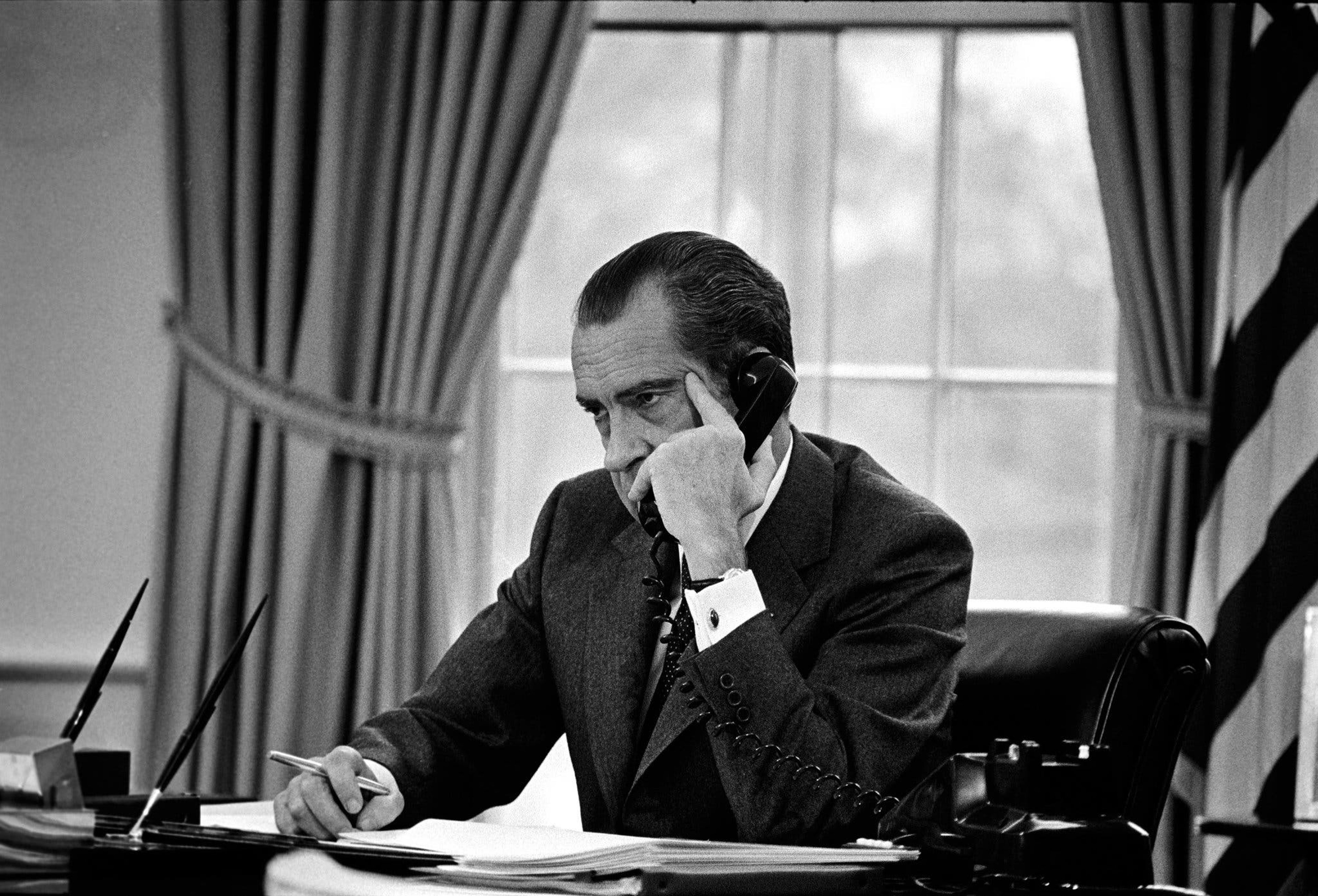
The juvenile thrill of participating in racism without the fear of being branded a racist was what Nixon offered emotionally to the anti-busing, pro-law and order white suburbanites. So how did he divide, conquer, and exterminate his insurgent enemies?
As one always does—by unleashing the war of all against all. John Ehrlichman, Republican President Richard Nixon’s domestic policy chief had this to say about the War on Crime and the War on Drugs: “The Nixon campaign in 1968, and the Nixon White House after that, had two enemies: the antiwar left and Black people. You understand what I’m saying? We knew we couldn’t make it illegal to be either against the war or Black, but by getting the public to associate the hippies with marijuana and Blacks with heroin, and then criminalizing both heavily, we could disrupt those communities. We could arrest their leaders, raid their homes, break up their meetings, and vilify them night after night on the evening news. Did we know we were lying about the drugs? Of course we did.”[5]
Nixon attempted to preserve and even conservatively expand the New Deal welfare state to offer a “carrot” for some with the “stick” for others.
Nixon’s exposure as a crook in the WaterGate scandal and his impeachment in the aftermath of the outrage left the ball in the hands of his sitting Vice President Gerald Ford. He certainly wasn’t a man that was about to come up with radical new solutions to preserve the postwar system.
The energy crisis after the Arab anti-Zionist oil boycott of 1973 threw the petrodollar imperialism—full employment–welfare state triangle out of whack for good. Shortages forced people to wait long hours in gas lines. Inflation of consumer prices became endemic. Nothing worked as it was supposed to anymore.
By the late 1970s, there seemed to be no course open for future Presidents other than the aggressive austerity of the neoliberal anti-state state and the rapid expansion of corporate neocolonial totalitarianism in the gaps left by the trimmed down welfare-warfare state.
The small, elite circles of ideological neoliberals in early ‘70s America pounced on the chance to impose their ideas on reality. Intellectuals like Milton Friedman and Lewis F. Powell, Jr. readied themselves to pounce at any opportunity for power that presented itself.
Powell was the first. A few months after Powell was sworn in as a Nixon appointment to the Supreme Court in 1971, journalist Jack Anderson drew the attention of the public to the text of a memo that Powell had addressed to his friend Eugene B. Sydnor, Jr., Chair of the Education Committee of the Chamber of Commerce. It had been written, sent, and discussed among the well-positioned men and a handful of their powerful friends just before Powell was sworn in as Justice.
Titled “Attack on American Free Enterprise System,” Powell wrote within it of a corporate Cultural Revolution. He called on his friends to restore the power of entrepreneurs (rather than managers) in society, promote a free market dogma in all schools, lobbies, and communications, and apply the “great talents” of businessmen “to the preservation of the system itself.”[6]
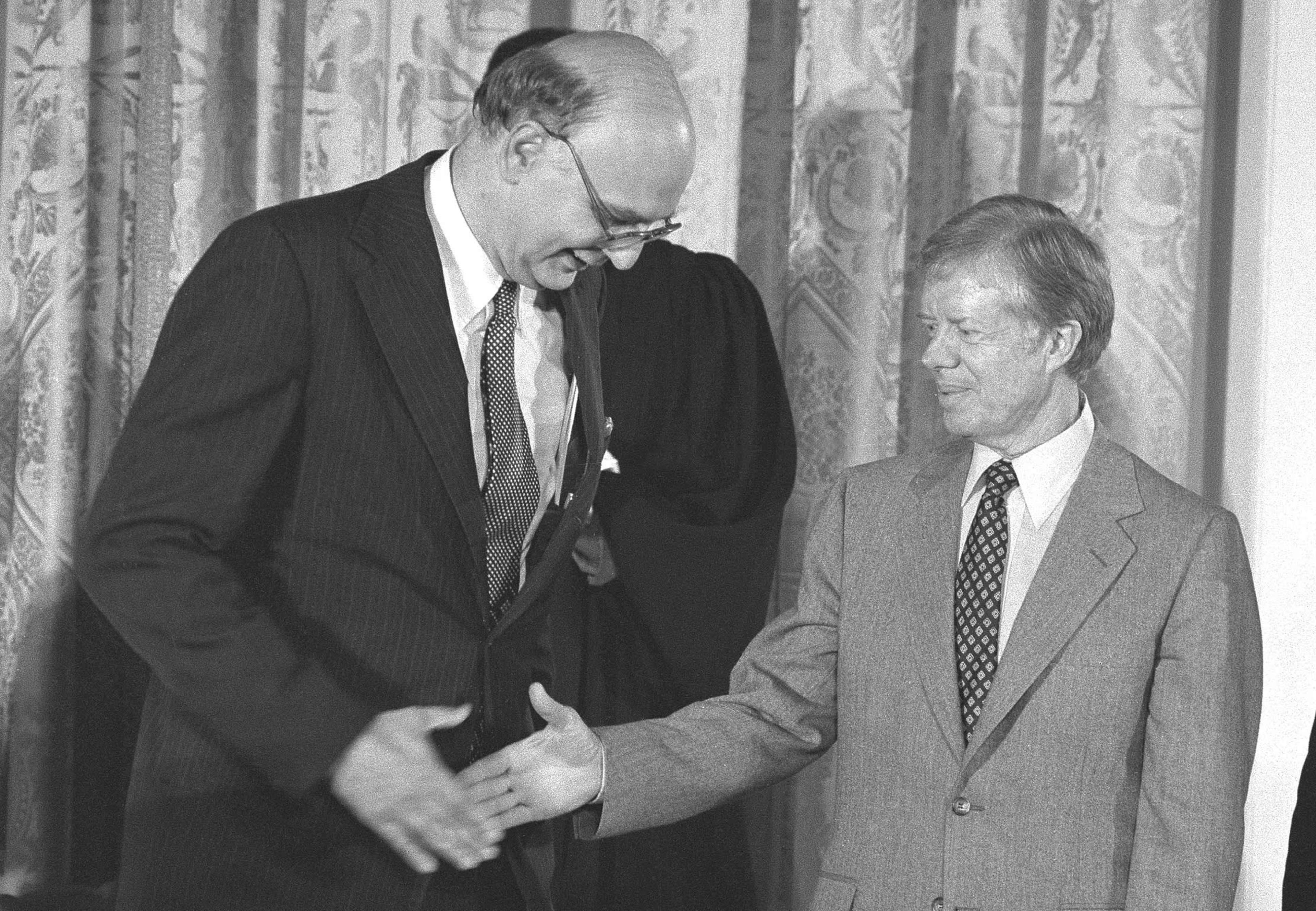
Milton Friedman finally got his own chance to put his faith in the invisible hand to the purpose of “the preservation of the system itself” in the late ‘70s. He snuggled into the White House as an advisor of Democratic President Jimmy Carter.
Facing the energy shock of the late ‘70s and seeking a way to keep a lid on the growing taxpayer’s revolts of suburbanites, Carter gave in and accepted the need for total reform. The President confessed the neoliberal creed on the national stage in 1978: “Government can help us by stimulating private investment and by maintaining a responsible economic policy. Through a new top-level review process, we will do a better job of reducing Government regulation that drives up costs and drives up prices.”[7]
The answer was not placing the economy under the control of the people, but handing it over to be managed by impersonal corporate bureaucrats like Federal Reserve Chairman Paul Volcker.
That sort of financial totalitarianism was supposed to be more convenient for balancing everyone’s budget—at least, for those with their share in the money system.
Whatever delivered the greatest profits, shareholder value, consumer goods, and entrepreneurial success was the new neoliberal-neocolonial definition of success—one that left behind the poor and the dispossessed.
Ronald Reagan was the founding Nathaniel Bacon figure of the neoliberal age. The story of Ronald Reagan is the story of this shift from the New Deal to Free Enterprise. Reagan began as an actor, a progressive union member (in the Screen Actors Guild), and a Democrat. He only began to shift into what we know him as in the 1960s. Like many white suburbanites, wealthy elites, and imperialist bureaucrats, he was angered by the movement of students and workers against the Vietnam War. He went over to the neoliberal and warhawk wings of the Republican Party. As he began to speak out and act against protestors as Communists and the welfare system that took care of him as near-Communism, he began to grow into a national political leader figure.
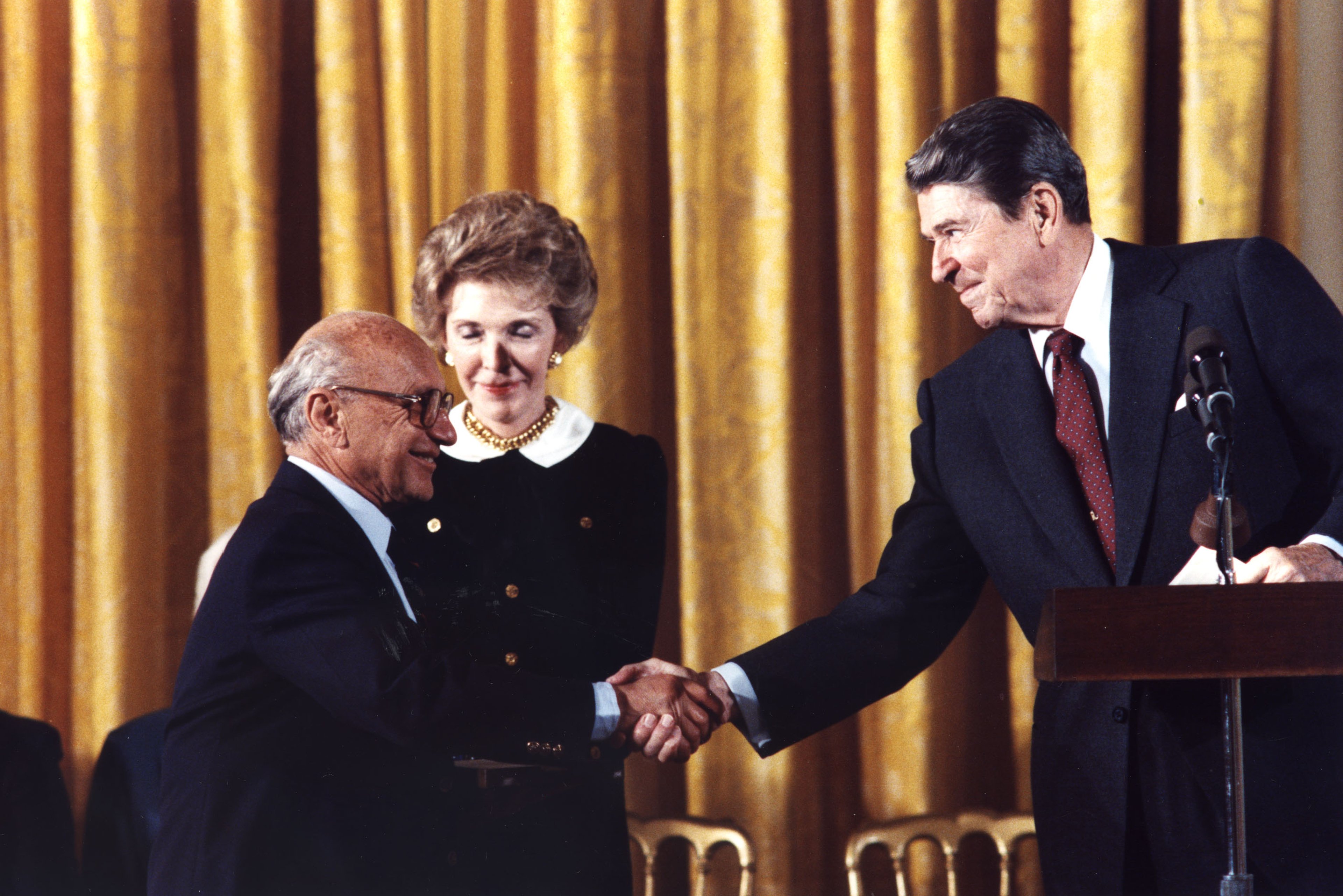
A neoliberal populist, Ronald Reagan marched across the televisions of suburbia from California’s Mansion of the Governor in the ‘60s and ‘70s to the White House in the ‘80s. He rose into a well-known face across the nation by vowing again and again that he would crush urban unrest, send student protestors packing, and declare a war to the death on the Evil Empire of Communism.
Reagan was the first President to win by running on making the poor poorer, the rich richer, and giving the middle class the same old cheap plastic goods. While running his first Republican Presidential campaign against Gerald Ford in 1976, Reagan focused on turning white suburbia against impoverished Black people. He told stories about the mammoth cuts that he had made to welfare in California. He made up stories to fire his audience up in a one-sided class war. In one fabrication, he drew on a headline about the real-life Black welfare recipient Linda Taylor to declare that the New Deal had fed an entire nation’s worth of parasitic “welfare queens”:
“There's a woman in Chicago. She has 80 names, 30 addresses, 12 Social Security cards and is collecting veterans’ benefits on four nonexisting deceased husbands. And she's collecting Social Security on her cards. She's got Medicaid, getting food stamps and she is collecting welfare under each of her names. Her tax‐free cash income alone is over $150,000.”[8]
Reagan and his supporters didn’t have to actually prove that such people existed in the pores of the welfare state. Just the possibility was enough to fire them up for the class war. Once Reagan came into office, he tore down the New Deal and redistributed the ruins to the rich—full employment became right-to-work, social responsibility became free enterprise, and Civil Rights social workers became yuppies. As Reagan and his friends privatized public institutions, reorganizing them for the sake of making a profit, the spaces of society that serve the working class and the poor shrank to almost nothing.
The real estate cannibals, suburbs and penthouses, ate up entire blocks of cities and wasted urban spaces on the luxury of a few instead of the wellbeing of everyone.

Under the reign of Reagan, universities became what they are now—bloated, for profit monstrosities that shoulder students with gigantic debts and tiny degrees with false promises of guaranteed employment if they just work hard.
What really drove the cowboy’s pilgrimage back east, to the White House? Reagan’s advisor Roger A. Freeman, who had overseen the implementation of Bonzo’s neoliberal policies at the state level, confessed in 1970 that their concerns were actually with proletarian revolution: “We are in danger of producing an educated proletariat. That's dynamite! We have to be selective on who we allow to go through (higher education). If not, we will have a large number of highly trained and unemployed people. That's what happened in Germany. I saw it happen.”[9]
Reagan began a new Crusade against anything that looked a little too Pink or Red in the western hemisphere.
Reagan attacked the communists and Christians of the Nicaraguan revolution as enemies of Western civilization. He told the American people that a people fighting for their own multiracial democracy were itching to invade our own.
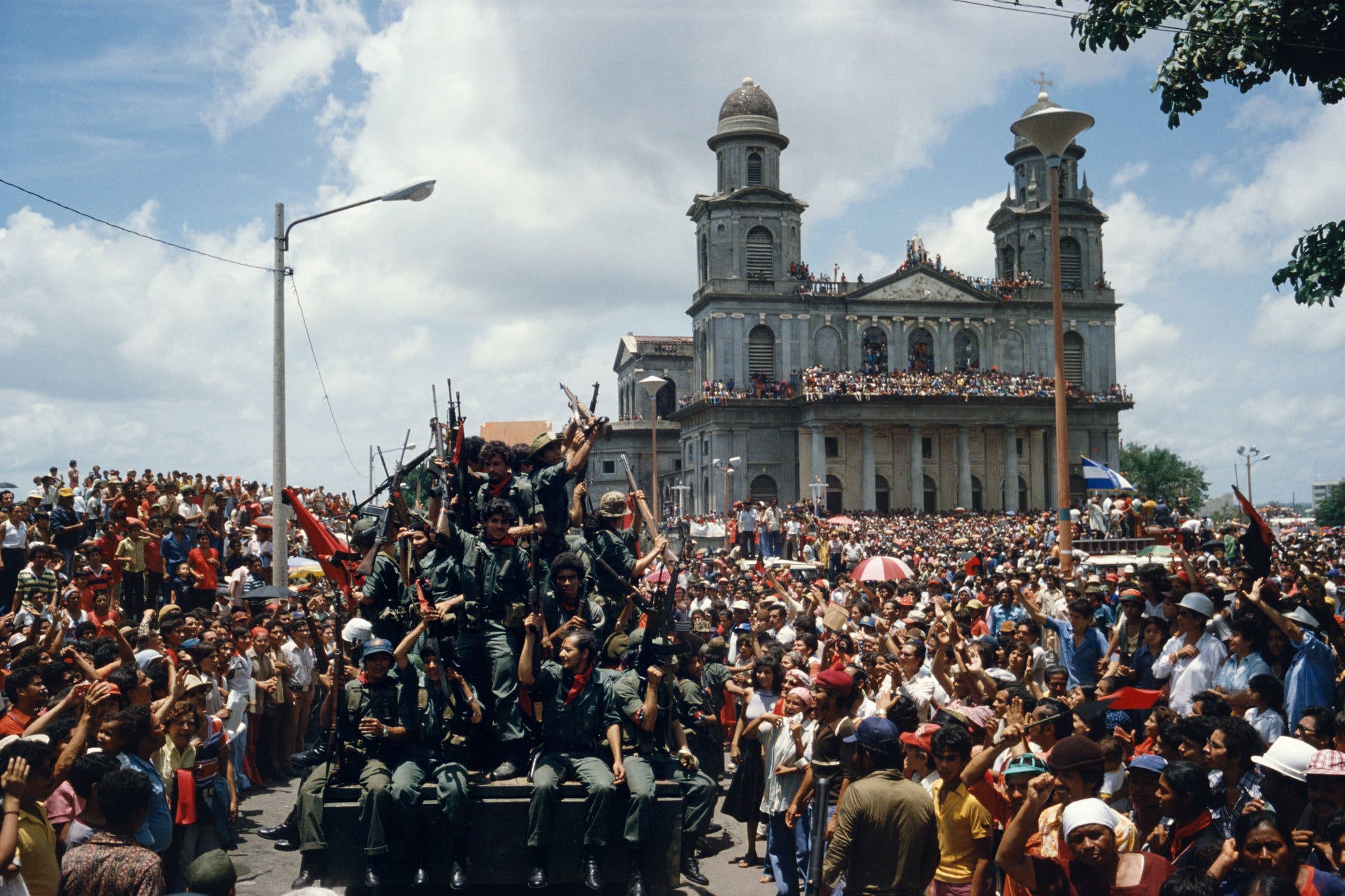
Reagan aided the men who committed genocide against the Mayans of Guatemala in the name of driving out the communists who were seeking to improve their conditions.
The opponents of Guatemalan communism slaughtered millions of people. They sought to exterminate one of the oldest peoples in the world so that a few latifundistas could keep their colonial lands and a few banks could keep exchanging flesh for money. You Christians are meant to accept it in the name of political expediency and cheap goods.
Is that an example of Christlike behavior?
Would you have handed your Savior over to Pontius Pilate to be crucified?
Like Emperor Diocletian, Reagan’s campaigns seem to have been motivated more by flight from fear and yearning for the fawning of others than a deep and intelligent regard for freedom. It was more Reagan’s impulse than his intellect that motivated his all-deregulating, all-privatizing, all-tax breaking free market fundamentalism.
Reagan’s army of suburban supporters seem to show all the signs of a commonsensical herd instinct in their own behavior, in spite of all their verbal commitment to reason and individualism.
Why are so many of these plebeian patricians of suburbia still obsessed with Communism?
Hasn’t it been three decades since the cowboy President himself is supposed to have outcompeted it in the stick measuring contest of the arms race?
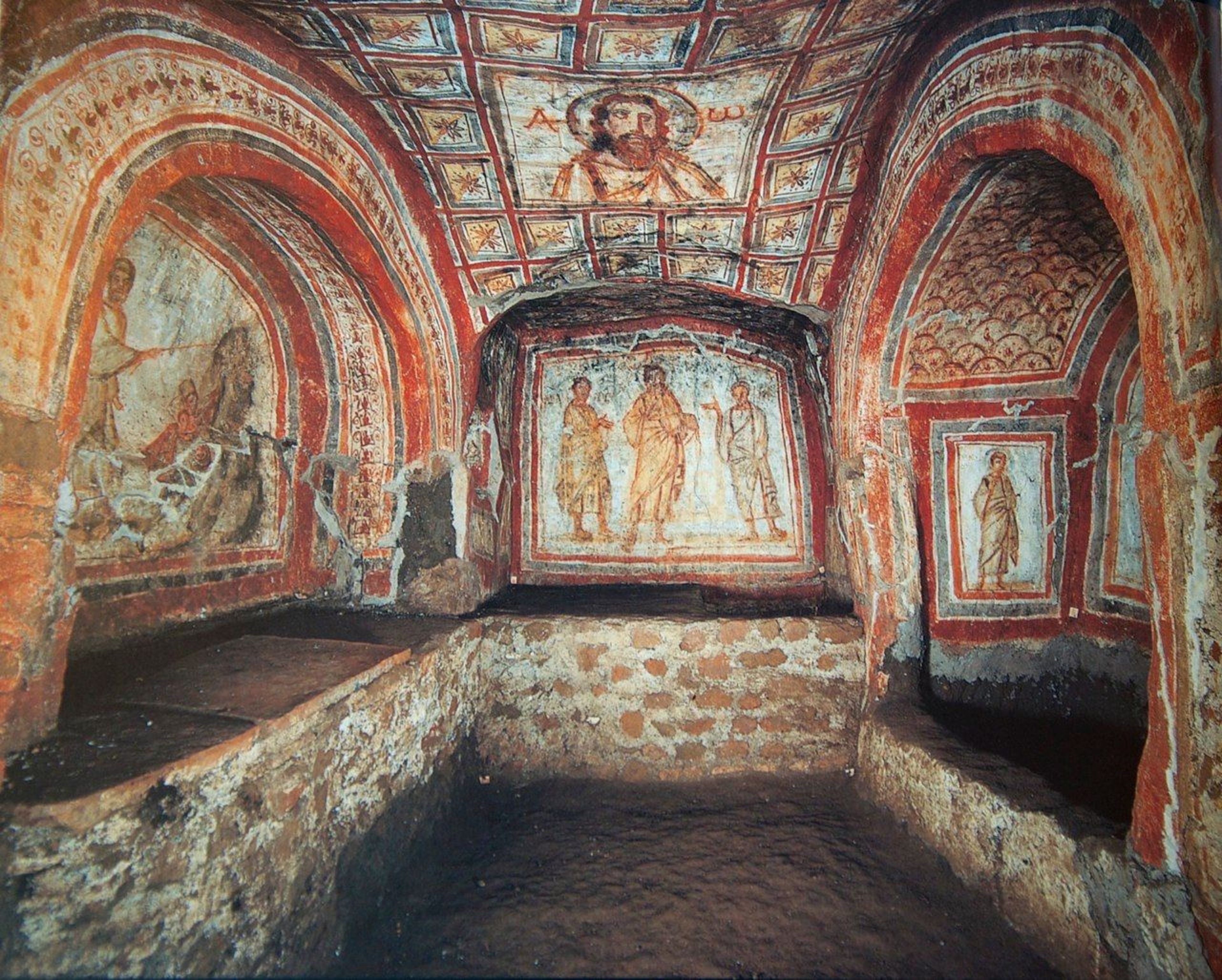
Diocletian and his people have long since thrown our beloved friends to the lions. They drove our meetings into the catacombs, where others are free to forget that we exist.
The neoconservative dissidents among the neoliberals still believed in some form of moral communitarianism. They were appalled by the decadent individualism of the penthouses and wanted to bring things back to the compassionate conservatism of the family.
But the neocons were always bound to their evil twin through the neocolonial project of racially diverse White Anglo-Saxon Protestant (WASP) imperialism.
Their compassion for the weak became a tool to convert them into Roman soldiers. On his inauguration in 1989, the tail end of the Reagan era, George H.W. Bush, Anglo-Texan oil baron, loyal friend to suburban Mexican Americans, and former director of the CIA, advocated for a shift away from his friend Reagan’s more aggressively racist imperialism. He directed foreign policy towards forging a multiracial and multinational alliance against all enemies of Western civilization and its characteristic economic system, corporate capitalism.
H.W. Bush sought to rally the nations of the world against the seizure of Kuwaiti oil fields by the Iraqi Saddam Hussein and the Ba’ath Party, from the oligarchs of the ex-Soviet Union to the petrodollar princes of Saudi Arabia.
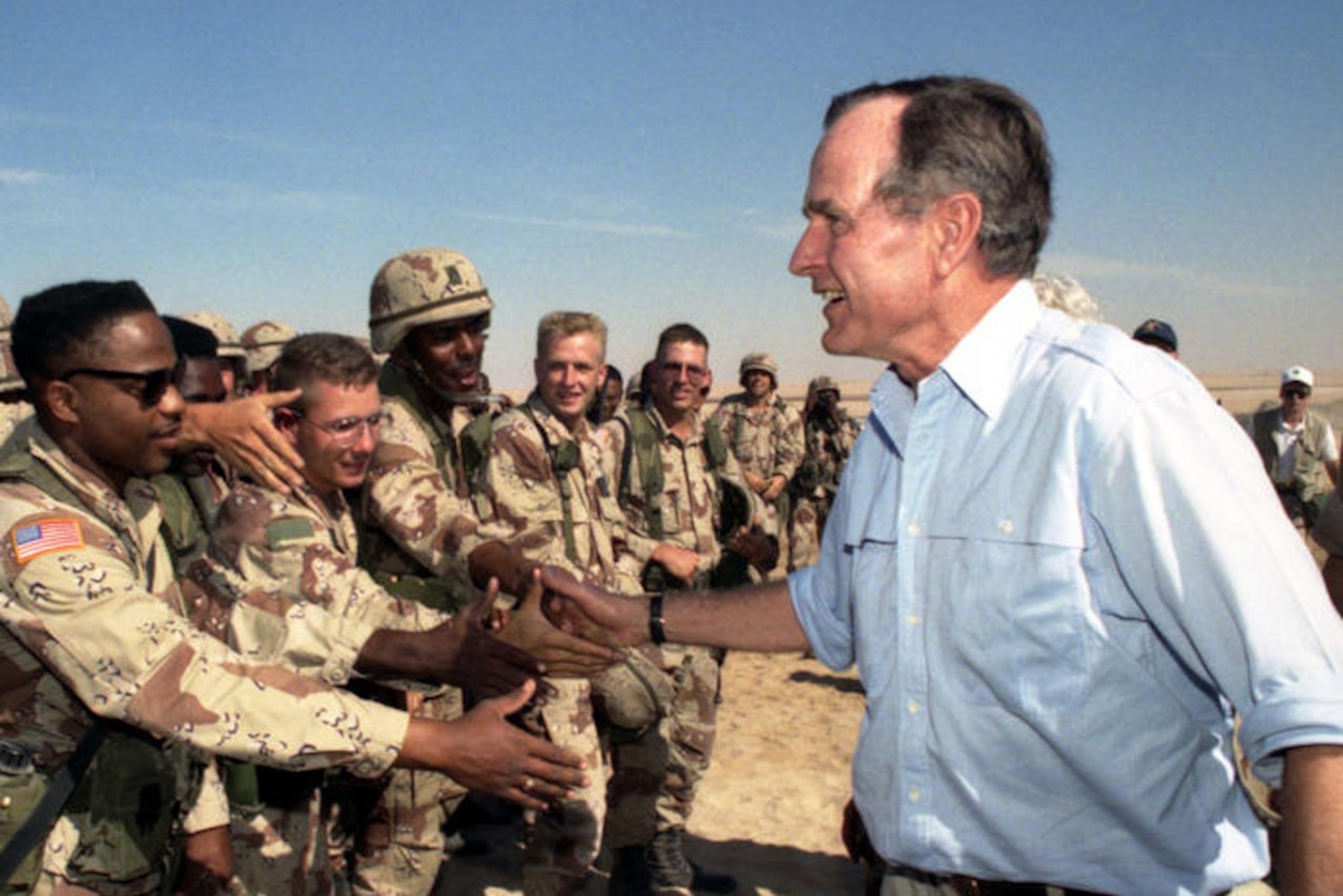
In 1991, the U.S. Army invaded and slaughtered the much smaller and poorly equipped Iraqi Army, securing a glut for the oil-dependent nations of the world and strengthening the purchasing power of the dollar. Bush hailed the War on Terror as having more at stake “than one small country; it is a big idea: a new world order, where diverse nations are drawn together in common cause to achieve the universal aspirations of mankind—peace and security, freedom, and the rule of law. Such is a world worthy of our struggle and worthy of our children's future”—and who could forget that our economic strength depends on being competitive in world markets. We must continue to expand American exports.”[10]
Not all was well with the multiracial New World Order. LAPD officers were caught on film brutalizing Rodney King in March of 1991. A nearly-all-white jury acquitted the officers of wrongdoing in April. The poor Black people of South Central Los Angeles broke out into a rebellion against corporations, the government, and the segregated society of the city itself. They halted traffic, burnt down buildings, and took what they pleased from stores. The rioting unleashed a new wave of hip hop culture that hooked the nation. But the one-way class war wasn’t going to stop just because it faced a little resistance.
Radical centrist, Third Way Democrat, and Epstein acolyte Bill Clinton carefully extended the very same project of humanitarian-totalitarian capitalism into the everyday lives of the poor. He couldn’t bring himself to pass legislation securing universal healthcare for everyone—it would buck the trend of neoliberal governance too hard, and make him into an establishment persona non grata.
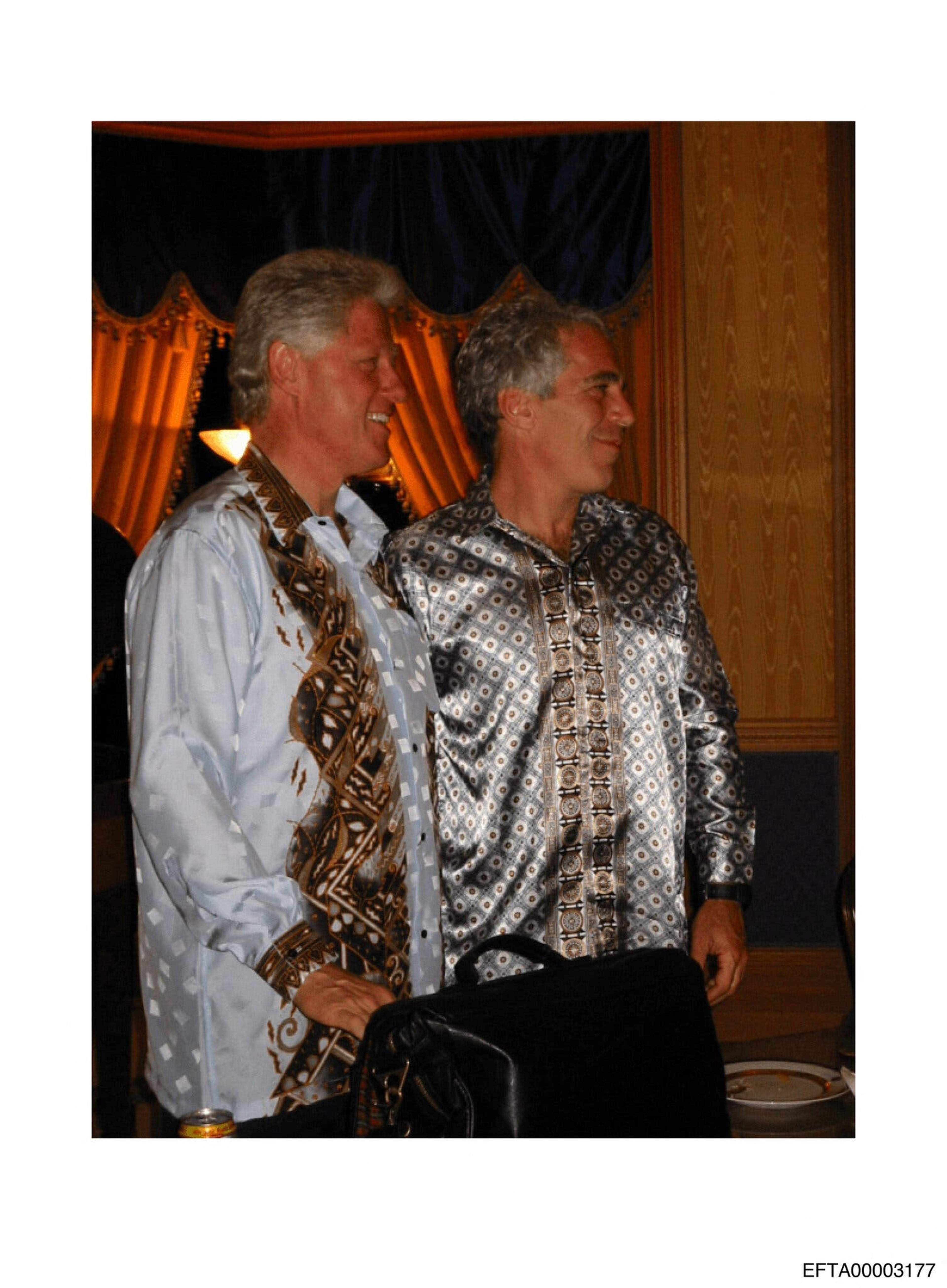
Clinton’s administration set their reform efforts aside to dedicate millions of taxpayer dollars, hands, and lives for the mass incarceration Crime Bill of 1994.
Clinton was brave enough to challenge fellow Epstein class elites like Bill Gates to a game of trustbusting in the late 1990s (while helping them out with the Telecommunications Act of 1996).
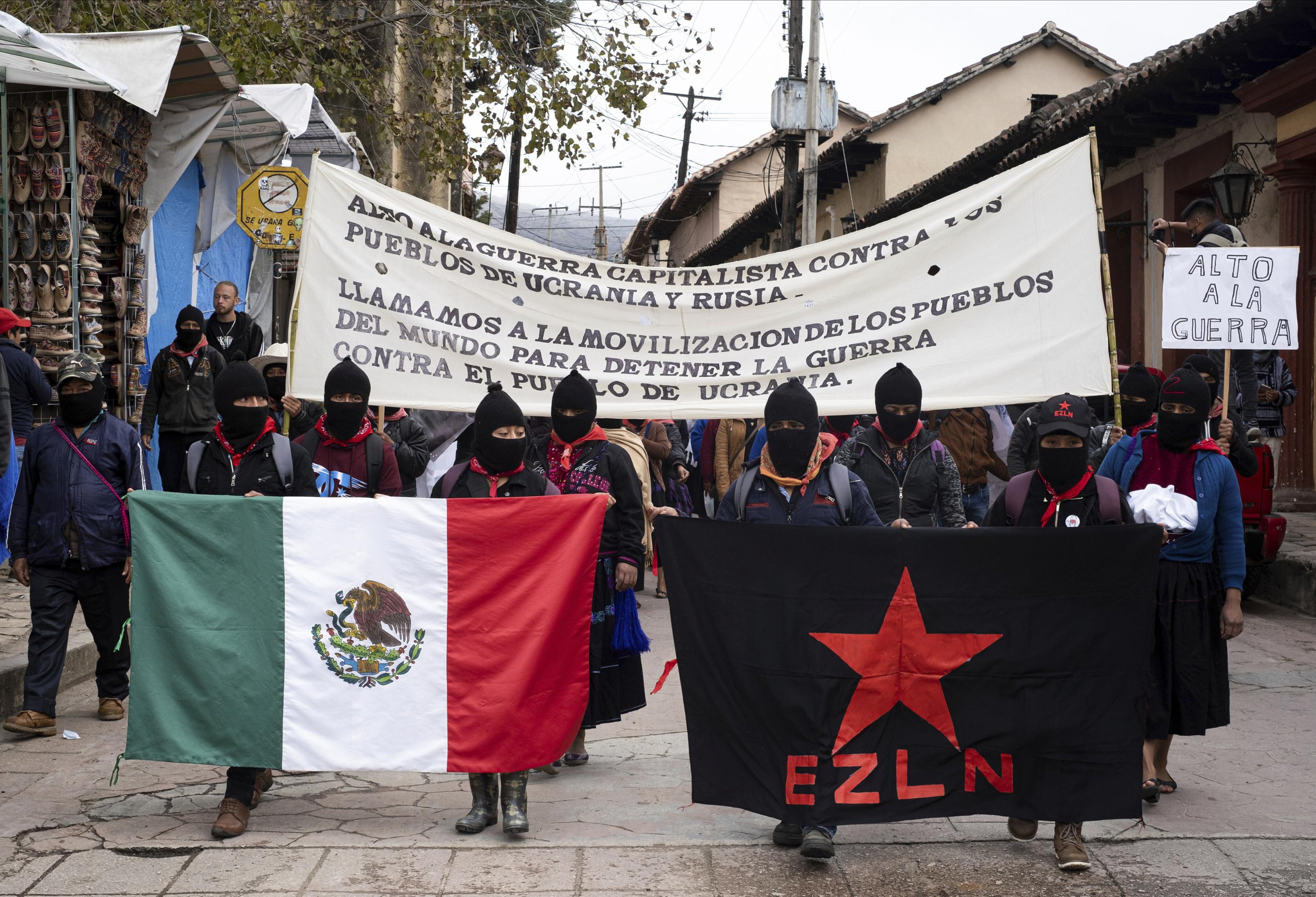
He was bold enough to throw the labor vote away from the Democrats for the sake of constructing a neocolonial free trade corridor in the western hemisphere with the 1994 North American Free Trade Agreement (NAFTA). Long before President Trump dismantled it, the Zapatistas emerged in Chiapas, Mexico to oppose NAFTA in 1994. A movement of Tzotzil Mayans, they declared that it was nothing more than another moment in the colonial history that had begun in 1492.
Clinton launched his own pet project for a new bloody Poor Law with legislation like the Personal Responsibility and Work Opportunity Reconciliation Act of 1996. During his 1992 Presidential speech, he had announced that he was “committed to ending welfare as we know it,” replacing it with a system that “requires work, imposes time limits, cracks down on deadbeat parents by enforcing child support, provides child care,” proving that “this cycle of welfare can be broken; that welfare can be a second chance, not a way of life.”[11]
Isn’t that an incentive structure based on compelling each to do their best and rewarding whoever puts the most best into it with the most wealth?
That neoliberal ethic sounds strangely similar to Communism, which declared with the voice of Vladimir Lenin: “he who does not work, shall not eat, but he who does work is entitled to a voice in the state, he can influence matters of state.”[12]
That must just be a strange coincidence. One was talking about citizens, the other was talking about the working class.
Right? It’s hard to tell if there is a line there without looking closer.
This late era of neoliberalism seems to provide all sorts of examples of dissonant thoughts, people testifying against themselves, confessions of guilt.
All things become infected with their opposites and turn their insides out. A grotesque display of disembowelment for all to see—only if they are brave enough to resist the urge to look away.
We can find a recent example of this from a more recent Republican President. Child of H.W., face of the forever War on Terror, architect of the surveillance state, professional dancing chimpanzee, George W. Bush.
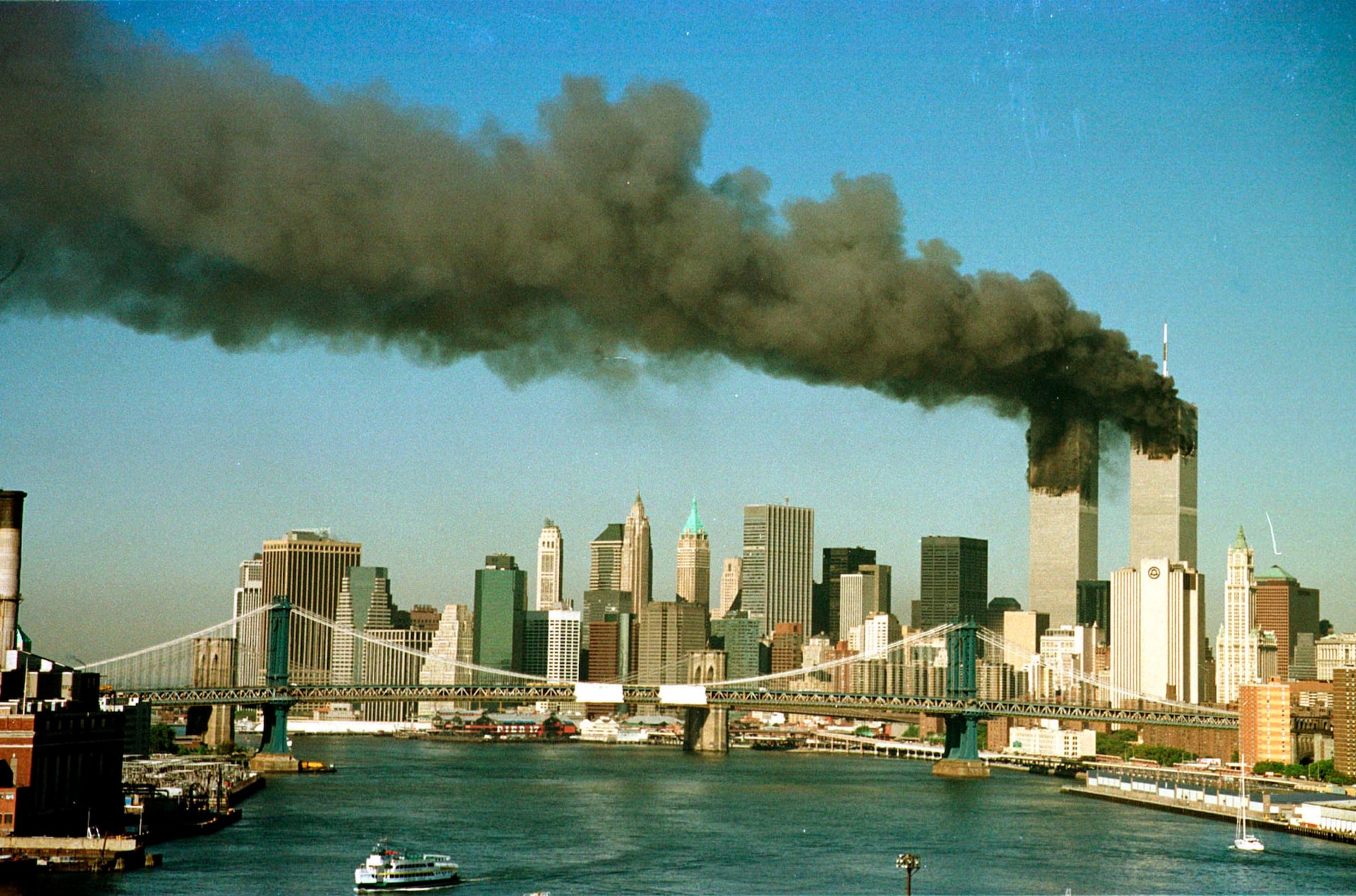
The kamikaze attacks that destroyed the World Trade Center on September 11, 2001 traumatized the neoliberal world and made the neocon neocolonial Crusade against terror into the top priority of all. The culprits responsible for the attack were Salafi jihadi group Al Qaeda, led by Saudi Arabian elite Osama bin Laden.
Before he became Enemy #1, Bin Laden had been backed by the CIA and Western media as a freedom fighting mujahideen against the Soviets in Afghanistan. Most of his crew was made up of nationals from the Gulf Arab monarchies, but they had made a home for themselves in Taliban-controlled Afghanistan.
W. and an international coalition invaded Afghanistan in 2001, after the Taliban refused to give up their guests on the basis of hospitality. No one was really surprised—even if many objected. It was well within the purview of the Bush family’s project of multiracial imperialism.
What threw the multinational consensus around the War on Terror off was when Bush began to claim that he had reason to believe that there were Weapons of Mass Destruction (WMDs) being hidden by Saddam Hussein, by then the leader of a thinned out Ba’ath Party and a broken down Iraq.
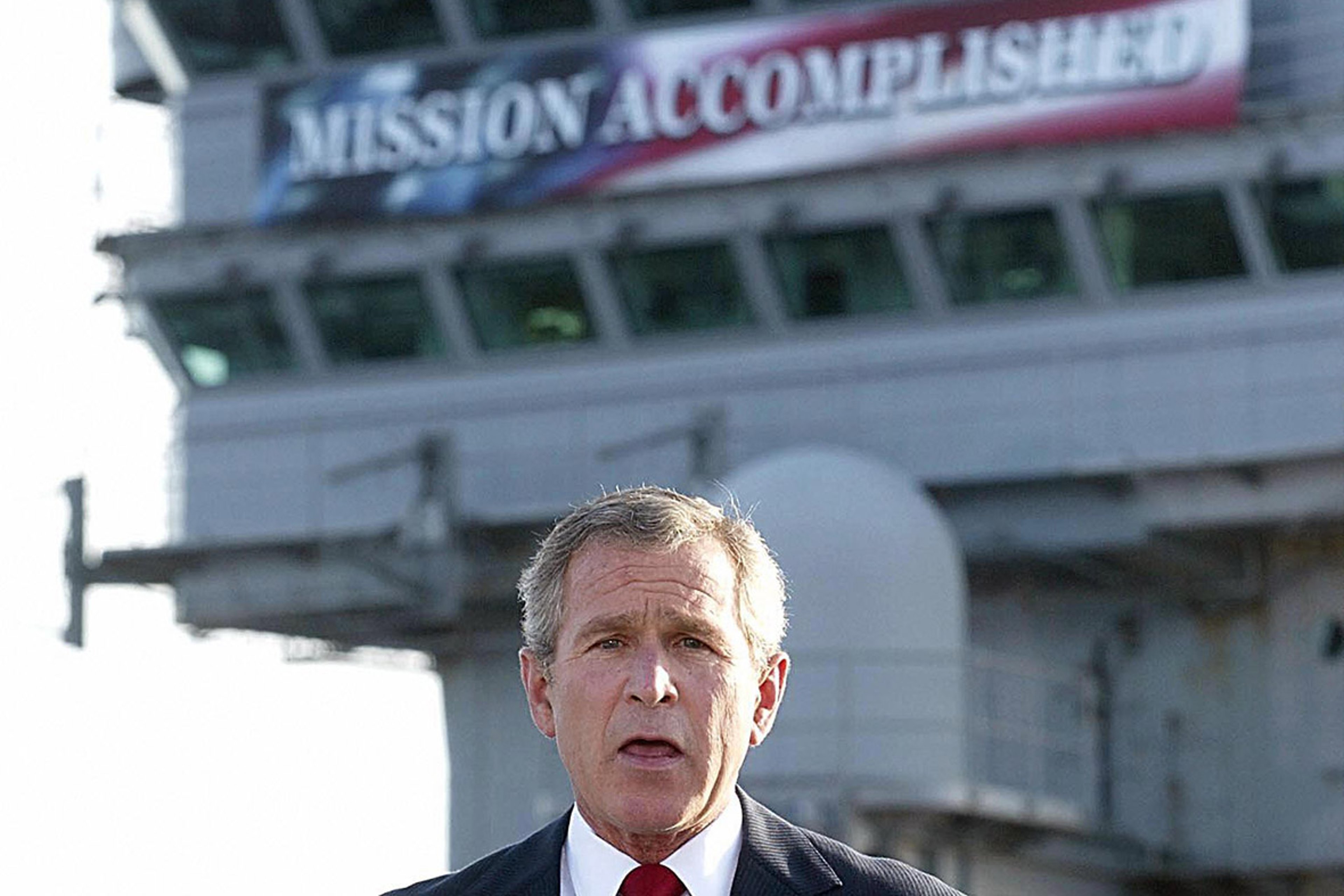
Without any evidence for this claim, W. launched an invasion of Iraq in 2003, launching the country into a forever civil war, and military occupation that only withdrew this year, in 2026.
W. expanded his Department of Homeland Security (DHS) and its Immigration and Customs Enforcement (ICE) into a sprawling secret police that could arrest and disappear anyone under the pretext that they were an illegal immigrant.
These two fronts of the War on Terror, global and border, have been the sites for the most concentrated growth of the parasitic terrorist state today.
While forced to ape the part of Ulysses S. Grant or Dwight D. Eisenhower during the propaganda campaign in support of the War, Bush’s malapropisms became legendary—”They misunderestimated me,” “fool me, you can’t get fooled again,” or my favorite: "Our enemies are innovative and resourceful, and so are we. They never stop thinking about new ways to harm our country and our people, and neither do we.”[13]
Bush’s most recent Bushism, dropped while giving a speech about the Russian invasion of Ukraine, was the ultimate slip—he condemned “the wholly unjustified and brutal invasion of Iraq.”[14]
It was almost inevitable that a populist leader would shove W.’s bumbling antics aside. The nation only had to get over its collective investment in a multiracial, cross-class, suburban crusade of revenge out of its system. The masses were dead set on inflicting humiliation and pain on the mortal enemies of consumers and corporations. But, on facing the deprivations of a crisis, their nerves finally faltered.
W. reduced taxes for the very wealthiest, deregulated real estate and lending, and freed up banks to gamble however they pleased with their investments of people’s money. This created the conditions for a perfect storm to come to a head in 2008 and smash the neoconservative wing of the neoliberal consensus.
Democratic candidate Barack Obama, an African-American and Irish-American, organized his campaign on a perfectly generic, colorblind imperialist, centrist platform, albeit with the aesthetics of a radically populist Civil Rights icon like Jesse Jackson.
The posters of Obama’s face were emblazoned with words like “HOPE” and “CHANGE.” He made a sunrise the symbol for his campaign, the design singling out the empty space of the “O” in his name as its focal point.
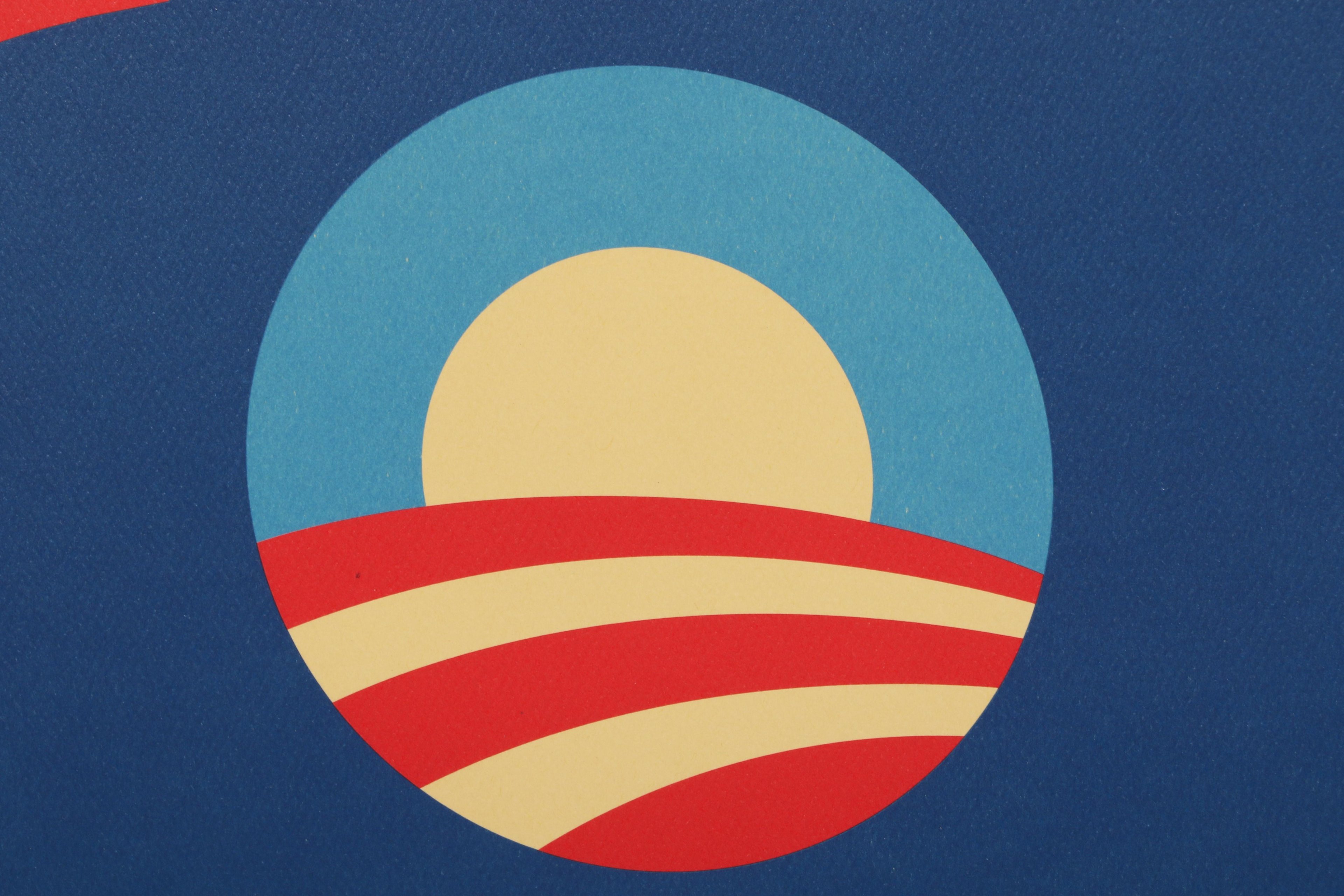
Obama talked smoothly and spoke eloquently. He satisfied poor white racists with his colorblind promises at the same time that he embodied the concrete hope of the very first Black President to racial minorities.
Obama had no clear demands and no characteristic policies. Even Obamacare came on the heels of nearly a century of efforts by Democrats for public healthcare.
Obama’s youthful, vibrant face seemed to promise a total pivot away from the senile embarrassment of Bushism.
The emptiness of Obama’s promises was what made him so all-appealing—anyone could see their own hopes and dreams for change in him. Hillary, by contrast, was always going to be tied to the growing pain policies of 1990s neoliberalism.
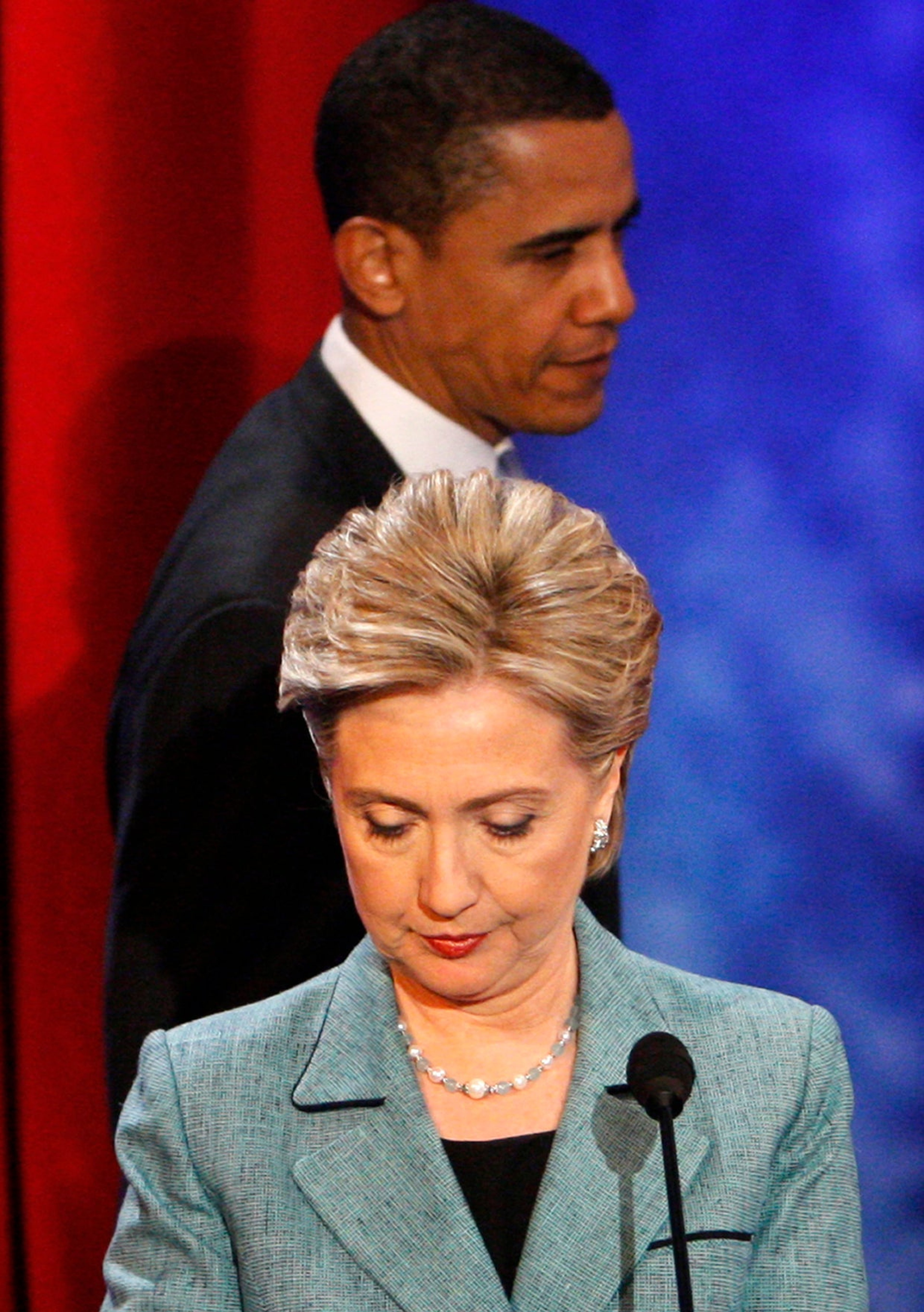
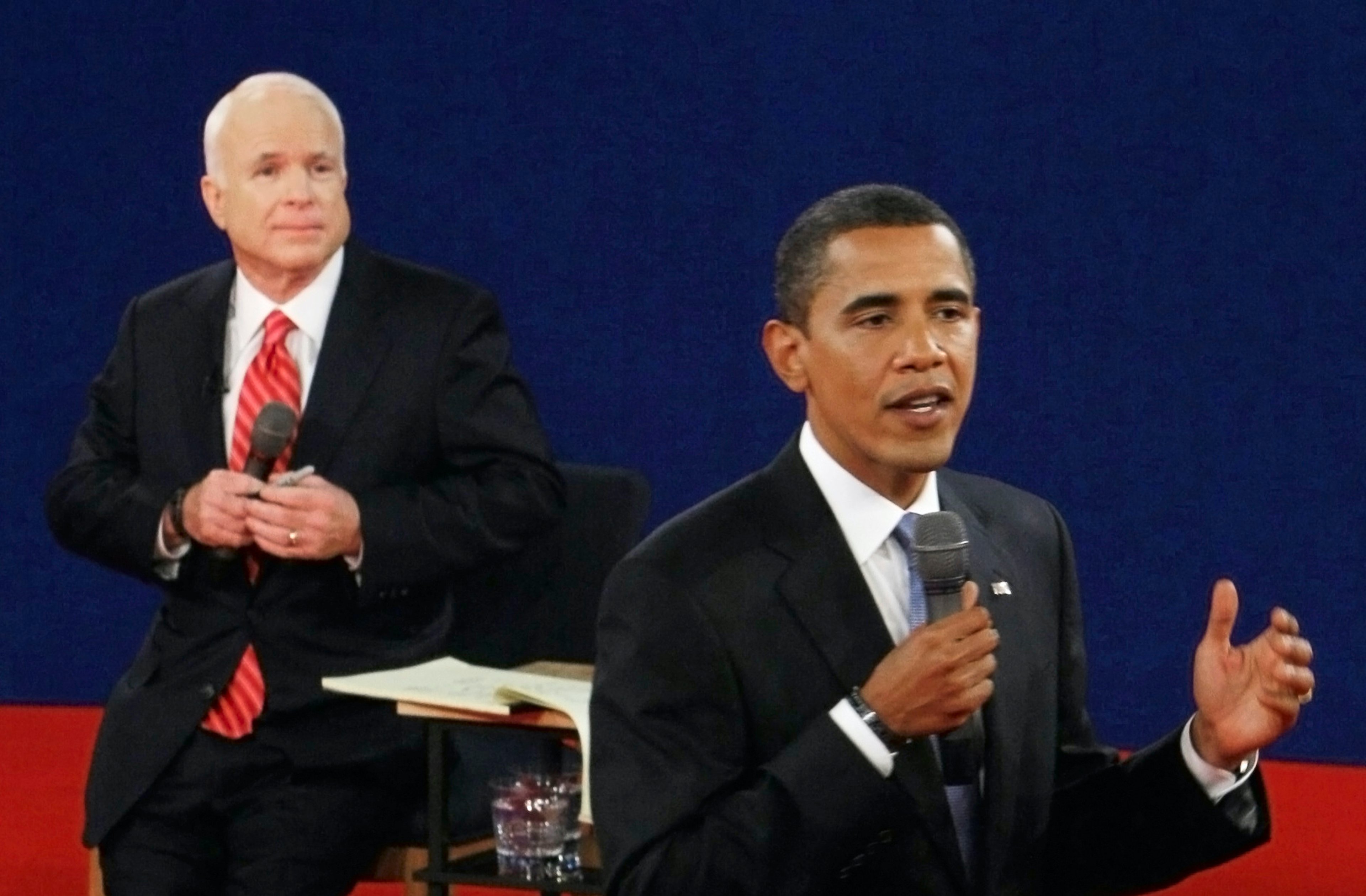
When a perfect storm of overconfident monopolists, subprime mortgages loaned out to people like candy, and everything leveraged on high-risk high-reward financial gambles exploded into the Great Recession in 2007-2008, the stage was set for Obama to rise to power on a Democratic opposition ticket. Practically no one could have challenged his populist momenum—certainly not career bureaucrat Hillary Clinton or elderly warhawk John McCain.
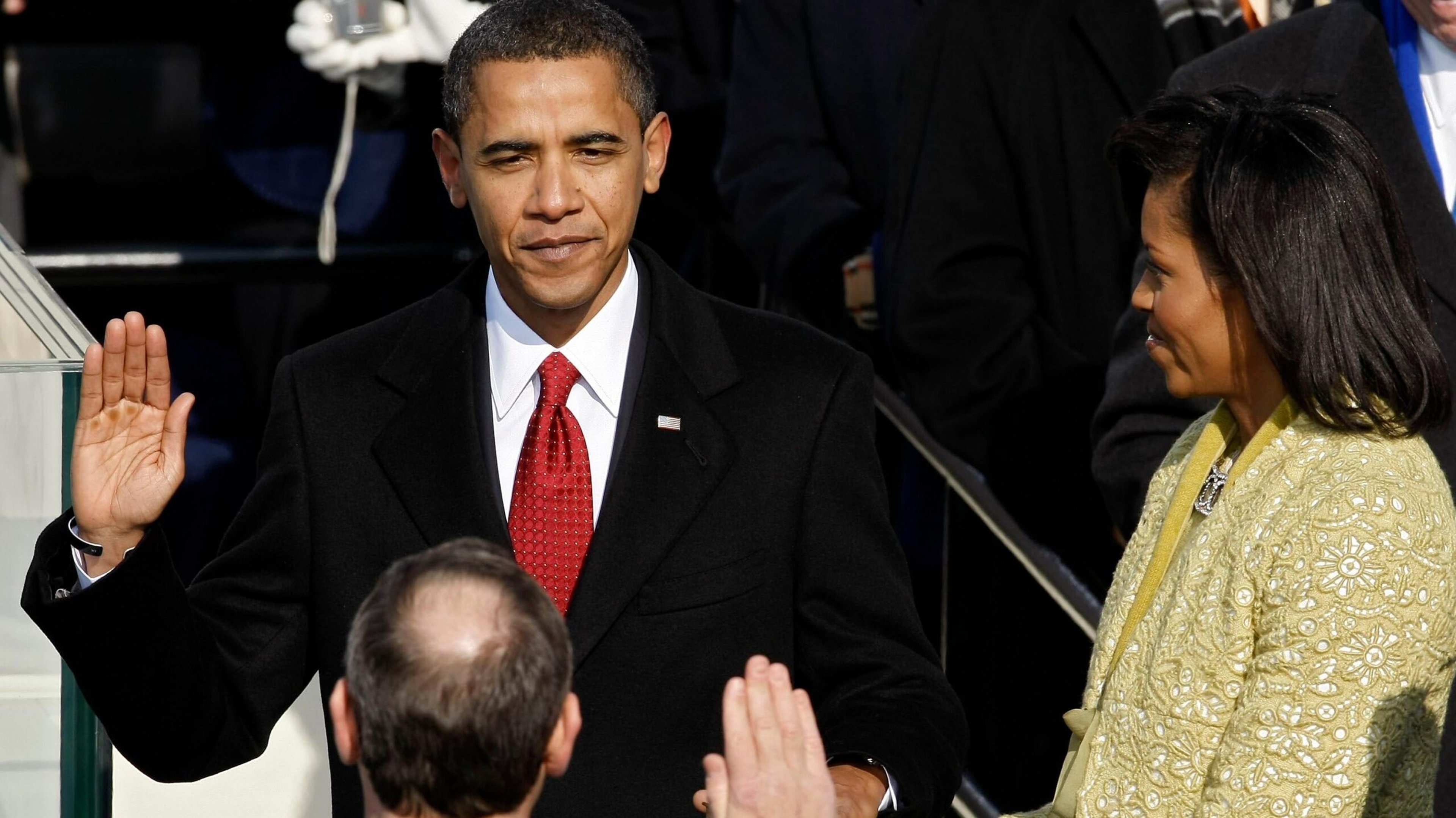
When Obama was finally inaugurated into office in 2009, his supporters expected anything and everything from him. He was an overidentified face and an overdetermined voice. His enemies thought he was a Kenyan Antichrist with a forged passport. They sensed that there was something that they could not quite grasp about him. It made them uneasy, and they resorted to the familiar comforts of racism to explain it away.
Obama offered empty, yet symbolically weighty rhetoric. He fed the hopes of a broad coalition of Americans in a meritocratic multiracial democracy: “If there is anyone out there who still doubts that America is a place where all things are possible; who still wonders if the dream of our founders is alive in our time; who still questions the power of our democracy, tonight is your answer.”[15]
During the remainder of the Obama era, the President gave his supporters every reason to be disappointed in any cause or demand they might have attached to him. He governed like a perfect 50/50 split of the Bushes and the Clintons.
Obama killed welfare reform left and right. While he allowed the system to expand as needed during the Great Recession, he did so within the framework of Clinton’s Crusade against the welfare state. In 2014, he signed his Farm Bill into law, cutting Supplemental Nutrition Assistance Program (SNAP) benefits by around $8 billion.
How many of you know someone who would have been, or actually was impacted by those austerity measures?
Obama significantly expanded the scale of the deportation machine while opening more paths to citizenship for upwardly mobile immigrants through policies like the Deferred Action for Childhood Arrivals (DACA).
Obama continued to escalate the War on Terror to new countries, even initiating a new round of CIA coups in Latin American countries like Honduras and entangling the country in political brinkmanship with North Korea.
Obama avoided the reputation of a Bush because he was more intelligent, he knew how to speak clearly, he normalized diplomatic relationships with Cuba with a moratorium on the blockade, negotiated with Iran to put a stop to its development of nuclear weapons, and he focused his warmongering efforts on the development of smarter and cheaper deathdealing through drone strikes rather than occupations.
Coming from a background of riding on the skirts of neocolonial neoliberalism, Obama believed in delegating the governing work of monopoly to the representatives of communities, streamlining the work of metropolitan government to precision strikes and spectacular influencing.
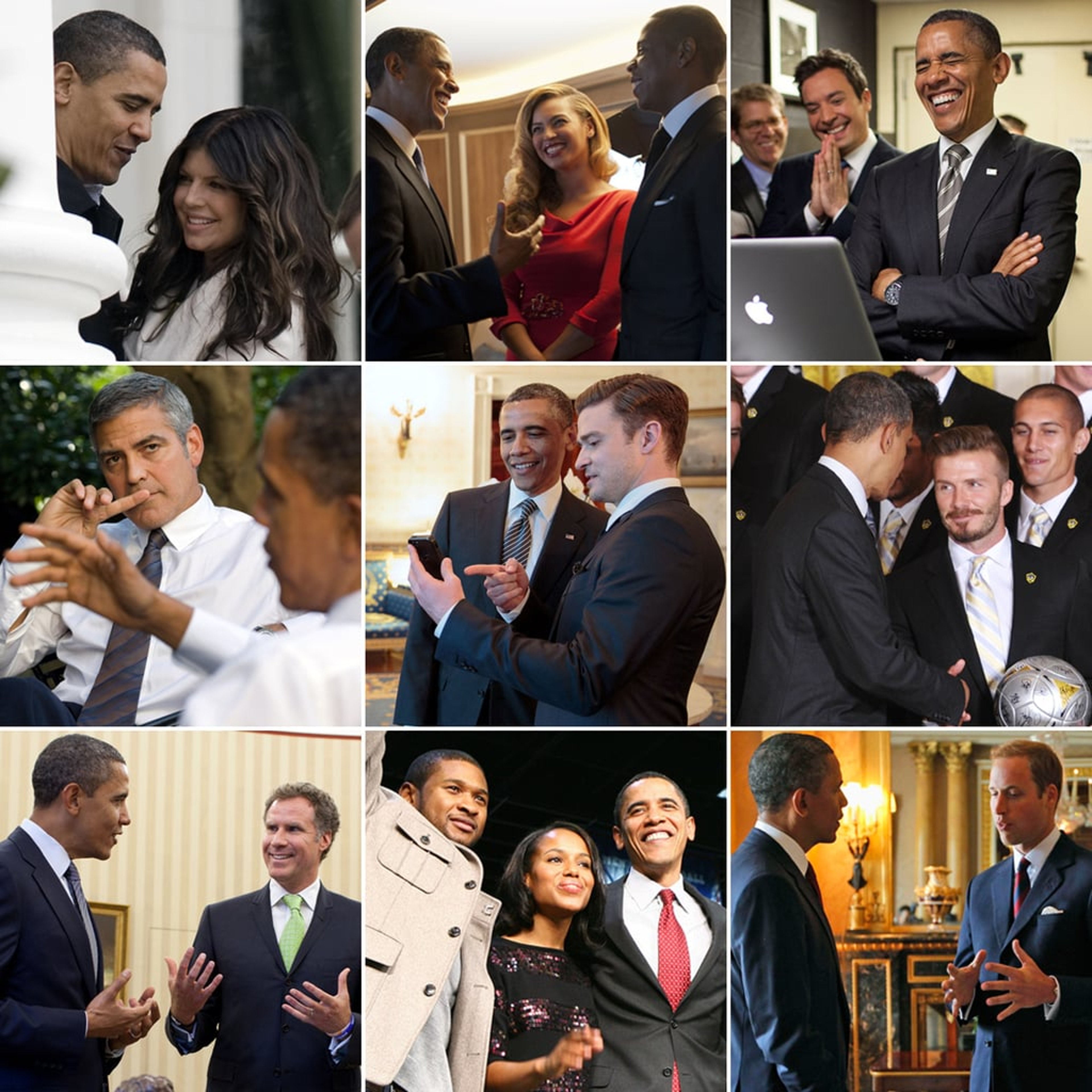
Obama was a bridge between two eras, two styles of hypnotism.
On the one side, the New Class of minority capitalists. Johnson, Nixon, Carter, and Reagan administrations had allied with the New Class to destroy the savage proletarian radicalism of the Civil Rights movement, collaborate with in constructing the totalitarian police state, send out to all peoples to achieve their full cooperation through the mediation of native informants, and maximize the dynamism and innovation of the colonial government. The New Class always came in full force to participate in the pageantry of the neoliberal Presidential families, from the Reagans to the Obamas.
On the other side, the classless army of the two-seconds-of-fame nouveau riche, the out-of-touch celebrities and attention-seeking social media influencers, who bump into and shove each other in a competition for our seeking our engagement, subscription, and payment. The past and the future of deceit met in the empty realm of the elite minoritarian populist, where coldblooded opportunism and benevolent toothlessness reign together.
Obama united the middle class white ethnics with the racialized proletariat. He could keep the peace with bread and circuses for the whole family. For just that reason, oligarchs like Amazon’s own Jeff Bezos happily get along with him and promote his paternal family man reputation as a corrective to growing proletarian discontent.
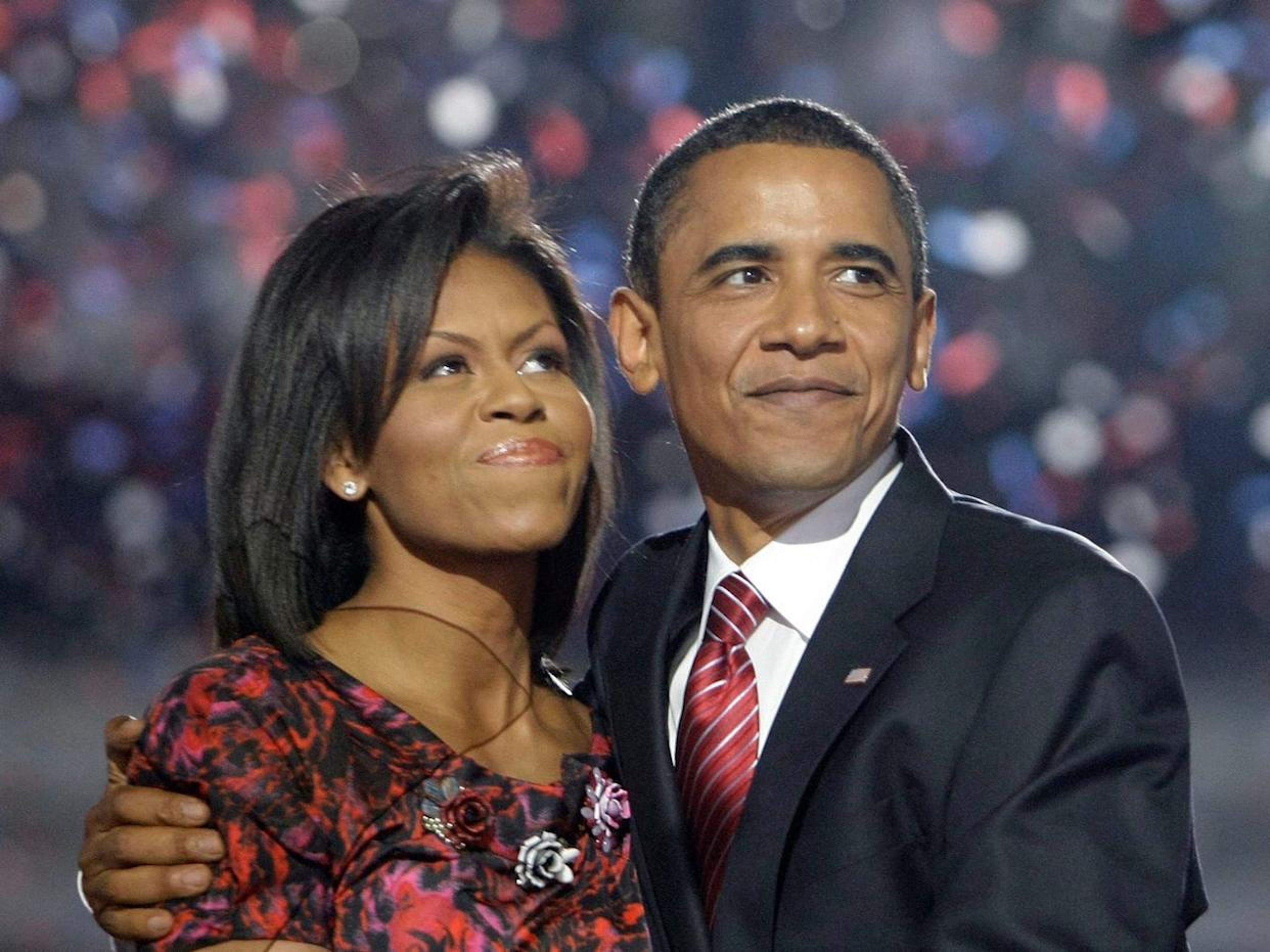
We have all become more than familiar with the critiques of this Democratic Party offered by wealthy white populists like President Trump.
But what about the very people that Obama’s project claims to represent?
Not all of the poor and oppressed who lived in the early years of neocolonial neoliberalism believed that the new elite had the right to represent themselves as the exclusive representatives of their people to society.
Those faces, names, and voices were uplifted to the state-dependent professional-managerial class (PMC) and signal boosted by liberal institutions like the Ford Foundation or the Open Society, which promoted the neoliberal delusion that the wonders of private non-profits could solve all social problems.
From below, deep in the belly of the world’s ghettos, the poor continued to gestate their own intellectualism. They preserved the traditions of Civil Rights militancy. They had to fight within and against the new system.
One example is offered by the example of New York City.
Since the fiscal crisis of 1975, the city government had subjected New Yorkers to an unelected technocratic dictatorship of corporations and banks.
The only outlet for democracy was the extension of public-private partnerships to community leaders. Proletarian advocates of autonomy like Black Muslim, Five Percenter Nation founder, and radical individualist Clarence13X initially showed a willingness to seek power for themselves and their community in the new system.
That all began to change by the end of the ‘70s. July of 1977, one of the hottest months of the year, New York City experienced a citywide blackout. The working class of the city began rioting and looting once again. They seized expensive and otherwise-inaccessible stereo equipment for their own purposes. From those bold acts, the earliest hip hop music was born.
Proletarian Black Communism continued to menace the white suburban nation in the ‘70s. Black working class militant Assata Shakur was born and raised in New York City during the height of the Civil Rights movement. She became an unwavering communist as a result of her experience in the movement against the Vietnam War.
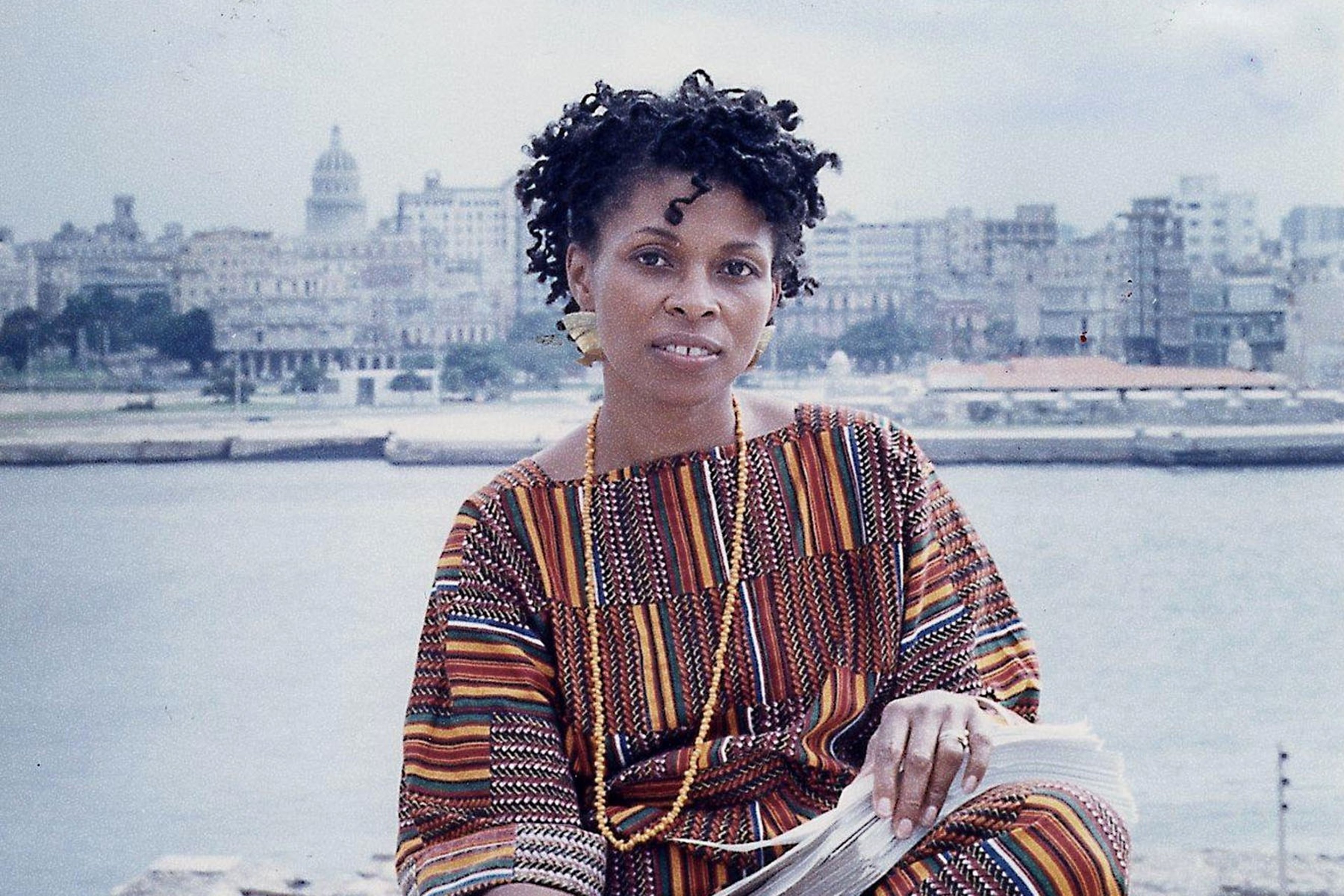
Shakur’s refusal to surrender to the United States police state, even after being taken into custody for shooting a cop, left her no choice but to break out of prison in 1979. She left the country of her birth behind and spent the rest of her life in the more welcoming nation of Cuba. She died peacefully in Havana in September of 2025.
Why did Shakur spend half of her life separated from the land that her ancestors had lived, toiled, and died in?
Was she wrong for finding everything wrong about a world that in her day was already fencing entire communities of Gazans into a concentration camp and throwing thousands of Black people into cages for petty theft and drug possession?
Do you know who Assata’s godson was? Tupac Shakur, world famous American rapper and communist.
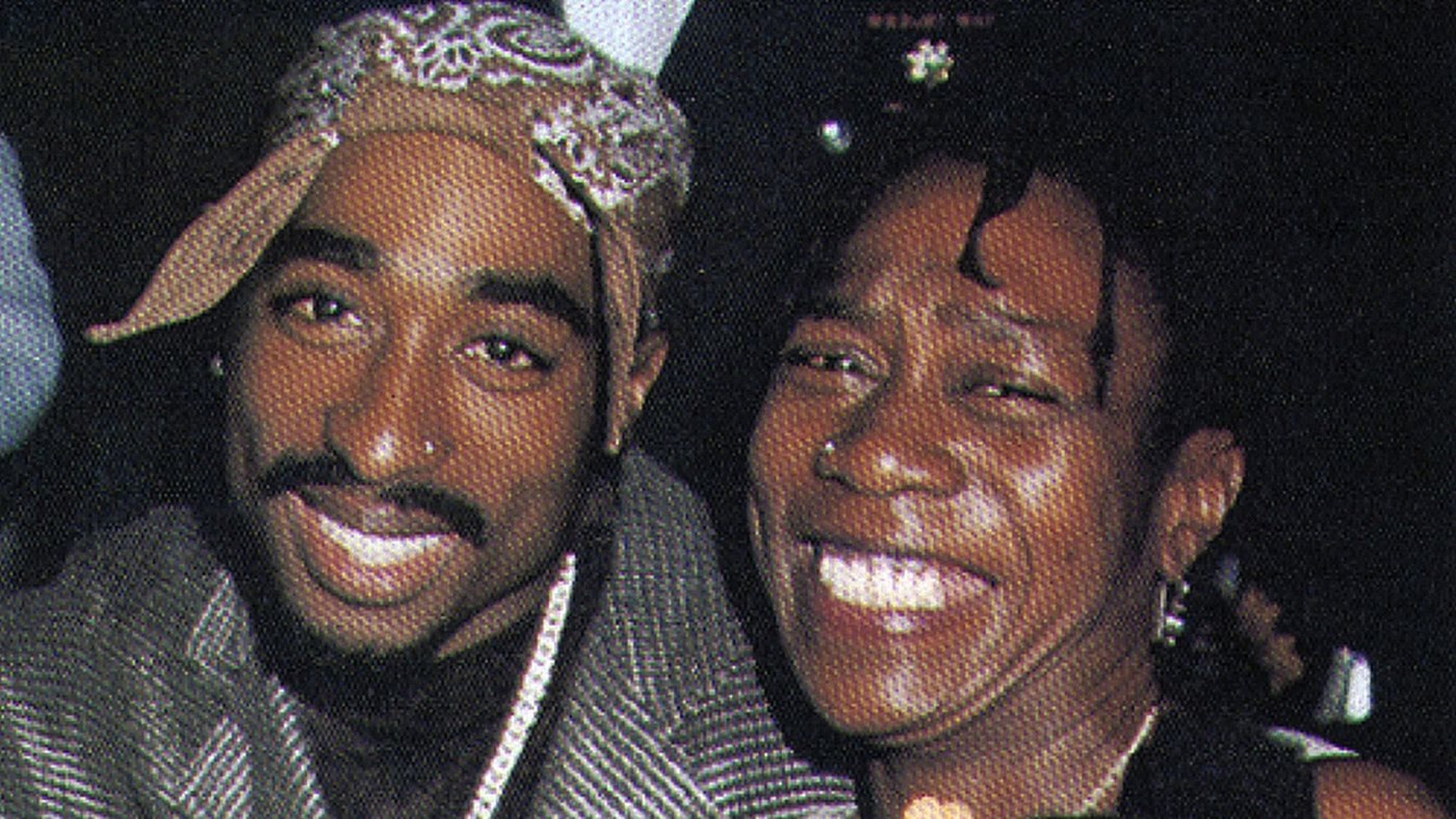
The elite knew that Shakur was their enemy from the moment of his birth. The mainstream media condemned him as a thug. We have even learned that that mini-Epsteinian record producer P. Diddy was linked to his death, possibly motivated by resentment for the rapper’s pursuit of independence from the music business.
Other leftist artists, like Rage Against the Machine, Immortal Technique, Tracy Chapman, and Anne Feeney all sought the same democratic demand for their industry as Tupac.
It has been people in this network of independent artists who have most consistently criticized monopolist power grabs over everyone’s communications infrastructure.
They have protested against the 1996 Telecommunications Act, the 1998 Digital Millennium Copyright Act, the passage of the totalitarian Patriot Act in 1991, and the ending of net neutrality in 2025.
The left has been almost the sole party to advocate for a free marketplace of data, communications, and art, free from all infringement on the voluntary disposal of individuals over their original creations and their likeness. We’re the really really free marketers!
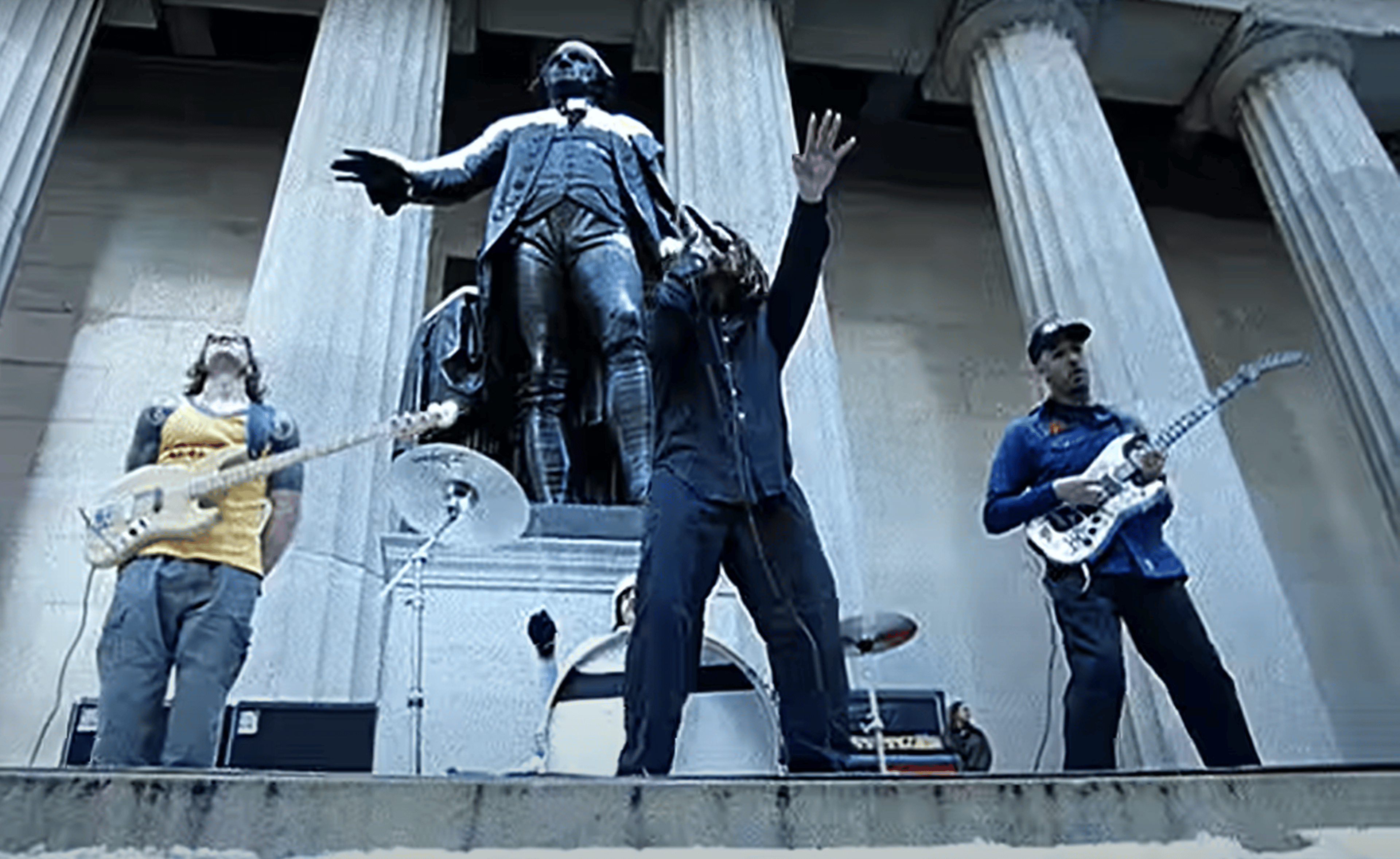
How many people do you know and admire who are touched by the network of communists that 2Pac and others are linked to?
How many of you are unhappy with what media monopolies have done to the entertainment industry?
Are even you being brainwashed by communist propaganda? Are you a communist?
If you insist that you aren’t without even considering whether you are, then I ask you: why does it seem so far from the realm of possibility?
If we look more closely into our own time, it turns out that seeds of communism have been sown all over the country.
Fragment II.A.h.ib. The new millennium
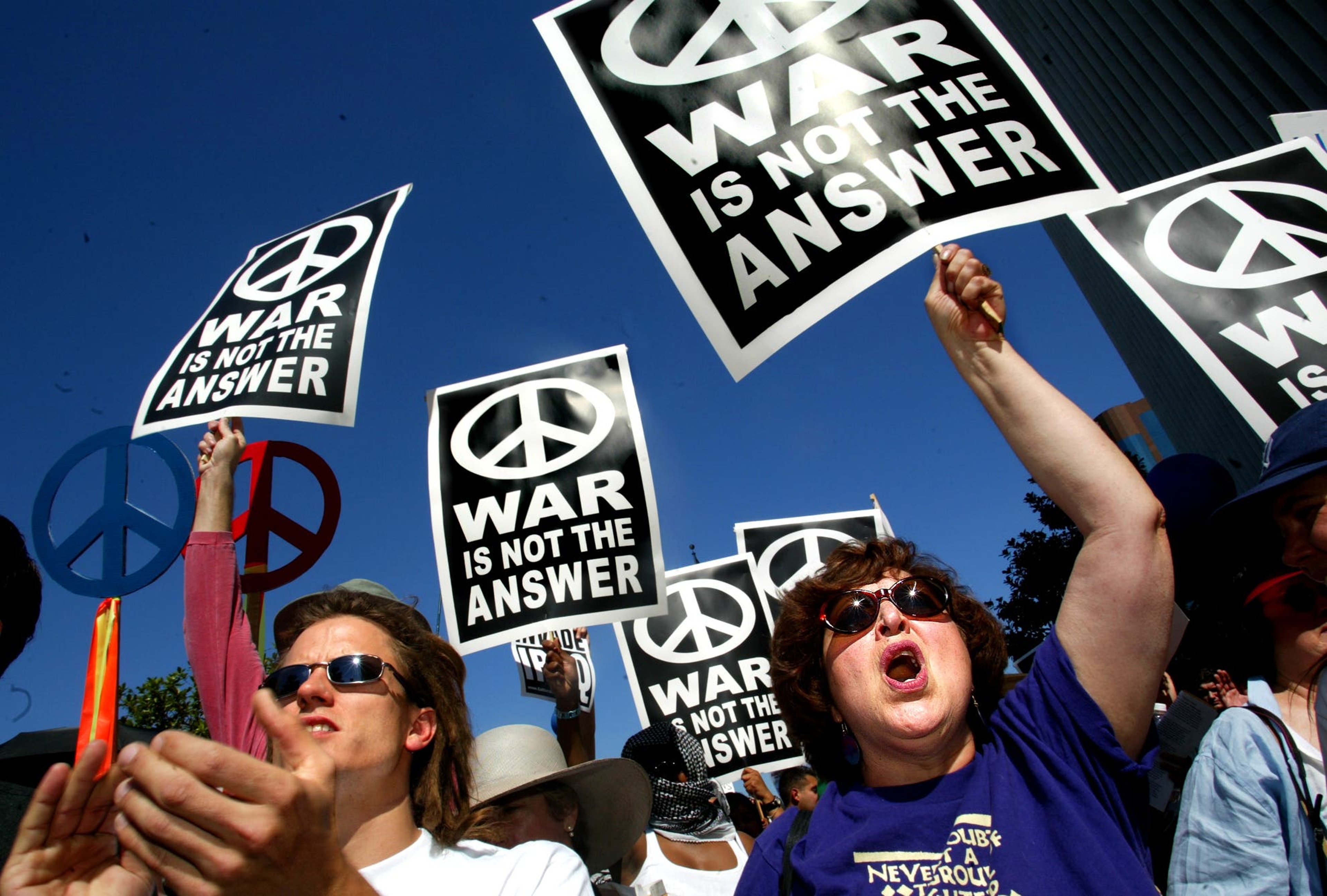
The people who opposed the rise of neoliberalism at the ballot box and fought the power of multinational capital in the street were a tiny minority at the turn of the twentieth century.
They fought hard to make themselves heard, but as such a small group of people, they could only do so through broad moral coalitions, a world wide web of intellectual entanglements, and drastic direct actions.
One illustration is offered by the 1999 Battle of Seattle, a protest against the World Trade Organization (WTO).
The people that participated in the marches of the daytime ranged from trade unionists opposing unfair labor arbitrage, radical environmentalists advocating against the exploitation of the earth, xenophobic nationalists who sought to put a stop to all immigration, and anti-imperialist militants fighting against the neocolonialism of global cartels like the World Bank or the International Monetary Fund, which impose austerity and privatization on all countries that come under their control. In the nighttime, black-clad militants engaged the police in street fights and looted corporate-owned stores.
The mainstream media then either denounced the entire movement as dedicated to the violent destruction of property, or carefully distinguished between the peaceful and violent factions so as to pretend that violence can never achieve our otherwise legitimate political aims.
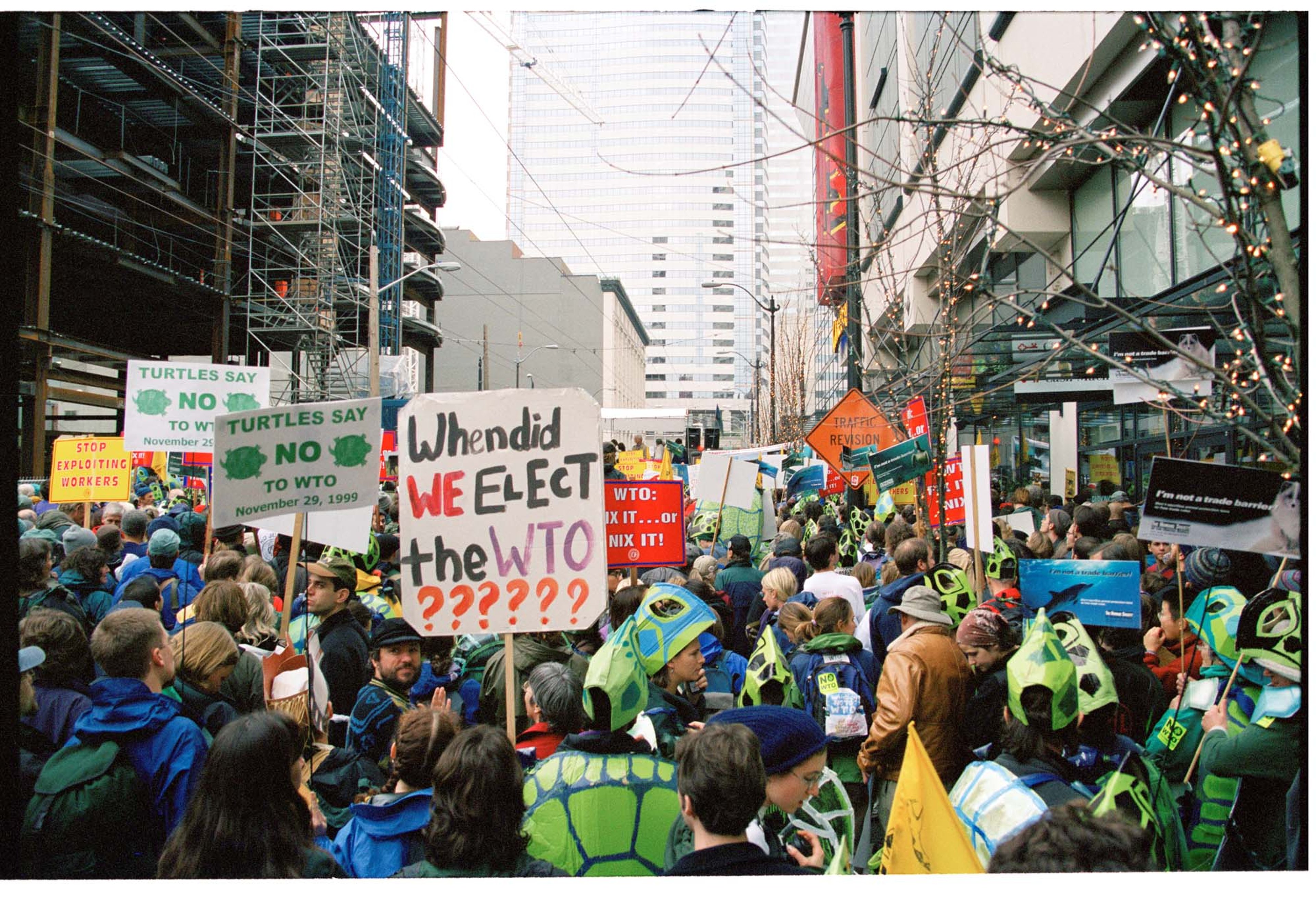
The very same cycle has repeated throughout the millennium, from the student Trotskyist and Maoist-stewarded protests against the invasion and occupation of Iraq and Afghanistan, to the January 20th, 2017 protests that disrupted the inauguration of President Donald Trump.
In our twenty-first century, it has turned out that international workers and their allies remember this history of American communism better than patriotic Americans themselves. Don’t believe me? I have an illustrative example of it.
Some of us have marched in May Day rallies once again after the holiday was crowded out by the more consumerism-friendly Labor Day. Labor Day was first made an official holiday by Congress on June 28, 1896, after anti-communists made a legislative effort to bury the growing summertime holiday of Reds. It has now become a day in which many people work harder than the rest of the year, while a few gorge themselves on a feast of product, which they buy for the sake of a class-exclusive suburban vacation.
Which one seems to draw on a stronger and deeper civic feeling?
Is exploitative consumerism a more appropriate way to show appreciation for the efforts of all?
Or, is it spontaneous assembly and festivity for all?
Does it make us “the greatest threat to our country” to reflect on what those who came before did to make the world better for us?
Or, what we’re going to do to return the gift for the next generation?
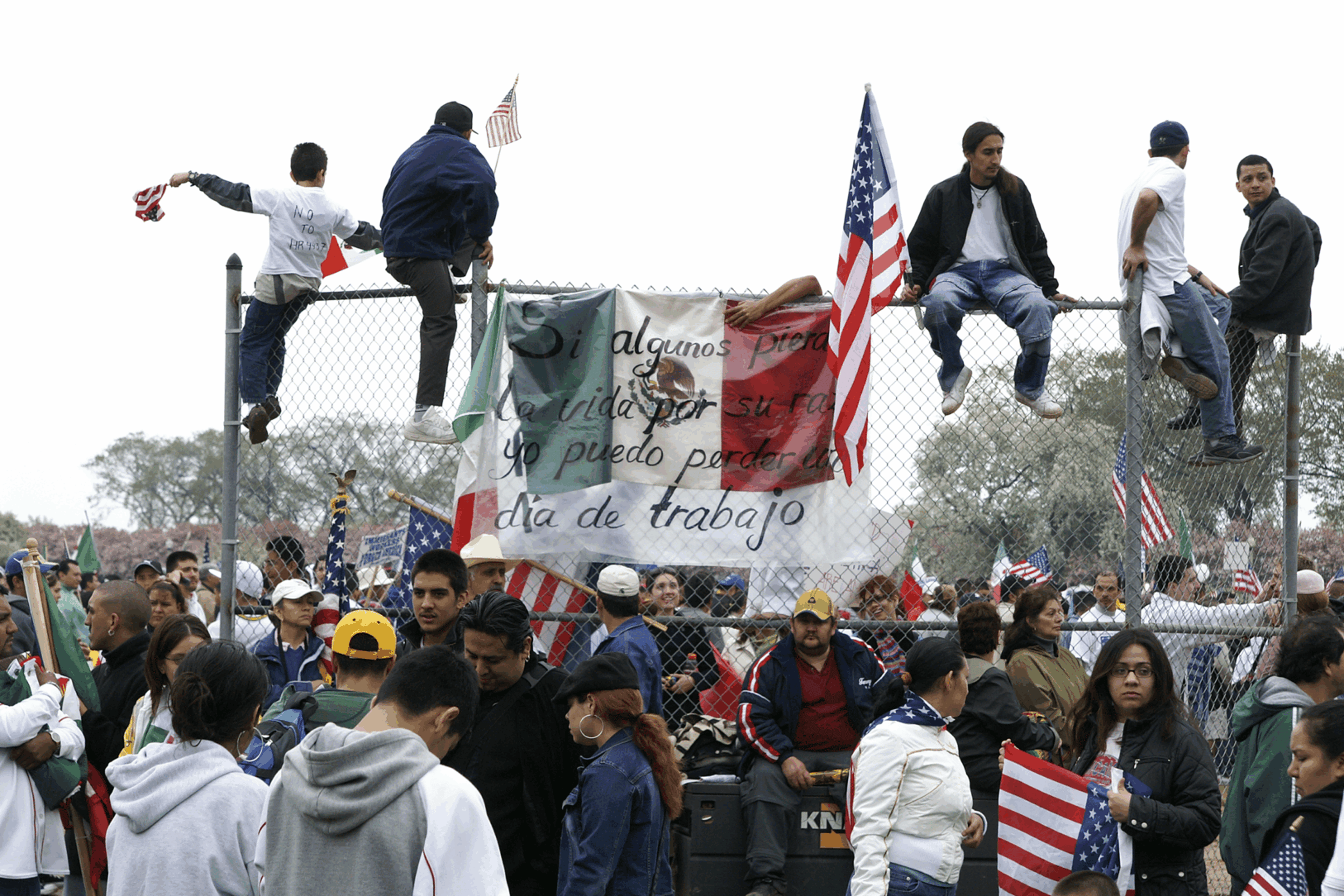
May Day was revived by immigrant labor organizers during the 2006 Great American Boycott, when immigrants all over the country stayed home and refused to participate in any economic or political activity. Through united action, they sought to demonstrate their true importance to a nation that despised them and blamed them for its own problems.
Why did Latin American immigrants know about May Day in 2006 while a majority of Americans still don’t know this part of their own history in 2026?
Are we latinos more in touch with the history of the U.S. than the “heritage Americans” that we’re slowly coming to outnumber?
I wonder how many of my readers knew the story of May Day before they read about it here.
Fragment II.A.h.ic. The populist moment
The 2008 financial recession slapped the complacent smile off of suburban neoliberalism’s face.
Countless people lost their jobs and wellbeing. Society was driven to the breaking point. And all because some bureaucrats and banks decided to gamble everyone’s money by giving out subprime loans to anyone and everyone, just for the sake of making a quick buck.
In the 2010s, the American left re-emerged with a vengeance—albeit in assemblies that were scattered, sporadic, and usually talking past each other.
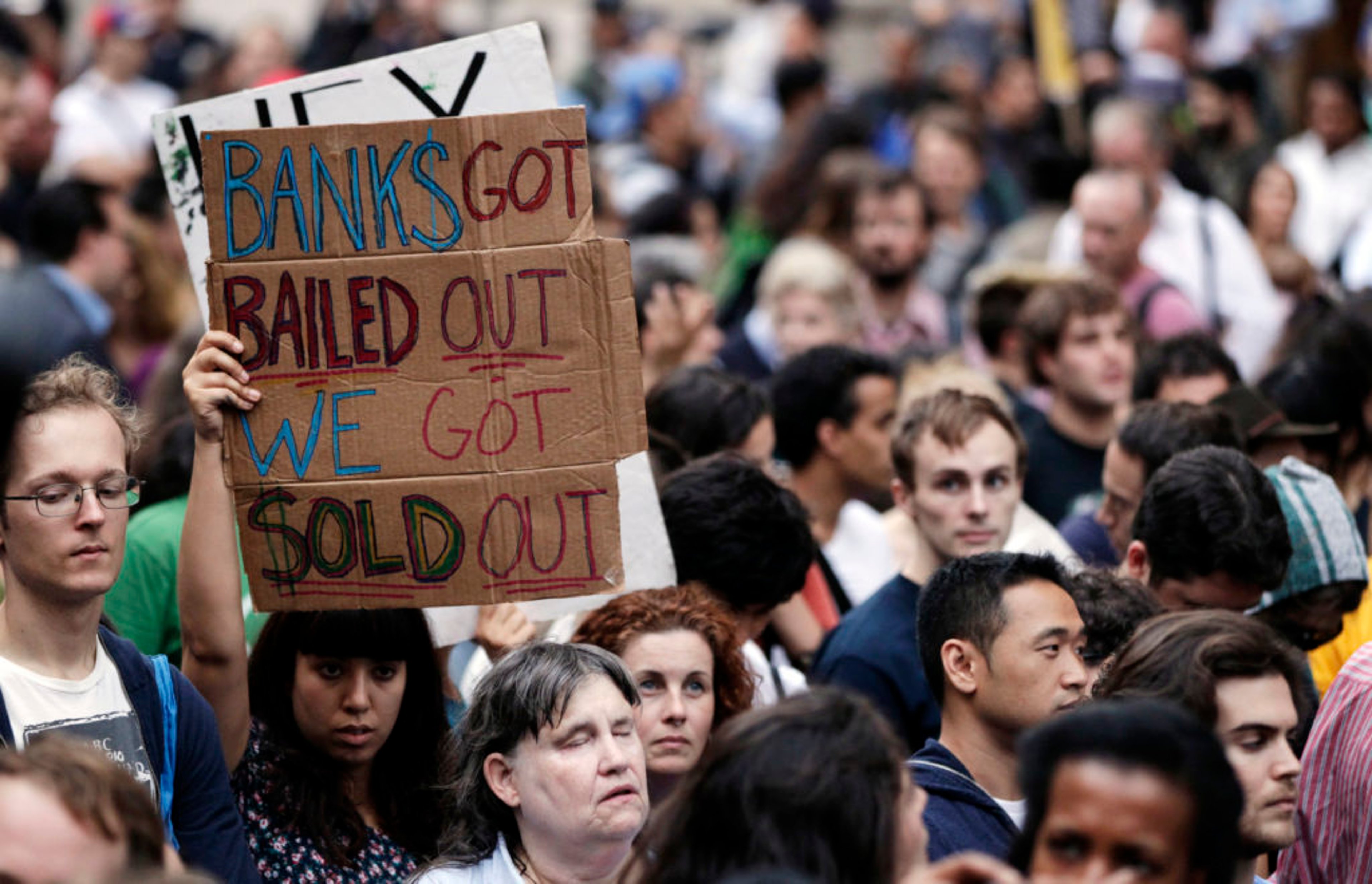
Occupy Wall Street emerged in 2011. It brought a populist coalition of Democratic, Republican, and Libertarian voters, anarcho-communists, and Taxed Enough Already (TEA) Party into a confrontation with the banks of the country over their part in causing the recession. The Occupy movement spread rapidly, influenced the rhetoric of everyone, and then was unceremoniously forgotten by most.
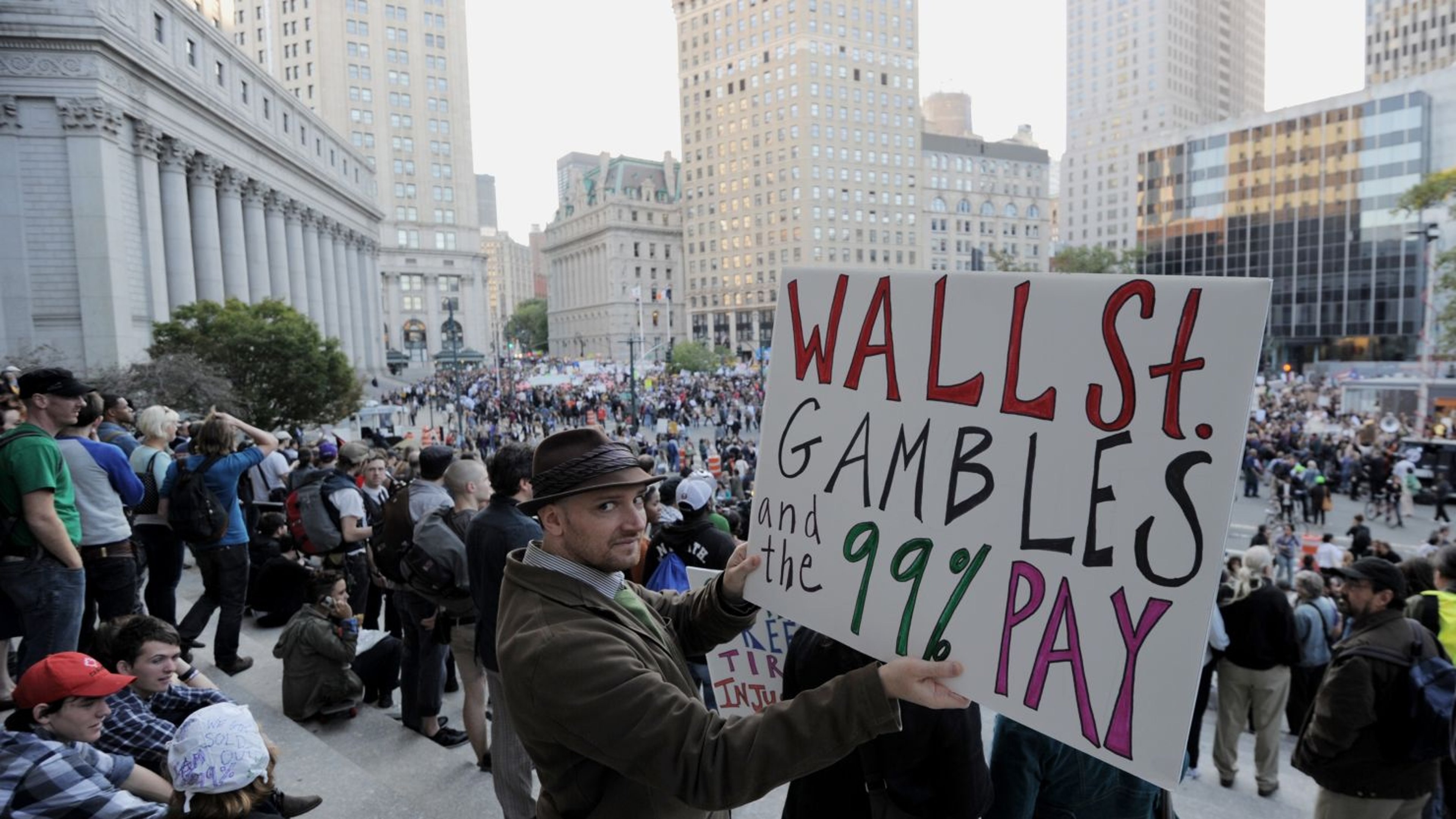
Many thought the de-mobilization of the occupations was good riddance, resenting the protest movement for having chosen the phrase “Occupy” (rather than “Decolonize”) more than they hated the imperialist despotism of monopoly capital. They did not see far enough to understand the role that populism could play in confronting colonialism. If they had looked a little to the south, to the Bolivarian Revolution of Bolivia and Venezuela, they could have learned a little bit more about this. In fact, they could have learned it by looking right in front of them—at their neighbors.
#BlackLivesMatter (BLM) became a national social movement in 2013 through social media posts and digital networking among Black women, the poor and academic among them alike. BLM criticized the authority of hyper-militarized police officers to become the judge, jury, and executioner of any darker-skinned American the moment that they feel an itch.
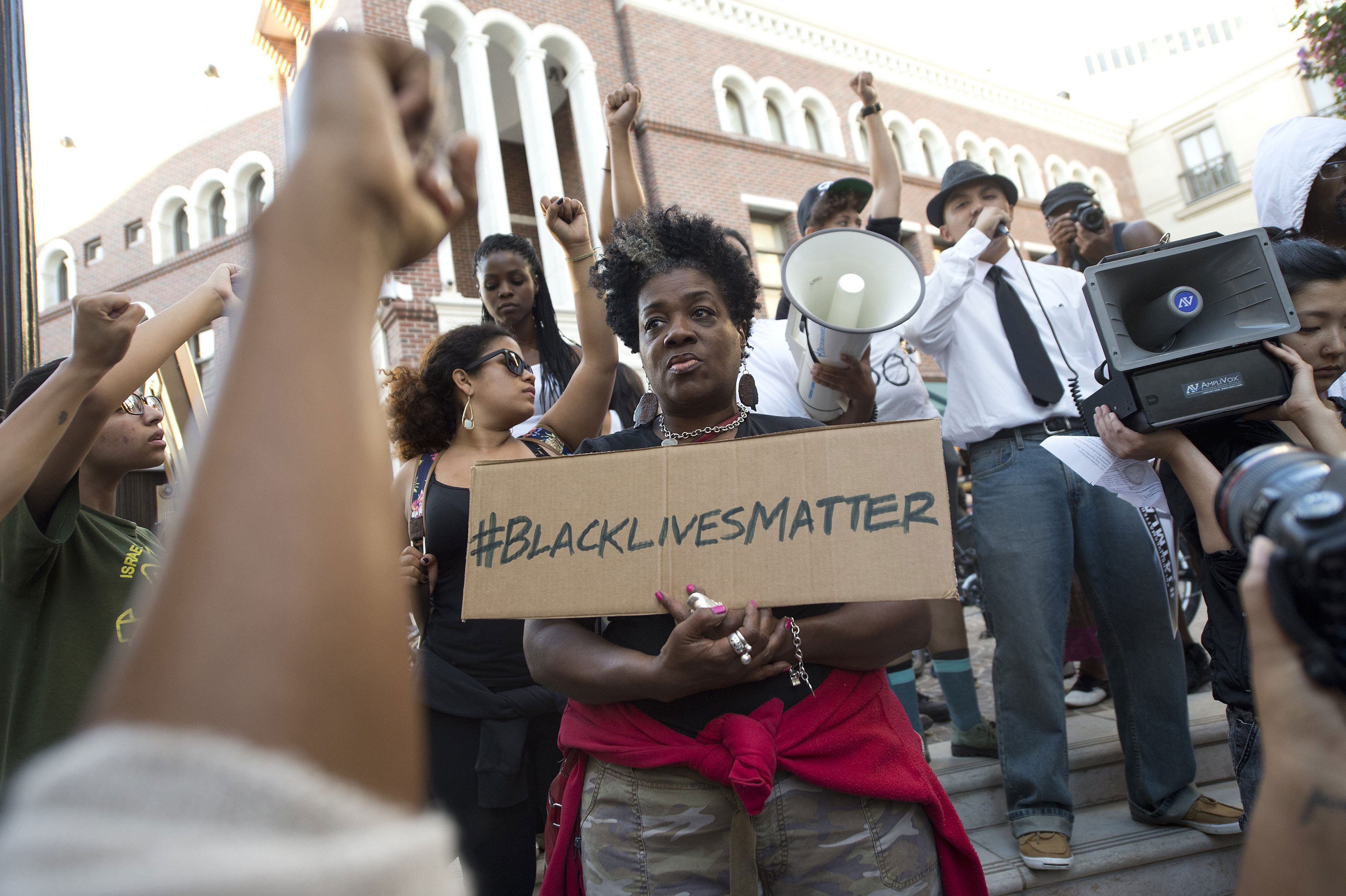
BLM drew people’s attention to supposedly cost-efficient neoliberal governments’ bloated spending on providing police departments with training in controlling hostile territory, assault rifles, riot squad equipment, and even tanks. BLM began to inspire a new upsurge of radical social justice sentiments, populist and anti-populist alike.
During the 2015-2016 election, Democratic socialist Presidential candidate Bernie Sanders took center stage in the national debate about corporate power, war, policing, and welfare. He argued that the postwar affluence longed for in slogans like Make America Great Again (MAGA) was in fact the product of a full employment welfare state.
Bernie made the case that such prosperous conditions could only be achieved again for all Americans through a popular and democratic struggle to retake the national stage of politics for reform-minded movements. He seemed destined to become the avatar for the multiracial populist momentum that had coalesced around Barack Obama in 2008.
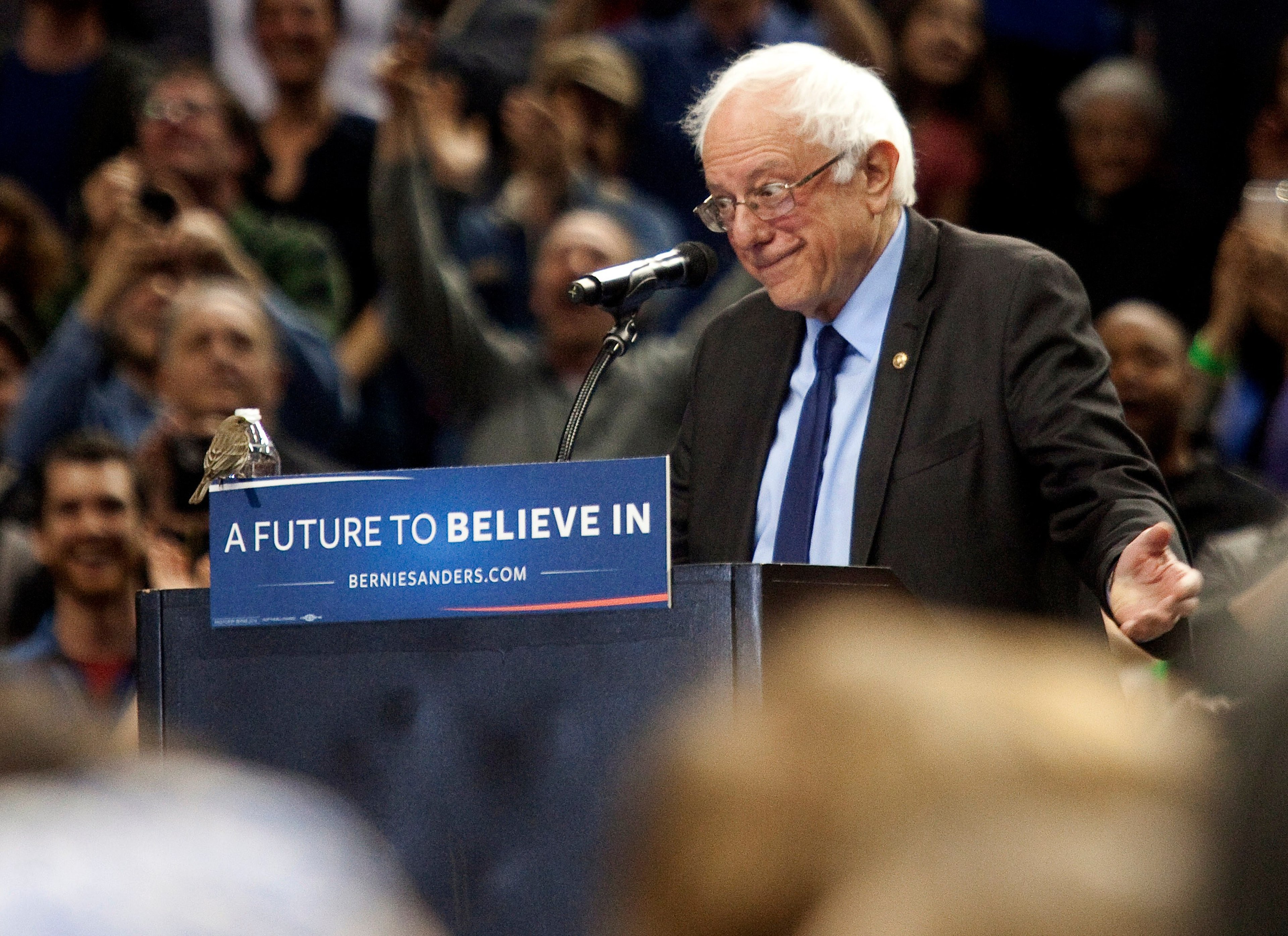
Hillary Clinton’s Democratic Party conspired with the mainstream media machinery to try to shut Sanders out of acceptable discourse and brand him as just as racist as Trump for focusing on populist and working class demands. The Clintonites claimed that Sanders did not appeal enough to a class-abstracted African American population, or to classes of people that were no more diverse than the working class—celebrities, professionals, and small business owners.
Bernie was nevertheless able to draw on the digital networking of his supporters and the viral appeal of his rhetoric on social media to make it far through the Democratic primaries. Sanders ultimately lost the candidacy and endorsed Clinton in the name of beating Trump.
A Republican like Donald Trump has won, time and time again, because he has successfully combined power with populism. He channels the resentment of millions against the Establishment. He intuits the deepest insecurities of his enemies, and even friends, and then humiliates them. He smashes the idols and defiles the temples.
Trump’s populism is not just rhetoric—or rather, his rhetoric has force. He is even able to mobilize a multiracial force of supporters for his campaigns. January 6th, 2021 might have been more diverse than the average Democratic Party rally. Trump is our Nathaniel Bacon for the twentieth century. Bacon, in turn, was the Napoleon Bonaparte of the 1670s, channeling all of the utopian aspirations of the time to his end of narrow self-interest.
Trump combines the features of both Bacon and Bonaparte. He has begun a personal Crusade against the very neoliberal Establishment that raised him up, hoping to unleash his own gang from all fetters and win plenty of fame money for himself in the process.
But Trump does not have control over his own People. Remember that there was an overlap of Trump and Bernie voters in 2016. Think of the role played by mass discontent with the post-COVID inflationary spiral and collapse of the neoliberal order in bringing him into office for a second time. As Trump loses his mandate to govern, his grip over the populist moment slips away. All signs point to the possibility that Bernie’s style of leader + internet left populism may become the winning formula for a popular opposition.
The Democratic establishment has not learned this lesson. Perhaps they will never learn.
The most recent Presidential elections have repeated the exact same 2016 cycle of Bernie, the Democratic establishment, and Hillary in the 2016 election. It’s as if we are going around and around on a carousel.
In 2016, after the media and the other candidates turned against him and for his opponent, Bernie lost the Democratic candidacy to Clinton, who then lost the Electoral College to Trump.
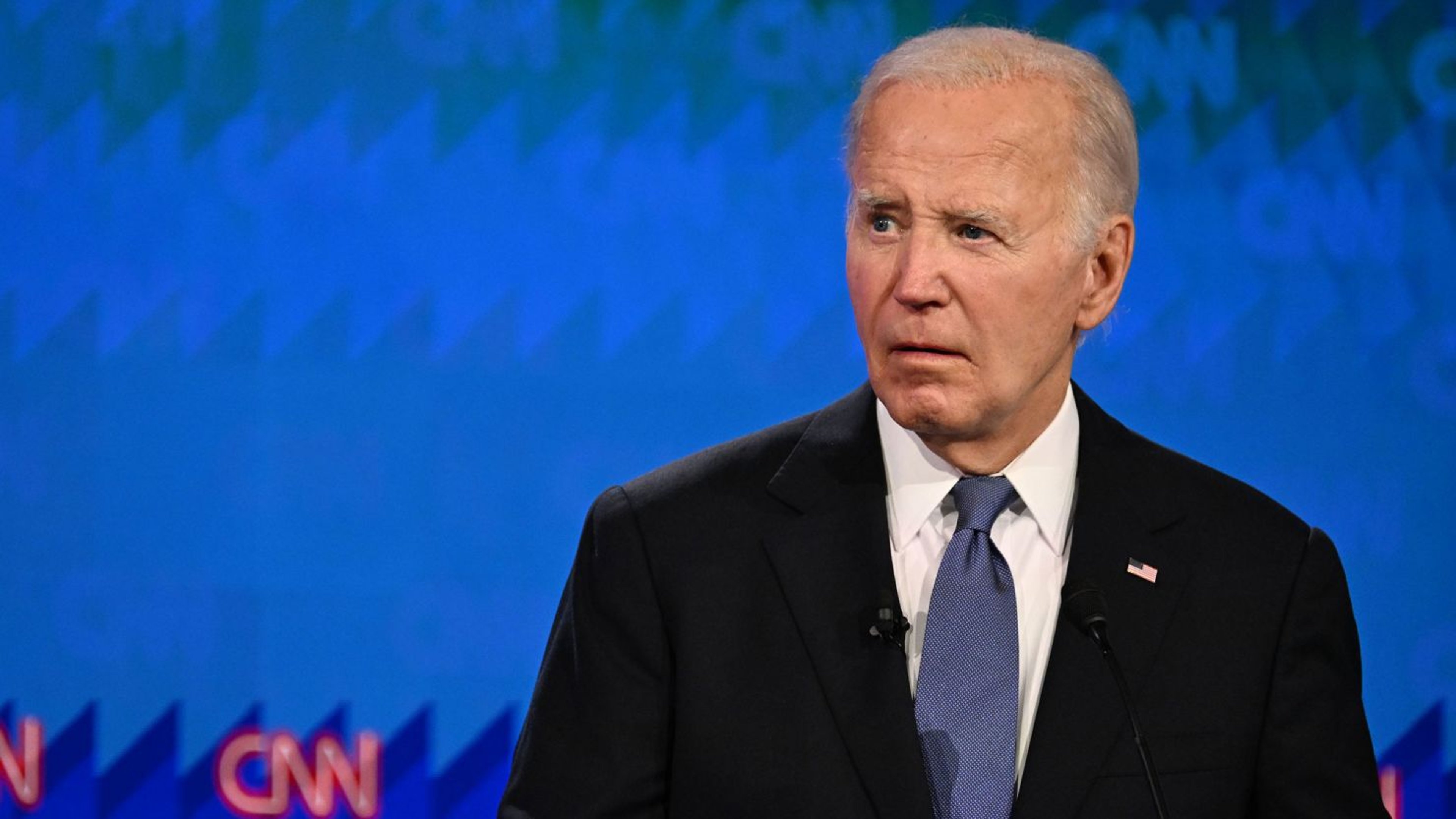
In 2020, after the media and the other candidates turned against him and for his opponent, Bernie lost the Democratic candidacy to Biden, who then won the Presidency and oversaw the repression of Trump’s 2021 coup attempt before disgracing himself through his fanatical devotion to Zionist genocide.
Although he failed to win the Presidency, Bernie the Democratic socialist was still able to revive left populist rhetoric for a national audience.
The #NoDAPL protests broke out in 2016 under the leadership of the Standing Rock Sioux Tribe (Íŋyaŋ Woslál Háŋ) against the construction of the Dakota Access Pipeline (DAPL), an oil circulation project that threatened to expose the water of the reservation to spills and contamination.
The colonial state saw this self-determination protest as a threat to the Army workers who were building the pipeline. They sent out the police state.
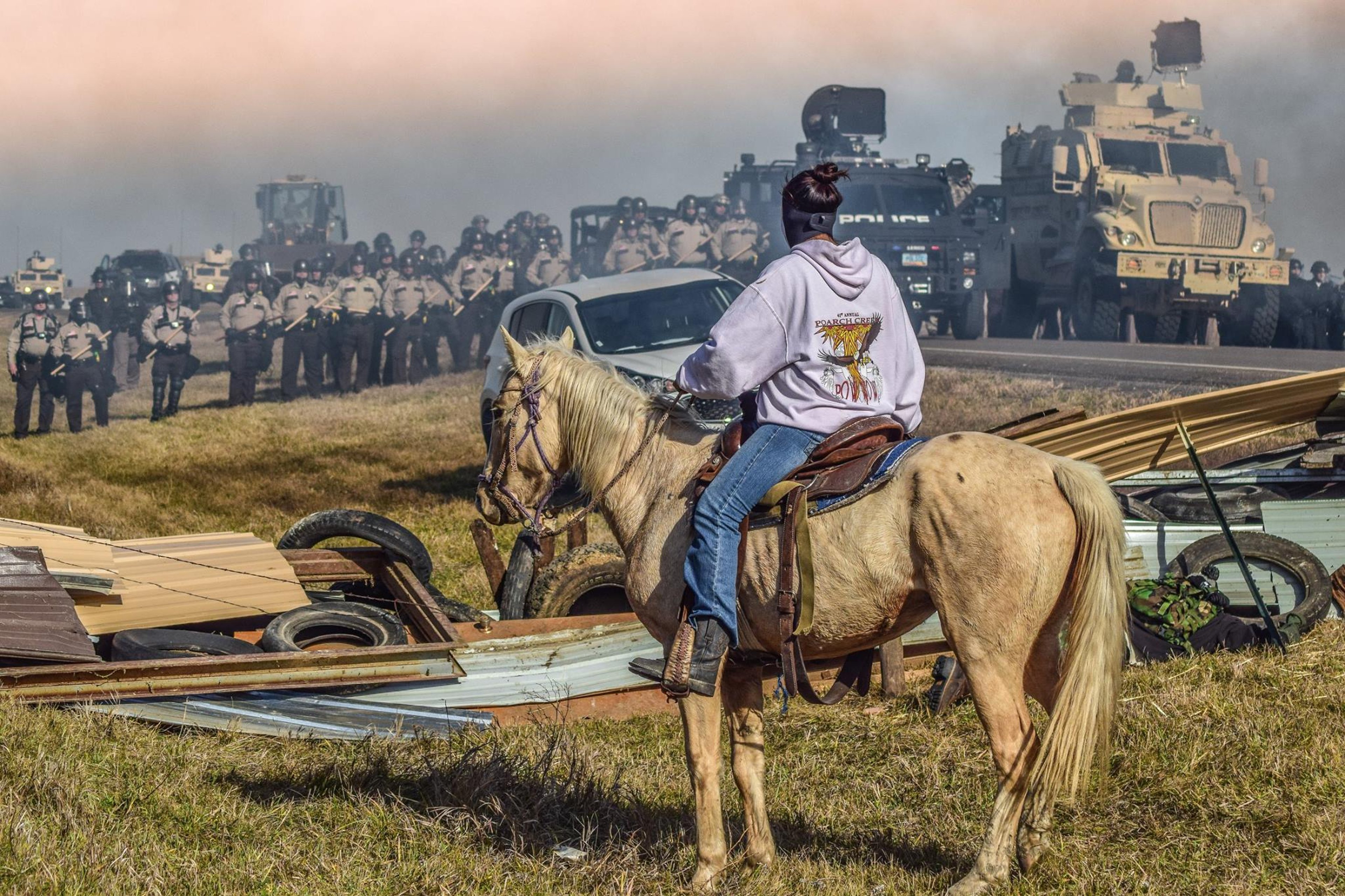
#NoDAPL drew support from people all over the country similarly concerned with the carelessness that politicians and corporations had repeatedly shown to life. They had abandoned New Orleans residents after Hurricane Katrina in 2005 to fend for themselves. They had let off the criminal BP corporation responsible for the Deepwater Horizon oil spill of 2010, which polluted the Gulf of Mexico with millions of barrels of oil.
#NoDAPL revived a national discourse about the legacy of colonialism that had been dormant since October of 1992, the Columbus Quincentenary. The protestors linked Native sovereignty and environmentalist ethics in a single slogan: “Water is Life.”
In 2017, the Army Corps of Engineers began to rethink their participation in the project and suggested to their superiors that further investigation into the tribal concerns was warranted before further action could be taken.
The newly inaugurated God-Emperor Trump ignored their advice. Channeling Indian Removal architect Andrew Jackson, Trump commanded the Army to proceed on the project, regardless of the concerns of any aboriginals. He backed his orders up with his private army of mercenary soldiers and riot police.
#MeToo emerged from social media in 2017 as an attempt to end the public silence around the abuse and rape of women and expose the powerful men responsible for both. The campaign breached the mainstream when celebrities signal boosted the hashtag. Prominent men of the entertainment industry like Harvey Weinstein were exposed as predators that targeted even the most famous for abuse.
Many of these intra-elite predators were put on trial for their crimes, while it proved to be harder to do anything about the most powerful predators and the most everyday abusers. In the last years of the 2010s, the movement began to reach into the deeper layers of society when women working in manual and domestic labor began speaking out about how their bosses exploited and abused them.
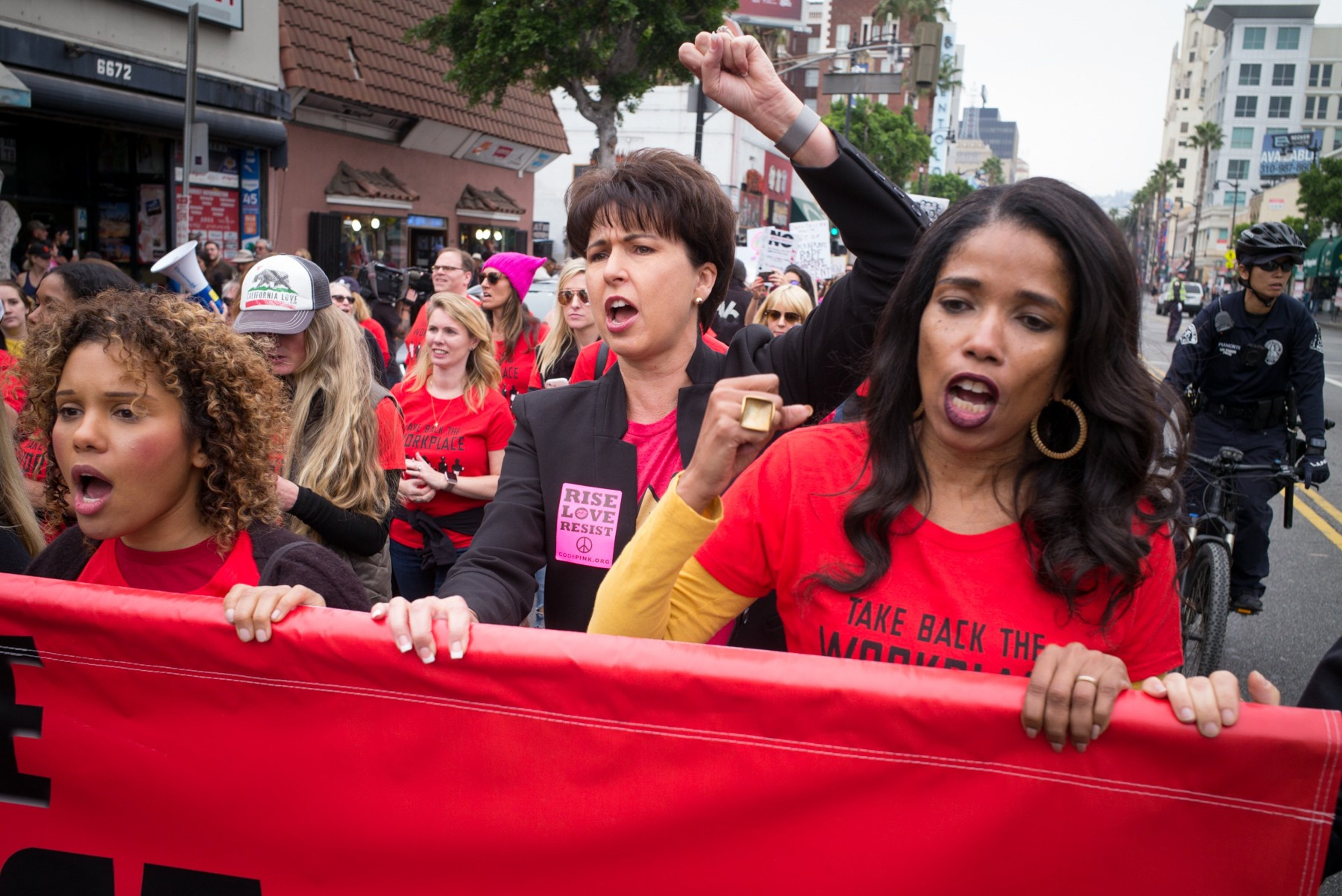
#MeToo began to spread through social media to countries all over the world, where it caught the attention of professional and working women who wished to take the power back from the men who had taken it from them.
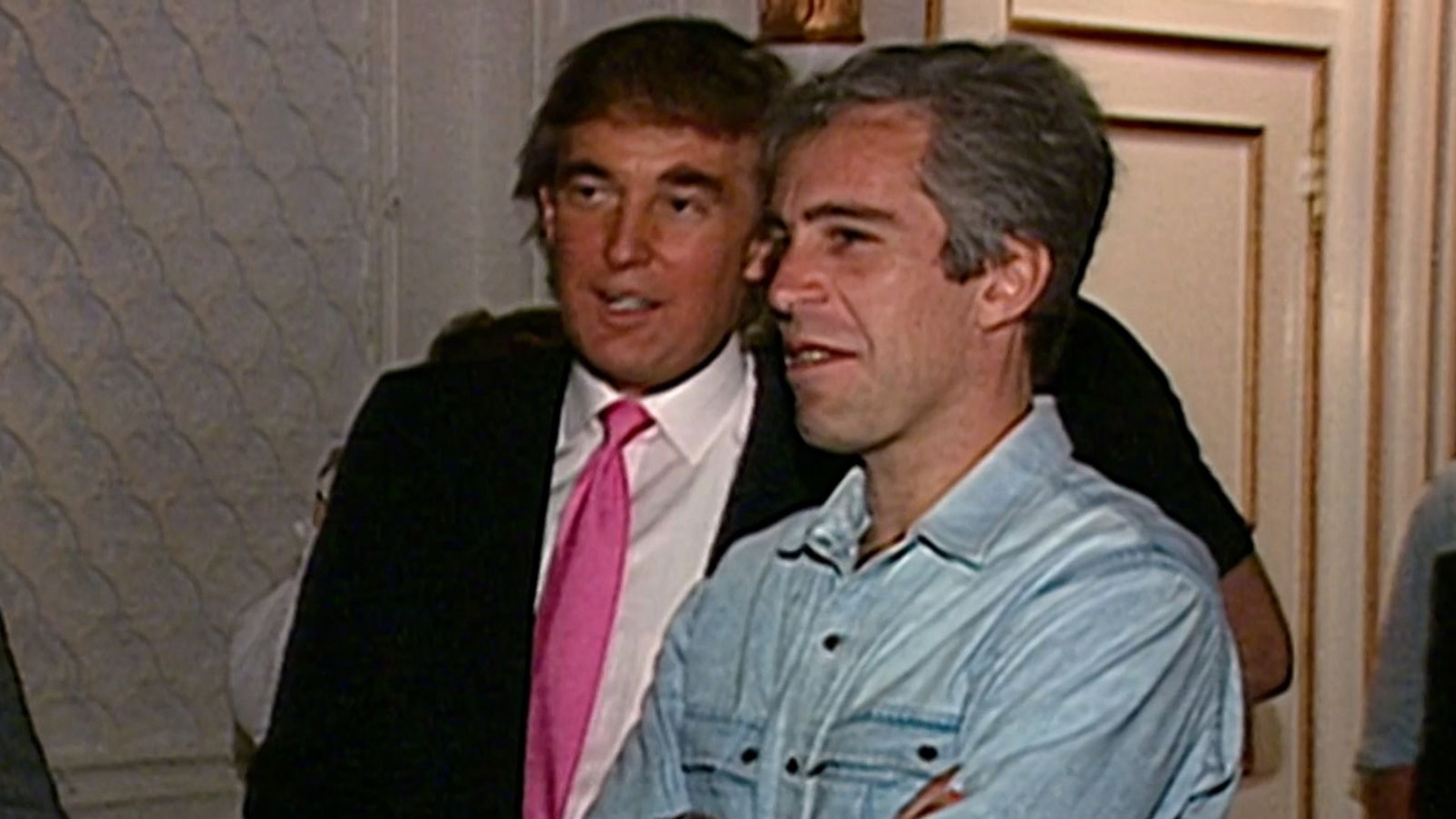
The campaign threatened some very powerful and well connected men. In August of 2019, President Trump’s links with Jeffrey Epstein began to breach the mainstream when Epstein’s “suicide” under highly suspicious circumstances became viral news.
Why was our President hanging out with a man that had been convicted of the sex trafficking of children? The cultural network of abusive male power that #MeToo had exposed went much deeper than anyone could have imagined.
The “movement of movements” of the millennium, with its populist phase in the 2010s, reached its peak during the global coronavirus pandemic that began in 2019 and shut down the world in 2020.
Millions of people were left unemployed and stuck at home, or highly employed and required to mask and practice social distancing while exposing themselves to infection at their workplaces.
People were barely keeping afloat amidst the apocalypse on their miniscule wages, unemployment, and stimulus checks. Communities of people bound only by sentiment organized mutual aid campaigns to keep each other alive, fed, and housed. The growth of this gift economy between people allowed for the growth of a new left.
Everyone had all the time in the world to keep up on endless social media scrolling, think about their lives, and reflect on the meaning of the world’s events. We were itching to get back outside in the world and do something together with other people.
An opportunity finally presented itself to all of us in the image of a horrific injustice.
Footage of Minneapolis Police Department officer Derek Chauvin suffocating George Floyd went viral in the spring. The ensuing outrage of the summer rapidly spilled over into street rebellions that forced police to retreat from entire neighborhoods, burnt down precincts, looted goods from corporate stores, organized occupations, and began to demand the abolition of the parasitic police state.
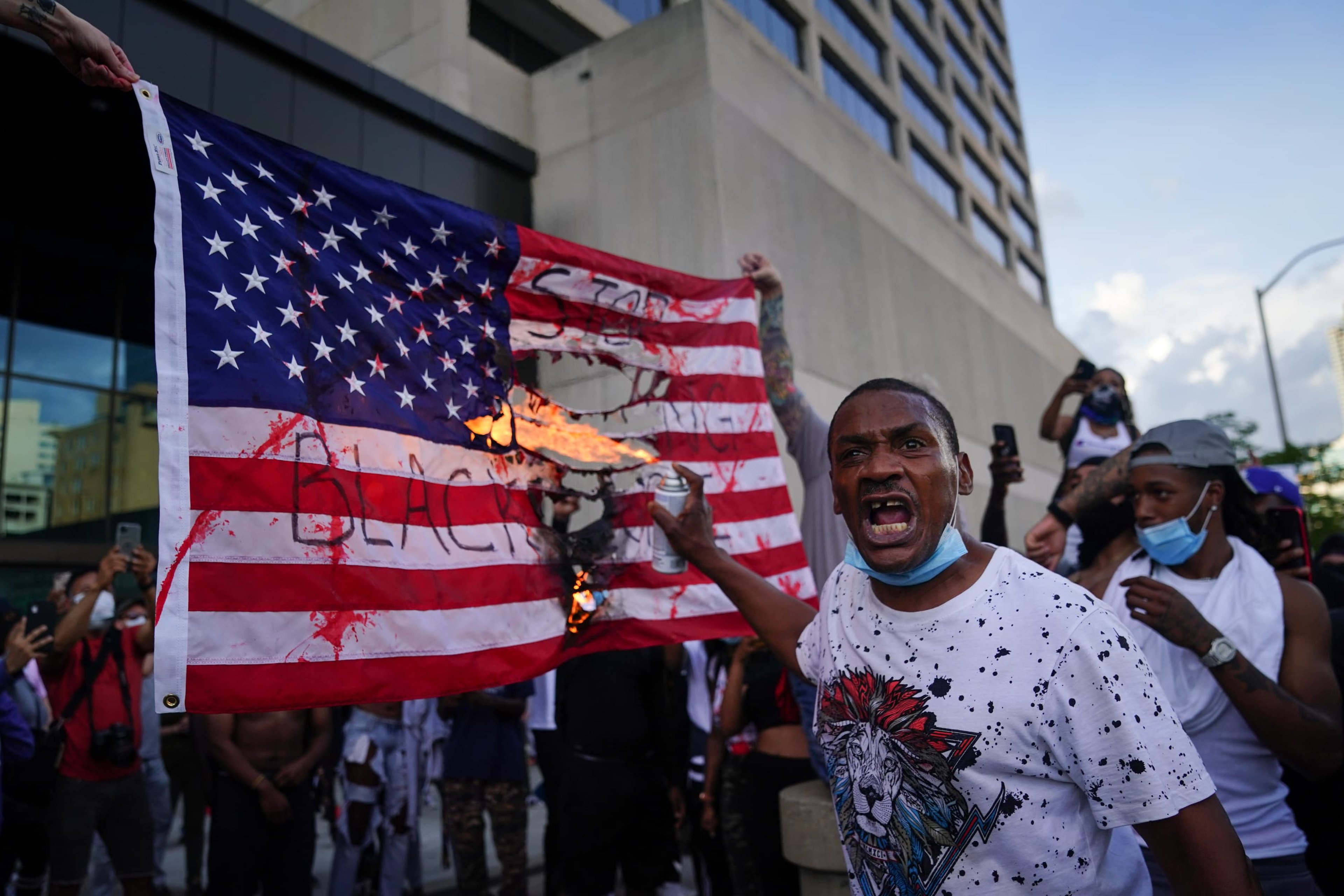
White liberals and the Black PMCs worked closely to de-mobilize the riots. They directed the demands of protestors to more moderate goals like defunding (or even just re-training) the police. They called for giving free money to Black businesses (or to white-owned corporations selling “Black” products). They campaigned a get out the vote campaign for Zionist Democrats. They believed that all of the problems would be resolved if only a Kamala Harris or a Joe Biden were elected President in November.
On October 7th, 2023, the prisoners of the Gaza concentration camp broke out of the fencing that had penned them in like beasts. Hamas militants used the cover of the ensuing chaos to fly on paragliders into a festival attended by off-duty Israeli Defense Soldiers (IDF). They quickly took attendees hostage for leverage while the Zionists fired into the crowds of people indiscriminately in their attempts to kill the insurgents and maintain control.
The Zionist entity then launched a multiple-years long genocide of the Gazan people that has not ceased to this very day. They have conducted it with guns, bombs, and tanks, all provided for directly or indirectly by the government of the United States and its taxpayers. Among young people, it became a joke to describe a problem, and then end by saying: “I know what we should do! Let’s send another trillion dollars to Israel!”
In 2024, students began to form encampment occupations on campuses to protest the support of all major U.S. institutions for the genocide in Gaza, including the very places they were going to learn and get degrees. Universities repressed the student protestors at a scale and with a fanaticism that has not been seen since the reign of Tsar Nicholas II over the Russian Empire.
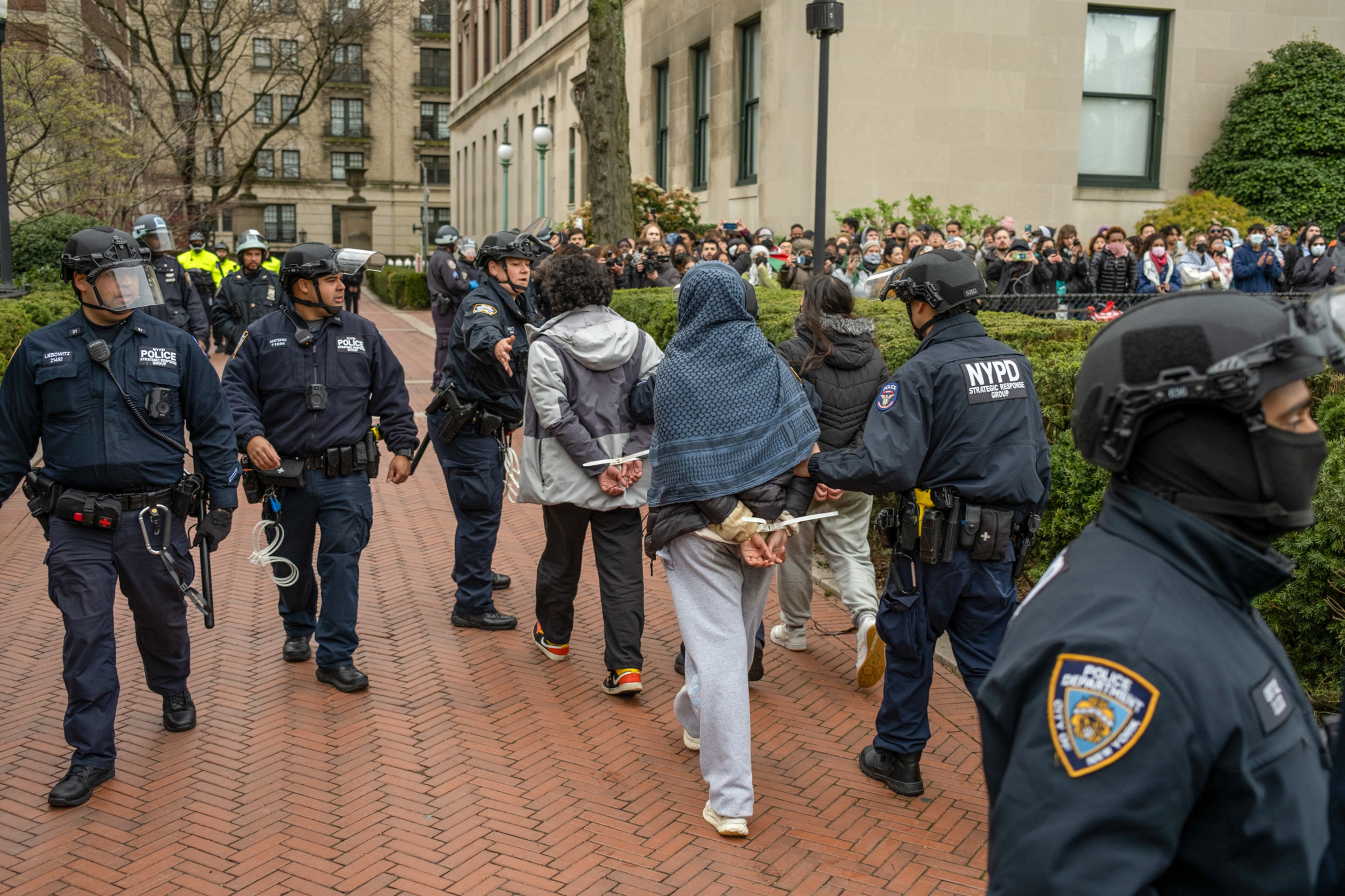
Zionist President Joe Biden and his Vice President Kamala Harris, with their entire social justice cabinet on board, gave their full support to the Israeli war machine abroad and the Zionist crackdown on dissent within.
Because of mass disdain for his senility, incompetence, and fanatical imperialism alike, Biden’s incumbency became irrelevant to his prospects in the 2024 Presidential election.
Biden was the worst possible candidate for the Democrats to run, and yet the Democrats let him run anyway. The head of the establishment white ethnics, drawing from the elite representatives of Irish and Jewish Americans alike, he failed to appeal to the racialized proletariat. After he spent his first debate against Trump mumbling gibberish at no one in particular, the Democrats rushed to swap him out at the last second with his Vice President, the neoliberal carceralist Kamala Harris.
Harris did not make any policy difference between herself and Biden clear at all. Her being of Jamaican descent did little to convince the racialized proletariat, even if she won over some PMC POCs. A political insider through and through, she failed to achieve the populist appeal she would have needed to actually win the majority vote. Her campaign mostly relied on her and her little platoons of supporters laughing about coconut trees.
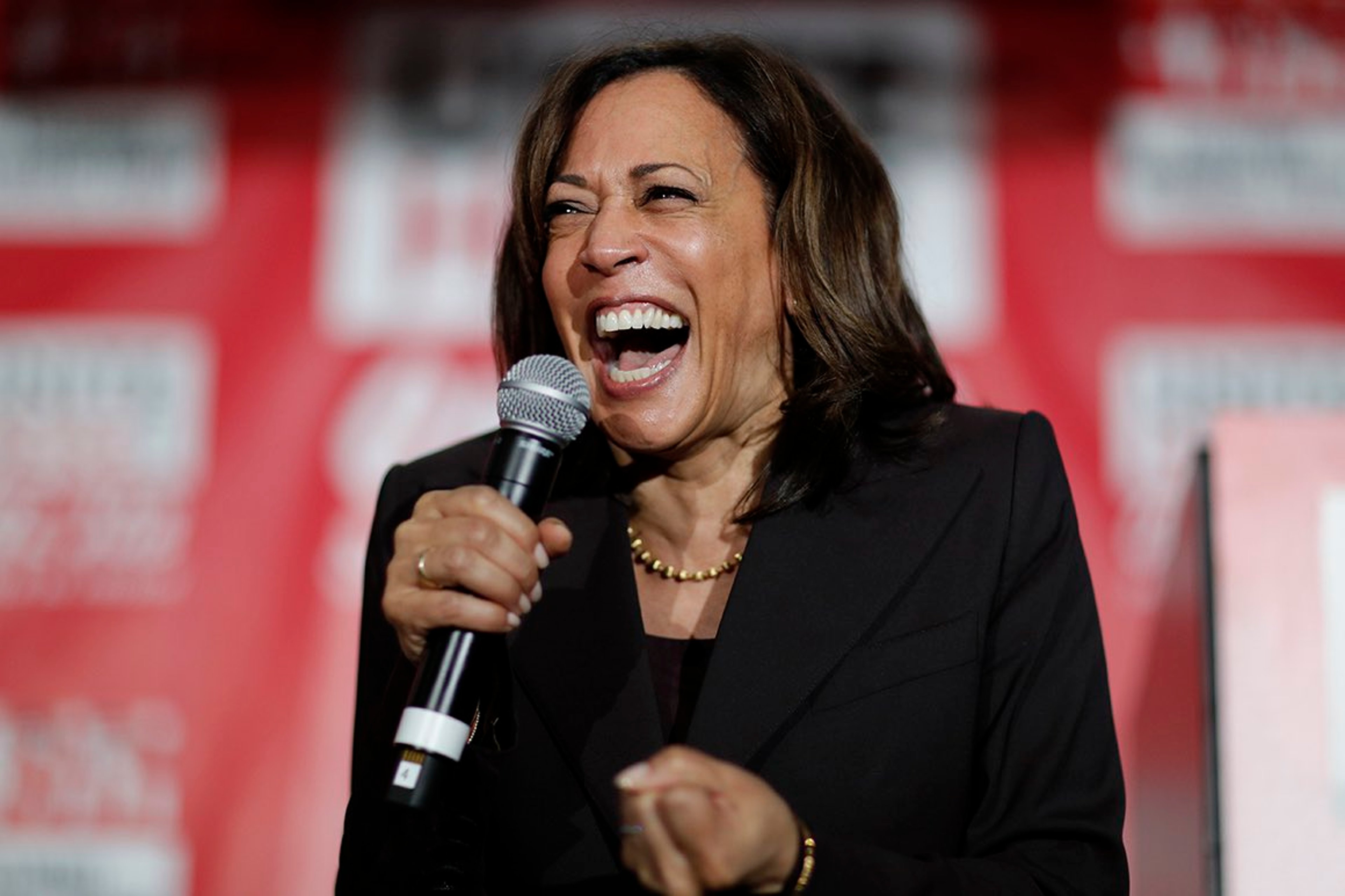
In the 2021 run up to the next round of elections, the citizens of the Empire launched a new round of campaigning against the inner light of their children.
They clutched their pearls and fainted over children altering their bodies with hormones and surgeries instead of sports injuries and overwork.
They pretended to care for the limitation of medical power while working to reinforce the power of medical providers against patients’ choices.
They looked the other way while pharmaceutical companies and police departments allowed the poor of the streets to drown in an open air opium den.
They enlisted the powers of public and private bureaucracy to repress the experiments of gender transitioning as the first shots in a great Crusade for paternal property and decadent conformity.
All of the misery of the present state of things was redirected back to maintaining it.
Discontent over inflation, exasperation with a historically sparse job market, exhaustion with forever wars, and suspicion towards immigration drove millions of former Democratic voters into the arms of the man they had once voted against—the Republican Napoleon himself, Donald Trump. For the first time ever, Trump had won a solid majority of votes.
Biden spent the remainder of his Presidency as a rabid sitting duck, clearing the forces of opposition and laying out the welcome mat for Trump. The senile Zionist refused to allow any limitations to the flow of taxpayer dollars in the billions to Israel.
Months before Trump was inaugurated, when things seemed hopeless for many on the left, the public was rudely awakened to a dangerous inspiration. On December 4th, 2024, a masked man gunned down United Healthcare C.E.O. Brian Thompson in the streets of New York before disappearing back into the city as soon as he had emerged from it.
Has Propaganda of the Deed made a return for the twenty-first century?
Has the violence of bomb-throwing Nihilists and anarchists returned for a new millennium?
Has the homicidal greed of billionaires driven society to the breaking point?
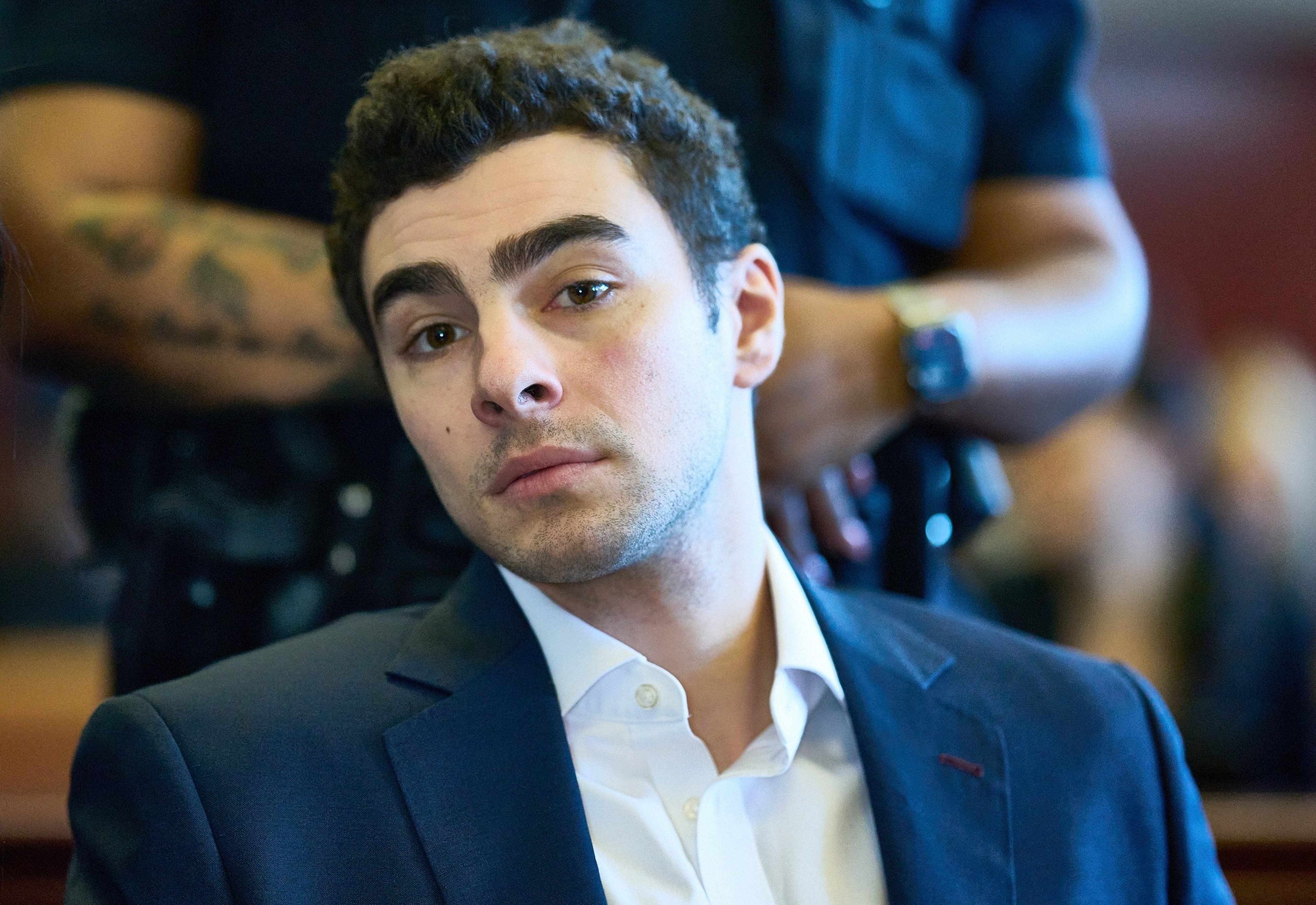
When the Federal Bureau of Investigation (FBI) presented the young and attractive Luigi Mangione as the culprit, a celebrity cult quickly formed around him. It turns out that people have more sympathy for young men screwed by the system that screws everyone than the old men who screw everyone by getting rich off of the system.
How many of you Italian-Americans have ancestors that took actions like Mangione, whether against tyrannical Kings, American monopolists, or Italian Fascists?
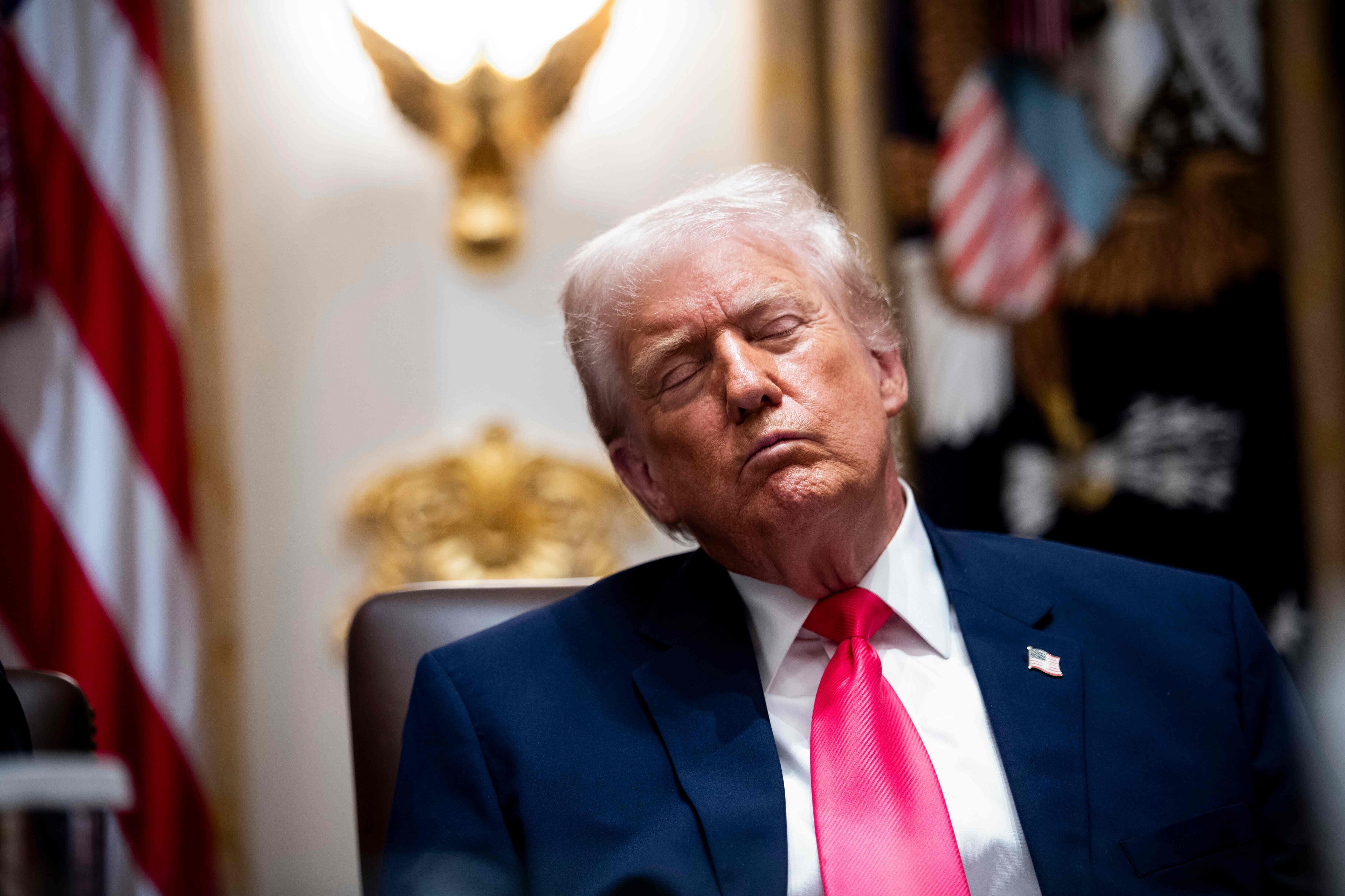
Since Trump took office for the second time in January of 2025, workers and radicals have been making scattered efforts at (re-)organizing a militant opposition to the dictatorship of the Epstein class.
Trump and his cronies’ massive reduction of public jobs, privatization of social wealth, and terrorization of the public has marked him as one of the very Enemies of the People that he once vented populist rage at. Trump does not even seem happy with having finally achieved the vaunted status of a God-Emperor with a court of sycophantic Viziers. The King himself has finally Brandonified at a rapid pace, his body taking on the visage of Sleepy Joe.
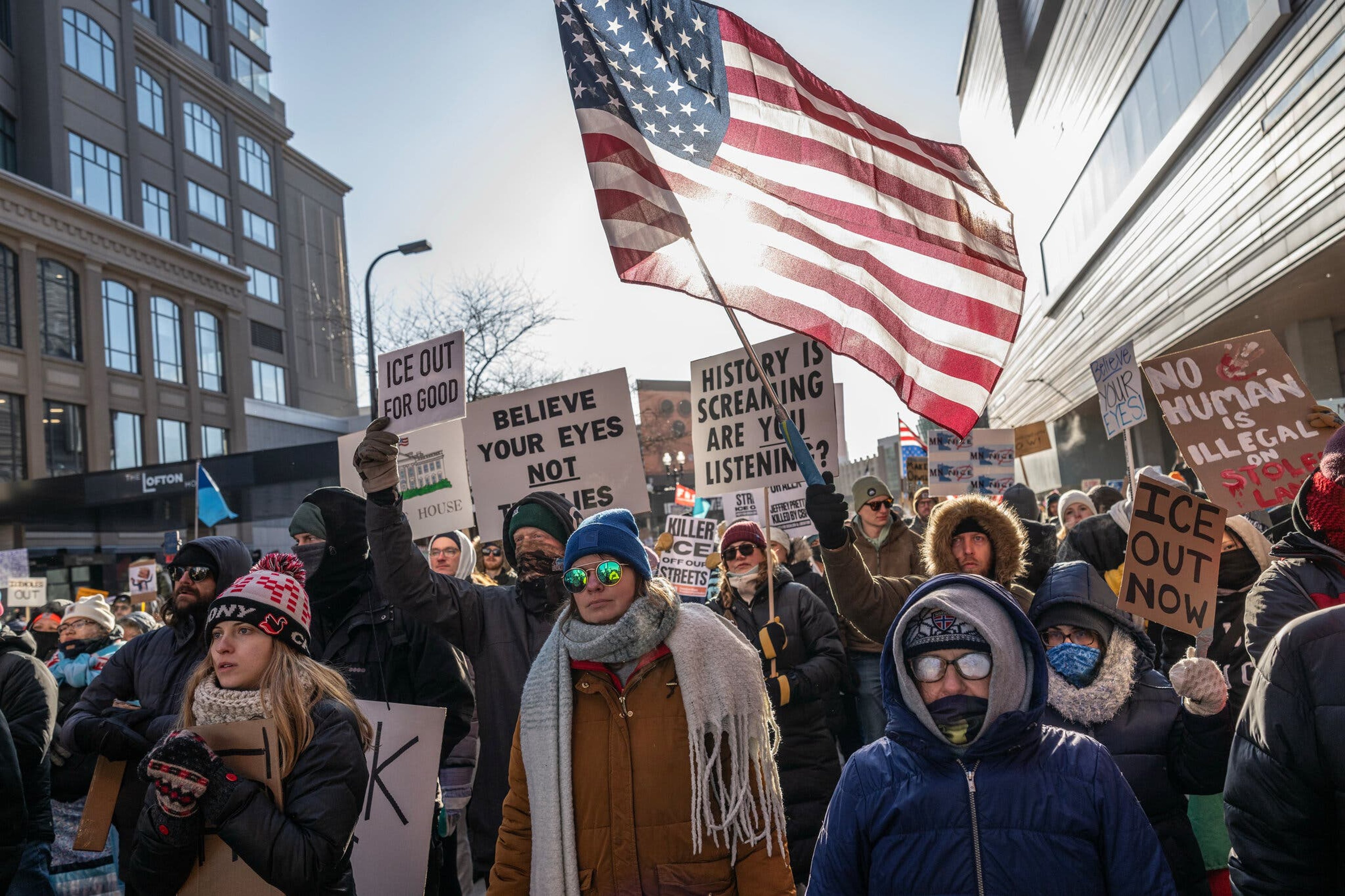
Like the millennials of the 2010s, the precarious youth of generation Z have come to the forefront of the resistance to Trump.
Young people use social media to warn each other of the secret police surveillance of the Department of Homeland Security (DHS) and the raids organized by the Immigration and Customs Enforcement (ICE).
Youth cooperate to compile information about the movements of the agents in order to track their location and warn people accordingly.
The boldest among us organize disruptions to ICE’s kidnapping campaigns and concentration camps.
In the summer of 2025, the latino American working class youth of Los Angeles led an uprising against the secret police of Immigration and Customs Enforcement (ICE), which had been spending the past year harassing, kidnapping, torturing, raping, disappearing, and killing thousands.
In January of 2026, another series of coordinated rebellions broke out against ICE in Minneapolis after they began attacking the city’s Somali-American community, brutalizing protestors, and killing bystanders like Renée Nicole Good and Michael Pretti.
In summer of 2026, this protest movement became concentrated around the hunger strikes and organizing demands of the concentration camp prisoners themselves, now being held in unliveable dungeons like Delaney Hall in New Jersey.
Our government is persecuting the few Americans who understand the intimate link between American history, race, immigration, labor, and communism.
The defendants of the 2025 Prairieland, Texas case are our own modern-day Haymarket martyrs. The evidence that Federal Judges Mark Pittman and Reed O’Connor used to sentence one defendant (Ines Soto) to 50 years of his life to be wasted away in prison was that he had moved anarchist zines, which the “justice” system has decided to classify as terroristic “antifa” (antifascist) literature.
The monopolists in power don’t want you to understand that our interests are bound together across all sectoral lines by need and labor. Our causes are best fought for in a common, popular, and democratic struggle against the divisive schemes of the Epstein Class. They are the vice regents of King Capital. They are taxmen and axemen who waste society’s potentials on the oppression of the people.
Who knows how fast or how slow a proletarian revolution could unfold in America.
Trump’s experiments in national enterprise have failed to get off the ground. They have ruined the economy.
Who knows if a Great Revolt of the propertyless, poor, and despised won’t replace it with a free enterprising gift economy within a few years from now?
It is impossible to predict ahead of time how slow or how fast the process will be. It is entirely up to us, our friends, and society.
Segment II.B. The communist option
What does it mean to consider such a hated and persecuted thing as “communism” to be a serious option for society today? Or to try organizing it as its own political faction?
This question forces us to think more carefully about the reality around us and consider whether there is fertile ground for such an unusual thing as “communism” to grow into it from root to branch, and in all directions.
There must be a reason why so many of us are now willing and able to consider something so far afield from the neoliberal consensus that unites the power elite of the two-party system.
The free enterprise ideology that once took in most people from the older generations has exhausted its legitimacy.
While the poor grow poorer, the rich grow richer—some of them are now trillionaires.
Our corporate overlords have consolidated dragon hoards of wealth and power in their own hands, driven us into countless meaningless wars for their own enrichment, and been exposed as predators in repulsive scandals.
It’s hard for us to take it seriously when neoliberals go on corporate-owned media to spread fairy tale propaganda about the rich and their friends being the best qualified to rule us.
In spite of this crisis of legitimacy, we are still left to confront a capitalist system that has been more deeply lodged into every facet of our lives than ever before.
We might feel that this system is wrong deep inside of ourselves. We might simmer in a constant rage at being scammed and robbed at every corner by corporations, banks, and landlords. Yet it’s less clear to us where we can go with this.
What can we do about the discontent that tugs at our hearts? The people around us, our society, even the world itself seems to keep us subjected to this fate. We need clarity about what it would take to come together, change the world, and determine our own destiny.
The world’s wealthiest celebrities and most powerful rulers are the bought-and-paid-for advocates for the kind of civilization that produces a Sean “Diddy” Combs or a Jeffrey Epstein. They do not have a vision for the world that leaves any room for our own hopes and dreams.
Many of them seem to be planning to hide out in bunkers or fly to the moon once it’s going down. Only if we learn to act for ourselves and cooperate with each other can we build a new civilization out of this dumpster fire dystopia.
But if action is what we need, then why theory?
If the scale of action is so overwhelming, why should any one person care?
I can only answer these questions by filling in this term “communism” with power and reason, which will clarify its relevance to your life.
Section II.B.a. The anti-communist case
The most immediate connotation that “communism” provokes is that of a historical movement, typically conflated with the systems of government that the movement has constructed.
Think twentieth century capital-C Communism in the Soviet Union or the People’s Republic of China. Detractors try to rule out “communism” by drawing up a list of crimes to charge twentieth century Communism with—famines, purges, and police states are all supposed to be the inevitable outcome of any and all “communist” experiments.
These anti-communists often go as far as to posit that we shouldn’t opt for a social revolution of any sort. They claim that revolution, which results from impatience with evolution, always results in suffering, and we’re better off respecting the security that the property system grants us anyways.[16]
Argument II.B.a.ia. Problems of anti-communism I.: The Reign of Terror
The first problem with the anti-communist case, specifically with anti-revolution arguments, is a gigantic elephant in the room. It makes a significant, if politically convenient, omission of the facts. Do you think you can judge the truth of something without all relevant facts of the case being laid out in front of you?
There is some evidence that I would like to place in your full view for your reasoned consideration. It reveals that American liberalism came to power through violent revolutions. Even revolutions which deprived people of their own life, liberty, and property. It demonstrates that capitalism has infringed on people’s possessions and homes. It reveals that American struggles for democratic republicanism have been some of the bloodiest in human history.
Our very own American Revolution began with rallies demanding the rights of Englishmen.
Reading groups of radicals called for resistance against the taxation of the colonists until they could achieve representation in their own government.
Protestors dumping corporate-owned and government-subsidized tea into the Boston harbor.
By the time that it escalated into the War of Independence, the Patriots seized and redistributed the property of thousands of the Loyalists who had opposed their cause. Any of the Patriots were foreigners invading other people’s lands to throw them out of their homes, rape them, and kill them. The Spirit that drove Jeffrey Epstein already stalked among them.
Theft is the origin of private property in America. The newly independent settlers stole and sold land from indigenous peoples who fought on the Patriot, the Loyalist, their own, and neither sides of the War alike. Many of our Founding Fathers participated in holding an entire race of people in bondage, raped them, sold them as slaves, and restricted the freedom of association between races.
What to the slave is the 4th of July?
How many millions of Black people and Natives lost their life, liberty, and pursuit of happiness during the expansion of capitalism?
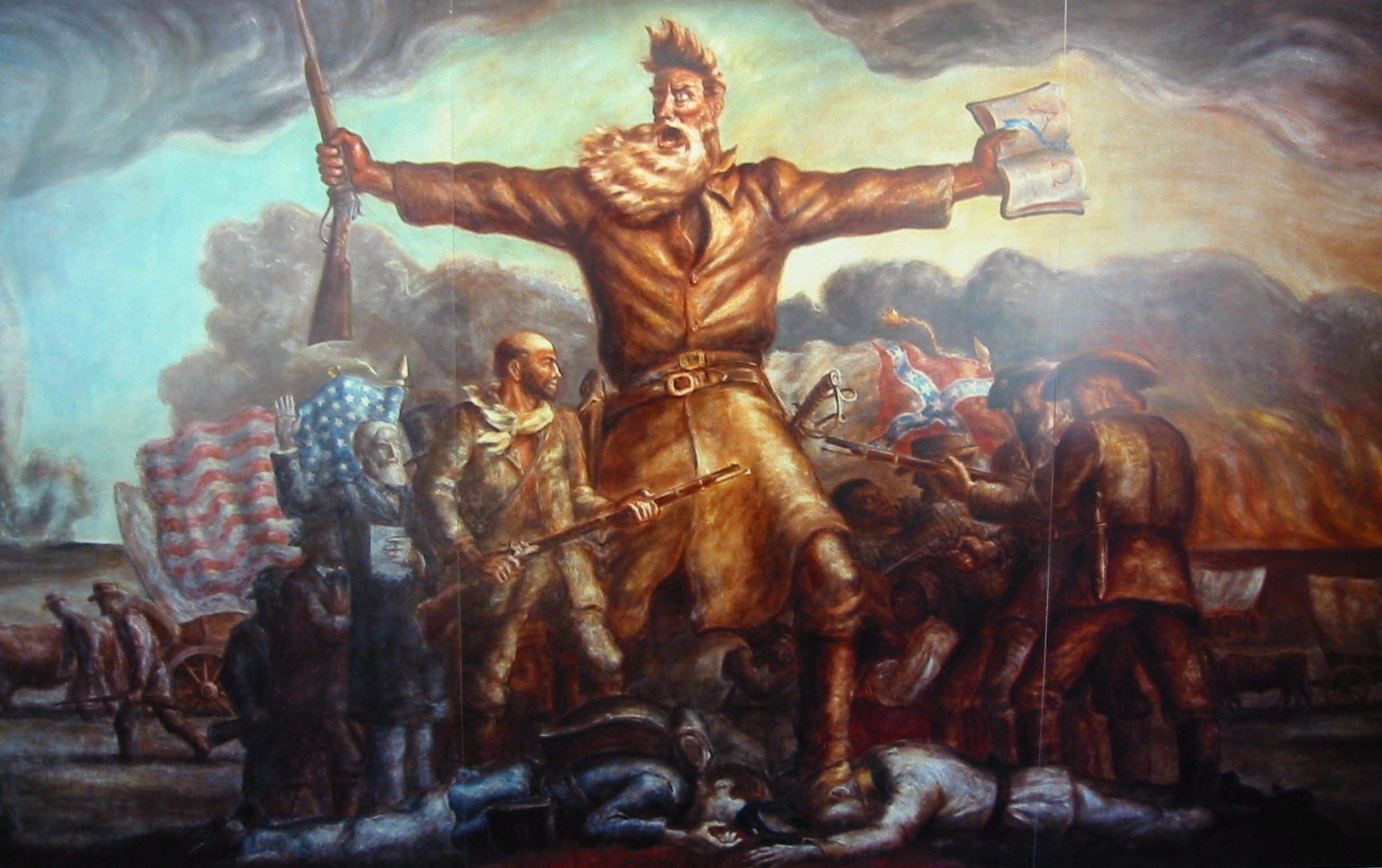
Emancipation and democracy have been extremely costly to achieve within the scope of capitalism. The Civil War and Reconstruction shed the blood of millions in the course of a great struggle over the abolition of chattel slavery—which was then a legally recognized form of property!—and in the arduous construction of a multiracial democratic Union.
Liberal imperialism has always been an enemy of liberty. From the 1870s to the 1930s, rent-a-cops, the boys in blue, and the troops shot down crowds of the poor striking and rallying for freedom of speech, freedom of association, and the right to collectively bargain.
Industrial capitalism and free enterprising imperialist expansion subjected millions to the authority of robber barons and government bureaucrats, then slaughtered them in droves wherever they resisted. In 1915, the U.S. Army even invaded and occupied the nation founded by the first successful revolution of the enslaved in history, Haiti.
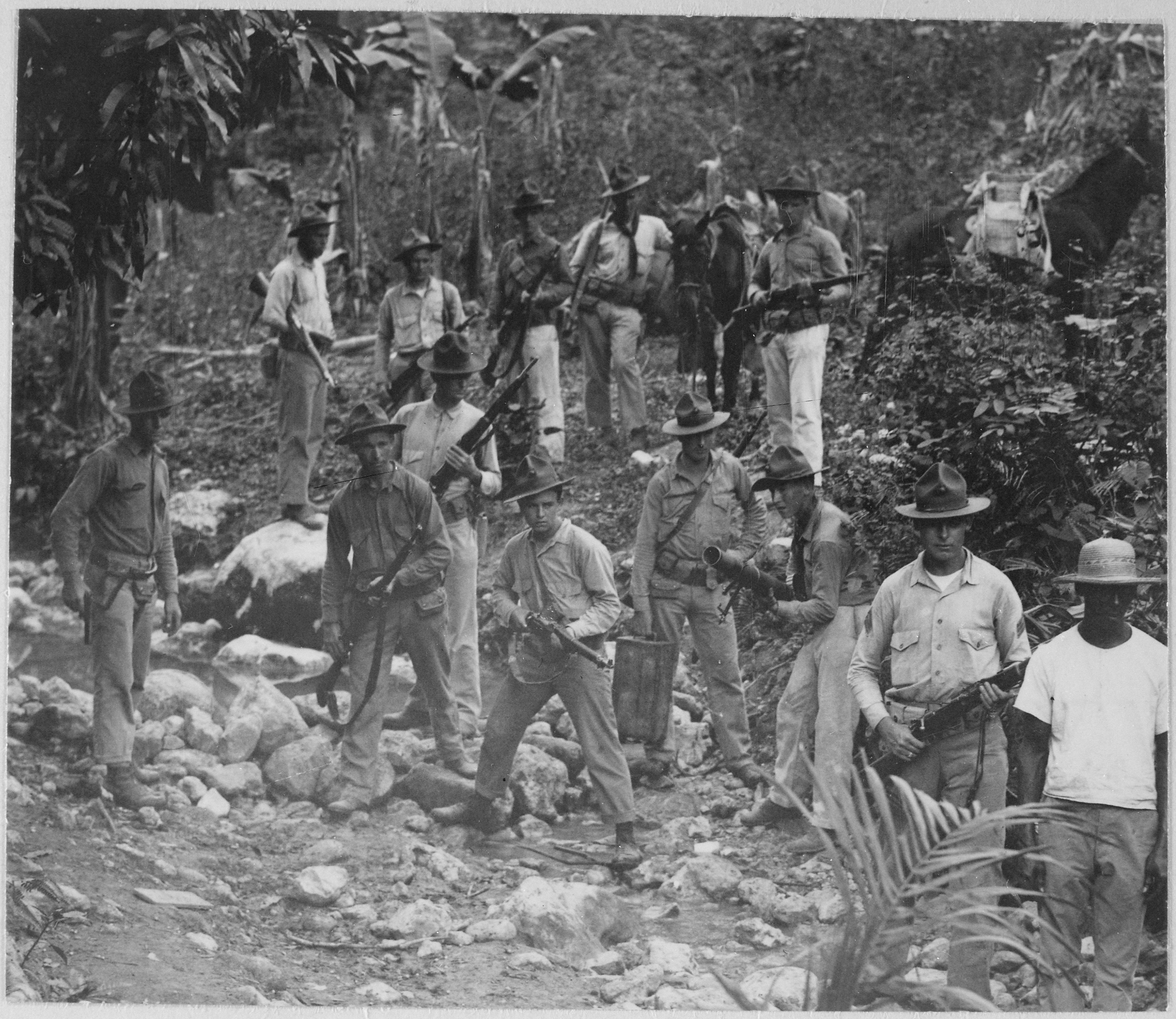
It turns out that not everyone was supposed to have the “common sense” of patriotism!
Bureaucrats and the rich criminalized “the pursuit of happiness” for the working class!
The full employment welfare state of the New Deal was only achieved after the Great Depression had nearly brought the country to the point of a popular social revolution.
The anti-fascist efforts of the Allies in World War II drafted, starved, displaced, imprisoned, mutilated, and killed millions.
The Civil Rights struggle nearly reached the point of a bloody new Civil War in the South just to achieve its most basic liberal demands of freedom of association and equality before the law.
The rise of neoliberalism took access to quality assurance, free time, and welfare away from millions of people just to free up lots of money to make the most power-hungry people the richest.
Jeffrey Epstein and his circle were devotees of greed and exploitation. They were also staunch liberals.
Every element of liberal democracy that we are accustomed to taking for granted as a law of nature, whether we find it good or bad, is the product of a long and violent historical struggle.
Argument II.B.a.ib. Problems of anti-communism II.: Taking your things away
The second problem with the anti-communist case is that a lack of security or property is already a reality for most people living under modern day (neo)liberalism.
The prosperity of the post-WWII United States, with the promise of full employment and a welfare state made by the New Deal, is long dead, reduced to a vague dream. The halcyon days (for some) of early neoliberalism have faded away into nostalgic memories.
How many of us work awful low-wage jobs, spend most of our paycheck on groceries, and live on top of each other like sardines in overpriced apartments?
How many more are constantly worried in our day-to-day, paycheck-to-paycheck lives about unemployment, debt, and homelessness? Will you own nothing and be happy anyways?
The suburban middle class might become upset about our decommodifying housing, urban planning for everyone’s needs, and prioritization of public transportation, but it’s not as if we’re going to come in and take your toothbrushes.
How bad could it be? You won’t have to worry about mortgages anymore once we seize the banks, you’ll have some new neighbors in public housing cooperatives, and you’ll be freed up from the time you waste on commuting by the construction of high speed rail networks in place of the dangerous highways. If you’re worried about construction time, think of how much noise and disruption real estate construction projects make today for the sake of moneymaking instead of wellbeing. Or even just what for-profit data centers do to your energy bills.
If you’re afraid of living side by side with the working class, consider whether it would be worse if it was under conditions in which they are happy and well fed rather than today when they are miserable and driven into theft and crime by it. With a mature system of social assistance, no one of any background would have to waste their lives worrying about saving for their own retirement, either.
Still suspicious that we want to take your stuff? Today, even “luxury” consumer goods are now being locked behind high prices and subscription systems—fast food chains charge many times more for a meal than what they pay their employees in an hour, PlayStation has shifted from selling ownership of physical games to a subscription system where players own nothing, and data centers are driving up the price of memory chips.
The misery, pain, and deprivation that we are supposed to fear from social revolution is already here as an everyday reality in the world of “business as usual.”
Argument II.B.a.ic. Problems of anti-communism IV.: The tanks roll in
The third problem with the anti-communist argument is that it expects us to ignore the pervasive violence of capitalist society.
We live in a class society where command over the wealth of nature and the value of everyone’s work to produce useful things is consolidated under the hands of a few and used for the benefit of the 1% at the expense of everyone else.
The entire civilization has been built on genocide and slavery, from 1492 to today.
The passage of time alone hasn’t changed that much about it—the elites resort back to both all the time when things get out of hand for everyone else, like in Libya in 2011 or Gaza today.
Any objection made against the resistance and violence that leaders like Karl Marx, Vladimir Lenin, and Mao Zedong carried out against their enemies can also be made of the Patriots and Founding Fathers.
Thomas Paine was the Karl Marx of the American Revolution, the intellectual and organizer who fanned the flames of discontent.
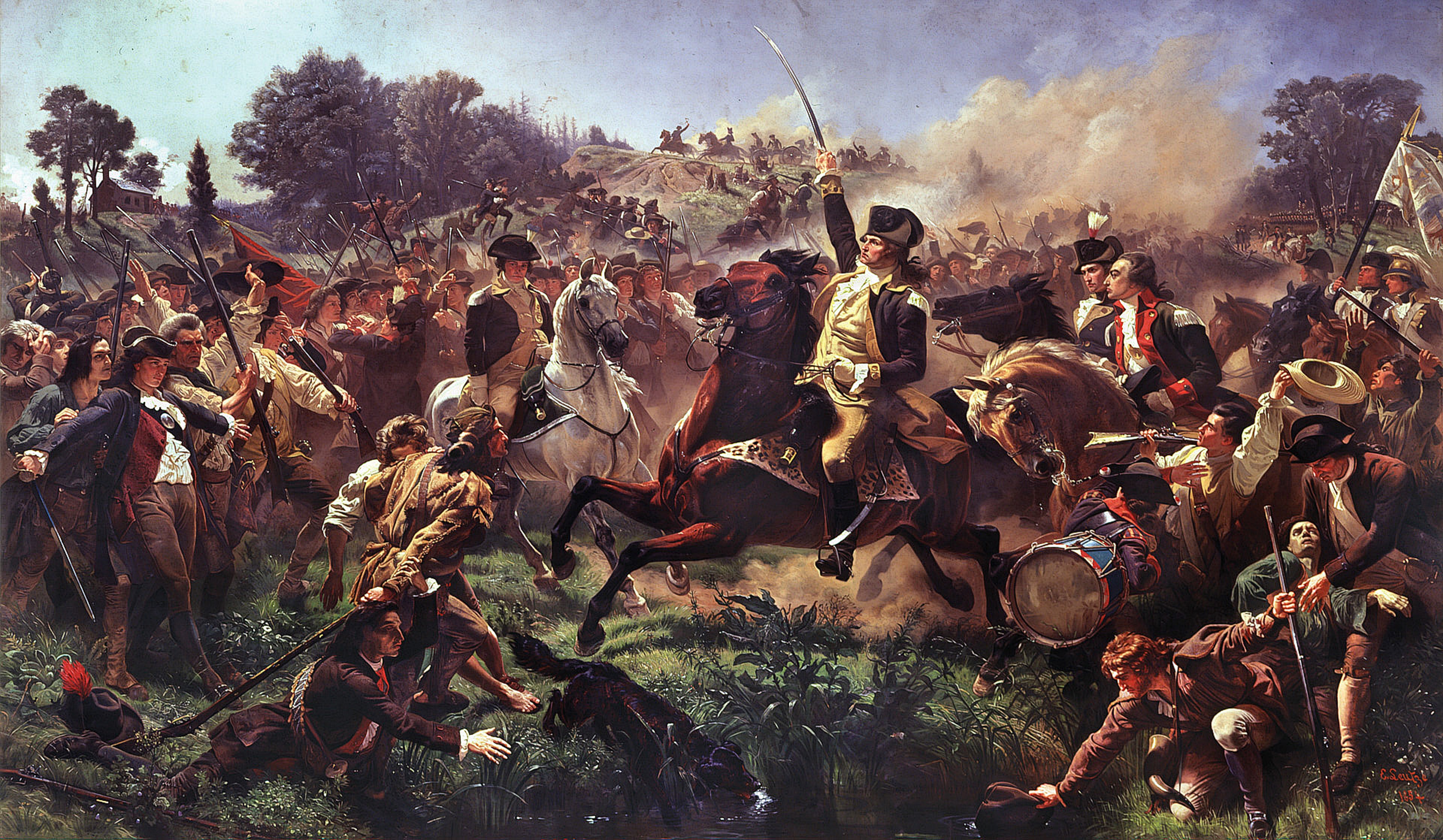
George Washington was the Lenin, a man who converted its struggle into a new type of state.
Thomas Jefferson was our Mao Zedong, a populist who sought to unleash society against the bureaucratic state machinery and the enemies of the Revolution.
All three of them advocated on behalf of the invasion of the lands of other peoples.
Had tanks existed in their day, Washington and Jefferson would’ve been rolling them into the front lines of the Appalachians and the Great Plains. They would have made an amphibian invasion of the shores of Haiti in the name of restoring the slave power.
Argument II.B.a.id. Problems of anti-communism V.: Totalitarian dystopia
The fourth problem with the anti-communist case is that it requires us to close our eyes, ignore our own daily reality, and repeat the Party Line on the evils of communism.
Remember how communism is supposed to make us think of bread lines?
If you’ve ever had to wait in line for hours to buy cheap clothes, stop by a food bank for groceries, or get a meal at a soup kitchen, you’ve waited in our very own monopoly capitalist bread lines.
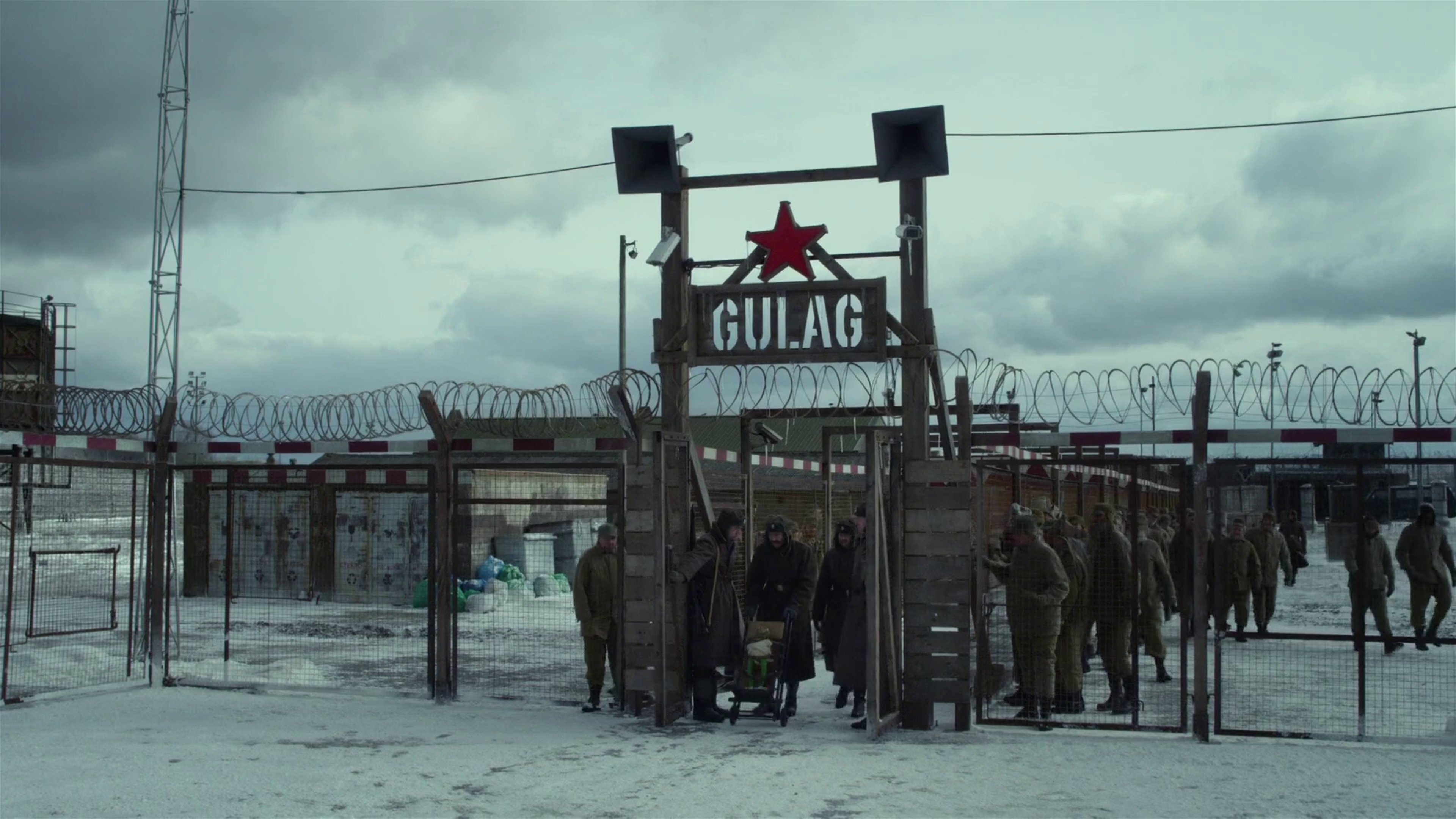
This capitalist totalitarianism even comes with its own informant network, police state, and gulags. Neighbors call cops on neighbors over petty disputes without a second thought, who then assault or even kill them in cold blood, and then the cowardly tattletales simply push their feelings of guilt deep down inside.
The U.S. spends approximately $400 billion of its GDP on maintaining a highly militarized police force, and our prison system hosts the biggest prison population in the world at 2 million people—that’s 25% of the world’s total prison system, in spite of the fact that the U.S. makes up just 2% of the world population.[17] Trump, for his part, has begun working to export much of this prison population to be held in pens with the most ruthless gangs in the world and tortured for profit under Nayib Bukele, caudillo of El Salvador.
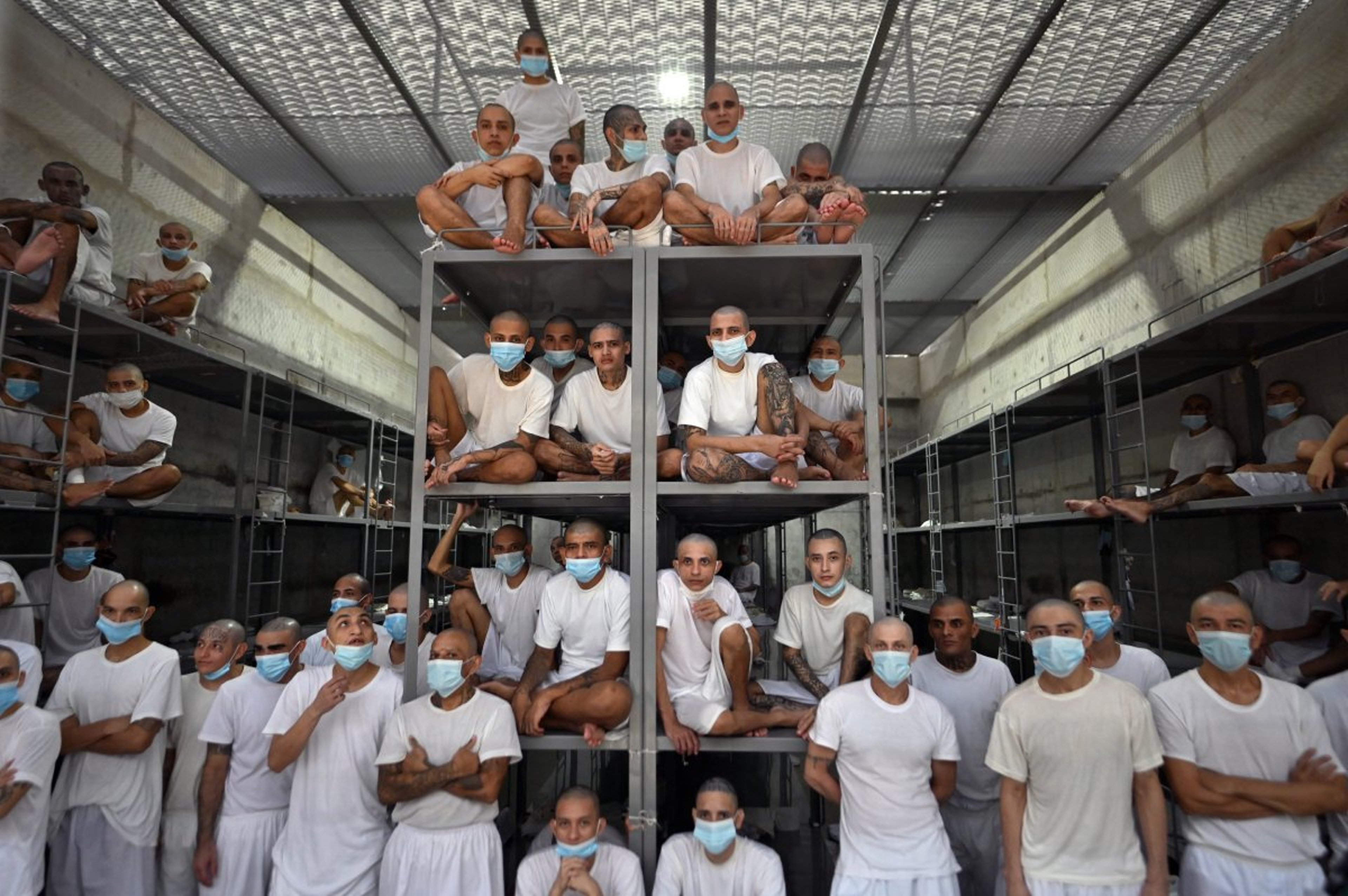
The wealthy and powerful already view us as disposable human capital. We are all at risk of being scrapped from society if we are unlucky enough to find ourselves living as undesirables without jobs or money.
Even the endemic corruption that we are told plagues Communist societies is not at all unique to them.
How much of the distribution of wealth, jobs, and status in our bureaucratic-managerial corporate society is accomplished through a network of favors?
The anti-communist arguments that point to the inefficiency, waste, and parasitism of bureaucracy are perfectly true, but they are inconsistently applied—some of the greatest examples of it are provided to us by the contract system of the “private sector” itself.
We are taught to despise welfare recipients as entitled lazybones while aspiring to the luxury offered by such important and productive jobs as “communications specialist” or “marketing consultant.”

I don’t mean to direct my ironic disdain at everyone with a cushy email job—why wouldn’t you take it if you had the opportunity? The point is that if you want to have a better life, our society is more interested in incentivizing you into pursuing nonsense advertising careers than in working to ameliorate the society’s most pressing concerns.
The best and brightest students sacrifice their youth to the Ivy League rat race only to then take on gigantic sums of debt, focus their education on completing their degree and networking, learn the minimum to pass and do nothing to change the world, and then commit to more lucrative careers like banking or consulting in order to pay off their debt and someday retire wealthy.
Those professionals who protest in defiance of the special interests that the universities receive generous sums of money from are harassed, expelled, imprisoned, or deported, while those who keep their heads down must also learn to proudly display their loyalty to the United States and Israel alike to get ahead in life.
Even after making it through all of those trials, many of you professionals have been thrown out of your jobs by the cuts made by the Department of Government Efficiency (DOGE) and the pressure to automate with Artificial Intelligence (AI).
Meanwhile, your former bosses are encouraged to gorge themselves off of society. They no longer bother to offer professionals a basket of good jobs in return for cooperating with their vampiric drive for wealth at any cost. They are planning society in the wasteful worship of a hidden god.

It should be liberating if your pointless job becomes superfluous to society and you are freed up to do something better.
In our society, where the availability of work is dictated by the interests of money-making, redundancy signs you up for austerity and humiliation.
If the government and businesses get rid of too many of these jobs, which are an absolute burden on the caretaking and productive parts of society, their own system will start to break down into a war of all against all.
Corporate society is a great, bloated bureaucracy of people who have to pretend to be busy all day, working by controlling their inferiors, holding leverage over their peers, and doing favors to those more powerful than them.
Corporate bureaucracies do all of this while mostly existing to move money, products, consumers, and numbers around according to a plan for accumulating capital for the infinite development of the system.
This great conglomeration of office drones, talking heads, consultants, bankers, and corporate managers are all fused into the unanimous We of the corporation. A corporation would like the world to think that it has freely united all into a single mind and freed them from the world of suffering by setting them into the joyful work of a single body to serve the consuming classes.
The corporation is an inefficient and wasteful parasite that throws resources, labor, space, and time away to offices, parking garages, billboards, commuter traffic, spam, data harvesting, and algorithmic manipulation. Everything that the mainstream media represents to us as twentieth century Communism, corporations practice in reality.
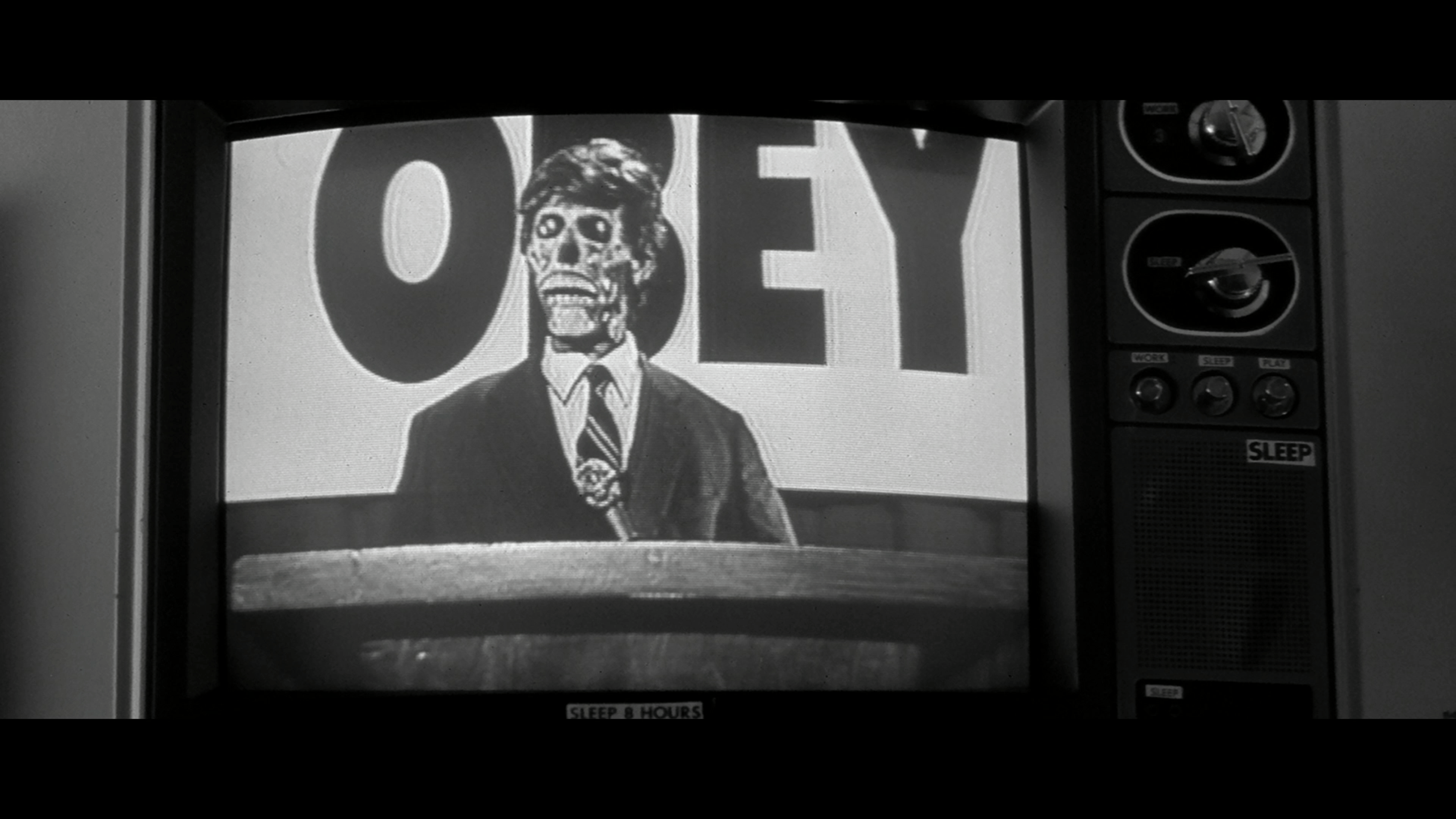
How many corporations are the beneficiaries of corporate welfare?
How many small businesses are, in reality, completely at the mercy of the impersonal dictates made by giant banks?
How much of our economy is already planned by private boardrooms?
How much of society’s labor is wasted in the work of maintaining the system, with its “carrot” of bread and circuses and “stick” of micro-managers and police?
How much of the consumer economy depends on wasteful ventures, nonsense jobs, consumer debt, and unaccountable bureaucrats outright gambling with people’s money?
Section II.B.b. Communist experiments
The freedom of choice offered to us by liberalism turns out to just mean freedom to live for work under a privatized totalitarian system. Any dissent that threatens corporate interests is shut out or even silenced.
This “freedom” is almost the opposite of substantial freedom, the ability to actually exercise our freedoms. A free life could only be secured if we were all free from want, precarity, and fear.
Given all of these agonies of modern society, why shouldn’t we who seek freedom try for something else?
This problem of modern freedom brings us to the kernel of truth in the connotation of “communism” as a faction. We can best understand “communism” if we think of it as a social movement, a shared historical experience, a collective aspiration for universal emancipation.
Some people might take offense to such a claim—wasn’t Communism just the totalitarian twin of fascism, both claiming the lives of millions in the twentieth century?
This propagandistic narrative makes a false equivalency between a movement that conquered and slaughtered millions for the sake of a few and a movement that killed many in pursuit of a better life for everyone. If it came down to it, I’m not certain how well American liberalism would fare on the scales of justice if weighed against Communism.
Even in its most brutal moments, capital-C Communism was never a movement motivated by blind sadism. How would a dictatorship that offered nothing good to anyone even gain and maintain power?
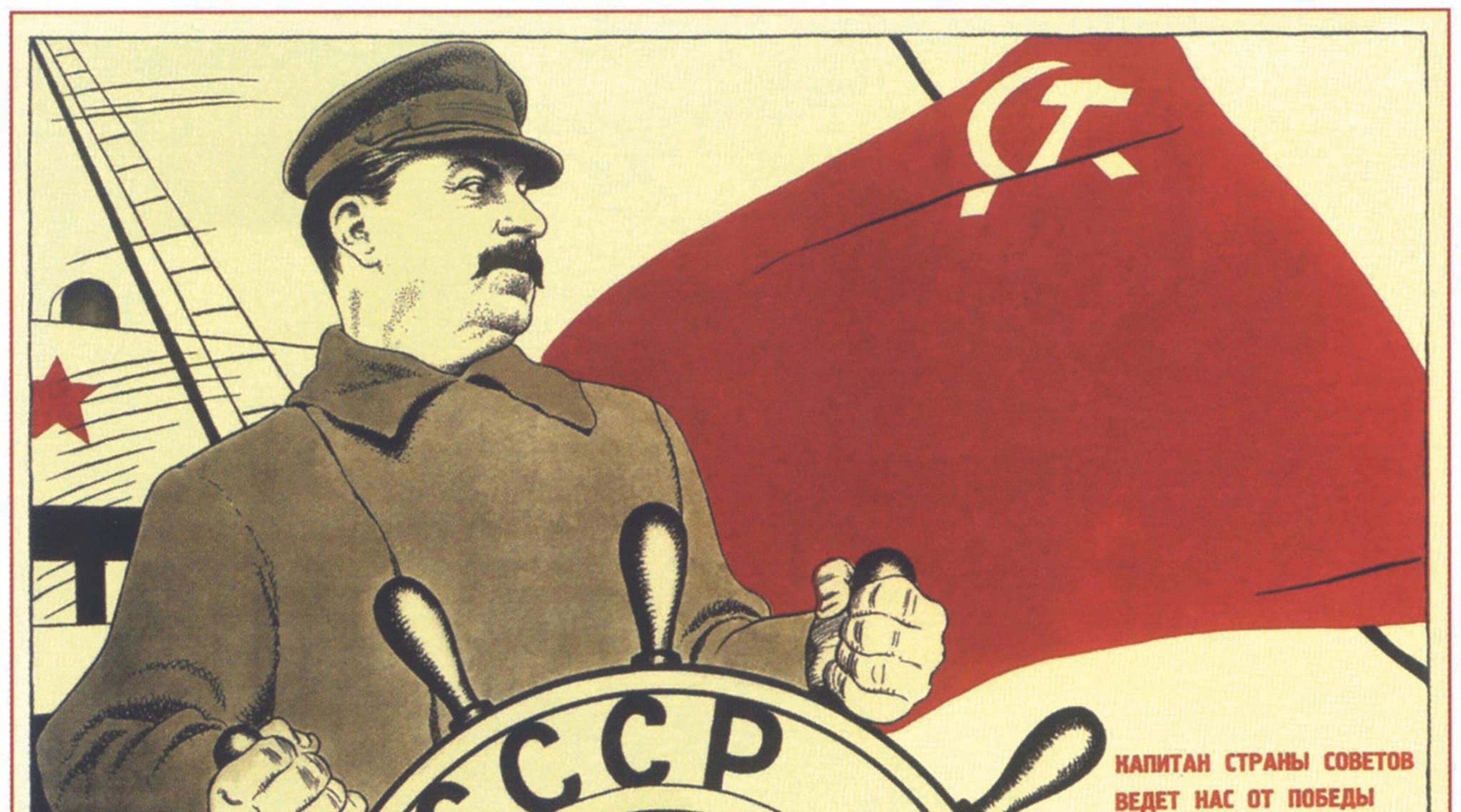
Saying such a thing may sound extreme to you. Yet it is a matter of historical fact that the majority of Communists justified even their worst actions not as good in themselves, but as necessary measures to achieve a society where everyone could live well and enjoy true freedom.
During the height of Soviet collectivization in 1930, Vychaselav Molotov, one of Joseph Stalin’s close allies, delivered a speech justifying the actions of the Communist Party of the Soviet Union as securing a good life for all: ”Life has improved, and now as never before the doors to a happy and cultured life for all the peoples of our Union stand wide open.”[18]
Even Nikolai Bukharin, a Communist facing unjust humiliation, torture, and execution by his fellow Communists and the Soviet police state during the Great Purges, still used some of his last words to say this: “What matters is not the personal feelings of a repentant enemy, but the flourishing progress of the U.S.S.R. and its international importance.”[19]
Bukharin’s rationale for accepting his fate wasn’t entirely unfounded—by the second half of the twentieth century, most Communist-led countries had achieved large-scale industrialization, needs-based urban planning, widespread literacy and education, socialized medicine and childcare, and easy access to basic necessities for all.[20]
These achievements marked a major victory for personal freedom as well—they freed millions of women who had formerly been controlled by their families and burdened by childcare to pursue satisfaction in their own lives.[21]
Does that sound worse than owning nothing, being left behind, and being disappeared from society in the free market system?
Even the cruel exploitation of Gulags and other labor camps was officially directed not to inflict a life of punishment, but achieve redemption through labor. There were more illegal abuses (as opposed to the legal ones) in the Gulag system the further each prison was from the overseeing power of Moscow.
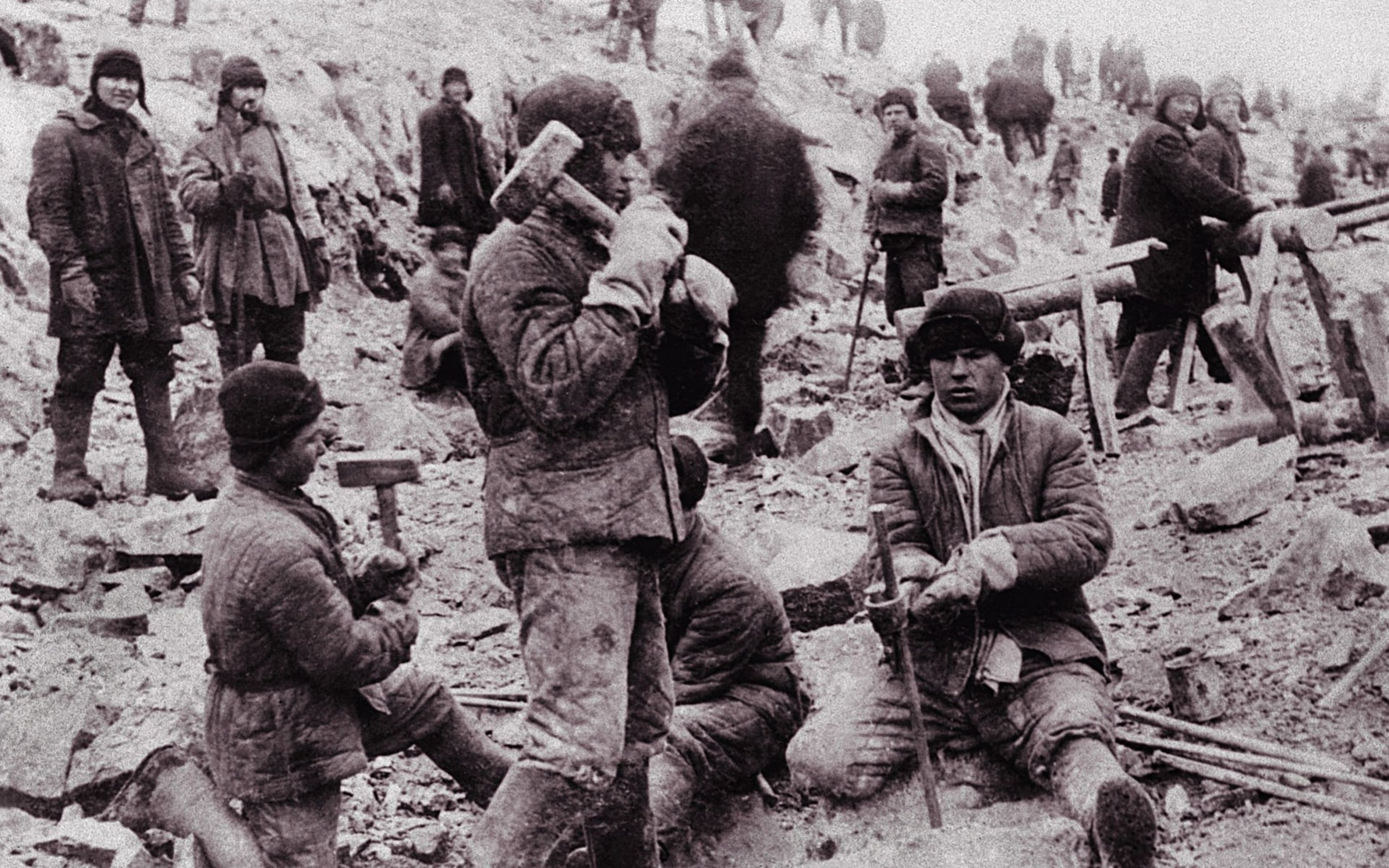
Does our own prison system in the U.S. even bother with Ideologically justifying itself as bettering its prisoners?
Or, does the police state and its chorus of sycophants just insist that criminals deserve punishment, and that they owe it to us to suffer?
Capitalists were so afraid of any attempts at a communist society that they made a habit out of organizing pre-emptive sanctions, coups, and wars against revolutions.
In Indonesia alone, Central Intelligence Agency (CIA)-backed anti-communist reactionaries killed somewhere from hundreds of thousands to millions of Communists from 1965-1966.[22]
The Federal Bureau of Investigation (FBI) organized its own domestic persecution campaign against communists and Civil Rights activists in the U.S. with programs like Counter Intelligence Operation (COINTELPRO), which systematically and illegally surveilled, infiltrated, discredited, disrupted, and even killed leftist organizers all over the country, all to prevent a popular revolution in America.[23]
The Communists of the Soviet Union, China, Korea, Vietnam, Laos, Cuba, Yugoslavia, and Albania all managed to consolidate power and keep it for an extended period because they established public control over all major industries and mastered the military mobilization of society.
My problem with the Communists is not that they were wild fanatics, but that they were far too reasonable. In fact, they saw reason in all of history. Their civic religion, Dialectical Materialism, was a doctrine of progress that many liberals could get on board with.
Communists put all of their faith in both the efficiency of large-scale industry and the rationality of historical progression over time to do away with their isolated poverty through cooperation, control their economy by controlling their currency, meet their needs by fulfilling their plans, and therefore solve the basic problems of their survival in the long run. Of course, as you know, that didn’t exactly work out for them as planned.
Capital-C Communists, pursuing the miracles of industrial technology in mobilizing people in the millions, soon learned that technocratic efficiency and maximum production served to reinforce the worst of the conformist aspects of society—rights turned into obligations, duty turned into overwork, ethics turned into boredom, friendship turned into corruption.
Amidst siege conditions, their military defenses grew to eat up much of the people’s resources while keeping the rest of society disciplined in the toil of public service. They identified nationalization, meaning making wealth and workforces the property of the state, with socialization, as in putting wealth and work under the participatory control of each and everyone.
Some Communist reformers hoped that the two sides could be merged into one by providing for and encouraging grassroots democratic participation, but the possibilities allowed by the law within a party-state structure remained limited.
There was not a wide variety of options for the reformists and the peaceful extension of grassroots power. Anyone who sought a broader freedom in that system had to push its technocratic rules to their limits, whether in the name of the working class and society or in support of capitalist consumerism.
Capital-C Communism ceased to be a powerful force for communism, understood in the sense of a voluntary mutualistic association, and its attempts to manage capital in the name of the people decayed and finally fell into the more lucrative prospect of public austerity and capitalist privatization. The Soviet Union and the other Communist countries that dissolved at the end of the Cold War fell in a bloodsoaked entrepreneurial Wild Hunt.
Many of their own leaders sold them out to their neoliberal enemies, taking on the role once played by our very own General Benedict Arnold.
What else can we call the actions of a Communist-turned-oligarch like Boris Yeltsin or Mikhail Khodorkovsky but treasonous collaboration for their own fun and profit?
Why is it that we are only taught to despise the Soviet tanks that rolled into Budapest to end the 1956 experiment in Hungarian democracy, but not the bombs that U.S.-backed Russian President Boris Yeltsin launched at Russia’s Parliament to destroy the democratic opposition to his neoliberal experiment in 1993?