
May 1
What Constitutes the Communist Party?: CPUSA, May Day, and the Communist Plus
On the CPUSA's "Communist Plus," the No Kings demonstrations, and how a politics meant to overcome economism keeps reproducing it.
You know who told me the best story? The British Marxist, Terry Eagleton. He told me that 20 or 30 years ago he saw a big British Marxist figure, Eric Hobsbawm, the historian, giving a talk to ordinary workers in a factory. Hobsbawm wanted to appear popular, not elitist, so he started by saying to the workers, “listen, I’m not here to teach you. I am here to exchange experiences. I will probably learn more from you than you will from me.” Then he got the answer of a lifetime. One ordinary worker interrupted him and said, “fuck off! You are privileged to study, to know. You are here to teach us! Yes, we should learn from you! Don’t give us this bullshit, ‘We all know the same.’ You are elite in the sense that you were privileged to learn and to know a lot. So of course we should learn from you. Don’t play this false egalitarianism.
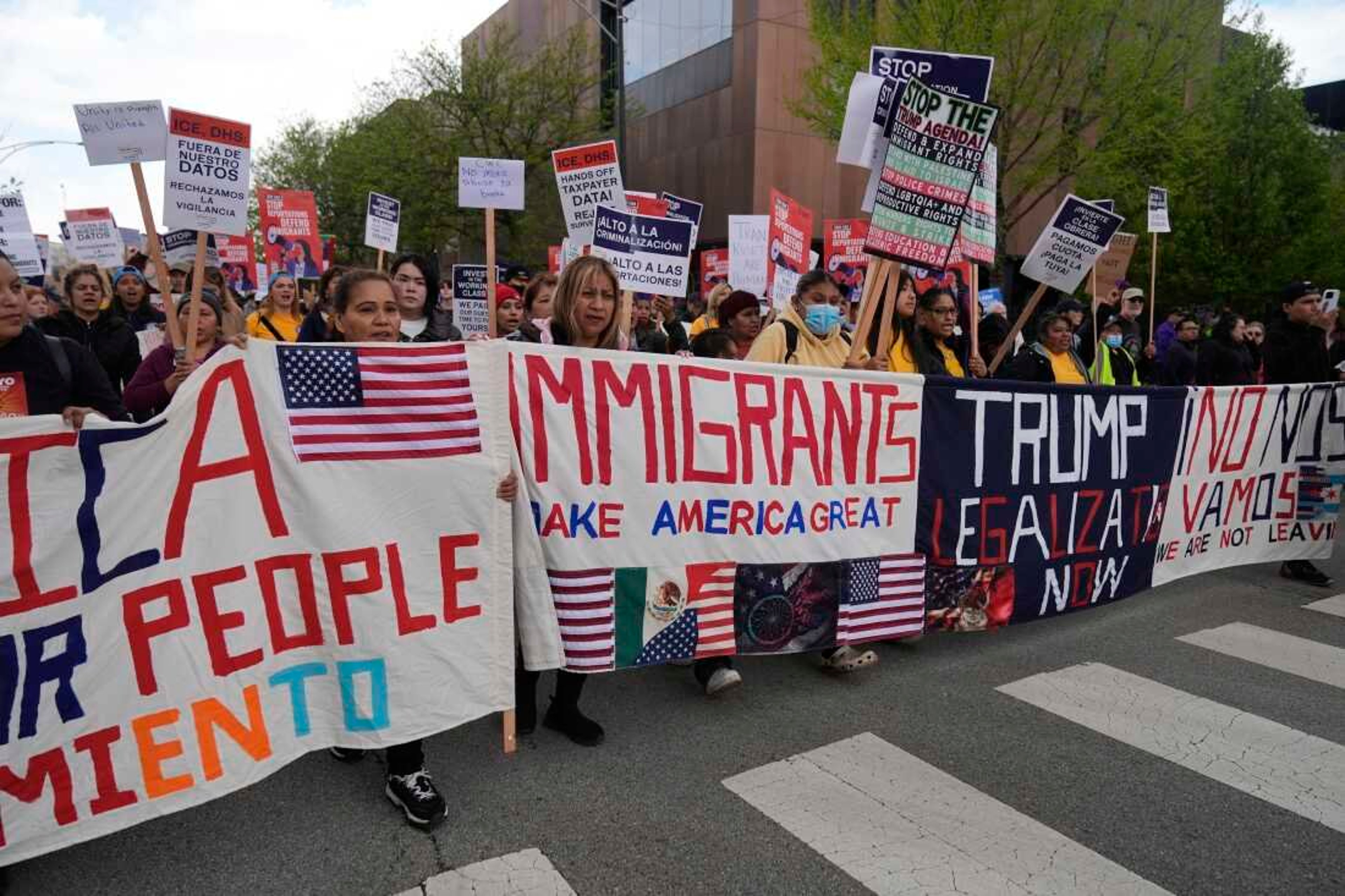
If the defining feature of the present moment is the emergence of a mass democratic movement without a coherent political form, then the central danger lies in how that absence of form is being interpreted on the left. There has been an upsurge in debate among communists in attempt to make sense of their own position in relation to the sweeping ‘No Kings’ demonstrations that have dominated popular discourse in recent weeks. Do we engage the No Kings movement? Are they captured by liberal leadership? Do the communists have any investment in this struggle?
In response to such developments, the contemporary left seems to have encountered a fork in the road. The predominant response has, unfortunately, been that of abstentionist rejection and dismissal of mass energy surrounding these demonstrations. This sort of abstentionism seems to elaborate upon one of (if not both of) two lines; the first is that they insist that the mass demonstrations are decentralized and unfocused, incapable of rising to the level of a power that can seize the state. The second follows along the lines that the membership of No Kings has been thoroughly co-opted by the liberals and is incapable of retrieval. Both lines begin with correct assessments of the situation, and both arrive at rather disastrous conclusions regarding how to respond to it. This is a position of inevitable marginality: a total failure to penetrate into the real social life of the millions, which self-indulgence and a stubborn refusal to engage make impossible the development of a serious revolutionary organization.
However, a consensus is growing against this sort of ineffectual narcissism—perhaps most predominantly in the DSA—which finds itself constantly enveloped in questions of engagement with the mass movement. This might be because DSA’s electoral work forces them to engage in questions about the status of their organizational relationship (or lack thereof) with its electeds.
Another organization attempting to develop an answer to this question from an anti-abstentionist perspective is the Communist Party USA (CPUSA), which, despite having a vastly smaller scope of electoral participation than the DSA, also finds itself consistently engaged in discourse surrounding the mass movements. It was the prevalence of this discourse during our own time in the CPUSA, otherwise significantly lacking in American communist formations, that kept us engaged more than most else. To us, it is precisely this contradiction that defines the CPUSA: between its own commitment to mass politics crafted painstakingly over a century of political practice, and the structural pressures of left-marginality, to reject mass political practice in favor of inward-looking, circular activism. These pressures are compounded by the growing ultra-left tendencies within the Party’s youth wing (The Young Communist League, of which we are also former members), coupled with the failure of Party leadership to effectively articulate their orientation towards the masses into an effective and moving politics. What is left is an unfortunate mish-mash of the senior executive membership’s unequivocal emphasis on the importance of rigorous engagement with the mass movement, coupled with a general lack of ability to achieve it. This practically forces leadership to devote increasing energy, and slowly lose ground, to this ultra-left youth wing, whose position is now the unfortunate default among most contemporary left formations, even outside of the CPUSA.
The mass political orientation struggling to be expounded can be clearly identified in the CPUSA’s recent statement on “No Kings” III, which focused on critiquing the ultra-left tendency to dismiss the protests. The party correctly argued that, in doing so, this abstentionist milieu was ceding ground to the very same liberal leadership it claims to be in tension with. Rather, the article proposes, the communist must bring communism to the masses. To make this argument, the party references its ideological concept of the “Communist Plus”: a model of left engagement from the CPUSA’s historical leaders, now revived by current party co-chair Joe Sims, that argues that the Communist Party must bring communist critique into all fields of struggle.
Today, on May Day, as the CPUSA and other left organizations hit the streets in pursuit of clarity as to their place within the ongoing mass demonstrations, further examination is in order. In Joe Sims’ original essay on the matter, he invokes Lenin’s ‘What is to be Done?’ He writes:
“Trade union activity, [Lenin] argues, left to itself, will lead only to trade union consciousness, a narrow focus on wages, and benefits absent broader political struggles. This is one form of what’s called ‘economism’…hence, the communist plus demands of us a general critique of the capitalist system in everything we do: in organizing, in writing, in creating. It demands that we look under the hood, deeper into the inner workings of monopoly capitalism and point out as we go the systemic causes of the hardships people endure. This allows a discovery of points of unity, a way of connecting reforms, seeing their interrelations thereby both deepening and broadening the struggle.”
In other words, the Communist Party cannot stop merely at participation in the mass struggle. It must, additionally, move beyond “economism” and make a political argument. What does this look like in practice? What is the content of the communist critique? Sims clarifies:
“Taxing the rich, breaking up the big monopolies, fighting racism, sexism, and homophobia. Add to that boycotting Target and other corporations that have backed away from equal opportunity. And let’s not forget cutting the military budget and ending the forever wars in the Middle East. U.S. imperialism must be defeated!"
The CPUSA, in search of answers to the burning questions of our time, does so with respectable effort, especially in relation to the outright dismissal of its ultra-left peers. However, it should be noted that in understanding the ‘communist plus’ as equal to a program of taxing the rich, boycotting corporations, and perhaps most vitally ‘showing up’, they have, in effect, ceded the ability to imprint a unique political stamp on present events and have succumbed to the very ‘economism’ they are attempting to extinguish. Having stepped in front of the abstentionists proudly, there is difficulty in figuring out where to place the other foot.
When charting his critique of communist engagement in mass struggle, Lenin was well aware that abstentionism, as clearly foolish as it was, was not the only potential error that revolutionaries could fall into. On the other side of the same coin is the desire to dismiss these struggles as merely economic. The attitude that understands these movements purely in their most immediate and ‘accessible’ elements–its economic grievances, its diffuse anti-elite sentiment–while its political character is downplayed or, in most cases, completely ignored. The argument that follows is that one must not “impose” broader political content onto the movement, but instead confine oneself to articulating demands that promise “palpable results.”
A further understanding of this inadequacy can perhaps be provided by Lenin’s critique of economism in ‘What Is To Be Done?’, the very text cited as the primary influence for the ‘Communist Plus’. Lenin writes on communist engagement with the movements of his own time:
These attempts manifested themselves in a twofold direction. Some began to say that the working masses themselves have not yet advanced the broad and militant political tasks which the revolutionaries are attempting to ‘impose’ on them; that they must continue to struggle for immediate political demands, to conduct ‘the economic struggle against the employers and the government’ (and, naturally, corresponding to this struggle which is “accessible” to the mass movement there must be an organisation that will be ‘accessible’ to the most untrained youth). Others, far removed from any theory of ‘gradualness’, said that it is possible and necessary to ‘bring about a political revolution’, but that this does not require building a strong organisation of revolutionaries to train the proletariat in steadfast and stubborn struggle. All we need do is to snatch up our old friend, the ‘accessible’ cudgel. To drop metaphor, it means that we must organise a general strike or that we must stimulate the ‘spiritless’ progress of the working-class movement by means of ‘excitative terror’. Both these trends, the opportunists and the ‘revolutionists’, bow to the prevailing amateurism; neither believes that it can be eliminated, neither understands our primary and imperative practical task to establish an organisation of revolutionaries capable of lending energy, stability, and continuity to the political struggle. [my emphasis]
The contemporary left’s responses to the No Kings movement reproduce precisely this subservience to mass spontaneity Lenin describes, but in two seemingly opposed forms that ultimately converge on the basis of economism rather than split on it.
The “revolutionist” tendency that Lenin describes is, of course, equivalent to the aforementioned and defined “abstentionist” position and is worthy of rebuttal. This tendency dismisses the movement altogether as liberal spectacle—incoherent, compromised, structurally incapable of producing meaningful change. In its opposition to spontaneity, however, this tendency fails to understand that this ultimately reproduces the very substance it seeks to critique. In treating the movement’s current lack of coherence as definitive, rather than as a historically contingent product of a lack of a revolutionary organization, it absolves itself of responsibility and subsequently leaves spontaneous elements to the same liberal leadership it complains of co-opting the movement.
The truth is that the liberal character of such movements is not an intrinsic necessity; it’s the result of a political vacuum. Where no organized socialist force exists to articulate and lead, liberalism will occupy that space by default. To abstain on the basis of this outcome is to mistake effect for cause—and to ensure its repetition. What appears as radical ‘clarity’ is, in practice, a passive acceptance of the existing balance of forces.
The CPUSA admirably avoids this type of pseudo-revolutionary detachment. In turn, they fall into the issue that Lenin terms “opportunism” not simply as a polemical insult, but rather as an attempt to diagnose an objective error. The issue here lies in the lack of recognition that mere sympathetic reinforcement of the mass movements' existing demands, in fact, constitutes a profound belittlement of the movement’s political character. For this attitude, a ‘success’ of the communist intervention in the No Kings movement would be a redirection of that ‘spontaneous’ energy towards the party’s pet programs, which are largely also spontaneous and ‘accessible’ movements. The CPUSA seeks to mobilize the No Kings protesters’ political potential by boycotting Target, for example. What is presented here as a neutral reading or as an encouragement of the movement’s capabilities is, in reality, only a reproduction of activism. It is a narrowing of the movement’s scope, a reduction of what is already a political struggle into something merely economic.
The No Kings protests are not simply expressions of economic dissatisfaction; they are grievances directed against the state apparatus itself, against the legitimacy of the existing undemocratic institutions. Their incoherence does not consist in an absence of politics, but in a failure for a political organism to adequately link itself to that social movement’s real demands and political aspirations. That may not only be due to a lack of size in that organization, but also due to a lack of ability to truly express that social movement’s worldview. To treat the spontaneous movements as pre-political in this sense is to misrecognize their most important feature.
Lenin anticipates in ‘What is to be Done’ not only the ultra-left dismissal of the mass movements but also this right-liquidationist error with resonance and clarity, he states,
The ‘activity’ you want to stimulate among us workers, by advancing concrete demands that promise palpable results, we are already displaying and in our everyday, limited trade union work we put forward these concrete demands, very often without any assistance whatever from the intellectuals. But such activity is not enough for us; we are not children to be fed on the thin gruel of ‘economic’ politics alone; we want to know everything that others know, we want to learn the details of all aspects of political life and to take part actively in every single political event. In order that we may do this, the intellectuals must talk to us less of what we already know and tell us more about what we do not yet know and what we can never learn from our factory and ‘economic’ experience, namely, political knowledge… Devote more zeal to carrying out this duty and talk less about ‘raising the activity of the working masses’. We are far more active than you think… It is not for you to ‘raise’ our activity, because activity is precisely the thing you yourselves lack.
The parallel here is striking. The masses in motion do not require encouragement or, perhaps even worse, merely ‘showing up’ under the pretense that there is a necessity to reinforce their existing immediate demands; they are already adequately doing so. What they lack is not activity, but the political and organizational form that would allow that activity to transcend its immediacy. To respond by narrowing the scope to what is already present is not as innocent as ‘meeting the movement where it’s at’, but to hold it there—to convert its limits into a principle and universalize that principle. This is not merely a strategic error; it is a form of political condescension, one that ultimately underestimates the capacities of the movement while simultaneously outsourcing responsibility for its growth solely to its ultra-left counterpart. These two positions—tailist reduction and abstentionist dismissal—are not opposites but complements that share space on the spectrum of economism. Both accept the limits of the movement as given. Both refuse the task of transforming those limits. Both, in different ways, leave the field open to liberal capture.
Lenin’s intervention cuts through the presented yet false choice. The problem is neither that the movement is insufficiently radical nor that it is insufficiently practical. The problem is that there does not yet exist an organization capable of mediating between its spontaneous energies and a coherent political project. The task, therefore, is not to adapt to spontaneity or to reject it, but to overcome it—to construct a party capable of providing not only activism reinforcement but rather a mobilization of activist energy into a concrete political expression that can imprint its will onto present events.
The foregrounding of the demand to boycott Target, as an example, is only the same error expressed in the realm of tactics, but, if we look at the demands themselves, they are the same error yet again expressed in the realm of program. Issues such as “taxing the rich,” recently the driving ideological slogan for NYC-DSA’s failed attempt to follow up on Zohran’s election via similarly activistic measures, or even “breaking up monopolies,” are meaningless unto themselves. These measures are only relevant to people when made concrete to them in the form of the actual elements of the political world they live in. Taxing the rich… to what end? Breaking up the big monopolies… for what reasons? There are many rational and individual reasons one might wish to do these things, as well as a clear goal that might be achieved by the method. But this is also the reason they fall flat as a politics: they do not offer the masses more than what they already possess. Perhaps no one says it better than Antonio Gramsci: “It is on the level of ideologies that men become conscious of conflicts in the world of production.”
To approach the No Kings movement or today’s May Day demonstrations in this spirit is to recognize that its incoherence is not a deficiency to be lamented, but an opportunity to be seized. Its antagonisms—to oligarchy, to unilateral militarism, to the hollowing out of democracy—are already present. What is absent is the form through which those antagonisms can become structurally transformative; that absence will not resolve itself. It can only be addressed through the conscious construction of the communist party. In their conception of the ‘Communist Plus’, it’s clear that the CPUSA seeks such a concretization of its position in relation to the ongoing mass movements, but actively hampers its own ability to do so within its implicit justification of the economism it attempts to reckon with.