
Jun 26
Zohran Freezes Rent for 2 Million New Yorkers—but it is Only One Step Towards Solving the Housing Crisis
by Nik M.
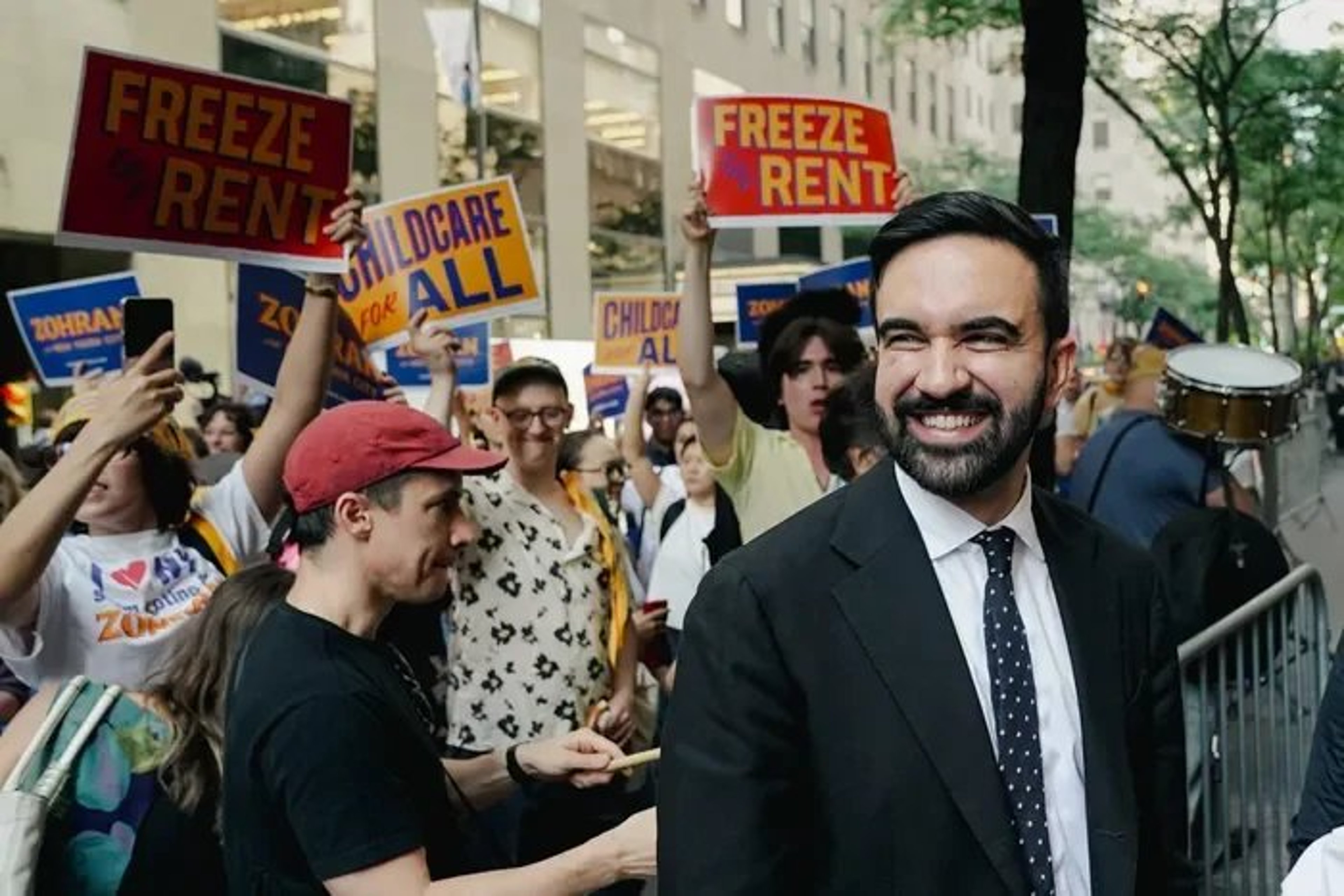
Zohran Mamdani ran heavily on his ‘Freeze the Rent’ Initiative is his 2025 Mayoral campaign.
On June 25th, New York City’s Rent Guidelines Board (RGB) voted 7-1 to freeze rents on roughly one million rent-stabilized apartments, covering about 2 million people, or 40% of the city’s housing stock.
This is a major political win for Mayor Zohran Mamdani. When he campaigned for mayor in 2025, he maintained a relentless focus and zeal on his promise to “freeze the rent.” The RGB vote allows him to beat back skepticism over his ability to deliver this promise, and to deliver on affordability more broadly—especially important given that it came just two days after the three congressional candidates he endorsed won their primaries in stunning fashion. It was also the first two-year freeze ever approved; previous freezes under Mayor de Blasio applied to only one-year leases. Mamdani was able to do this simply by exercising his authority as mayor to appoint six of the RGB’s nine members, replacing the Adams-era appointees who had approved rent hikes. The new board did exactly what it promised to do.
The vote was not without drama. Christina Smyth, the board’s landlord representative, resigned hours before the vote, accusing the board of becoming “a body that starts with an answer and vibe-codes its way backwards to justify it.” Her accusation previews the legal challenges expected in the coming weeks— landlord groups are likely to argue that the board’s independence was compromised. The tension reached its peak when the remaining landlord representative, Maksim Wynn, took the microphone. As he read a lengthy statement calling for expense-side relief for landlords, the crowd of tenants drowned him out with boos and whistles. But when he concluded and voted in favor of the freeze, the audience erupted in cheers, their anger turning to delight.
This deserved explosion of joy cut through a persistent skepticism—the view that contesting state power through electoral work is inherently a trap, a maze designed to co-opt and dilute radical energy. In fact, it is precisely the terrain where that energy must be spent. Building-level tenant defense is irreplaceable, but without organized political action over state power, it inevitably hits a ceiling.
And in answering this question, the people did not disappoint. They broke the grip of real estate capital through a localized, democratic show of force that strengthened the hand of the city's socialist leaders. This victory goes far beyond a bureaucratic handout. New Yorkers worked to strip control of their city from the wealthy stratum that has dominated municipal politics for generations.
Despite the patronizing certainty of these types in the righteousness of their oligarchy and the supposedly undefeatable power of their machines, Mayor Mamdani and the movement behind him simply proved them wrong once again. The scene at the board shows that winning institutional authority doesn't have to pacify a movement. When anchored by a mobilized base, the levers of the state cease to be marshaled to eviscerate the working class and instead are bent and rebuilt to favor the people, according to their needs and preferences.
Beyond these shifting power dynamics, there is no doubt that this rent freeze will be a huge relief for tenants. Indeed, a study by The Robin Hood Foundation and Columbia University found that 140,000 people in rent-stabilized homes would sink below the poverty line if they lived in market-rate apartments. This freeze keeps them above it.
Despite the relentless focus on his promise to freeze the rent, this initiative was always only one part of a broader strategy of Mamdani’s affordability agenda. On his first day in office, Mamdani appointed Cea Weaver — a DSA member and nationally recognized tenant advocate who played a key role in passing the 2019 Housing Stability and Tenant Protection Act — as Director of the Mayor’s Office to Protect Tenants. Her mandate is to ensure a “pro-tenant policy is moved into every aspect of the administration’s housing agenda.” The executive order also established a series of "Rental Ripoff" hearings across the five boroughs, where tenants could testify directly to city officials about poor conditions, hidden fees, and landlord abuses—testimony that would inform a report and policy recommendations within 90 days of the final hearing.
In an article last year, Weaver lays out the strategic logic of the Office. Rent regulation, she argues, is best understood not as an affordable housing program but as consumer protection in a tight market. The history of rent stabilization in New York is a history of landlords exploiting loopholes to deregulate units and raise rents. Between 1994 and 2019, the city lost nearly 250,000 rent-stabilized apartments—about a quarter of the stock—through vacancy decontrol, individual apartment improvements, and other mechanisms that enriched landlords at tenants’ expense. The 2019 HSTPA reforms closed many of these loopholes. Now, Weaver argues, the City must go further. It must act as a “non-speculative market actor,” acquiring distressed buildings, enforcing housing standards, and building a portfolio of permanently affordable housing.
The vision is backed by Block by Block, Mamdani’s comprehensive housing plan released last May. It plans to build 200,000 new affordable homes and preserve another 200,000 over the next decade, backed by $22 billion in capital investment, with a $40/hour minimum wage and benefit standard for construction workers on City-financed projects.
As mentioned before, the rent freeze has not been without significant backlash from landlords. While there is no doubt much of this is driven by greed and self-interest, it’s worth identifying the specific objections. Operating costs for rent-stabilized buildings have increased significantly. The RGB’s data shows costs rose 5.3% this year; insurance, labor, and maintenance costs are climbing. Kenny Burgos, CEO of the New York Apartment Association, warned the freeze would lead to “more dilapidated housing and potentially more foreclosures and bankruptcies, which the city is wholly unprepared for.”
Ann Korchak of Small Property Owners of New York put it more bluntly: “Rent-stabilized housing is old. It’s in need of tremendous and constant upkeep, repairs, and capital improvements, and the way we raise revenue is through rents.” The Small Property Owners of New York explicitly framed the freeze as part of Mamdani’s “sinister plan to illegally take private property and convert it into socialized housing.”
While these paranoid theories stem from anxiety over a shift in the balance of power between landlords and tenants represented by Mamdani’s administration, it is true that the 2019 HSTPA reforms made it difficult to raise rents on vacant units. Now a freeze makes it impossible. For owners who purchased buildings on the assumption of rising rents, the math no longer works. If rents can’t keep pace with costs, owners defer maintenance, conditions deteriorate, and abandonment follows. This is not hypothetical; there is a small but acute crisis within the rent-stabilized stock— 2 to 3 percent of units meet the statutory definition of physical distress.
Does the risk of disinvestment mean the rent freeze was a mistake? Of course not. It simply means the freeze must be paired with a strategy for what comes next.
Economist JW Mason, writing in Phenomenal World, expertly defuses the objections raised by landlords by making a distinction between operating costs and mortgage payments. Operating and maintenance costs are necessary costs of providing housing. Mortgage payments are not. Mortgage payments reflect what the current owner paid for the building, not what it costs to run it.
The RGB’s Income and Expense Study provides the data. In buildings with rent-stabilized apartments, rent averages $1,600 per unit; landlords collect another $200 from other income. Operating costs average about $1,200 per unit, including taxes and insurance. Net income is around $600 per unit—about 50 percent above operating costs. Over 70 percent of buildings have operating costs less than 80 percent of income; fewer than 10 percent have costs greater than income.
Mason argues that what landlords call "financial distress" is almost entirely debt service on inflated purchase prices—speculative overborrowing that assumed rents would rise forever. "The big obstacle to a mandated rent reduction," he writes, "is not the real costs of providing housing, but the financial commitments inherited from the past."
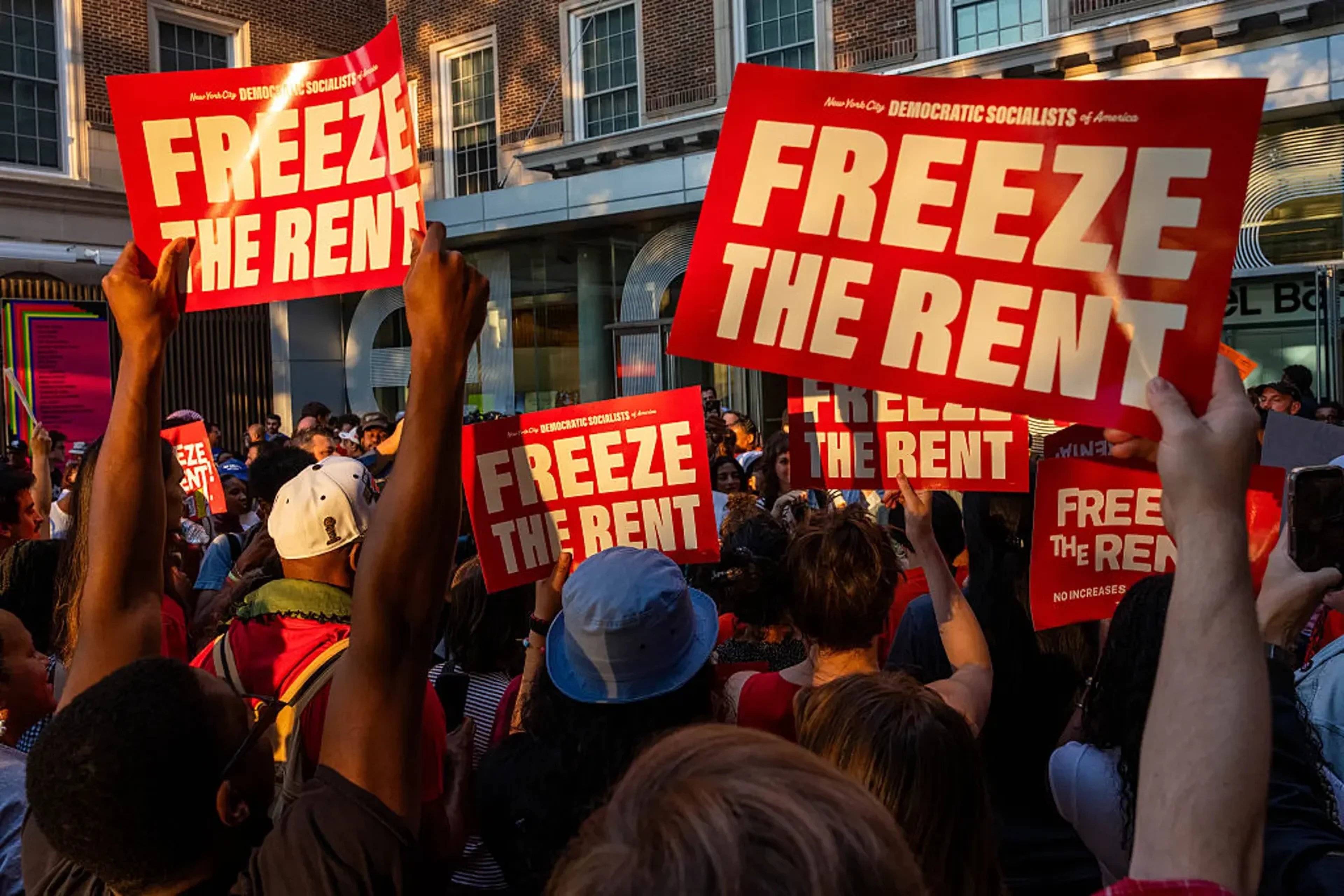
This is where the rent freeze becomes a strategic tool. By making the math impossible for overleveraged landlords, the freeze forces a reckoning. If owners can't pay their mortgages, that's a problem for owners and creditors—but foreclosure can drag on for years, and distressed owners prioritize debt service over maintenance. Mason argues that public ownership provides "an escape valve, a way for owners to exit their position without running the danger of an extended foreclosure process."
In other words, the freeze can not just be about holding rents down, but can also be the means of forcing distressed properties onto the market — and positioning the city to acquire them. Weaver's vision of the city as a "non-speculative market actor" begins here: acquiring buildings in distress, taking them out of the speculative cycle, and adding them to a permanent public portfolio. The freeze holds the line today. It also creates the conditions for public ownership tomorrow.
Josh Barro, a conservative journalist, described the housing strategy of Mamdani and the DSA as "capitalism for developers, communism for landlords”—and he did so skeptically. But the logic, as Mason shows us, is coherent. New construction and existing housing operate under different economic logics. Building a new apartment building creates something valuable for society. Buying an existing one diverts existing value. The discount rate explains why: a developer expects a return of around 20 percent, so rents decades from now play essentially no role in the decision of whether to build today. Reducing rents on old buildings does not meaningfully reduce the incentive to build new ones.
The strategy is therefore not a contradiction, but a recognition that the rent freeze is not an end in itself but a lever that can force the transition from speculative ownership to public or non-profit control.
This is the strategic logic presented at its best. But the Fulton-Elliott-Chelsea (FEC) privatization plan shows the logic at its breaking point. The same reasoning that justifies using private capital for new construction can justify giving away public land for private profit—especially when the state lacks the capacity to build itself. NYCHA has partnered with Related Companies and Essence Development to demolish nearly two dozen buildings and rebuild them, with private housing on roughly 70 percent of the land. Related would receive a 99-year lease on prime public land in Chelsea.
The case against the plan is strong. Former State Senator Thomas Duane argues it violates a 2010 state law requiring NYCHA to retain ownership of the Chelsea complex. A court extended a restraining order after a combative hearing. Residents point out that NYCHA's survey didn't mention the word "demolition," and only 16 percent of authorized residents participated. Over 1,000 residents have signed a petition opposing demolition.
The case for the plan is also real. NYCHA estimates it needs nearly $80 billion in repairs. The FEC plan would bring billions in private investment.NYCHA says 94 percent of residents would move only once, into new apartments. The alternative—doing nothing—means continued decay.
The tension lies in the fact that the state lacks the funding and capacity to rebuild public housing itself, due to decades of neoliberal federal, state, and municipal governance. So, it is forced to partner with private developers to fill the gaps in state capacity. But those partnerships risk surrendering public assets—99-year leases, private housing on public land, and displacement during construction. The line between "mobilizing private capital" and "surrendering public assets" is not always clear.
The rent freeze is a real achievement—for Mamdani, for NYC-DSA, and for the millions of tenants in the city, many of whom elected him. It proves that socialists can win power and use it to deliver. But it is also a holding action–and only the first step to addressing the housing crisis. The FEC controversy shows us the difficult tasks that still lie ahead. Block by Block marshals public investment and private capital to build housing—a pragmatic necessity given the state's gutted capacity. But it does not explicitly aim to rebuild that capacity. Tuesday's primary wins—three congressional seats and at least six state legislature seats—put the left in a position to pursue that goal, even if it has not yet been articulated.
In Zohran Mamdani Should ‘Project 2026’ New York City, we wrote that the mayor has a "plethora of institutions to commandeer"—the Rent Guidelines Board, NYCHA, HPD, and the City Planning Commission. For decades, capitalist mayors used these institutions to benefit landlords and developers. Mamdani has shown they can be used differently, and the rent freeze is proof. The question now is whether he and the DSA can use that growing political infrastructure—in City Hall, in Albany, in Congress—to rebuild a state that can build.