
Apr 20, 2026
Reading Gramsci: On Economism, Political Method, and Urbanism
An analysis of Gramsci’s “The City-Countryside Relationship During the Risorgimento and in the National Structure.”
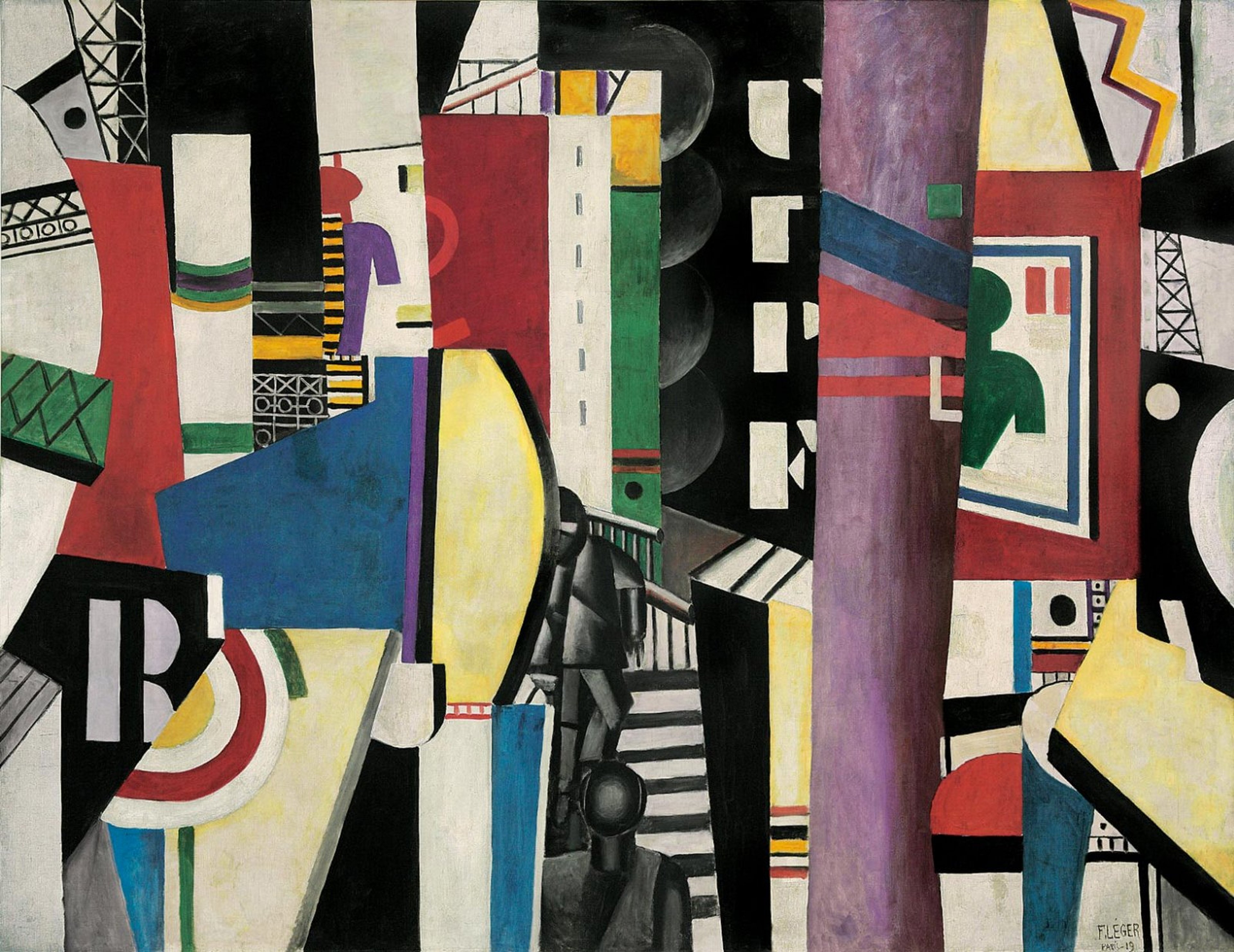
Fernand Léger, The City (1919)
This essay engages with Prison Notebooks: Selections by Antonio Gramsci, published by International Publishers NYC, pp. 90-102.
I. Introduction
Within Marxist and communist discourse, analysis of society writ large is too often narrowed into a mechanical and economistic model. Questions that do not immediately appear in the financial language of wages, distribution, or surplus are backgrounded, treated as secondary, or left to one side altogether. The classic principles of Marxist radicalism, such as the abolition of the state or especially of the family, recede from the discourse completely.
The result is a Marxism that can speak clearly about exploitation in the abstract, but much less clearly about the broader set of social, political, and ideological forms through which a society is actually organized and reproduced. In such a framework, distinctions like the city and countryside, or the problem of how different social antagonisms are politically articulated, recede into the background. Between the proletariat and the bourgeoisie, conceived in their narrowest and most mechanical sense, there appears to be little room for further categories.
Enter Gramsci. Throughout his work, but especially in the Prison Notebooks, we find someone concerned precisely with the problem of rendering Marxism adequate to the full complexity of social life. In the notes grouped under The City-Countryside Relationship During the Risorgimento and in the National Structure, Gramsci begins from what might seem a secondary distinction and shows it to be a rich field of political and historical determination. The city is never just the city, nor the countryside merely the countryside; each is a concrete social relation, historically specific, politically overdetermined, and bound up with wider questions of ideology, national development, class formation, and political action—just like the life of the revolutionary party itself.
II. Urbanism and the Subversion of Concepts
Throughout the work of Antonio Gramsci, we find a Marxist concerned with Marxism as a truly effective, total ideology that is really able to be the foundation for a genuinely novel and comprehensive world outlook. In his writings prior to incarceration, this primarily took the form of political exhortation. After incarceration by the fascist state, however, censored and denied access to his own library, Gramsci turns his attention to doing in the intellectual sphere what he had attempted to do in the political sphere; he travels through all sorts of historical events, philosophical topics, problems of political science and Italian history as a Marxist, and attempts to reappropriate their full complexity for Marxist theory.
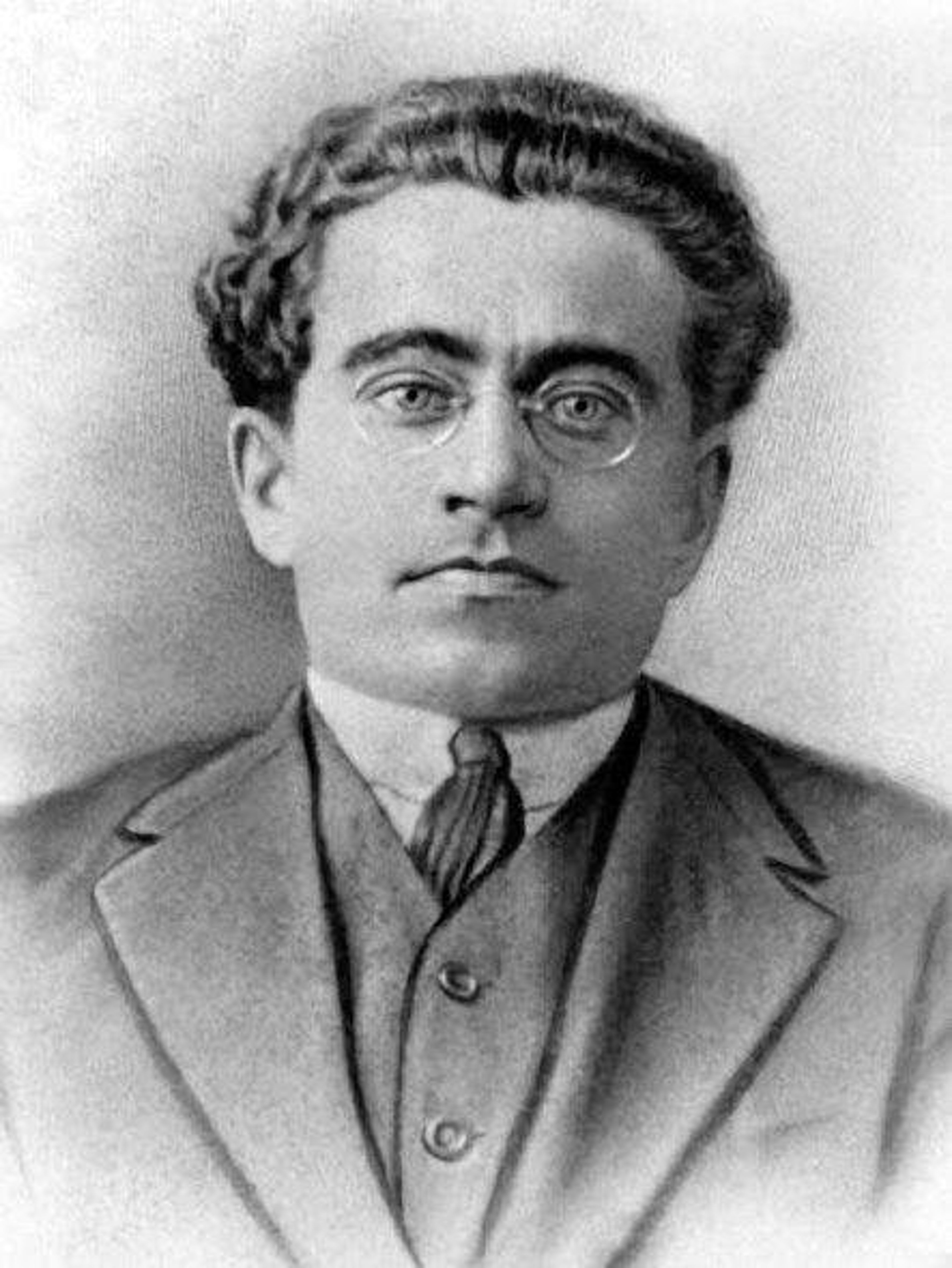
Antonio Gramsci (22 January 1891–27 April 1937)
Antonio Gramsci’s writing categorized as a single essay in the Prison Notebooks as ‘The City-Countryside Relationship During the Risorgimento and in the National Structure’ begins with an examination of the rural-urban distinction that reappears frequently in Marx, in a variety of forms, but which has fallen into secondary importance in the current day. Why is that the case? One must imagine that it is for the same reasons that the demands of family abolition, the abolition of the state, the critique of the division of labor, etc., have been backgrounded; the slow erosion of Marxism has reduced it to purely the most simple concepts attached to the most simple versions of the fundamental classes (the proletariat and the bourgeoisie). Conceived purely in their economic (or rather, more accurately, their narrow-financial) aspect, there is no logical or necessary connection between the liberation of the wage-laborer and the abolition of the family—no road from the generic demands of economistic socialism and militant social democracy towards communist revolution.
Ergo, an economistic socialism is ultimately oriented at only the modification of the existing distribution of surplus and cannot cognize within its scope questions that are not immediately assimilable to the quantitative form of surplus-value, e.g., the rural-urban distinction. We might explain this phenomenon another way: in this period of Marxism, ‘policy,’ ‘good governance’, and ‘rational appeal to interests’ (e.g., organizing workers under the slogan that socialism would improve their quality of life) are predominant. In Gramsci, however, we find different priorities that may seem foreign at first to historical materialism: ‘vision,’ ‘ideals’, ‘national directions,’ etc.
What we also observe is that these latter values have become common stock in the civilizational discourse of the far-right and the security state. A small example: in the Trump administration’s most recent National Security Strategy (NSS) document, immigration (both legal and illegal) is targeted not for its negative effects on wages or the economy as one might suspect—but rather is identified as a threat to Western civilization itself and given the highly abstract title of “destabilizing population flows.” In the shadow cast by this mighty narrative, the Democrats and the left proper both seem to be concerning themselves with ‘rearranging the deck chairs on the Titanic’—a policy here, a right there, a tax, another tax, a third tax—each of these promising nothing more than a short-term granting of relief. Both oppositional groups seem to be unable to rise to the level of civilizational discourse and instead appear as technocrats ideally arranging the relations between the various objective factors and groups, rather than inaugurators of a genuinely new type of society with its own values, self-narrative, manner of conduct, etc.
Let us turn to the text. The focus will be on teasing out from Gramsci’s analysis of specific concepts or historical events a number of more general analytical principles.
Gramsci’s concept of the ‘city’ and its examination points us in many directions. The most important is the principle we discover here, which we might term materialist in the strict sense, of the inability to identify the concept of a thing with the thing itself. This may seem trivial if understood as a statement asserting the necessary distance between a concept that names a thing and the thing named. However, Gramsci is not merely positing that concepts are distant from the objects they refer to, but also attempting to draw out what that means in practice. Therefore, he argues that any given ‘concept’ (such as the ‘city’ or the ‘countryside’ or the ‘Italian proletariat’) contains with it numerous facts and aspects that are not cognizable through the purely formal concept of the thing but which nevertheless do govern our effective use of that concept. Or, to use the register of discursive theory: this process involves the transforming of the static thing-in-itself into an empty signifier that both retains the original concept but appends to it a wide series of additional meanings that only contingently can be identified with it.
To put this in other terms: the difference between the theory of the inadequacy of the concept to the thing the concept refers to posits that the concept is smaller than the object, and is disrupted by the qualities of the object that are not contained in the referring concept. But Gramsci is saying something slightly different: eschewing the distinction between concept and referent itself, he argues that the concept itself contains qualities that are not cognizable immediately in the concept but nevertheless affect how we use and understand that concept. We might also describe this as the difference between the definitional value of a word and its real semantic content. A subtle distinction that may not be decisive but which is worth keeping in mind.
Gramsci’s ultra-concrete method of analysis shines through here as he begins with the formally self-evident and moves from there to an understanding of the situation specifically. The ‘city’ is never just a ‘city’, but always a historically and politically specific city from which innumerable consequences can be drawn for other spheres of society that are not identifiable prior to the concrete existence of the concept in a particular time and place. E.g., Gramsci writes:
Urbanism in Italy is not purely, nor “especially,” a phenomenon of capitalistic development or of that of big industry. (p. 91)
Here, we begin with the given (the division between the city and the countryside) and, after identifying its roots (the conditions of capitalistic development both generally and specifically), we learn that those roots are not applicable here!—that, the urban distinction being founded on such and such things, Italian urban distinctions are not founded on such and such things at all! Again, clearly, the question is not merely a matter of distance from the concept but more specifically that the given concept seems to escape its own bounds and be richer than any possible understanding could be. (We might recall Lenin quoting Goethe here: “Theory, my friend, is gray, but green is the Tree of Life.”)
What we see is that the concrete existence of the concept of the city is determined by a practically infinite number of factors that render the textbook definition of the term not only limited but even contradictory. This does not make the original concept or the definition irrelevant. But we do have a strange situation: we have an urban distinction that is not grounded in these factors, while, at the same time, we have a concept of the urban distinction itself identified with those factors. In other words, it appears here that the urban distinction exists without the real existence of the urban distinction; and, instead, is identified as the basis of a set of qualities or events possessed by the urban distinction that are similarly not the urban distinction itself but are interpreted in a way such that we find it acceptable to call the object itself the ‘urban distinction’ (or city). This means, further, that the concrete existence of a concept seems to be related to the formal definition of the concept only indirectly.
The next lesson: this contradiction does not present itself as an obstacle but, especially to the individual who does not cognize the contradiction in the first place, completely natural. Analytical tools help us understand the world, but that does not necessarily mean that the world is identified with the analytical tools which we use to approach it. The urban distinction here is a descriptive concept that is flipped and used as an anchor for understanding the same distinction through another lens—here, the lens of urban ‘chauvinism,’ where the very presence of urban centers results in the ideological ossification of the concept of urbanity and the subsequent formation of actually existing urban centers that do not depend on the conditions or qualities of the urban distinction but rather are identified with that concept of urbanity. In a quite clever dialectical maneuver, then, we might pose this as a fundamental ‘base’ (the division of labor mapped onto the conditions of the city-countryside division) determining a superstructural ‘idea’ (urbanism) that then itself, by virtue of being an objective idea, reacts once more back onto the base and becomes a foundation for a real division in productive relations. Consequently, the distinction exists which logically depends on the historical materialist dynamic but which actually follows a totally independent logic that is assimilated to that logic. (For our Hegelians, this distinction is, in my opinion, analytically quite similar to the distinction between ‘actual’ and ‘real’ history.)
This has significant consequences for the full range of Marxist concepts. In fact, we may even be able to reinforce this point by looking at the practice of historical revolutionaries. Communists like Lenin, for example, did not merely go searching for the proletariat that they identified from Marx’s books. They understood what the proletariat was in their particular conditions. In The Concept of Class in Politics, I write:
Working backwards: the same procedure marks the opening of Russian communism and the true birth of Lenin qua Lenin the Communist politician. He establishes this move in two texts: What the “Friends of the People” Are and How They Fight the Social-Democrats (1894) and The Development of Capitalism in Russia (1899). Both are directed against the contemporary and dominant belief in Russia that, while Marxism may be an adequate theory for Western capitalism, it was not vital in semi-feudal, historically unique Russia. What is remarkable about Lenin is the way in which he refutes this claim: Lenin does not point to the proletariat, or to the inevitable economic destiny of Russia, but redefines Russian society along the lines of a communist politics. In doing so, he is quite ingenious, subverting Marxist concepts.
The main mistake I make here is treating subversion of concepts as a specific act of a communist revolutionary rather than the normal mode of existence of concepts in general. Gramsci’s lesson here is precisely that what is described by myself as “subver[sion]” is ultimately the way that we use any concept in any situation.
III. On Translation
To introduce this concept it will be useful to stick to the example of the urban distinction for the sake of continuity. Gramsci writes:
In this type of city there exists, among all social groups, an urban ideological unity against the countryside[…] (p. 91)
We will extract an essential concept from Gramsci using this example: translation. Here, urbanism is posed as an “ideological unity.” But as we saw already, urbanism also encapsulates a certain economic position, a certain genetic history, a certain form, etc. The fact that this concept appears in various forms is not accidental, it is a consequence of the translation of that concept not across different languages but between different spheres of social life. The basis for this ‘translation’ can only be a commensurability rooted in the unity of abstract human labor, i.e., each specific sphere is only one type of human practice generally.
Gramsci shows the efficacy of this method by using the concept of ‘urbanism’ successfully to understand the fundamental economic problems of capitalism (the division of labor, uneven development), the social character of urbanism in Italy and in general (the formation of independent urban consciousness as a dividing line between the urban and rural), and of political action (the relative ideological unity within an urban center).
This concept of translation can be confusing. The concept of the ‘socialist movement’, which we might say belongs to the discourse of history, is read as equivalent to ‘another word’ in a ‘different language’: the socialist movement ‘means,’ in the economic sphere, trade-union militancy; the same term, in the political sphere, is the workers’ party; in the sphere of political science, Marxist theory, so on and so forth. Each of these words is both ‘equivalent’ but also distinct, in the same sense that a word translated across multiple languages means the same thing in each language but also possesses a particular semantic content within each language that is not shared.
Excusing my lack of proficiency in French, I think we might find here a good example. In English, the word ‘home’ indicates the actual home, the home as a place to ‘return,’ the home as a site of comfort, etc. But, in France, this word is subdivided: maison, for example, is used to refer primarily to the physical structure of the building, while chez is used in contexts that cleave closer to the more abstract, emotional use of the term home. Or: ‘friend’ in English is a very loose term—able to encompass everything from acquaintances to companionship—but the French equivalent, ami, tends to imply a stronger and more intimate bond than the English term alone does.
Not only is the phenomenon of translation ‘observable,’ but Gramsci finds it crucial for effective politics. Using the constructed schema of history, politics, economics, and theory: each of these different analytical frames is both necessary and complementary. The first, to understand the fundamental direction of the overall struggle; the second, to understand the makeup of social forces that a party must engage with; the third, to understand the means of organization appropriate for political revolution; the fourth, to clarify our concepts and ensure that they are really useful. As a set of lenses, these form a whole that allows us to understand the working class in its multiplicity of forms and on that basis develop effective slogans and practical work.
We might also show this point inversely, in the form of an error. By failing to account for translation, one fails to meet the relevant problem with the appropriate tactic; one brings political slogans into the union, the instrumental logic of activism into theory, and the principles of mass organization and consensus-building into the field of political conflict. So, we might also say that Gramsci is not only attempting to multiply the analytical tools available to Marxism but also accord to each their proper place in the practice of a revolutionary party.
This is a very clean presentation of the method. Let us look more closely at a specific example in the text to understand how this concept of translation is necessary, in Gramsci’s view, to understand effective political action.
Gramsci, discussing the failure of the Parthenopean Republic of 1799, argues that “the Republic, both in its first aristocratic phase and in its subsequent bourgeois phase, totally neglected the countryside” (astute readers may notice the similarity here to Marx’s criticisms of the Paris Commune’s failure) (p. 92). In a particular historical moment, apparently contingent questions, such as the relationship between the urban and rural sides of a country, assume decisive importance and determine the immediate resolution of a clash between different forces.
He continues:
…by holding out the possibility of a Jacobin upheaval in which landed property, which spent its agrarian income in Naples, would be dispossessed, thus depriving the great mass of the people of their sources of income and livelihood, [the Parthenopean Republic] left the Neapolitan populace indifferent if not hostile. (p. 92)
Here, the agrarian question which we might examine elsewhere under the economic form is presented purely as a political factor. The agrarian question for the Parthenopean Republic reveals itself to be about agriculture only at one level, the economic level. At the political level—what it ‘means’ in the political sphere—is actually the constitution of a national-popular revolutionary class, which could not exist in that moment except as an expression of an effective agrarian policy in the political sphere.
The failure to properly deal with the agrarian question turns out to be a failure to construct a victorious people. Failure to flexibly analyze the same problem from the perspectives of different fields and problematics bars a deeper understanding of the function of that problem in the overall development of history.
We can find more examples in this section. Gramsci writes, when discussing Croce and cultural tendencies in Italy, distinctions such as “idealism against positivism” or “classicism or classicity against futurism” as corresponding to the distinction between the North and South of Italy, which itself corresponds to the urban-rural distinction (urban being the Italian north, rural being the Italian South) (p. 92). Despite the fact that cities existed in both regions (as did idealists and positivists), the point is that each of these have transformed within a larger process of polarization—the formation of two sides where each factor is lumped into one or the other. Once polarization has occurred, all politically relevant dualisms are conjoined with others in the formation of society-wide political divisions: an early prefiguration of Laclau’s concept of “empty signifiers” in politics. This notion of polarization may be a key to understanding the method through which translations in general are established and identified by Gramsci.
By separating a concept out into its different elements, by transferring it across different “spheres,” we can find and identify these contradictions in our political work. This is an example of what we might call Gramsci’s “lateral thinking”—his ability to use his expansive approach to cognize factors essential to revolution which are not plainly borne out in theory.
IV. Some Principles of Interpretation
Throughout the essay, there are numerous valuable principles of interpretation. As this does not neatly fit into its own category similar to “Translation,” I have opted to treat the set of these principles as a group.
A. Marginality
Gramsci writes:
[…]in periods of crisis it is the weakest and most marginal sector which reacts first. (p. 93)
This is a strange and likely controversial claim. After all, it seems as if it is often the case (or even usually the case) that those who act are those who are the least marginal and most powerful. But let us think of how this rule might bear fruit: we can think of Lenin and Trotsky’s thesis of the “weakest link in the chain of imperialism” being precisely where the revolution can break out (in this case, Russia in World War 1), Fanon’s thesis on the marginalized colonial subjects being the real site of revolutionary action, or Stalin’s thesis during the collectivization debate on Kulak aggression originating in the fear of their incoming extirpation as a class.
Used as an analytical tool, we can apply this approach to the current day, as well: Can we think of Israel’s extremely aggressive posture towards Iran and Gaza in 2026 as resulting from a fear by the far-right ruling party that the ‘winds may change’ and that Israel may lose its American support soon? If so, this position of (predicted) ‘marginality’ functions to justify the most extreme action, or rather, becomes the real motivating basis for the most extreme reaction to crisis.
What we might take away from this rule is the general idea that motivating extreme action tends to require a sense of urgency or fear of marginalization—which again finds its own confirmation in certain slogans of our movement that function by posing the choice between socialism and capitalism in the starkest possible terms, e.g., as between ‘socialism or barbarism’ or ‘extinction.’
B. Unions
Speaking about unions, Gramsci writes:
[…] systematic diffusion of this social type on a national scale[…] is up to a certain point and in a certain sense an instrument of moral and political unification. (p. 94)
Previously, Geese Magazine has levied many criticisms of “economism”. This may be an opportunity to clarify how our anti-economist approach treats unions—and positively defends their real content and position in the class struggle.
Here, Gramsci posits the union as a powerful (and perhaps necessary) means for “moral and political unification.” He does not attempt to analyze unions from the perspective of their official characteristics, such as the higher wages or rights they have won, or their organizational structure, but their subtle and larger social consequences. For him, the union presents itself less as a tool of collective bargaining and more as the construction of a positive worker identity. What is key is that this category of worker then subsumes more local identities that are disrupted by the collective organization imposed by a union, due to the basis of the union on equality of economic status rather than social difference.
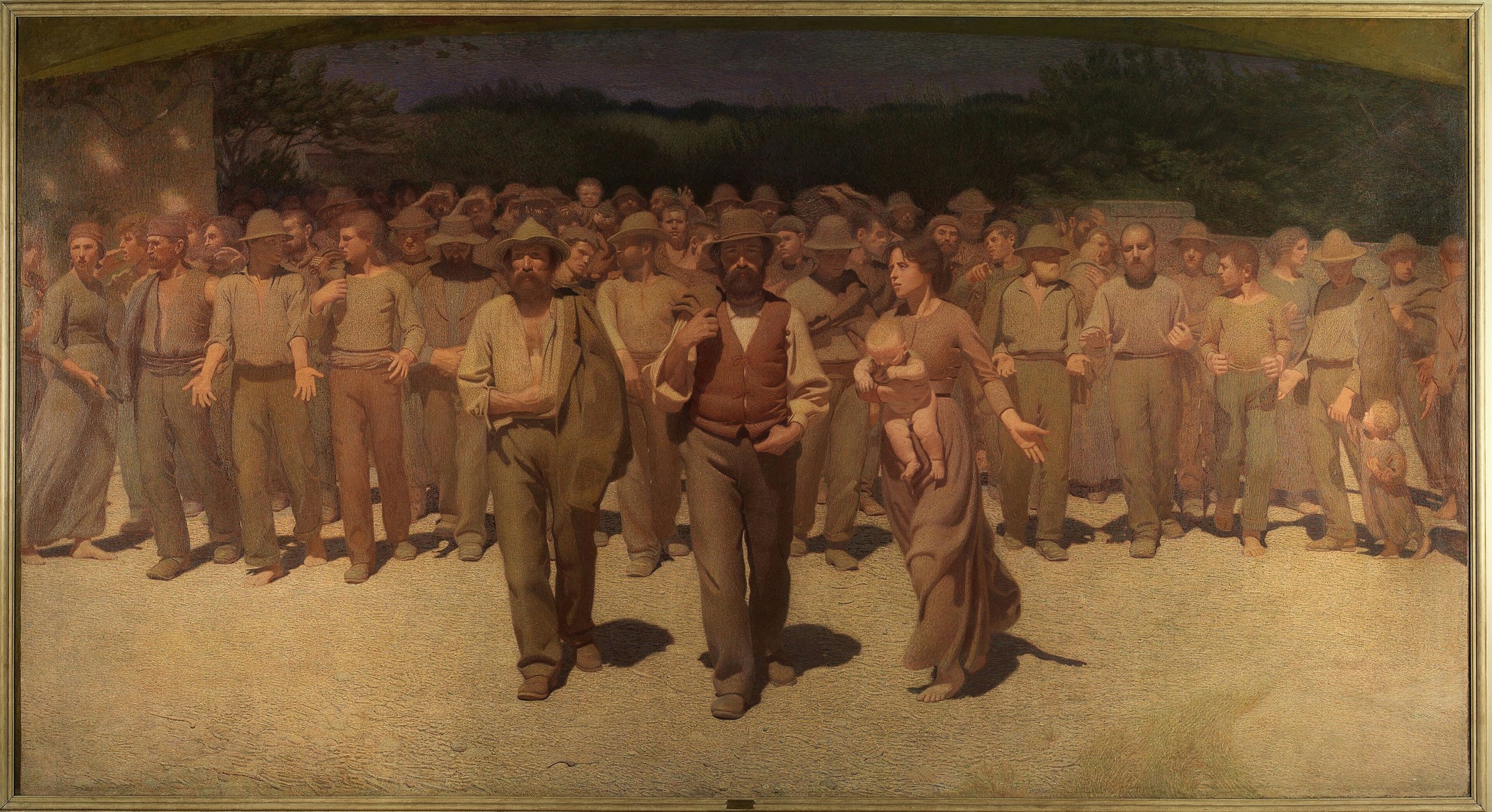
Giuseppe Pellizza da Volpedo, The Fourth Estate (1901)
As an example of this, the narrative of Ira Katznelson’s study of the New Deal, Fear Itself, is handy. Katznelson argues that there is significant merit in understanding the New Deal period and the political shifts therein from the perspective of the development of unionization—not just unions, not just union organizers, but the growth of unionization itself as a phenomenon. What he finds is quite interesting. The original New Deal coalition, made up of Northern and Southern Democrats, agrees to leave aside questions of racial progress. For the Northern wing of the Democratic Party, this is justified as a pragmatic alliance with the South. After all, a hypothetical FDR might reason, it is better to sacrifice civil rights for labor rights than to have neither, right?
After the largest expansion of labor rights in American history, the New Deal government is content to follow the racial dictates of the South and refuses to make formal progress in racial equality. But it is too late. Despite the intentions of the actors being to the contrary, the growth of unionization throughout the country—but especially in the South—leads to increased intermingling and solidarity of Black and white labor. Suddenly in the same workplace, a new, shared interest in their positions as workers rather than racialized individuals. It did so by constructing a practical category of “unionized worker” and reinforcing a neutral identity of “worker” over and above the local categories of “white worker” and “Black worker.”
This is not to say that racial difference did not exist within the union struggle. But rather than treating it as a binary, we achieve greater clarity of the situation if we see each of these identities as coexisting, often in one and the same person, and competing for greater or lesser shares of that identity. In that case, even though the historical union struggle did not ‘solve’ racism, it provides a material foundation for a real anti-racist struggle within the proletariat that ultimately culminates in the Civil Rights Movement.
Although this is obviously a radical simplification of a very complex historical period, in the South, the multiracial character of labor organizing tended towards increased militancy and organization in the direction of anti-racism and anti-segregationist politics. Further, according to Katznelson, the downstream effects on race relations caused by the New Deal’s labor policy was a major reason for the Southern eventual ‘defection’ from the Democratic Party. This is a great example of how an individual’s identity does not sit complacently in their stomach, but is constantly changing and developing in relation to the outside world and the rest of the set of identities he identifies with.
C. Elite Capture
Gramsci also writes presciently on elite capture and cooption of subaltern intelligentsia and politicians. The methodology of “personal favors to the “intellectual stratum” along with “incorporation[…] individually into the leading personnel of the State” corresponds with modern understandings of the function and method of cooption (p. 94). The crisis that this causes is fundamental: “Southern discontent, for lack of leadership, did not succeed in assuming a normal political form” (p. 94). We can think here especially of the means by which the American state has defused Black and other non-white revolutionaries, intellectuals, and organizers through incorporation into the mainstream through institutional or political access.
More interesting, I think, is how this account of leadership maps onto the historical debate within Black liberation, encapsulated in the DuBois argument for a “talented tenth” of Black leadership trained in political action, etc., against Booker T. Washington’s strategy of industrial education that sought to sidestep political struggle by rendering Black labor especially productive or useful to the American national economy. Under Gramsci’s paradigm, we would criticize Booker T. Washington for failing to produce an intelligentsia that is able to resist or defuse cooption but which instead, by virtue of being purely economic in their theory, is only fit for labor and thus easily integrated with the capitalist economy. On the other hand, we might identify the later success of the Civil Rights Movement in their remarkable talent at producing political cadre, such as Rosa Parks, who were highly trained, highly ideologically committed, and therefore resistant to cooption in practice.
D. Paternalism
Gramsci writes:
In order to analyze the socio-political function of the intellectuals, it is necessary to recall and examine their psychological attitude towards the fundamental classes[…] Do they have a “servile” attitude towards the ruling classes, or do they think that they themselves are leaders, an integral part of the ruling classes? During the Risorgimento, the so-called Action Party had a “paternalistic” attitude; it therefore only succeeded to a very limited extent in bringing the popular masses into contact with the State. (97)
A number of themes are developed in this short section. First, the emphasis on the unity of subjectivity and objectivity in the form of practice—the “attitude” Gramsci is identifying here is an objective attitude, defined partially by the subjective qualities of that attitude, yes, but fundamentally determined by the relation it embodies. In other words, it is not merely that the Action Party had a “paternalistic” attitude and therefore it failed to bring the masses into contact with the State—but precisely because it failed to do so, furnishes the proof by which we can understand the Action Party’s conduct as being “paternalistic” in this way. The proof of the pudding is in the eating, in other words.
The other major theme developed here is the role of the communists in developing mass political activity: of bringing the masses into the (struggle for the) state. Looping back around to our discussion of subjectivity and objectivity, the problem here precisely is the failure to cognize the peasantry (in this case) as a genuine class, or collective subject, within the people: “the Action Party itself, which in this field thought like the moderates, []considered as “national” the aristocracy and the landowners, and not the millions of peasants” (101). Trapped in the ‘political science’ of the ruling class, the Action Party leave the peasantry, as the motive force of the revolution in this period, out of the equation.
V. Conclusion: Problem Solving
The final element of this essay that I think merits drawing out is Gramsci’s notion of the ‘problem-solving’ function of political leadership. In this view, an effective political party or political intelligentsia does not primarily provide education or organization to a desired social group, but offers a solution for that social group’s problems in the political sphere.
In Lenin, this narrative also appears frequently. For Lenin, the task of the working class (as he argues in What is to be Done?) is not encapsulated in narrow economic struggle but the broader political and social demands of the proletariat as a ‘fundamental’ and ‘historical’ class. Lenin writes: “The fact that economic interests play a decisive role does not in the least imply that the economic (i.e., trade union) struggle is of prime importance; for the most essential, the ‘decisive’ interests of classes can be satisfied only by radical political changes in general.” In practice, this meant that the proletarian party of Russia must be the party of democracy, anti-war, the constitutional convention, etc.—why? Because these were the means through which the Communist Party solved the problems that were deemed existential in that period—dictatorship, war, famine, etc. No amount of theoretical clarity can substitute for this.
For Gramsci, the ‘problem-solving’ function applies to all political action (more is written about this here, where it is conceptualized as problematizing). No matter what faction or class it represents, a political tendency is an attempt by a class to solve the problems defining a given period of history according to the outcome that best serves that class. A nation’s development can be seen, from the political lens, as the result of successive attempts to solve successive crises of political structure: “But its solution, precisely for this reason, was one of the cruxes in the nation’s development” (99).
For Lenin and Gramsci, then, a class achieves its political consciousness only when it sizes itself as a potential ruling class that administers its own state, solves some crisis of social development, and is able to identify the social makeup of its society. In subjective terms, this means that the class sees itself and its aims as total, i.e., it sees itself as a political class, that the individual partisan feels satisfied with their answer to the present social crisis, and that the Party is able to understand which slogans and practices to appeal to the relevant social strata, respectively.
To add our own gloss: this means that a true ‘revolutionary’ party does not just seek the revolution, but seeks the revolution as the solution to the riddle of history, as the means to solve each and every problem afflicting the people, along the lines of proletarian politics. This is the key of politics, above organizing, rhetoric, etc.—‘historical role’ here figures as ‘concretization’: “If they had resolved these immediate relations successfully, the North urban forces would have set a rhythm for all similar questions on a national scale” (100).
So it is with our current tasks. The world is besieged by a legion of horrors and catastrophes. Apocalypse looms, and the population turns its eyes away from the impending doom only due to exhaustion with the torment it is already forced to live through. The true Communist Party will not descend from the heavens and promise to relieve the world of its burden with the introduction of a new society. No, instead, it will present itself as the real, living mechanism by which these problems will be solved, with concrete solutions for every case; and, just as Gramsci expands his mind across the full field of the intellectual world, with the confidence of a power that knows itself to have grasped the contradictions and problems of society at large and which now, with that in mind, calls for the reins of history, so too will the Party rise to the moment not as an alternative to the world’s problems but as their comprehensive solution and master.